Mind the Gap: The Holy Bee’s Adventures in the U.K. (Part 1)

Despite the exotic-sounding name, this was never intended to be a “travel blog.” As a general rule, I don’t travel. I am a mostly-sedentary creature of habit. I don’t like chairs that aren’t mine, beds that aren’t mine, being thousands of miles away from my creaking, over-stuffed bookcases, or not knowing when my next cold beer is coming.

Blogging is by its very nature a self-indulgent exercise, reaching its nadir with the toxic spoor of the internet known as the “mommy blog.” Mommy blogs seem to be less about documenting activities with their dull, backward children and more about “look what an awesome mommy I am.” Travel blogs can fall into the same narcissistic reflecting pool — endless photos of meals, sunsets, and feet-on-the-beach. But well-done ones can be edifying, informative, and amusing, three things no mommy blog in the history of the universe has ever got within shouting distance of.

For the brief period of time that the Holy Bee of Ephesus will be prancing around in a “travel blog” costume, I will try to be those things, but probably not all of them at once. And there probably will be a few pictures of meals. In fact, there’s one below.

The accompanying photos are mostly my own (which explains their poor quality), except in situations where photography was not allowed, or whenever time, circumstance, or being too lazy to pull my phone from my pocket precluded me from snapping some shots. In these situations, I will shamelessly swipe pictures from the web or resort to screenshots of Google Street View.

So, what prompted me to clamber out of my chair, stuff an oversized suitcase full of socks and various medicated creams, and dust off my never-once-used passport?

A British Airways aircraft taxis past ot

Because the destination was to be Great Britain.

Growing up steeped in the Beatles and Monty Python, and countless other bits of British cultural ephemera, a U.K. trip was a siren song not to be resisted. Plus they speak pretty good English over there (certain parts of Cumbria excepted), so making myself understood would be only a limited challenge.

And I would not be fending for myself. It was a trip for the extended family, and had been in the planning stages for years. Like myself, my wife, Shannon, has chosen a career in teaching, and therefore lives with me on the edge of pauperdom. Her parents and brother, however, entered the world of business, and through their ingenuity and hard work, have all been very successful. One of the ways they celebrate that success is seeing the world, often taking any black-sheep educators that happen to be related by blood or marriage along with them. Before my time with them, my wife and in-laws have tromped across Machu Picchu, the Alps, New Zealand, and various European cities. But, oddly enough, never London. Shannon went there for a few brief days after college in 2002 (as a small part of a larger European trip), but the British Isles have remained for the most part un-visited. And since Shannon’s family by nature are doers and planners, I could simply be hauled along like luggage and not have to concern myself with the nuts and bolts of organization, apart from taking part in an occasional vote about where to eat. (Most luggage doesn’t whine that it needs a beer, but whatever.)

The only downside was that my older son Cade, 20, was working an internship and could not join us. Shannon, myself, and my younger son Cameron, 18, were already on summer break, so we set off a few days ahead of the rest to get a feel for London and take our time at the massive British Museum.

Having never flown anything but coach, traveling in business class was an unexpected luxury. The seats in business class are sort of self-contained pods that can be reclined fully into sleeping positions. Each pod is twinned with another pod to the side. If your pod buddy isn’t a spouse or a friend, a privacy divider can be raised. When the dividers are down and the seats are upright, everyone’s head and shoulders are visible. A woman in a tube top nearby kept startling me out of the corner of my eye because it looked like she was taking a bath. Pillows were provided, along with a sealed package full of blankets (three different thicknesses), a sleeping mask, earplugs, and socks. Cold champagne and hot towels were distributed before take-off.

(The seats themselves weren’t much wider or plusher than standard airplane seats. The true gift of business class is leg room, so I wouldn’t repeat the gaffe of my most recent airline excursion the previous month. As an 8th-grade teacher, I was one of the chaperones on the annual graduation trip to Disneyland. Getting two dozen self-absorbed, half-awake 14-year-olds through security and onto an early morning flight was its usual nightmare, and I was literally the last person to board as they were closing the jetway door. It was a completely full Southwest flight with first-come, first-serve seating, so there was one single middle seat left available. I was so frazzled and out-of-sorts, I thought I could squeeze in front of the older lady in the aisle seat, as if I were at the movies or a basketball game. Her distressed squeals as I practically climbed into her lap brought me to my senses. As far as most embarrassing moments, it barely cracks the top 20.)

And since we were flying British Airways, all the flight attendants were wonderfully, authentically British. They were crisp, efficient, and referred to us all as “luv” and “darling.” The plane safety lecture was presented via a video featuring British celebrities only vaguely recognizable to American eyes, but warmly familiar to the Anglophile Holy Bee. “It’s Steve Coogan! It’s Jim Broadbent!” I kept saying exultantly to Shannon. Gillian Anderson used her English accent. She is evidently bidialectal.

The 747 jumbo jet hauled itself aloft out of San Francisco International Airport a little after 4:30 on Wednesday afternoon. The time difference meant we would arrive at London Heathrow Airport in the late morning of Thursday.

The dinner menu was a little vague in places. One course was simply listed as a “fillet of beef.” Trying to get any scrap of further information, Shannon asked the nearest flight attendant how it was prepared. “We heat it up, luv,” shrugged the attendant and moved on. Shannon wisely went for another dish, and I had the beef. It was indeed a totally non-descript brick of beef-like matter, wholly impervious to my attempts to cut it with the doll-sized knife and fork. It was at least flavorful, and the smoked salmon appetizer, with a healthy dose of horseradish cream and lemon juice, made me rethink my usual aversion to oily fish.

After dinner, washed down by a couple of Tribute Cornish pale ales, I attempted to sleep. It was twilight outside the plane’s window, and the tracking info on my little video screen indicated we were entering Canadian airspace at an altitude of 38,000 feet and a speed of 660 miles per hour. The cabin had gone dark, passengers vanishing as they put their seats into sleep mode. The glow of dozens of personal video screens was the only illumination. I tossed and turned as we streaked through the sky over Ontario and Quebec, but sleep would not come. Every time I would begin to drift off, a jolt of turbulence caused the aircraft to shudder. After two and a half hours, I gave up and fired up my Kindle, completing most of of Kerrang! writer Mick Wall’s Guns N’ Roses band biography Last of the Giants. Convinced it was the middle of the night, I cracked the window shade and was stunned to see bright North Atlantic sunlight. I snapped it shut before it disturbed anyone. We were just south of Iceland, and it was morning in Europe.

By the time the rest of the plane was stirring and breakfast was being served we were over the west coast of Ireland. According to my flight tracker, we flew directly over the Skellig Islands, the picturesque but incredibly windy location that served as Ahch-To, site of the first Jedi temple and hideaway of Luke Skywalker in The Force Awakens and The Last Jedi.  

As we passed over the main part of Ireland, I noted that anyone who describes it as “green” is pretty spot-on.

As will be mentioned several times, Britain was in the grip of a heat wave at the time of our visit. The modest air conditioning of Heathrow Airport couldn’t keep up, and as we crawled through the line to have our passports checked, sweat began to pool in the small of my back. We finally were determined to be not of the terrorist type, picked up our luggage, and breezed through a totally unmanned customs zone. A huge room full of scales and stainless-steel inspection tables echoed emptily as we strode towards the airport exit.

We grabbed a cab (a mini-van, not one of the traditional “black cabs”) and headed towards London on the M4. The cabbie, I noted, was dressed in a floral Hawaiian shirt, cargo shorts, and flip-flops. All clothing items I left at home so I wouldn’t appear out of place. (Except for flip-flops, which I don’t own. Any grown man who wears flip-flops more than fifty feet from a swimming pool or other body of water should be fined. Any grown man who wears flip-flops with jeans should be executed by firing squad.) I took in my first view of a foreign country as it whizzed by our cab window. Not too different from home — car dealerships, big box stores, diversions for construction. The main difference was the style of traffic signs and the age of most of the buildings. Any random, anonymous building by the side of the motorway in suburban London was likely old enough to be an historical monument with a guided tour if it were in California.

As we got closer to London itself, the cabbie engaged us and began pointing out items of interest — and railing testily against the new bicycle lanes which he believed had destroyed the previously smooth flow of London traffic. The Natural History Museum, the Victoria and Albert Museum, Harrod’s, the Ritz, and Piccadilly Circus all went by our cab’s windows as we alternately zipped insanely or crawled interminably through the districts of Knightsbridge and Mayfair towards our hotel. Being Americans, it wasn’t long before the cabbie asked us about Trump. We assured him that we thought Trump was a vile, bloated toad and a national embarrassment, and conversation continued amiably.

Just over an hour after leaving Heathrow, we arrived at our hotel in the Bloomsbury area of London. Taking an hour to go sixteen miles was something that would take some getting used to, but I believe there is something positive in having quaint, narrow roads and a lack of eight-lane freeways. Continue reading

1 Comment

Filed under History, Life & Other Distractions

The Last of the Antenna TV Generation

TVIt can be mildly frustrating being on the dividing line between generations. I am on the younger end of “Generation X,” and a few years too old to be a “Millennial.” I’m that between-the-cracks age that is young enough to spend a lot of money on games from Steam, but old enough to remember Betamax tapes. Can’t remember John Belushi as an SNL cast member, but can remember Julia Louis-Dreyfus as an SNL cast member. Young enough to have grown up mostly with cable TV and the plethora of options it offers, but old enough to (barely) remember when the family TV in its polished wooden cabinet was still wired to an antenna on the roof, and the smaller TV in the den had rabbit ears. Too young to remember TV sitcoms of the 1960s and early 70s during their original run, but old enough to have seen them when they were still widely syndicated on local channels through the beginning of the 1990s.

So I have a comfortable familiarity with The Beverly Hillbillies, I Dream of Jeannie, My Three Sons, The Addams Family, The Brady Bunch, and so many more, even though I wasn’t around to watch them on a network in prime time when they first aired. People approximately my age are probably the last of those who do know these shows, unless they were “outdoors” in the late afternoons, engaging in “organized sports” or some other pointless shit instead of sprawled in front of the TV where the good stuff was. (Mid-mornings were also a primo time for these shows, perfect for summer vacations and sick days.)

Knowledge of these shows drops off precipitously for people even just a few years younger than me. The mid-1990s would be right when those slightly younger folks graduated from cartoons and kids’ programming to regular TV, and is also right when syndicators began dumping re-runs of long-gone shows in favor of re-runs of shows still being made, which seemed wrong somehow. Not to mention the fact that hot garbage like Home Improvement and Family Matters can’t hold a candle to timeless works of art like Gilligan’s Island and Mister Ed. Basic cable’s “Nick At Nite” programming kept the flame alive for awhile, but even they began to prefer Fresh Prince of Bel Air to Welcome Back, Kotter by the early 2000s.

(Another influx of truly old-school entertainment came when I slept over at my grandparents, which happened at least one weekend a month from 1977 to 1984. They had only one TV in their house, so I watched what Grandma and Grandpa watched…and they were born in 1909. So it was a parade of Bob Hope specials, The Love Boat with its gallery of washed-up mid-century celebrities, The Lawrence Welk Show, Hee Haw, and the last of gasps the network variety shows, which were almost extinct by the early 1980s. Even at age seven, I remember thinking Barbara Mandrell and the Mandrell Sisters was kind of a horrid trainwreck. Luckily, the grandparents were tucked into their Bert-and-Ernie twin beds at 9:00, so I was free to watch the Duke boys tear ass through Hazzard County, then turn the TV off as Dallas started, and watching the picture shrink to a tiny glowing dot in the middle of the screen that lingered for several minutes.)

The mildly frustrating part comes in when I’m dealing with someone even just a little bit younger (I’m on the cusp, remember?), and realize our frames of reference don’t match up, and then feel incredibly old. (“Remember when Pat Sajak had that famously bad late night talk show? ‘No?’! What do you mean, ‘Who’s Pat Sajak?’! He’s still on TV, for chrissakes! Oh, you only watch streaming shows…”)

A one-sided version of this scenario came up most recently for me when I started listening to the podcast Seincast, which, as you would expect, is a discussion and analysis of individual episodes of Seinfeld (a show I fully supported going into early syndication, because I got to watch even more of it.) The podcast hosts, Vinny and Matt, are for the most part enjoyable and certainly know their Seinfeld…as long as it’s confined to the Seinfeld universe. They are grown men with respectable day jobs (Vinny is actually a pharmacist.) But every so imageoften, I (internally) cry out is dismay as the hosts reveal their status as ignorant pups bumbling across my audio lawn by completely misunderstanding — or missing entirely — an older cultural reference that Seinfeld will make from time to time. I can almost hear the whizzing sound as the name or phrase sails over their heads. How can a someone as grown-up as a pharmacist not recognize a reference to A Streetcar Named Desire? (They were baffled by Elaine’s Brando-esque cries of “Stella!” when she encounters someone of that name while stoned out of her gourd on painkillers.) And they seem to not realize Elaine and Jerry’s frequent inside-joke refrain of “all right sir” is quoting Tom Snyder. They have admitted to never having seen a second of The Dick Van Dyke Show. They had never heard the old expresson “nothing to sneeze at,” and assumed it was a creation of the show’s writers. This sort of thing will happen at least once per episode, and it makes me start every podcast with the thought, “I wonder what these kids aren’t going to get this time?”

I’m sure poor Vinny and Matt are inundated on the Seincast Facebook and Twitter accounts with corrections or clarifications from crotchety older listeners. But they rarely acknowledge it on the next episode. I admire their “keep moving forward” philosophy, but c’mon, give the old folks some closure. Even stoner comic Doug Benson has a “Corrections Departmentduring the next episode whenever he or a guest flubs a film fact on the Doug Loves Movies podcast.

For those in the know, a lot of those old TV shows can still be found if you look hard enough. Deep down the cable channel list, between Laotian soap operas and equestrian coverage, you’ll find Antenna TV and MeTV, both of which feature the type of stuff I was raised on. I hadn’t seen Hogan’s Heroes in decades. I’d forgotten how adorably zany Nazis could be. 

I first discovered Antenna TV when I heard they were showing old Tonight Show episodes from the Johnny Carson’s Burbank era (1972-1992). As a kid during summer vacations, I would stay up to watch Carson and Late Night with David Letterman. During the school year when I went to bed earlier, I set the timer on the VCR and watched them on tape after school the next day. Carson was a big part of my formative years, and I was excited he would be on regularly once more, from beyond the grave. So I set my TiVo accordingly, and it’s hardened into a daily habit again. I get home from work, handle whatever minor domestic chores need to be done, put on my loungewear, climb into my massage recliner with a cold drink, and the well-known (to some of us) brassy intro to Paul Anka’s Tonight Show theme is blaring out of my TV’s sound bar by 5:30 or a little after.

250px-Tonightshowtitlecard1980sThere is no rhyme or reason to the order that Antenna TV airs the episodes. A Tonight Show from 1991 can be followed the next night by one from 1973. If it’s from 1986 or after, I might actually remember watching it when it originally ran. Antenna TV puts the date of the original broadcast on the opening credits, but I try to avoid looking at it, and attempt to guess the year from the contents of the monologue, which is always topical. The challenge is that current events names almost never stay current. On one episode, Johnny made about six references to a “Tamara Rand.” I gave in and looked her up. Turns out she was a psychic who claimed to have predicted the assassination attempt on Reagan, was exposed as a fraud, and never heard from again after a few weeks in early 1981. But, boy, was she the comedic highlight of that single episode of The Tonight Show. I’m sure they have a reason, but Antenna TV does not air episodes from Johnny’s first ten years (1962-1972) when the show was based in New York, which is a shame because I think that would be pretty fascinating. [EDIT: I just learned that NBC wiped and re-used the tapes from the New York era, and only selected highlights remain.]
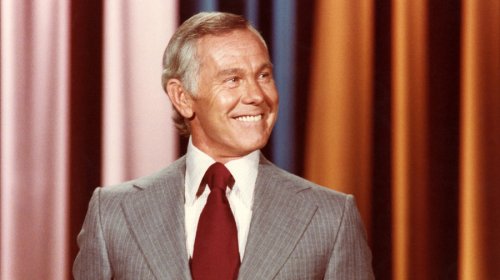
The guest panel is often a parade of the semi-recently deceased. I look down the couch, thinking “dead…dead…ooh, still alive…dead…” And I can do that because the guests actually stuck around after their segment, they just moved down to make room for the next guest. If they had to leave early, it was remarked upon as out of the ordinary, and they were ceremoniously ushered off. Conan O’Brien tried to keep this tradition alive until relatively recently, but it hasn’t stuck. No celebrity wants to sit outside of the spotlight and just listen politely. Or, more likely, no celebrity’s publicist wants them to do that.

Then as now, guests were on the show to plug a movie or TV show, and I like to use Wikipedia as a time machine to see the fate of that project in a weird form of internet schadenfreude. “Hmmm…looks like Dead Heat didn’t work out for you, Joe Piscopo. In fact, nothing ever will again. Suzanne Pleschette, you seem really excited about that new TV series. Oh, cancelled after six episodes? Sorry, dear.” Sometimes I don’t need Wikipedia. “Hey, O.J., guess what you’re going to do in about ten years?”

Even though Johnny Carson supposedly pefected the late night talk show format (based on a template sketched out by Steve Allen — current events monologue followed by a comedy bit at the desk, celebrity guests, maybe an interesting or odd civilian guest, closing with a stand-up comedian or musical guest), what strikes me is how late in Johnny’s run that format hardened into tradition, and how much late night talk shows have changed even from that point. Modern late night shows are first and foremost comedy shows, are very high-energy, and move at a pretty fast clip. Unless it’s a mega-star like George Clooney, a guest gets one segment between commercials. And if the guest or host doesn’t get a laugh every thirty seconds (at least), the show feels dead.

johnnycarson_wide-ccb834aaba4918dfd1eb5f25d612ad836fbe00e6-s900-c85

Johnny’s version of the show, at least until its last few seasons, was a genuine talk show, or “chat show” as the Brits accurately call it. Guests just…talked. They weren’t coached by the writing staff, or spoon-fed laugh lines. They would ramble through a lengthy anecdote with minimal payoff. It was often so quiet you could hear an occasional cough from a studio audience member. The post-monlogue desk bit flopped as often as it scored. (You can sometimes see Johnny completely lose interest partway through as the audience sits in what sounds to modern ears like very awkward silence.) Believe it or not, it was actually kind of great — real and relaxed. It was assumed most viewers were winding down and preparing to go to sleep, and none of the content was designed to be viewed in frenetic three-minute clips on the internet the next day. Smoke from Johnny’s under-the-desk cigarette would often drift lazily into the picture as the camera focused on McLean Stevenson talking about his socks for eight minutes. (If it was a 70s episode, both Johnny and the guests would openly puff away. An ashtray was always on the table in front of the guest couch.) Carson bent over backward to make his guest funny or interesting if they weren’t pulling it off for themselves. Amy Irving was a fairly frequent guest. She was (and is) a brilliant actress, and I’m sure she’s a gracious human being, but it was like interviewing a dead carp — you can see Johnny working. (Charles Nelson Reilly, on the other hand, I’ll sometimes rewind and watch twice.) Continue reading

1 Comment

Filed under Film & TV, Pop Culture

“Finest Kind” — The Holy Bee’s Martini Recipe

“The martini felt cool and clean…I had never tasted anything so cool and clean. They made me feel civilized.”  — Ernest Hemingway, A Farewell to Arms

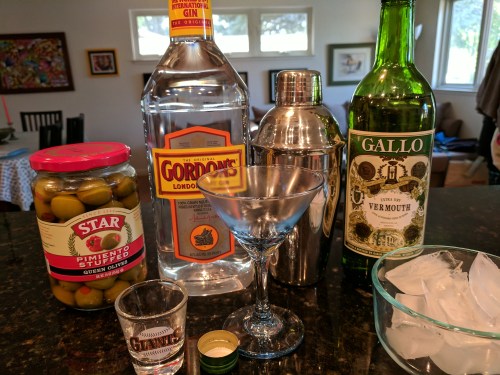
A couple of years back, I posted a recipe for my absolute favorite cocktail: the (double) old-fashioned. That is my drink for the end of the evening, my nightcap, the libation that sends the Holy Bee off to dreamland. But what about the opposite end of the evening? My just-getting-home, pre-dinner, five o’clock opener to cocktail hour is often the martini, which is soon celebrating its own day — National Martini Day on June 19th.

As long as there are bar snobs, there will be arguments over how to make a proper martini. Brand of gin, amount of vermouth, use of the shaker, garnishes, and just about any other finicky minutiae can be endlessly debated regarding this very simple beverage by the type of people who like to debate about that sort of thing. I’m not presenting this version as the “correct” way, only as my way.

My only hard, fast rule is that martinis are made with gin. I’m happy to sample any other variation, as long as that baseline is adhered to. 

IMG_20180413_164335

The original martini recipe from the 1800s may make a modern-day martini drinker gag, using sweet vermouth in a staggering 50-50 ratio with gin. A little later, sweet and dry vermouth were used in equal measure. According to my battered 1977 copy of Jones’ Bar Guide, sweet vermouth was considered an integral part of the martini until the 1930s, when it started becoming some kind of weird pissing contest about how “dry” you preferred it. A dry martini once referred to one made with dry vermouth to the exclusion of sweet. It later became code for a microscopic amount of dry vermouth. Even to the point of not including it at all — everyone’s heard of silly rituals like waving a vermouth bottle over the martini shaker, or bowing in the direction of Turin, Italy, where vermouth originated. All very amusing, but the result is simply a glass of cold gin, which is fine, but don’t call it a martini. 

Though when it comes down to it, I do like my martinis pretty dry, just because it’s what I’m used to, I suppose.

Gin at its essence is a clear, neutral spirit — basically, vodka. Unlike vodka, it gets a distinctive flavor from an infusion of juniper berries, and a variety of other aromatics proprietary to the individual gin manufacturers. (“Gin” is a shortened, Anglicized version of the Latin word for “juniper.”) Originating in Holland, gin jumped across the North Sea and became immensely popular in England. A little too popular, in fact. In 17th and 18th century England, gin was the drink of the lowest of the low classes, sold at a penny a mug in any of the almost 8,000 “gin houses” in London alone. Though it was called gin, by the end of the so-called “gin craze,” what was often consumed was nothing more than crude, sweetened grain alcohol. Referred to as “a mother’s ruin,” it was considered a massive social problem. The Gin Act of 1751 shut down a lot of cheap distilleries that couldn’t pay the exorbitant new tax. That and the development of more refined distillation methods (such as the column still) caused gin to be once again acceptable to classier folks. Cleanly-made, unsweetened “London dry gin,” the preferred variety for martinis, was born. In addition to juniper, the most common aromatics infused into London dry gin are citrus peel, coriander seeds, angelica root, orris root, and liquorice.

Vermouth is a fortified wine. Most dry French vermouths originate as a low-alcohol white wine, which is aged for awhile, then “fortified” with an additional infusion of a neutral grape spirit and aromatics. Originally used medicinally, vermouth became a popular aperitif, then, beginning in the mid-1800s, a widely-used ingredient in cocktails where it added flavor and character. The word derives from a French pronunciation of the German term for “wormwood.” Martini & Rossi and Gallo are the two most commonly found brands, and won’t hit you in the wallet like some of the fancier types. Since we’re working dry, we’re dealing with tiny amounts of the stuff, and it won’t make much difference. If you do invest in pricier vermouths, by all means treat yourself and up the amount you include in your martini by a considerable amount, for a more historically accurate take on the cocktail. And keep your nice vermouth refrigerated once you open the bottle. (The preference for super-dry may have stemmed from old vermouth gone a little off.)

Additionally, you don’t need really expensive gin to make a good martini, though if that sort of thing is important to you, knock yourself out. I can’t really taste the difference when it comes to clear spirits. (Except for Gran Legacy, the bottom-shelf gin carried by CVS drugstores, which tastes like the contents of a vacuum cleaner bag. I literally spit it out on the first sip, and poured the rest of the handle down the drain. That’s $8.99 I won’t get back.) A good middle-shelf London dry variety, like Beefeater or Gordon’s, will do the trick nicely. I’m using Gordon’s in these photos just because it was James Bond’s and Ernest Hemingway’s preferred brand, and the brand good old Charlie Allnut guzzled by the crate in The African Queen. So by God, it ought to good enough for the likes of you and me.

I used to make giant martinis in oversized glasses, until I was talked out of it by my brother-in-law (who is also a master of the rye Manhattan). He held up a 4-ounce martini glass and declared it the way to go.

IMG_20180413_165036

A 4-oz. martini glass, with some dice and chips for scale

“That’s tiny!” I objected. “I’ll finish that in twenty minutes.”

“So then you make another. That’s why they’re small. And that way they stay cold.”

I saw the light, shamefully remembering myself slopping around with a half-finished, hour-old, room temperature martini in a big glass. Never again. A warm martini should not be tolerated by anyone. Continue reading

1 Comment

Filed under Life & Other Distractions

15 Flaws in the Star Wars Saga or, The Holy Bee Finally Feels Like Part of the Internet

the-last-jedi-theatrical-blog

Since it’s Star Wars Day (May the 4th be with you!), and The Last Jedi has recently become available for home viewing, and Solo: A Star Wars Story will be hitting screens in a few weeks, I figured the time is right to go through a long-delayed rite of interweb passage. I’m finally making some time to take pot-shots at good ol’ Star Wars! Even if it’s way too late, why not take a dip in the almost-empty pool already clouded up by a million nerds’ sebaceous discharge and medicated eczema cream?

I have touched on the events from a long time ago in a galaxy far, far away a few times on this website, but in case I haven’t made it absolutely clear, I am a hardcore, lifelong Star Wars fan. The first one I saw was The Empire Strikes Back at age five in the summer of 1980. In those pre-home video days, hugely popular movies were often re-released back into theaters. So even though, at two, I was too young to remember seeing the original Star Wars in 1977, I got to see it on the big screen, twice, during its 1982 re-release. Then I watched the original trilogy conclude with a crushing defeat for the evil Empire in 1983’s Return of the Jedi. Yub nub!

…then we all grew up and moved on for awhile. Star Wars went into a lengthy hibernation, except for the development of a Star Wars role-playing game by West End Games (giving names and backstories to several minor on-screen characters) in the mid-1980s, which was the seed that grew into the “Expanded Universe.”

…then the EU really took off with a trilogy of novels by Timothy Zahn starting in 1991, continuing the story beyond Return of the Jedi. They were…pretty ok. Further novels in the EU were not-so-much ok. 

…then came the prequel films from 1999 to 2005. They have their latter-day defenders, but the general consensus is that the prequels were underwhelming. Like most of us, I found Revenge of the Sith a worthy entry in the overall series. The Phantom Menace had a plethora of problems, but retained an earnest likeability at its core. Much of Attack of the Clones, though, was downright dire, full of cringey sequences (see below) and dialogue that was bad even by prequel standards.

…then Disney bought the entire Star Wars franchise outright in 2012, wiped most of the EU from the canon (the correct move), and began the post-ROTJ stroyline anew. I was totally on board. Despite its obvious “fan service” (which I don’t think is automatically a bad thing — yes, I’m a fan and, shucks, I don’t mind being “serviced” now and then) and repeating some story beats from A New Hope, I thought J.J. Abrams did a fine job crafting the opening salvo of a new trilogy for a new generation with Star Wars: The Force Awakens. And I was already an admirer of the next installment’s writer-director, Rian Johnson. I talked up his 2005 indie debut, Brick, to anyone who would listen, and his time-travelling crime drama Looper was one of the best films of 2012.

So when I put on my 3D glasses settled into my seat at the IMAX theater to see Johnson’s Star Wars: The Last Jedi on the pre-opening night of Thursday, December 14, 2017, I was vibrating with anticipation…and I was duly blown away. I found tears running down my cheeks two or three times. It was a dark, complex, very grown-up episode of the saga, full of angst, desperation, and characters making snap judgements and hasty mistakes. I was moved in a way that few films moved me. A little overlong? Yes, the editor’s scissors could have made an extra snip here and there, especially in Canto Bight. That was my main quibble (there was a secondary one, see #14 below…)

I had avoided all spoilers in the weeks before I saw the film, so the next morning I was excited to go online and plunge into the fan reviews and discussions. To my shock, when I made my first stop on the good ol’ Star Wars subreddit, I saw a tidal wave of…negativity. Howls of outrage, even. Other websites with active discussion forums were in a similar state. It seemed that everyone in internet-land hated it.

Whaa…? Did I (and every professional film critic, who all praised it to the skies) see a different movie? “Bombs can’t fall in zero gravity” and other whiny horseshit was being hollered by pedantic dweebs as they flung themselves on their racecar beds in despair. (Sound doesn’t travel in space either, but everyone wants to hear those engines, lasers, and explosions, don’t they? Yes, you too, Neckbeard. Remember, it’s a fantasy.)

Many of the complaints seemed to be along the lines of it didn’t “feel like” a Star Wars movie. “It’s too different” these guys pouted, and I’ll bet you a frosty mug of blue milk a lot of them were the same chinless wonders who bitched that The Force Awakens was “too much of the same.” Also, everyone seemed want Snoke to have some kind of awesome backstory, and everyone wanted Rey’s parents to be some kind of noteworthy figures. Well, guess what? Fuck ‘em, says The Last Jedi. None of that turns out to be important to the story as it barrells forward. Despite the (admittedly handy) existence of Wookieepdia, not every character needs an elaborate backstory, and not every character has to have family ties with other characters. (I suppose Kylo could be lying about Rey’s kin, but I hope not.) [2019 Ed. Note — He totally was.] The Star Wars galaxy is a little too small as it is. And they hated Rose, mostly for stopping Finn’s self-sacrifice. I sort of see their point, but a Star Wars “good guy/girl” can’t be selfish, short-sighted and a little dense? They all have to be noble heroes? How. Fucking. Boring. (A portion of the other Rose hatred came from blatant racist and misogynist incels who are a stain on Star Wars fandom.)

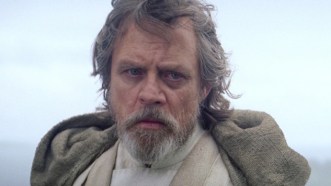
The other major source of pissing and moaning was the characterization of Luke Skywalker, which I thoughtLuke Skywalker Last Jedi via Lucasfilm Header was the film’s masterstroke. In The Last Jedi, Luke has become a Yoda figure — a wild-eyed, disillusioned hermit, who believes to the core of his being that he is a catastrophic failure (echoing Yoda’s Revenge of the Sith line “into exile, I must go” after failing to stop the Emperor). This was a nice piece of work by Johnson, and performed beautifully by Mark Hamill (who was snubbed by the Oscars in the Supporting Actor category, if you ask me.) But evidently, Luke wasn’t enough like the old “Expanded Universe Luke” for some naysayers, clutching their pearls in high dudgeon. Based on the decent-sized amount I’ve read myself back in the day, a good chunk of the original EU was uninspired, juvenile, color-by-numbers garbage. Seriously, I’ve never read anything as badly written as some of that shit. I don’t care what the upcoming stand-alone Han Solo movie does, it will never be as clunky and stilted as Ann C. Crispin’s version of the Solo origin story. [2019 Ed. Note — I was right. I like Solo more each time I watch it.] I loved the fact that The Force Awakens had Han return to his roots as a shady, second-rate smuggler and made Leia a boots-on-the-ground Resistance general. The EU’s choice? Make them a boring old married couple dealing with the bureaucracy of the “New Republic.” And the EU’s Luke Skywalker was a noble but dull plaster saint. That’s what people wanted? Again, How. Fucking. Boring. 
After a half-hour of wading through these complaints, I actually unsubscribed from the Star Wars subreddit in a fit of disgust, and thought dark thoughts about perpetually butt-hurt fanboys who were disappointed that The Last Jedi wasn’t the movie they had “written for themselves in their heads” (to quote my very perceptive wife, who also loved the film, along with all of my friends and anyone whose opinion I respect.) Continue reading

Leave a comment

Filed under Film & TV

The Holy Bee Recommends, #18: Monty Python’s The Meaning of Life

“It took God six days to create the Heavens and the Earth, and Monty Python ninety minutes to screw it up.” — Original film poster tagline.

SPOILER ALERT: The meaning of life, according to Monty Python, will be revealed in this blog entry.

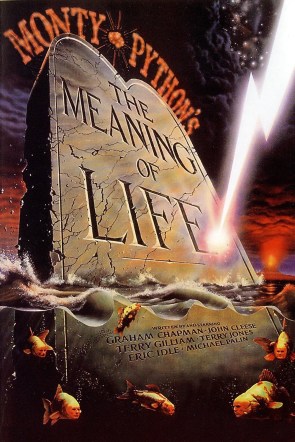
monty-python-the-meaning-of-life-posterHere at Holy Bee World Headquarters (i.e., the second-hand desk in my converted garage), I generally try to use my “Recommends” feature to champion something that may be existing in relative obscurity, but just as often I will use it to highlight something in popular culture that is definitely on the radar, but doesn’t get the respect it may deserve.

Britain’s Monty Python comedy team (John Cleese, Eric Idle, Terry Jones, Michael Palin, the late Graham Chapman, and American animator Terry Gilliam) certainly isn’t obscure. But while every nerd over 40 in America can quote 1975’s Monty Python and the Holy Grail at length, and the Brits have taken 1979’s Monty Python’s Life of Brian to their collective bosom, The Meaning of Life, a collection of sketches (sort of) exploring the purpose of existence, is treated as something of an also-ran…even though a mention of any of its scenes will elicit a chuckle and a quote from any Python fan (“wah-fer thin mint” is a common favorite), just like all the other of the team’s productions. 

A few of the Pythons themselves are somewhat dismissive of the 1983 film that would prove the swan-song for the full six-member group. “We started work on it before any of us deep-down wanted to,” said John Cleese, who ended up the most frustrated with the project. “It wasn’t all bad, just aimless.” Even Terry Jones, the film’s champion, admitted the writing process was labored. “It was getting increasingly hard to get [the six of us] together, and it showed.”

So, what prompted the Holy Bee to take up the cause of everyone’s least favorite Python monty-python-dvdfilm?

While cleaning and organizing a musty bookcase in the aforementioned World Headquarters, I came across a forgotten DVD still in the shrink-wrap — Monty Python Live (Mostly): One Down, Five To Go, which documented their July 2014 reunion stage show at London’s O2 arena. (The title is a reference to Graham Chapman’s 1989 death.) Reunion rumors had swirled around the group for three decades, but the reason that finally forced the five remaining members on to the stage one final time was pretty prosaic — they needed the money. (Holy Grail producer Mark Forstater successfully sued the group for almost a million pounds in royalties on Spamalot, Idle’s Broadway musical based on the film.) I cracked open the DVD and found myself enjoying the reunion show quite a bit — several “greatest hits” sketches that everyone knows, and a few deep cuts for hardcore fanatics, performed with all the energy a group of men in their seventies could muster (at least two of them with artificial hips). The whole thing was presented as a gala stage extrvaganza, with massive production numbers backed by a full team of dancers and an orchestra. The team swapped some roles around and divided up Chapman’s parts among themselves (all six very rarely appeared in sketches at the same time anyway), and pulled off an overlong and slightly overbaked semi-reunion that was still a lot of fun.

Then…it struck me that it was now, for all intents and purposes, two down, four to go. The O2 shows were Terry Jones’ final performances. All throughout the rehearsals and the series of ten performances, Jones struggled with remembering his lines, even in material he had performed hundreds of times. (The others, with their usual sensitivity, referred to anyone forgetting their lines as “pulling a Terry.”) The following year, he was diagnosed with primary progressive aphasia, a form of dementia. Unlike Alzheimer’s, PPA does not affect orientation or cognition, but it has a devastating effect on the ability to communicate. As of this writing, Jones, 76, is still living comfortably, but cannot write and cannot speak beyond a few garbled words. [EDIT: Jones passed away Jan. 2020.]

Watching their reunion show, and thinking sadly of Terry Jones’ illness and retirement, I decided to binge watch the three original Python films — all of them directed by Jones. (Holy Grail was co-directed with Gilliam.) 

(Their “official” filmography consists of five movies but their first, 1971’s And Now For Something Completely Different, consists of re-filmed sketches from their late 60s – early 70s BBC-TV series and shouldn’t really count. And Monty Python Live at the Hollywood Bowl, a videotaped record of their 1980 live show, was intended to be shown on HBO or Showtime. It was instead transferred to film and placed in very limited theatrical release — against the team’s wishes — in 1982.)

gal-school-monty-pythons-the-meaning-of-life-cast-jpg

Grail and Brian came off as the unimpeachable classics they are, but I was struck this time by how well-done The Meaning of Life was. It looks great. Jones’ directorial eye has a good sense of color, the overall production design really pops, and he stages the musical sequences as well as any traditional musical director. The humor of Life has a reputation for being patchy, but here’s the claim on which I’m basing this entire blog entry — I’d put the first half (45 minutes or so) of The Meaning of Life up against anything they ever produced and it would come out equal — in terms of wicked satire, plain belly laughs, and the aforementioned visual sophistication, which Python realized was important for a feature film, even if it was just a collection of rather silly sketches. 

In the group’s eyes, the film’s nagging flaw was that it never found an organizing theme until the very end of the scripting process, denying it the opportunity for a final polish. They had just been writing random sketches, hoping to eventually concoct a framework on which to hang them. Grail and Brian had been narrative films, with a story that consistently followed the main character(s) from beginning to end. After those experiences, Jones in particular wanted to try a sketch film, mostly for the challenge. “[Cleese] had this theory that you can’t make a sketch film over fifty minutes,” Jones stated. “I always said ‘I’m sure we can do a sketch film and make it work,’ just to show we can.” By the time they came up with the “meaning of life” concept, they were up against deadlines. “I think it would have been perfect if had we given it one extra draft,” said Eric Idle. “We just sort of stuck in references to the meaning of life wherever we could.”  Continue reading

2 Comments

Filed under Film & TV, The Holy Bee Recommends

“It’s Not the Years, It’s the Mileage”: An Indiana Jones Chronology, Part 6 — The Final Years and Appendices

August 1957 — Indy and his former WWII intelligence partner George “Mac” McHale head for one of Indy’s favorite places to do archaeology work — the central coast of the Yucatan Peninsula. They spend several weeks exploring Mayan ruins and gathering artifacts.[1]

August 30, 1957 — Indy and Mac are abducted by Soviet KGB agents in southern Mexico. The abduction team is headed by Dr. Irina Spalko, a Ukrainian scientist and specialist in psychic research.[1]

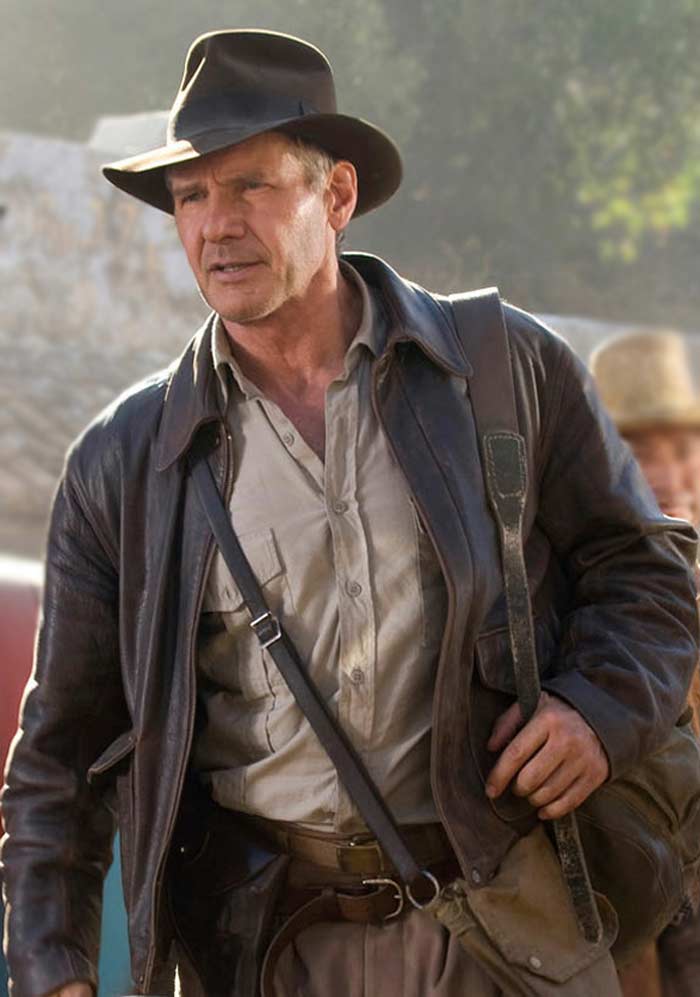
Harrison-Ford-Jacket-Indiana-Jones__24967_zoom

Indiana Jones, 1957

August 31, 1957 — After almost two days of travel (part of which was spent locked in the trunk of a car), Indy and Mac arrive with their Soviet captors at the U.S. Air Force’s Nevada Test and Training Range, better known as “Area 51.” The Soviets infiltrate the base, and knowing Indy was on the analytic team that worked on the Roswell UFO crash, force him to locate the case containing the heavily-magnetized mummified alien body. Mac suddenly reveals that gambling debts have forced him to work for the Soviets. As Indy manages his escape, Spalko and Mac make off with the alien remains. (In eluding his Russian pursuers, Indy inadvertently cracks open the crate containing the Ark of the Covenant.) Indy gets clear of the area on a rocket sled, which blasts him for several miles down a track at fantastic speed, causing him to pass out from the g-forces.[2]

September 1, 1957 — Indy is lost and disoriented, wandering through the Nevada desert. He comes upon a town that is mysteriously deserted. It turns out to be a model town designed to test the results of an atomic explosion — which is about to be detonated. Indy seeks shelter in a lead-lined refrigerator in one of the model homes. He survives the blast, and is apprehended by the FBI, who decontaminate him and subject him to a hostile interrogation regarding his “assistance” to the KGB. He is released on the orders of General Robert Ross, who knows Indy from his OSS days in World War II, and assures the FBI he is not working with the KGB. The FBI warns Indy he is now a “person of interest.”[2]

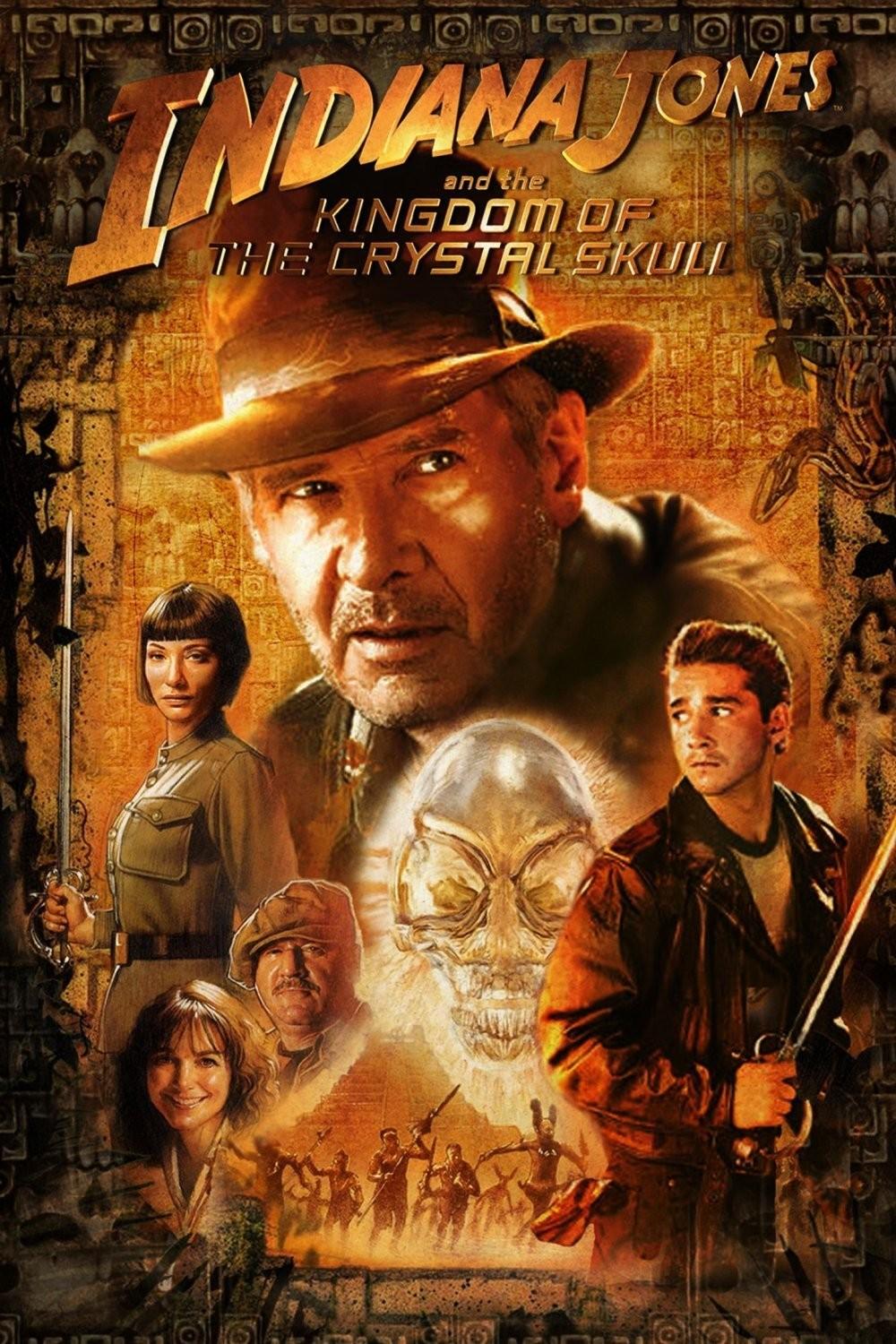
indiana_jones_y_el_reino_de_la_calavera_de_cristal_2008_4

September 20, 1957 — Indy is back at his teaching position three weeks after the incident in Nevada[1]. The Dean of Students, Charles Stanforth, pulls Indy from his classroom and says the FBI came in with search warrants and went through his office. The Board of Regents instructs Stanforth to place Indy on “indefinite leave,” essentially firing him. Stanforth resigns in protest. Not wasting time, Indy plans on leaving the country that very day, taking the train to New York and getting an overnight flight to London, and from there possibly to Leipzig University in Germany where he is “owed a favor.” As his train pulls out of the station, he is convinced to hop off by a young leather-jacketed motorcyclist, Mutt Williams. At the local diner, Mutt tells Indy that Indy’s old friend Harold Oxley had found a crystal skull in Peru, suffered a mental breakdown, and was later kidnapped. Indy relates that crystal skulls are associated with the lost city of Akator. Mutt gives Indy a letter from his mother, who was another friend of Oxley’s…and is now a fellow prisoner. (Oxley had looked after and Mutt and his mother after her husband was killed in World War II.) The letter says Indy is the only one who can help her and Oxley, and contains a riddle written by Oxley in an ancient South American language. At this point, KGB agents attempt to capture them, but Indy and Mutt evade them on a motorcycle. [2]

September 21-23, 1957 — Indy and Mutt travel to Cusco, Peru, by way of Havana and Mexico City. [2]

September 25, 1957 — After some time trying to pick up Oxley’s trail in Cusco, Indy and Mutt find out he has recently stayed in the local psychiatric hospital. Oxley’s scribbles on the walls and floor of his cell lead them to the grave of Francisco de Orellana, a 16th century conquistador who has searched for Akator. They discover the skull at the grave, with Indy reasoning that Oxley had returned it there after failing to get it back to Akator. [2]

September 26, 1957 — As the sun rises over the Peruvian graveyard, Indy and Mutt are captured by Mac and a group of Soviets. They are taken by air and river to the KGB camp deep in the Amazon jungle late that night, where they find Oxley, and Mutt’s mother, who turns out to be Marion Ravenwood. Dr. Spalko believes that the crystal skull belongs to an alien life form and holds great psychic power, and that finding more skulls in Akator will grant the Soviets the advantage of psychic warfare. Spalko uses the skull on Jones to enable him to understand Oxley’s ravings and identify a route to the lost city. Indy, Mutt, Marion, and Oxley escape with the skull, but Marion and Indy get trapped in a dry sandpit, and are recaptured by the Soviets. In the midst of all this, Marion reveals that Mutt is actually Indy’s son — born Henry Jones III, later becoming Henry Williams after her marriage to Colin Williams.[2]

September 27, 1957 —  On their way to Akator, Mac tells Indy he is a CIA double-agent to regain Indy’s trust, and Indy’s group once again fights its way out of the Soviet captivity. Indy and company survive three waterfalls in an amphibious vehicle, while many of the Soviets fall from a cliff while trying to pursue them. Mac had lied about being a double-agent and has been dropping transceivers to allow the surviving Soviets to track them. The adventurers gain access to the temple, and find it filled with artifacts from many ancient civilizations, identifying the aliens as extra-dimensional “archaeologists” studying the different cultures of Earth. They find and enter a chamber containing the crystal skeletons of thirteen alien beings, one missing its skull. Spalko arrives and presents the skull to its skeleton, whereupon the aliens reanimate and telepathically offer a reward in ancient Mayan through Oxley. A portal to their dimension becomes activated, and Spalko demands knowledge equal to the aliens’. The thirteen beings fuse into one, and in the process of receiving the overwhelming knowledge, Spalko is disintegrated and sucked into the portal. [2]

September 28, 1957– Indy, Marion, Mutt, and Oxley — who regained his sanity once the skull was replaced — escape, while the remaining Soviets are also drawn into the portal. Mac is caught in the vortex while trying to scrounge some of the treasure, and even though Indy offers him his whip to pull him to safety, he willingly lets go and is sucked in. Indy and the others escape and watch as the temple walls crumble, revealing a flying saucer rising from the debris and vanishing, while the hollow in the valley floor left by its departure is flooded by the waters of the Amazon. [2]

Early October, 1957 — Indy is reinstated at the college, and promoted to associate dean. Charles Stanforth withdraws his resignation. [2]

October 18, 1957 — Indiana Jones marries Marion Ravenwood at the college chapel.[2]

Cheesy-Movie-Lines-Indiana-Jones-Kingdom-Crystal-Skull-600x300
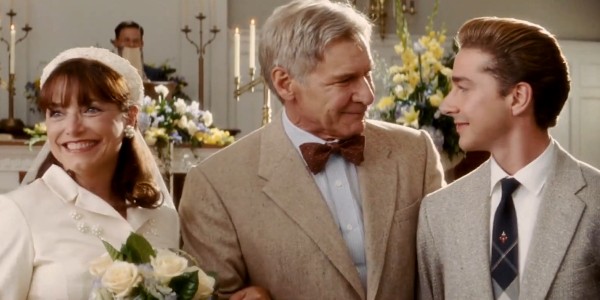
The wedding of Indiana Jones and Marion Ravenwood, October 1957

Late 1957 – ? A return to a quieter life, but we’ve been promised one more adventure…

THIS SPACE WILL BE UPDATED WITH THE EVENTS OF INDIANA JONES AND THE DIAL OF DESTINY IN THE NEAR FUTURE

(I’ve seen it in the theater, but will need to re-watch it a few times to nail the chronological details, so expect an update not longer after its debut on home media.)

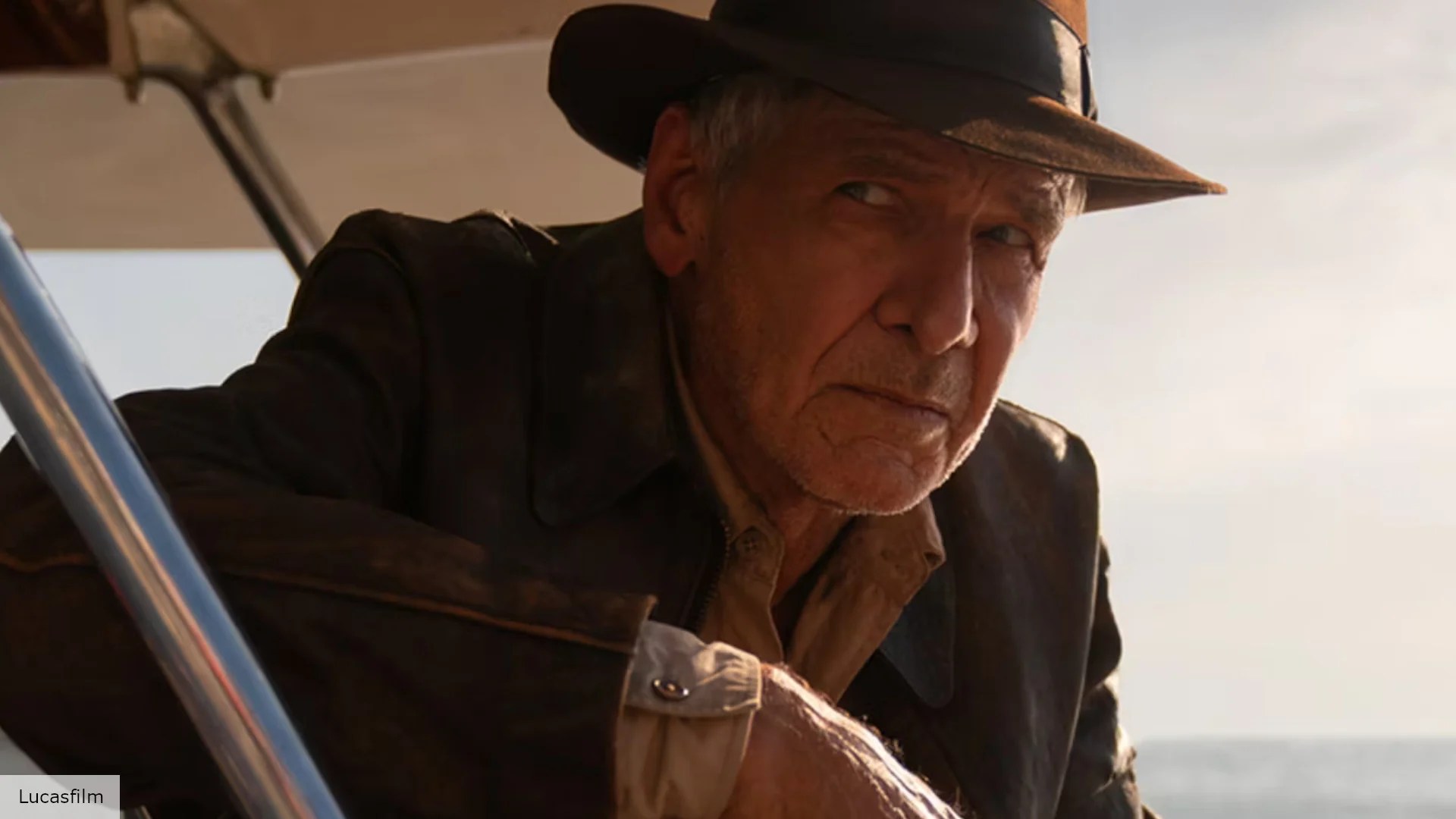
Indiana Jones, 1969

APPENDIX A: Indiana Jones — Archaeologist

What are some details about how Dr. Jones practiced his trade?

Indy’s archaeological specialty is epigraphy — the study of written inscriptions and engravings.

The titles of any archaeological books or papers he has written over the course of his career are unknown, but he did write his memoirs at some point.[3] It seems he did not receive tenure until the early 1950s, probably as a result of his frequent absences from campus — which are grudgingly overlooked due to the amount of grant money and donors his notoriety brings to Barnett College[4] (and the fact that his classes are often covered by the capable and popular Marcus Brody.)

He speaks around thirty languages, including Spanish, French, German, Italian, Latin, Greek (modern and ancient), Anglo-Saxon, Swedish, Russian, Hungarian, Turkish, Hebrew, Arabic, Hindi, and several Meso- and South American native dialects (excluding Hovito, of course.) His Chinese and Vietnamese are basic but serviceable, but he only knows a few phrases in Japanese. He can read Sanskrit and most Egyptian hieroglyphs, and can use American Sign Language. Welsh and Icelandic have totally eluded him.

His expertise covers a wide range of historical eras and geographic regions, but his focus tends to be on the pre-Columbian societies of the American southwest, Mayan and pre-Mayan cultures of Mesoamerica, and the Inca and related tribes of South America. He is also quite knowledgeable about ancient Greece, the ancient Near East (including Egypt), and the Indian subcontinent. His heart really wasn’t in his first teaching position — Celtic archaeology in the British Isles — but he came to appreciate it. His interest can be piqued by compelling stories and artifacts from the Nordic regions or the Far East, but those areas seem to be secondary.

Continue reading

Leave a comment

Filed under Film & TV

“It’s Not the Years, It’s the Mileage”: An Indiana Jones Chronology, Part 5 — The Later Adventures

Remarks in italics are not taken from explicitly-stated events in the canon material. They are my own speculations, logical inferences, gap-fillers, and extrapolations based on fragmentary references and passing mentions in the original sources.

July 1938 — Henry Jones III is born to Marion Ravenwood, unknown to Indy.[1]

November 1938 — Marion Ravenwood becomes involved with RAF pilot Colin Williams, who had been introduced to her by Indy the previous year. They marry soon, and Williams adopts the infant Henry Jones III. Perhaps thinking of his recent reconciliation with his father, Indy writes Marion a letter around this time, but it goes unanswered.[2]

914E-0IvZgL._SL1500_

Spring 1939 — After discovering an ancient ram’s head idol in Sudan, Indy encounters a group of Nazis, and is forced to give up the Idol, but makes an escape when he distracts their leader, fellow archaeologist Magnus Voller. Indy chases down a departing plane and boards it. Upon his return to the U.S., Indy receives a letter informing him that his former college professor, Charles Kingston, has disappeared. When Indy heads to San Francisco to discuss the matter with the letter’s sender, Archie Tan, he discovers that Tan has been kidnapped. Indy’s investigation into the disappearances leads him to the discovery of another artifact, the Jade Sphere. The Nazi agents (led by Voller) holding Tan demand the Sphere in exchange for Tan’s return. Indy agrees, but after Indy and Tan flee the situation, Voller discovers Indy had substituted a worthless figurine for the Sphere. Kingston had left the Sphere as a clue intended to guide Indy back to where Kingston had first discovered it — Panama. In Panama, Indy is joined by Irish photographer Maggie O’Malley, and the pair are attacked by Voller’s native mercenaries. Indy fights them off, saving a local village in the process. The villagers give him access to nearby Mayan pyramid, where Indy discovers Kingston’s journal. The journal reveals details regarding the location of the Staff of Moses. (Indy had already discovered the companion Staff of Aaron in a previous adventure five years earlier.) Obtaining further clues on a flying visit to Istanbul, Indy finally finds Kingston and the Staff in Nepal. They are ambushed by the pursuing Nazis, who abscond with Maggie (who is actually a British Intelligence agent) and Kingston on their zeppelin, the Odin. Indy is able to rescue Maggie, but Kingston is fatally shot. In a final confrontation with Voller, Indy and Maggie use the Staff to clear a path through the Red Sea, and then cause the waters to inundate the German archaeologist. The ultimate fate of the Staff is unknown.[3]

For unknown reasons, Indy is living in the faculty quarters of Barnett College around this time, rather than his own home. [4,5]

71G8tIc35bL._SX342_

May 6, 1939 — Indy is approached at Barnett College by a mysterious stranger about a small key-like artifact. Indy recognizes its distinctive engraved pattern, and matches it to another artifact, a small horned idol, that the college had in storage from the 1929 Jastro Expedition in Iceland (see earlier entry). The key opens the artifact and reveals a small bead-like object. The mysterious stranger, who turns out to be SS Col. Klaus Kerner, attempts to take the gem, and in his failure to do so, leaves behind a clue leading Indy to Sophia Hapgood, a former archaeological colleague who now makes a living as a “psychic” and fortune teller, supposedly drawing her power from her collection of “Atlantean” artifacts.[5]

May 7, 1939 — While Indy is visiting with Sophia Hapgood, the apartment is raided by Kerner and his men, who make off with any artifact bearing the engraved pattern, including the idol from Barnett (but missing one worn as a necklace by Sophie), and badly wounding Indy (the fourth gunshot wound of his career by my count — his shoulder/upper arm areas on both sides must be remarkably resilient.).[5]

May 14, 1939 — Analysis by Nazi scientist Dr. Ubermann indicates the bead is a metal called orichalum, suposedly from Atlantis, and has the potential for being weaponized — a source of unlimited energy if found in sufficient quantities. While Indy is recuperating in the hospital, Sophie foils an assassination attempt on him by another Nazi agent.[5]

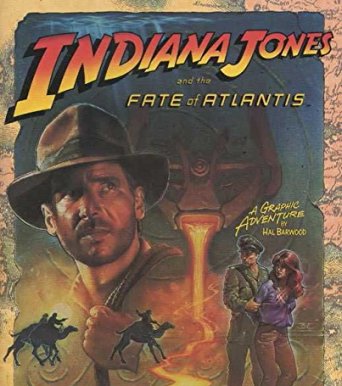
Late May 1939 — Out of the hospital, Indy decides to join Sophie on a trip to Iceland to investigate the Nazis’ interest in the artifacts. After discovering the frozen body of Thorskald, a fellow archaeologist clutching an idol identical to the one once in Indy’s possession, they decide to follow Dr. Jastro’s post-expedition route from Iceland to the Azores, where they find a stash of artifacts that Jastro had hidden for his private collection, including a a part of a keystone with the distinctive engraving. Following a lead in Thorskald’s notes, they end up in the Yucatan, investigating ruins that have engravings in Mayan…also in Egyptian, and an unknown script that is possibly Atlantean. A mutated skeleton in one of the crypts is wearing another engraved keystone, but this is stolen by their contact and guide, Charles Sternhart, along with their horses. Indy and Sophie make their way back to town on foot to discover an emergency cable from Brody. Brody has been investigating his own leads in Cardiz, Spain, and received a keystone from a Spanish Atlantis researcher. He arranges to meet Indy and Sophie in Leningrad to study a rare manuscript by Plato with clues to the existence and (former) location of Atlantis, only to have the manuscript stolen by Kerner. The only other copy of the manuscript known to exist…is at Barnett College.[5]

Early June 1939 — The manuscript leads them to Morocco, where local Berber diggers (supervised by the Ubermann and Kerner) are already digging for more clues and artifacts. Indy and Sophie make off with an important artifact (an “orichalum-finder”) and escape in a hydrogen balloon heading out over the Mediterranean Sea. They end up on Crete, and enter the labyrinth under Knossos, where they find Steinhart (killed by the Nazis he was working for) and collect the third and final keystone that will allow entrance into Atlantis. The information in the manuscript combined with Steinhart’s journal provide the exact underwater location of Atlantis. Indy dives down and enters the city buried under the seafloor using the three keystones. The Nazis, utilizing a U-boat and with a captive Sophie, are not far behind. Indy frees Sophie, and they use the orichalum finder to find the source of the powerful metal deep in the core of the ruined city. Sophie’s necklace begins giving her visions of the fate of Atlantis — they tried using orichalum to re-create their own living gods (“horned ones”), but it resulted in mutations and failure. Indy and Sophie are eventually captured by Ubermann and Kerner, both of whom attempt to use the Atlantean god-making device, and are both killed gruesomely by it. A series of undersea explosions destroy the remains of Atlantis for good. After their return, Sophie joins the faculty of Barnett College.[5]

IndianaJonesThunderInTheOrient1

Summer 1939 — Indy is assisting a French academy on a dig in the Libyan desert when he receives instructions (via Marcus Brody) to head immediately to Nepal. (His overly-loyal servant boy from Libya, Khamal, accompanies him as a stowaway.) There he meets up again with Sophie Hapgood, who has discovered scrolls that appear to be 500 years older than any known Buddhist scripture — and point the way to a divine revelation from the Buddha himself. The government of Nepal agree to fund an expedition to find the “Covenant of Buddha.” Joined by Dr. Patar Kali, Indy, Sophie, and Khamal head for Afghanistan to begin their search. Their train is attacked by Afghani bandits. Sophie is abducted and the scrolls stolen. The Afghan warlord finds Sophie too troublesome to keep, so she is offered as a prize in a multi-tribe horseback competition. A disguised Indy manages to win her, and they escape. They meet up with a small portion of their Nepalese security detail who survived the train ambush. They reveal that Japanese military intelligence is also in pursuit of the map, in the hopes of uniting Asia under their rule, and has placed a spy in the Nepalese expedition. Without the scrolls, both Indy’s team and the Japanese must rely on clues found at various Buddhist shrines, beginning with the Colossus of Bamian, the only major shrine between Afghanistan and the Far East. They beat the Japanese to the required clue (a hidden map) which leads them to an isolated city, Chanri-Ha, high in the Himalayas. After an initially hostile welcome, inhabitants (who practice a blend of Buddhism and primitive paganism) begin to revere young Khamal as their god Zan-Khan– a reincarnation of two “gods” who had conquered the city in earlier times — Alexander the Great and Genghis Khan. In the Chanri-Ha archives, they discover the next place to seek the Covenant — Szechuan, China. They flee the city when it is attacked by the bandit army of the female warlord known as the Serpent Lady. The Serpent Lady insists on accompanying Indy and his party to Szechuan, where she will use the Covenant for her own purposes. After eluding a Japanese ambush, and hijacking a train, they end up captured by a rival warlord, Ch’ao the Red, near where the Covenant is supposed to be hidden. After an air raid by the Japanese on Ch’ao’s camp, Indy and co. reach the final temple, only to be confronted by Japanese general Masashi Kyojo. After a brutal round of hand-to-hand combat, Indy finds the Covenant, only to have it disintegrate into ash.[6]

37437-5617-41944-1-indiana-jones-and-th

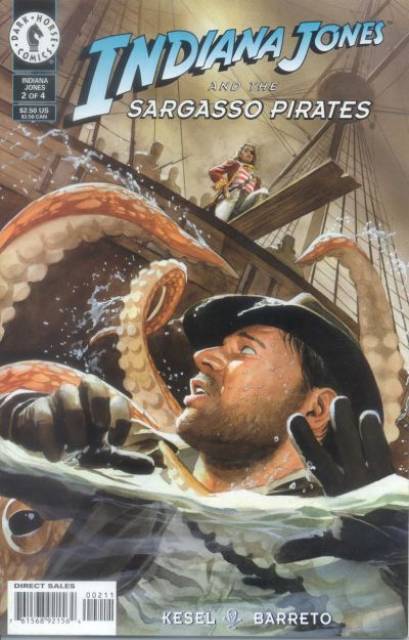
Fall 1939 — Indy has hired a salvage ship and its very unscrupulous crew to sail into the North Atlantic in search of a Viking shipwreck. After it is discovered lodged in an iceberg, a polar bear attack causes most of the crew to flee, leaving Indy and the salvage captain, Lawton, marooned on the drifting iceberg. Weeks pass. They are rescued by the French passenger liner Normandie. On board the ship, Indy discovers a conman has claimed to be his older brother, “New Jersey Jones,” and is selling phony artifacts to wealthy donors. Indy becomes intrigued by “New Jersey”’s female accomplice, Cairo, who has some kind of previous connection with Lawton. After an altercation, all four end up adrift in a Normandie lifeboat, which drifts into a portion of the North Atlantic known as the Sargasso Sea, known for its lack of wind and currents. They find a graveyard of old ships, some of them dating back centuries, trapped in the thick sargassum seaweed. They are captured by the residents of the ships’ graveyard, the Sargasso pirates, who take them to their flagship (the Freedom), and introduce them to the pirates’ leader, the Sea Witch. She allows them to stay after passing a dangerous trial — Indy must fight off a kraken. Indy is interested in investigating the Freedom’s treasure room, so he sends Cairo to distract the guards. This also gives Lawton the opportunity to assassinate the Sea Witch and take over the pirate crew. He pins the assassination on Indy. Indy is captured and sentenced to a “sweating,” a slow and torturous form of execution. He is spared when an oil lamp sets off a major fire, which destroys most of the floating city. Many of the pirates escape on the Freedom. Cairo has discovered the Sea Witch survived the assassination attempt, and they wait in the Sea Witch’s hideout until she sufficiently recovers. The Freedom gets quickly bogged down in the seaweed, but fortuitously discovers an abandoned U-boat. The U-boat chains itself to the treasure-laden Freedom and prepares to head out, but the Sea Witch reveals herself, and combat ensues. Thinking Indy, Cairo and the Sea Witch have been dealt with, Lawton steers the U-boat out of the Sargasso region, but the trio has managed to stow away on the Freedom. They are discovered and cut loose. The Sea Witch unfurls the sails and engages the sub in cannon vs. torpedo combat. The Freedom is sunk, but not before they get on the sub. The Sea Witch kills Lawton, and his mutinous crew is brought under control. Unfortunately, the treasure is lost.[7]

Late 1939 —  Indy is in Egypt, assisting a “rival” colleague, Dr. Dafoe, in deciphering clues that lead to the tomb of Egyptian pharaoh Azudab. The translated inscription states that the death mask of Azudab will reveal a path to the afterlife and all the treasures that follow. Indy’s father has joined them to help with the dig. The tomb is quickly found. In an attempt to cut Indy out of his share of the artifacts, Dafoe seals Indy and Henry in a small room within the tomb. Water from Henry’s dropped canteen leads them to an escape route — where they discover a dead Dafoe wearing the Azudab death mask, and leaving everything in the tomb to Jones.[8]

1940 —  Indy is searching for the Golden Jaguar flute in Bolivia. He talks to local native (and friend from some time before) Tuxa, a member of the Guarani tribe. Tuxa reveals that his village has fallen ill, but a crystal skull has been brought to the village by an outsider, “Jasy Kuna,” which has healed the village in exchange for valuable offerings. Indy exposes Kuna as a fake (she’s corrupt botanist Josie Kelland) that caused the illness by secretly poisoning the villagers. The “healing” was just the poison wearing off. The skull is worthless cut glass. Indy is given his choice of the offerings Kelland had planned on escaping with, and he chooses the Golden Jaguar flute.[9]

Later that year, Indy and his guide, a young boy named Bhakdi, arrive at a hidden temple in the Kamphaeng Province in Thailand. Indy had discovered the route to the temple’s interior in some old writings, and planned a full expedition. When he caught a college intern, Clifford, spying in his files, he decided to make the trip a year earlier than planned. Clifford has arrived before them, and plans on taking all the treasure and artifacts for himself. Bhakdi snatches Indy’s notes from Clifford’s hand, allowing Indy to overpower him. With his notes in hand, Indy leaves with Bhakdi, but Clifford has a copy, and attempts to enter the temple, but he still does not have enough expertise of information to avoid the temples traps.[10]

Colin Williams, Marion Ravenwood’s husband and young Henry’s adoptive father, is killed in combat.[2]

Continue reading

Leave a comment

Filed under Film & TV

“It’s Not the Years, It’s The Mileage”: An Indiana Jones Chronology, Part 4 — Fortune and Glory

Remarks in italics are not taken from explicitly-stated events in the canon material. They are my own speculations, logical inferences, gap-fillers, and extrapolations based on fragmentary references and passing mentions in the original sources.

1753e4502ef71d1decbe889c03e2a44d--bowties-funny-stuff

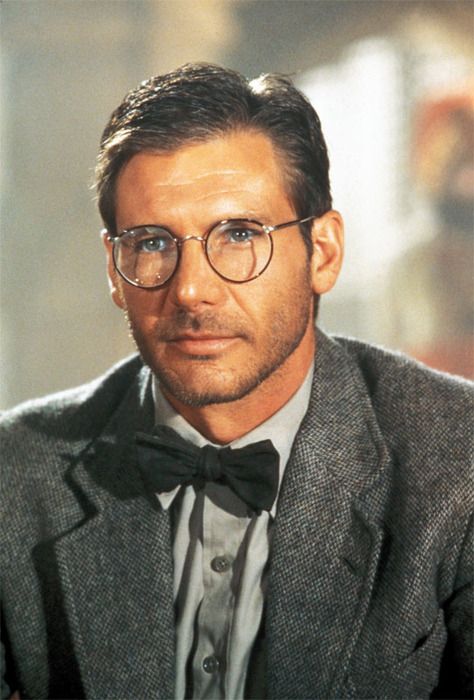
Professor Henry Jones, Jr. of Barnett College, NY.

1934 — Abner Ravenwood dies in Nepal.[1] Marcus Brody returns as curator of the National Museum after three years working for the American Museum of Natural History.

Late Summer 1934 — A large-scale excavation Indy had been organizing for the Rub al Khali desert in Saudi Arabia has to be abandoned because Rene Belloq got to the site first.[1]

Fall 1934 — Indy begins his first year of teaching at Barnett College, located in upstate New York, and closely associated with the National Museum. Marcus Brody sits on the college’s Board of Regents.

December 1934 — Indy is hired by Caspar Zzyzx to recover a treasure map in the South Pacific island chain known as the Marquesas Islands. The map is recovered with some difficulty, and Indy’s colleague Dr. Lopez is killed by headhunters.[2]

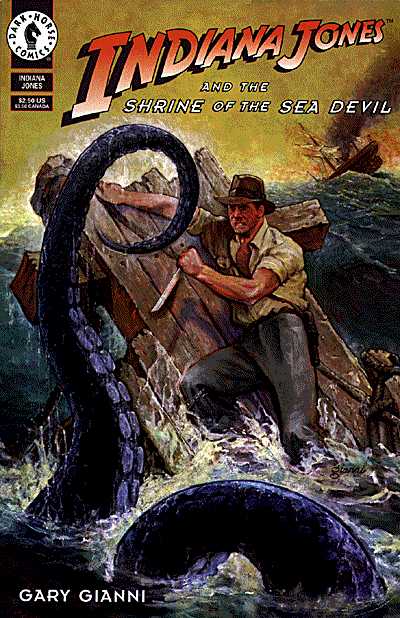
January 5, 1935 — Aboard their chartered ship, the Julie Anne, Indy, Zzyzx, and the ship’s Shrinecovercaptain, Whitby, analyze the map and determine it leads to the “Shrine of the Sea Devil,” an underwater temple of major archaeological significance 1900 miles to their north. The Julie Anne heads there, while her crew plots mutiny. They believe the shrine to be filled with pearls, and the first mate, Turps, has a score to settle with Indy.[2]

January 11, 1935 — While Indy is diving below the surface, the crew takes over the ship. Indy finds the shrine, but in the process, awakens a giant octopus, which causes catastrophic damage to the Julie Anne, killing the mutinous crew. (Zzyzx and Whitby escape on a dinghy.) Turps, the last surviving crew member, attempts to fight off the giant octopus with hand grenades, but only succeeds in destroying the ship once and for all. Clinging to the wreckage, Indy is rescued by Amelia Earhart, who is making her historic solo Hawaii-to-California flight.[2]

April 1935 — On an expedition in Ceylon, Indy has a run-in with a Nazi SS colonel called Albrecht von Beck, and recovers an artifact known as the Heart of Koru Watu.[3]

Late April, 1935 — Indy is visited at Barnett College by two Chinese officials, Kai Ti Chan and his female assistant Mei Ying. They commission him to find the massive black pearl known as the “Heart of the Dragon,” located in the tomb of the first Chinese emperor. (Indy had been inside the tomb before — very briefly — in the spring of 1934.) The Heart is said to have immense power, and the Chinese government is worried it will be found by dangerous people. To navigate the tomb’s treacherous paths, Indy will need to assemble the “Mirror of Dreams,” the first piece of which is to be found inside the artifact he had just brought back from Ceylon.[3]

steamuserimages-a.akamaihd

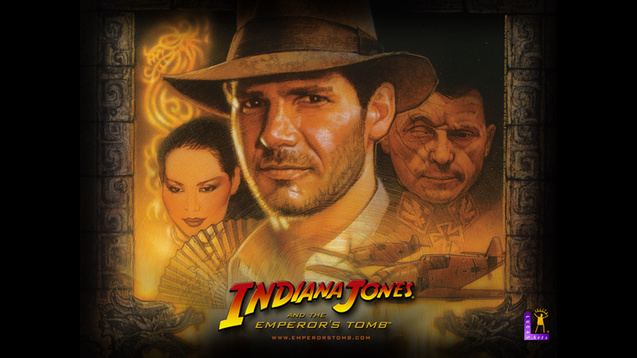
May 1935 — Indy travels to Prague Castle in Czechoslovakia to recover the second piece of the Mirror, and goes on to Istanbul for the third (outwitting von Beck and his Nazis at every turn.) Mei Ying approaches him in Istanbul, and informs him that Kai is a Triad crime lord in league with the Nazis. Indy and Mei Ying travel to Hong Kong to rendezvous with Indy’s associate Wu Han and infiltrate Kai’s stronghold. Before they can act, Mei Ying is abducted by von Beck and taken by submarine to Kai’s private East China Sea island. Indy and Wu Han tail them there on a junk, and overhear Kai and von Beck agree that Hitler can have the Heart once Kai has used it to take over China. Leaving Wu Han behind, Indy makes a dangerous trip through the bowels of Kai’s fortress, picking up an ancient weapon known as Pa Cheng (“Dragon’s Claw”). He frees Mei Ying, collects Wu Han, and the trio flees back to Shanghai. Indy and Mei Ying continue on the the tomb’s location near Xian. Using the Black Mirror, they navigate most of the way to the center of the massive tomb’s interior, but become separated. In a final attempt to kill Indy, von Beck appears driving a drilling machine straight at him. Vo Beck loses control and goes over the edge of a chasm and vanishes for good. Indy finally gets to the Heart, but the power it unleashes causes him to drop it. Kai shows up and is able to briefly harness the power, summoning a some of the emperor’s terra-cotta soldiers, and a massive dragon. With the help of Mei Ying and the Pa Cheng, Indy manages to turn the power of the Heart against Kai and destroy him.[3]

Late May 1935 — After abandoning the search for the Peacock’s Eye diamond back in 1919, Indy is offered the chance to finally possess it. In exchange for Indy recovering the cremated remains of Chinese emperor Nurhachi, Chinese millionaire (and organized crime boss) Lao Che will give him the diamond in payment.[4] Indy does not seem to be in any great hurry to get started, lingering in Hong Kong with Mei Ying before heading back to Shanghai.[3]

Early June 1935 — Indy and Wu Han recover the ashes of Nurhachi in an adventure that goes unrecorded. Indy also befriends a young Shanghai orphan boy, Short Round. Short Round, somewhere between 10 and 12 years old (no one is really sure) had attempted to pick his pocket, but Indy quickly became fond of him and promised to get him to the U.S.[5]

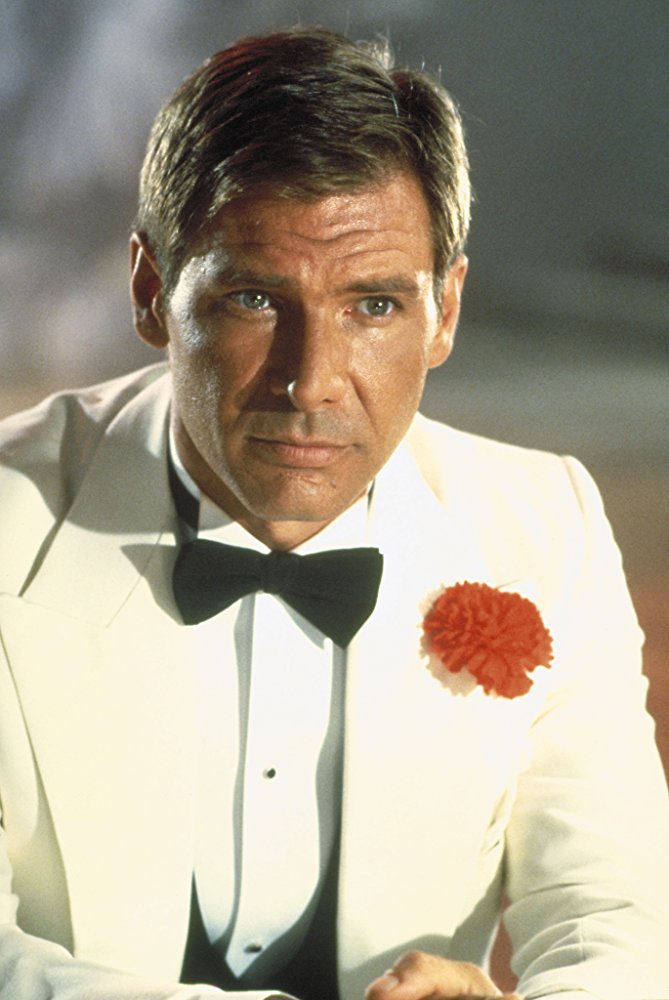
June 14, 1935 — On high alert, Indy goes to his pre-arranged meeting with Lao Che in aMV5BMTczMDM0NjY1MF5BMl5BanBnXkFtZTcwMjMwNDczMw@@._V1_SY1000_CR0,0,669,1000_AL_ Shanghai nightclub. Wu Han is already there, disguised as a waiter. One of Lao’s sons, Kao, had attempted to steal the ashes the night before, and got a maimed hand for his efforts. The nightclub’s singer (and Lao’s mistress) Willie Scott joins them at the table. In a tense confrontation, Lao finally turns over the diamond when faced with Wu Han’s pistol — but he has poisoned Indy’s drink. Chaos erupts in the nightclub as Wu Han is shot and killed by Lao’s other son, Chen. Kao opens up with a submachine gun. The diamond is lost in the confusion, but Indy knows that Willie has the antidote to the poison. He grabs her and jumps out the window, their fall broken by several awnings. They land in a car driven Short Round, who gets them to the Shanghai airport after a brief street chase. They arrange transport on a Ford Tri-motor freight plane, unaware that the freight company is owned by Lao Che.[6]

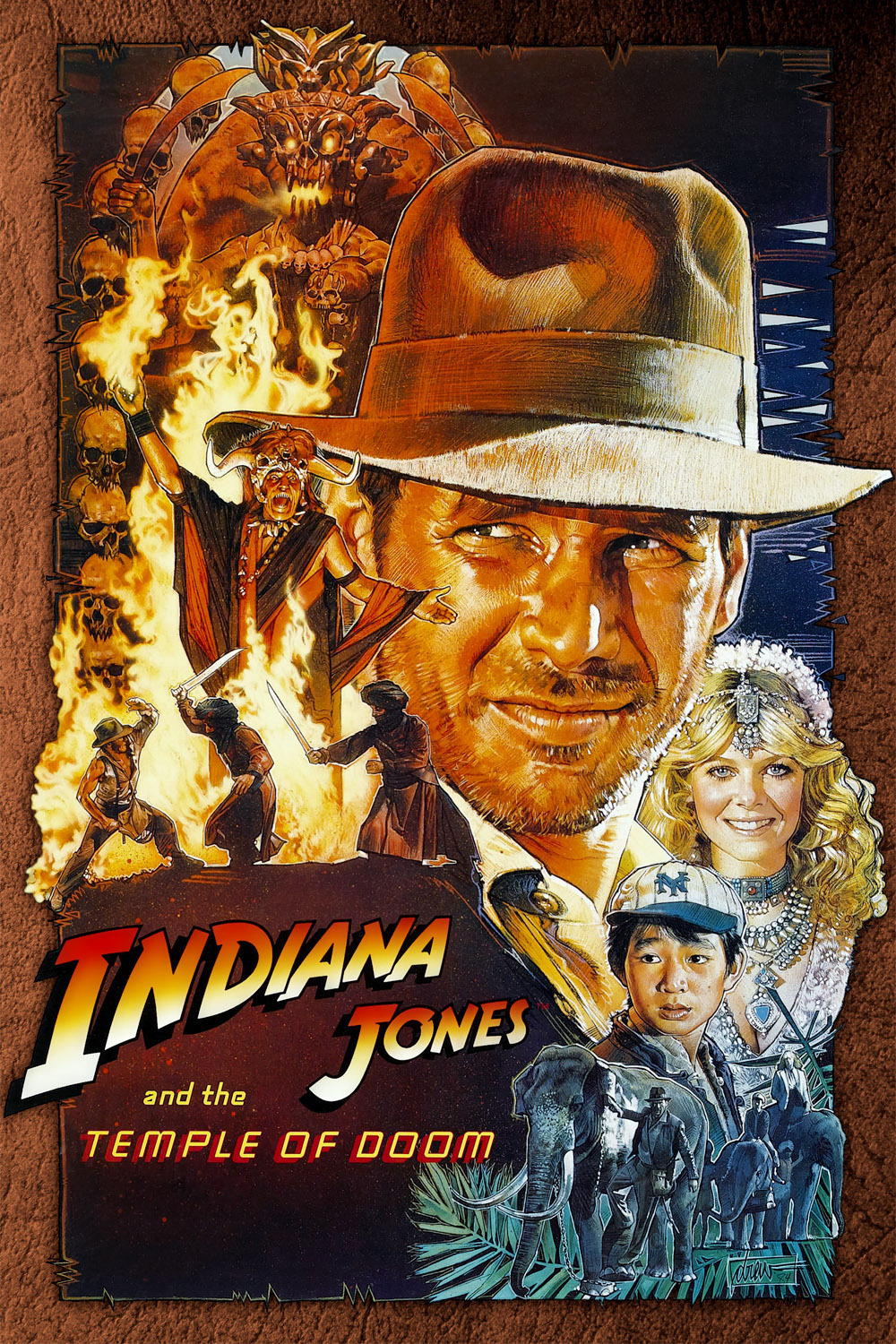
indiana_jones_and_the_temple_of_doom_poster_by_leonrock84-d9mlnklJune 15, 1935 — The freight plane pilots, on orders from Lao Che, dump the plane’s fuel and bail out. Indy attempts to use his limited piloting skills, but when he discovers the fuel situation, realizes they must bail out, too — with no parachutes. They use an inflatable raft to slow their fall when they bail out at low altitude. They ride the raft down the snowy foothills of the Himalayas, and end up in a river passing an impoverished village in northern India. The village began suffering from extreme drought when its protective “Sankara stone” was stolen from its shrine — along with all the village children. The village’s holy man asks Indy (who he believes was sent from the sky by Shiva) to go to nearby Pankot Palace (believed by most to be abandoned) and retrieve the stone and the children.[6]

June 16, 1935 — Feeling obligated to help the people of the village, Indy, Willie and Short Round ride on elephants toward Pankot Palace.[6]

June 17, 1935 — After a day-and-a-half’s ride, the party arrives at Pankot Palace, which is not abandoned — in fact, it has been restored and seems to be thriving. It is presided over by a child maharajah, and his prime minister, Chatter Lal. At a banquet later that evening, Indy begins asking uncomfortable questions — Pankot was once at the center of an area terrorized by the bloodthirsty Thuggee cult. The maharajah and Lal deny that the Thuggee have been revived, and Lal brings up Indy’s own less-than-stellar reputation as a grave-robber, making a point that rumors can be damaging. Indy is also curious about the food at the banquet — a bizarre meat-based menu (eels, beetles, monkey brains) that no true Hindu would ever touch. Indy’s suspicions are further aroused when he is attacked in his room later that night. After dispatching his assailant, Indy discovers a secret door that leads to a massive underground temple. Indy, Willie, and Short Round observe a Thuggee human sacrifice ritual presided over by the high priest of Kali, Mola Ram. After the ceremony is over and the worshippers have exited, Indy attempts to get the three Sankara stones that are on the altar, but is captured along with his two companions.[5,6]

nintchdbpict000253895176

Indy, Willie Scott, and Short Round, 1935

June 18, 1935 — Short Round is put to work in with the abducted village children in the mines below the temple, digging for the two remaining Sankara stones. Indy is forced to drink a hallucinogenic brew that induces the “black sleep of Kali” and putting him into a zombie-like trance. Willie is set to be the next sacrifice. Short Round escapes the mines and awakens Indy from his trance by burning him with a torch. Indy grabs the three stones, rescues Willie, frees the children, and the three escape via a fast-running mine cart. Mola Ram orders all the mine tunnels flooded. Indy and company barely avoid the deluge, make it out a tunnel exit, and clamber up a cliffside to a rope bridge over a deep river gorge. They are quickly surrounded by Mola Ram and his Thuggees. Indy cuts through the bridge supports, the bridge snaps in two and slams into the cliff wall. Most of the Thuggees are dispatched, but Indy must still defeat Mola Ram as they dangle over the river. Mola Ram is ultimately sent plunging to his death, and Indy manages to save one of the stones from following him into the river. The British Army arrive to provide assistance.[6]

June 20, 1935 — Indy, Willie, Short Round, and the children return to the village.[6]

Late June, 1935 — Willie and Short Round return to the U.S. [7].

July – August, 1935 — Remaining in India, Indy’s curiosity is piqued when he finds some map fragments leading to the Temple of the Forbidden Eye, a Bengalese temple buried under silt in a flood of the “Lost Delta” 2000 years ago. The map proves accurate, and Indy begins a large-scale excavation immediately. He brings in Sallah as a consultant and partner. Word soon leaks out that the temple offers all visitors either earthly riches, eternal youth, or visions of the future. The site is flooded with curiosity seekers…and is also running out of funding. Sallah decides to monetize the situation by offering motorized tours of the dig site for a fee. In the meantime, Indy had gone missing for a week, deep within the temple searching for the source of the temple’s power. He returned to the surface not long after rescuing one of the tour groups that had gone astray. The massive dig and profitable tours continued under Sallah’s supervision for an unknown time after Indy returns to the U.S.[8]

TombOfTheGods_TPB_finalMay 23, 1936 — Archaeologist Henrik Mellberg sends a letter requesting the assistance of Indy on a matter of grave importance. Five years earlier, Mellberg and two associates, Francis Beresford-Hope and Marwell O’Brien, discovered the key to the “Tomb of the Gods” in a remote Russian village north of the Arctic Circle. They divide the key into three pieces and each man takes one for safekeeping. O’Brien’s portion of the key has recently fallen into the hands of the Nazis (specifically, the “Ahnenerbe” — the “ancestral heritage” branch of the SS, supervised by Friedrich von Hassell). When Indy arrives at Mellberg’s Manhattan apartment, he finds the Nazis are already interrogating him. Mellberg is fatally shot as they make their escape, and his portion of the key ends up in the hands of mercenary treasure hunter Janice Le Roi. Indy and Marcus Brody agree that the third piece must be recovered as soon as possible.[9]

June 6, 1936 — Indy and Brody arrive in Lhasa, Tibet, the last known location of Beresford-Hope.[9]

June 10, 1936 — Beresford-Hope had died alcoholic and insane in a cave in Tibet, but Indy and Brody discover his son son, Alex, who is initially suspicious, fearing they may be Nazi agents. They escape an attack by Tibetan bandits with the help of pilot Jock Lindsey.[9]

June 12, 1936 — Indy, Brody, and Alex Beresford-Hope arrive in Shanghai. Alex turns over his father’s piece of the key, which has a map that can guide them to the tomb’s location in remote Siberia. Brody and Indy argue over what to do next, with Brody all for dynamiting the tomb to prevent whatever’s inside from getting released, and Indy driven by his curiosity to discover whatever’s inside actually is. Indy’s view wins out, and he and Alex plan to continue to without Brody.[9]

Mid-June, 1936 — After their ship stops in Japan, the final piece is taken from Indy by von Hassell and Le Roi. Von Hassell turns on Le Roi as well, cutting her arm to attract sharks, and setting her and Indy adrift in an oarless boat in the icy North Pacific, and keeping Alex as a hostage. They are rescued by a whaling ship who spotted the signal fire they had made out of articles of their clothing. Marcus Brody was also aboard the ship, trailing them in case he was needed. Grateful for Indy saving her life, Le Roi draws a map from what she remembers on the two key fragments.[9]

June 25-26, 1936 — The whaling ship arrives in Siberia in the vicinity of the Tomb. They race Von Hassell’s Ahnenerbe team on dogsleds, both sides tumbling into a crevasse opened by a lightning strike. After wandering through the caverns for some time, Indy and Le Roi find that von Hassell has discovered the door to the Tomb, and pressures Alex to open it. Alex refuses, and is immediately killed by von Hassell. Brody is ordered to open the door next, but suddenly three of Von Hassell’s men are possessed by the spirits of the tomb, and open fire with their machine guns. Indy overpowers the men and rescues Brody. Impatient, von Hassell opens the door himself. Inside is a vault with a seemingly bottomless pit. Unsure what monstrosity could or would emerge from that pit, Indy comes around to Brody’s viewpoint. He shoves von Hassell into the pit, lights some dynamite, and seals the door.[9]

rah_30378432339

August 1936 — With a crew of two Peruvian mercenary “guides,” Satipo and Barranca, and five native Quechua Indian bearers, Indy searches for a hidden temple in the jungles of Peru, where he hopes to find the golden Idol of the Chachapoyans. They are making their way through territory belonging to a tribe of hostile warriors, the Hovitos. Indy has half of a map, Satipo and Barranca the other. As they get closer to the temple, they are abandoned by their superstitious native bearers. Barranca attempts to take Indy’s half of the map, but is dealt with by bullwhip and flees into the jungle. Satipo meekly agrees to continue. They are following in the footsteps of another archaeologist (“a competitor” as Indy describes him), Forrestal, who never returned. Indy and Satipo enter the temple and quickly discover the decayed corpse of Forrestal, speared by one of the temple’s many security traps. They continue on, skirting the temple’s traps, until they come to the final room. Indy attempts to remove the idol without triggering anything, but fails, and the pair flee for their lives as a massive boulder is released to crush them. Satipo — afterattempting to take the idol for himself — is killed by the same trap that got Forrestal. Indy recovers the idol and exits the temple just as the massive boulder seals it shut. He is immediately confronted by a group of Hovitos, brandishing the body of Barranca, and holding Indy at spearpoint. They are in the service of Rene Belloq, who promptly takes the idol from Indy. Indy runs for his chartered seaplane, piloted by Jock Stewart, narrowly escaping the Hovitos’ spears and blow-darts. He gets out alive, but empty-handed.[10,1] Continue reading

Leave a comment

Filed under Books, Film & TV

“It’s Not the Years, It’s the Mileage”: An Indiana Jones Chronology, Part 3 — The Young Archaeologist

Remarks in italics are not taken from explicitly-stated events in the canon material. They are my own speculations, logical inferences, gap-fillers, and extrapolations based on fragmentary references and passing mentions in the original sources.

June 1925 — The newly-minted “Professor Jones” gets his first job after graduating — teaching a summer course on Britain’s megalithic monuments at the University of London. 

He discovers he has a brilliant but difficult student, Deirdre Campbell, who is the daughter of his department head, Dr. Joanna Campbell.[1]

IndianaJonesAndTheDanceOfTheGiantsMid-August, 1925 — At the conclusion of his summer course, Indy is invited by Dr. Campbell to join her and Deirdre on an excavation of St. Ninian’s Cave on the southwest coast of Scotland to look for a golden scroll that proves the legend of Merlin the wizard had basis in historical fact. After a series of violent run-ins with unknown assailants, Indy, with the help of Deirdre and Jack Shannon, gradually uncovers a plot by a modern day druidic cult, the Hyperboreans. The leader of the Hyperboreans, Albert Powell (wealthy member of Parliament and, it turns out, Deirdre’s half-brother) plans on using the scroll in a ceremony to unleash the power of the Omphalos, which he recently arranged to have stolen from the museum in Chicago. The scroll is not at St. Ninian’s Cave, but they find a clue as to where it actually is — in an old convent near Stonehenge. Powell heads out to recover it, leaving Indy, Shannon, and the Campbells to die in the cave he has filled with toxic gas. Three of them escape, but Joanna Campbell succumbs. They actually find the scroll in the convent ahead of Powell, but are captured by him not long after, and discover that the midnight ceremony Powell is planning includes a human sacrifice in the form of Deirdre. It turns out the Omphalos that Powell stole is a replica, and the ceremony fails. Powell perishes by falling into a massive bonfire.

Under the pressure of these few weeks, Indy and Deirdre find themselves in a passionate romance.

In Scotland, Indy is presented by the townspeople with a Webley .455 revolver. In freeing Deirdre from the cult ceremony, Indy makes his first peacetime self-defense kill with the Webley, and it “sickens” him, but from this point on, he rarely ventures out on his expeditions without a handgun.[1]

Fall 1925 — Indy begins teaching full-time at University of London, mostly courses in Celtic archaeology. He admits it’s not his favorite area, and he struggles with the Celtic language despite his facility with other languages. (Perhaps it’s all too closely associated with his father’s Holy Grail obsession.) He spends his off hours rambling around the English countryside, for which he develops a deep affection.[2] It is around this time, in the New Forest, that Indy meets Gale Parker, an academic and adventurer, basically a female version of himself (except she can fly a plane.)[3]

January 1926 — Indy finds out he is not scheduled to teach any classes for the upcoming semester, but will instead assist on a major University of London expedition to Tikal, Guatemala.[4]

February 21, 1926 — Under the leadership of the new head of the archaeology department, Dr. Victor Bernard, the expedition begins moving from the coast to the Guatemalan interior. Deirdre Campbell, whose relationship with Indy has cooled in the aftermath of the previous summer, is also on the expedition.[4]

March 7, 1926 — After some exciting initial discoveries in a Mayan pyramid, the expedition is disrupted by graverobbers, and they are lucky to escape alive.[4]

March 8-14, 1926 — Indy receives treatment for a gunshot wound suffered in the robbery attempt (it wouldn’t be his last), and the failed expedition makes its way back to New York via train.[4]

Mid-March, 1926 — Indy, arm still in a sling, attends the opening night of Marcus Brody’s highly controversial National Museum exhibition displaying evidence that ancient Old World civilizations had been to the Americas long before Columbus. Brody shows Indy several pages from a journal written by his old friend, noted explorer Jack Fawcett, who has gone missing in the midst of searching for a lost city, Ceiba (popularly known as “El Dorado”), deep in the Amazon jungle. Fawcett believed it was inhabited by fair-skinned people of Celtic origin. Indy and Deirdre decide to go in search of Fawcett.[4]

Late March, 1926 — On the eight-day ocean voyage that takes them to Brazil, Indy and Deirdre rekindle their romance. As the ship arrives in the bay at Rio de Janeiro, Indy and Deirdre are married by the ship’s captain.

Various clues and encounters with practitioners of the mysterious Candomble religion indicate that Fawcett is being held captive as “breeding stock” in the lost city of Ceiba. The inhabitants of the city have the ability to “veil” — to become like shadows, effectively invisible. High-ranking members of their society (which does appear to have Celtic origins) also have the ability to veil the city itself from outsiders.[4]

Early April, 1926 — After days of traveling by seaplane and on foot deep into the Amazon IndianaJonesAndTheSevenVeilsjungle, Indy and Deidre are taken captive by Ceiba’s inhabitants. The veiling causes everyone in Ceiba to exist in a semi-dream state. While their fate is being decided in shared dream with the Ceiban High Council, their physical bodies are busy escaping, plunging off a cliff into the river below. Pursued by the Ceibans, Indy, Deidre, and Fawcett make it back to the lake with the plane. After taking off, they discover the fuel tanks have been drained by a hostile tribe, the Morcegos — the plane plunges into the jungle, killing Fawcett and Deirdre. Indy is rescued from the jungle after several days, suffering from multiple injuries and typhus. He has no memory of his time in Ceiba or the crash that killed his wife of only a few weeks.[4]

Summer 1926 — Indy is still grieving for Deirdre. At some point during time away from his university duties, he examines the work of the ancient American Mound Builders along the Missouri River.[5]

He also pays an extended visit to his old mentor, Abner Ravenwood in Chicago, perhaps assisting Abner in his work. During one of their discussions, Abner cautions Indy that in the overlapping areas of mythology, occult, and archaeology that they both specialize in, it is important to remain skeptical and rational in front others, no matter what one may witness with his own eyes. Under the circumstances, Indy is grateful to have to distraction of working with Abner, and basks in the hero worship Abner’s teenage daughter, Marion, lavishes on him. In a complete lapse of judgement, Indy seduces Marion. Abner finds out, and this leads to a permanent break in their friendship.[6]

January 1927 — Indy travels to a conference in Dublin to present a paper on Celtic influences in New England.[7]

May 1927 — Depressed over recent events, and still feeling that Celtic archaeology is a bad fit for him, Indy resigns from the University of London and returns to Chicago to investigate possible employment at his alma mater. He finds his old friend Jack Shannon running a jazz club, and reluctantly involved in the organized crime that comes with the territory.[8]

IndianaJonesAndTheGenesisDelugeJune 1927 — Jack Shannon, due to the pressures of his new lifestyle, has found religion and invites Indy to his church to hear a lecturer, Dr. Zobolotsky, who claims to have discovered Noah’s Ark, and is still in possession of a small piece of it. After the job possibility at the University of Chicago falls through, Indy finds himself agreeing to join Zobolotsky and his daughter Katrina on an expedition to Mount Ararat in Turkey to document the existence of the Ark. After Shannon’s brothers are murdered in a mob hit, he decides to go on the expedition as well.[7]

June 21, 1927 — Indy and Shannon leave Chicago by train to join the Zobolotsky expedition. They are trailed the whole time by Bolshevik agents, who feel that proving the Ark’s existence would undermine the anti-religion Bolshevik government.[7]

Early July, 1927 — The expedition arrives in Istanbul and heads for and heads for Mount Ararat.[7]

Mid-July, 1927 — Partway up the mountain, the two tailing Bolsheviks shoot and kill Zobolotsky, and are themselves killed by the local Kurds. Indy, Shannon, and Katrina continue up the mountain, and find the Ark — and a bunch of Janissaries, a fanatical Turkish religious group who believe finding the Ark will trigger the apocalypse. Gunfire ensues, causing an avalanche which buries the Janissaries and the Ark, probably forever. [7]

August 1927 — Shannon and Katrina become engaged and head off to California. Indy is hired by a small, unnamed college in New England.[7]

Continue reading

1 Comment

Filed under Books, Film & TV

“It’s Not the Years, It’s the Mileage”: An Indiana Jones Chronology, Part 2 — Risks and Rewards

Remarks in italics are not taken from explicitly-stated events in the canon material. They are my own speculations, logical inferences, gap-fillers, and extrapolations based on fragmentary references and passing mentions in the original sources.

68158

Early 1915 — Professor Henry Jones, Sr. returns to teaching at Princeton full-time, and Indiana completes his sophomore year of high school.

Indy, who as a youth never met an odd job he didn’t like, hires himself out as an errand boy for busy Princeton students.[1] Indy probably loathed asking his father for spending money, and liked to be out of the house as much as possible.

Summer 1915 — There is likely a round of summer school for Indy after missing his entire fall semester last year, and hopefully a trip to the New Mexico ranch he has grown attached to. His Uncle Fred and Aunt Grace provide the emotional stability his father does not, his similarly-aged cousin Fred, Jr. is one of his best friends, and ranch work agrees with him.

At some point this summer, Indy works shoveling coal at a train depot, either in Princeton or New Mexico. [2]

Autumn 1915 — Indy begins his junior year of high school. He gets a job as a soda jerk at the drugstore downtown. He also begins dating Nancy, the daughter of famous author Edward Stratemeyer, creator of the Hardy Boys and Nancy Drew. Stratemeyer bases a lot of Nancy Drew on his daughter, who is independent and intelligent and loves mysteries.[3]  

February 1916 — Indy begins spring training for his high school baseball team.[3,4]

SpringBreakAdventureLate February, 1916 —  Indy is desperate to borrow Mr. Stratemeyer’s electric Bugatti car to take Nancy to the prom, but it needs a new generator. Indy takes the generator to an acquaintance of his father’s at Edison Laboratories in West Orange, N.J. Important plans for a long-lasting, powerful battery are stolen (along with, accidentally, the Bugatti generator). At first, German spies are suspected, but Indy and Nancy discover that a big oil company is behind the theft.[3]

February 26, 1916 —  Indy and Nancy attend the prom in triumph, much to the consternation of Indy’s rival, Butch.[3]

March 5, 1916 — Indy arrives at the New Mexico ranch for his spring break, accompanied by his father.[3]

March 8, 1916 — Indy and Fred, Jr. leave for a camping trip, promising to be back in time for Indy’s departure for Princeton on Sunday the 12th. What they actually intend to do is hitch a ride to the border town of Columbus, N.M., and visit the brothels. They arrive to find Columbus seemingly abandoned, but really just anticipating a violent raid by Pancho Villa and his Mexican revolutionaries. Indy and Fred get caught in the crossfire when the raid actually happens. Fred escapes, but Indy is taken by Villa’s men.[3]

Mid – Late March, 1916 — Inspired by Villa’s dedication for fighting for “the people,” Indy 2004c800-6554-11e4-871e-1b62bfda1b3c_young-indiana-jones-chronicles-sean-patrickquickly goes from hostage to participant. He meets Remy Baudouin, a hedonistic and temperamental Belgian ship’s cook several years his senior, who had jumped ship and settled in Mexico. Remy joined Villa after the federales raided his cantina and killed his wife. Indy also notices that one of the people Villa is trading with for weapons looks vaguely familiar and speaks Arabic. After spending a few days with Villa and his men, and observing their tactics which include theft and looting, Indy decides the revolution is hurting the people as much as helping. Upon seeing newsreel footage of the ongoing Great War, Remy decides to return to his homeland and fight for Belgium. Indy agrees to join him, but before he can do that, he finally recognizes Villa’s arms dealer as Dimitrios, the man who stole the jewel from the Egyptian tomb back in 1908. Indy recovers the jewel and rides to meet up with Remy in Veracruz and find a ship going to Europe.[3]
Early April 1916 — On the ship steaming from Mexico to Ireland, Indy and Remy have hidden themselves as stowaways. They are found out and put to work in the engine room. Indy gets them back in the captain’s good graces by overhearing a German saboteur attempting to induce the Mexican crew to mutiny. He tips off the captain, but not before nearly being tossed overboard.[5]

Indiana the dog dies in Princeton of old age as Indy is on his way to Ireland.[6]

Charming_Remy

Remy Baudouin

April 1916  Upon arrival in Dublin, Indy and Remy go to work as barmen in the local pub to afford the remaining fare to London, where they intend to enlist with the Belgian army. Indy’s flirtation with a young Irish girl, Maggie Leamass, prolongs their stay as he keeps spending his money on outings with her rather than saving it. Her brother Sean, who gradually builds a friendship with Indy, is a militant Irish Republican.[7]

April 24, 1916 — Indy witnesses the Easter Rebellion, a failed attempt to end Britain’s rule of Ireland and establish a free Irish republic. Many of the people known to Indy from his work at the pub and friendship with Sean and Maggie Leamass are involved.[7]

May 13, 1916 — Indy and Remy leave for London as soon as the final executions of the Irish Rebellion ringleaders are complete. (They had stayed to offer the Leamasses moral support.)[7]

Mid-May, 1916 —  In London, Indy and Remy officially enlist in the Belgian Army. Indy gives his age as 22, and his name as “Henri Defense.” (Remy indicates they would have taken him no matter what.) While waiting to be called up for service, Indy begins a relationship with a well-educated, outspoken English suffragette, Vicky Prentiss.[7]

Late May, 1916 — Indy thinks enough of Vicky to invite her to Oxford to visit his old tutor, Helen Seymour. Miss Seymour does not approve of Indy’s recent life choices, and insists Indy write his father (who still thinks he is in Mexico) and update him. Miss Seymour invites Indy and Vicky to a dinner party with Winston Churchill, who has words with Vicky on the topic of votes for women. Back in London, Indy proposes marriage to Vicky, who declines. Indy and Remy’s call-up papers arrive, and they set off for the battlefield.[7]

June 1916 — “Henri Defense” and Remy are now privates in the 9th Belgian Infantry, and participate in basic training at Le Havre, France. During his downtime, Indy acquires an old soprano saxophone and teaches himself how to to play it.[8]

4294b

July – August 1916 — The 9th Belgian Infantry goes into combat in Flanders. Indy and Remy get their first taste of vicious trench warfare, seeing heavy action, witnessing the death of several comrades, and losing all of their company officers. Indy, at some point having been promoted to corporal, is in charge of the decimated unit when it is finally pulled from the front lines.[9]

Trenches_of_HellAugust 1916 — The much-reduced Belgian 9th are attached to the 14th French Infantry, and thrown into the Battle of the Somme, one of the bloodiest battles in the history of warfare. Their first assault on the high ground ultimately fails in the face of heavy German machine guns, poison gas, and flamethrowers. The second assault (after a two-day break), initially succeeds, but they don’t have enough troops to hold the position, and the Germans counterattack. Remy is severely wounded, and Indy is taken prisoner. At the prison camp, he participates in a tunnel escape, which fails. Because he is caught wearing a coat with the ID of another soldier (a repeat escapee), Indy is sent to Dusterstadt, a fortress on an island in the Rhine River being used as a maximum security prison for “incorrigibles.” There he meets Charles De Gaulle, another incorrigible repeat escapee. They devise an escape plan (leaving the prison inside the coffins of two dead prisoners). DeGaulle is re-captured, but Indy makes it to freedom.[9]

September 1916 —  Indy has returned to the Belgian Army, and is now working as a f1fa00ce56d3ea54aeef369d8e02882c--indiana-jones-sean-patrick-flanerymotorcycle courier, taking messages from the trenches to the high command in their palatial estates far from the front lines near Verdun. He witnesses yet another failed frontal assault across no man’s land. The French generals are growing increasingly desperate. Indy, who speaks fluent German, volunteers for a dangerous mission — sneaking over to the German lines under cover of night, and eavesdropping to see what intelligence he can glean from conversations in the command bunker. He discovers that two massive railway howitzers (“Big Berthas”) are being brought to this position in advance of another French attack. When the French high command are informed of this, they fall to squabbling among themselves, ordering, cancelling, and re-ordering the attack. Indy finally “loses” the written orders in a staged motorcycle accident. He is sent back to the trenches, where he reunites with a recovered Remy.[10]
October 1916 — Indy and Remy are granted a two-week furlough in Paris. Indy stays with a colleague of his father’s and, out of politeness, is forced to attend a high society dinner party rather than carouse in the bars and brothels with Remy. There he meets the exotic dancer Mata Hari, and he begins a passionate affair with the older woman. They are clandestinely followed wherever they go. Indy struggles with the fact that she is obviously seeing other men. He is finally confronted by British and French authorities, and warned to stay away from her. His two-week furlough is cancelled. (Mata Hari is later revealed to be a spy for Germany, and is executed the following year.)[11]

yi101

Leading a charge on the African front

November 1916 — Indy and Remy are promoted to lieutenants and transferred to the African front. They get lost on their way to their new posting near Nairobi, and stumble onto an Allied camp in the middle of the savannah. They are the 25th Royal Fusiliers, made up mostly of older veteran soldiers, and they have been tasked with destroying a massive German railroad gun that seems to be able to disappear at will. Reconnaissance by Indy and the Fusiliers uncovers a tunnel hidden behind an artificial cliff face. After a complicated hijacking of the train, they succeed in their mission. The Fusiliers then agree to escort Indy and Remy to back their unit. They are captured and get taken to the German camp commanded by the legendary General Von Letow-Vorbeck. Indy and the Fusiliers manage to turn the tables on Von Letow-Vorbevk, and take him hostage. Indy, Remy, and their hostage accidentally take flight in a hot air balloon. After traveling many miles, the balloon crashes in the wilderness. They escape an encounter with hostile tribesmen, and facing a rapidly approaching German unit, Indy and Remy let their prisoner go in order to make a quick escape. They are soon picked up by the Fusiliers.[2]

PhantomTrainOfDoomLate November, 1916 — Back with his unit, Lt. “Defense” leads his mixed Belgian-African unit against an entrenched position under heavy fire. When Indy notices the enemy’s machine gun has jammed, he goes against Major Boucher’s withdrawal orders and continues the attack, which succeeds. Indy earns a promotion to captain, and the enmity of Major Boucher. Indy and the major are then ordered to lead a large expedition 2000 miles through the Congo region to retrieve a shipment of heavy machine guns that has foundered on the west coast of Africa, near Port Lopez. [11]

December 3, 1916 — The expedition across the Congo begins.[11]

Mid-December, 1916 — The trans-Congo expedition encounters a village wiped out by smallpox, except for one small boy, who seems healthy. Major Boucher orders the boy be left behind to die, but the company defies his orders.[11]

December 24, 1916 — Most of the company has perished from disease, and those that remain alive are very ill.[11] Continue reading

Leave a comment

Filed under Books, Film & TV