John Hancock was likely a smuggler. But so was everyone else in his line of work. To a Boston merchant, finding creative ways to evade the Navigation Acts was just good business.
Hancock Manor
The series of Navigation Acts that began being passed in 1651 required that all shipments to and from the American colonies had to be on British-owned ships, and cargos had to pass through an English port no matter where they were coming from or where they were going so they could have import duties paid directly to the British government, along with a variety of other restrictions designed to line British pockets.
Thomas Hancock
It was a policy that was outrageously unfair to colonial merchants, but almost impossible to enforce effectively, and for much of the 1700s, Britain didn’t try particularly hard. As a result, tons of “illegal” untaxed goods sailed into Boston Harbor, technically making a criminal of one of our nation’s founders long before he joined the treasonous revolutionaries. (When the British government actually tried to get tough on import duties, the result was the Boston Tea Party, more on which anon.)
John Hancock’s father and grandfather were ministers. His father baptized the newborn future president John Adams in 1735. Hancock himself was born in 1737, and seemed destined to join the family trade. Those plans were derailed in 1744 when Hancock Senior dropped dead. Little John was sent to live with his uncle, Thomas Hancock.Hancock’s birth mother quickly re-married and vanished from his life, so Thomas’ wife Lydia became his beloved maternal figure.
As a purveyor of “general merchandise,” Thomas Hancock had done quite well for himself. An early adopter of vertical integration, Thomas owned huge tracts of tree-filled land, a paper mill to turn the trees into paper, a bookbinding factory to make the paper into books, and a bookshop to sell the books, among many other interests. It was only natural that such a prosperous merchant should have a fine home, so in 1735, Thomas bought some land on the south slope of Beacon Hill next to the Common and began construction on what would be described as Boston’s most famous home — Hancock Manor, the first house built on that hill, which in those days was on the far edge of the city proper.
Aunt Lydia
Two-and-a-half stories tall, the brown granite Georgian mansion sported three big dormer windows along the gambrel roof, a dozen main rooms, a dozen steps leading up to a broad front porch with a balcony above facing Beacon Street, and extensive gardens and orchards. The house had a commanding view of the city and the harbor. Thomas Hancock enjoyed his palatial estate for almost thirty years. When he died in 1764, he left all of his businesses — locks, stocks, and barrels — to nephew John. John had been working diligently for his uncle for the past decade, and had learned the import/export business inside and out. Aunt Lydia inherited Hancock Manor, but signed it over to John almost instantly with the understanding that she could continue to live there.
In one fell swoop, John Hancock was one of the wealthiest men in Massachusetts. He gave generously to the Boston community, covering the costs of the laying of paved walkways in the Common, the entire re-construction of the Brattle Street Church, and the free distribution of firewood to the poor during the winter months. His popularity gained him a place on both the town council and in the colonial assembly.
His deep pockets also funded the Sons of Liberty and their fight against British oppression. The savvy Samuel Adams took the political neophyte Hancock under his wing, knowing his local prominence as a successful businessman and his facility for using money to make more money could be very useful to the cause.
Adams and Hancock made an odd pair. The shabby Adams could usually be found in the taverns and down at the harbor in his threadbare coat, shaking hands, gathering news, making contacts and connections. The genteel, well-dressed Hancock preferred more elevated company, and many among his business associates and social circle were conservative Tories who may not have known there was a rebel in their midst. Odd couple or not, once the situation between Britain and the colonies turned violent, it did not take the British authorities in Massachusetts too long to single out the team of Adams and Hancock as the driving force of the incipient revolution.
In 1768, one of Hancock’s cargo ships, the Liberty (it was by now public knowledge where his political sympathies lie), was busted for smuggling. Try as they might, the British officials could not get the politically-motivated, trumped-up charges to stick, and the case was eventually dropped. But it galvanized Hancock against the British even more. To be clear, no official evidence of Hancock smuggling anything has ever come to light. But, c’mon…he was probably just really good at it…
Once I had located the former sites of the Liberty Tree and the Great Elm, it was time to begin our walk along the Freedom Trail. The Freedom Trail was conceived in 1951 by journalist William Schofield, who thought a pedestrian trail that linked important Revolutionary landmarks in the relatively compact central Boston area would be a great idea. Local civic leaders and historians agreed, and a route was established using 30 painted signs to guide the way. This system was a little befuddling for the typical tourist, so in 1958 an idiot-proof path was laid directly on the ground using red bricks. In 1972, the Trail was extended across the river into Charleston in order to include Bunker Hill and the USS Constitution. As of 2025, over four million people walk the Freedom Trail every year.
The Freedom Trail officially consists of sixteen sites:
1. Boston Common
2. The Massachusetts State House
3. Park Street Church
4. Granary Burying Ground
5. King’s Chapel and Burying Ground
6. Boston Latin School
7. Old Corner Bookstore
8. Old South Meeting House
9. Old State House
10. Boston Massacre Site
11. Faneuil Hall
12. Paul Revere House
13. Old North Church
14. Copp’s Hill Burying Ground
15. USS Constitution
16. Bunker Hill Monument
#1 Boston Common was already discussed in the previous entry, so we’ll move on to the second stop on the Trail, which was…
#2 The Massachusetts State House is just across Beacon Street from Boston Common. The parcel of land it was built on was mostly made up of Hancock Manor’s former cow pasture, sold off by Hancock’s wife in 1795 (Hancock himself had died two years earlier). Boston’s new young hotshot architect Charles Bulfinch was hired to design a grand new state capitol building to replace the too-small Old State House (more on that anon) where the Massachusetts assembly had been meeting since 1776. Bulfinch designed a red brick building in a Federal style, with an imposing central dome and white marble trim. It was right next door to Hancock Manor on the south slope of Beacon Hill, the summit of which rose up just behind them.
We’ll start this off in a logical fashion: by discussing two elm trees that no longer exist.
Actually, let’s back up a bit. When I last left you, I had been forced to abandon my trip to Boston in the summer of 2024 due to a mild case of passing out on a departing airliner, which was due in turn to a less-than-mild case of influenza (which I swear I had no idea I had). We got as far east from California as Gate B43 at Denver International Airport.
Since then, I got vaxxed to the gills for both COVID and flu. I always dutifully got my COVID vaccine since it was introduced because I am a good citizen and a believer in basic science, and also pretty dubious about the efficacy of location-tracking nanobots being injected into my bloodstream. My flu vaccination was always a little more hit or miss (mostly miss) because — as I figured it — “I never get the flu.” Well, lesson learned. It’s the double jab for me every autumn from now on.
And now, here I was, striding across Boston Common on an overcast morning the following summer, eager to see a couple of vanished elms. Thus began my week of, as my wife put it, “taking pictures of plaques.”
Boston, 1775
The first place I was looking for was at the corner of Washington and Boylston, right where Boylston turns into Essex, on the northern edge of modern Boston’s Chinatown. There was, naturally, a Dunkin’ Donuts on the opposite corner. (What you’ve heard is true. Boston is positively infested with Dunkin’ Donuts. The next nearest one was literally 300 paces away.)
As I approached, I tried to picture what this intersection must have looked like 260 years ago. Three dirt roads known as “Frog Lane,” “Essex Street,” and “Orange Street” converged into an open space known as Hanover Square. The Chase and Speakman distillery was nearby. This was the old “South End” neighborhood, respectably middle-class. There would certainly be no Dunkin’ Donuts. Hanover Square was the site of several large elms, said to have been planted in 1646. The elms were so distinctive they were used as a landmark by people guiding newcomers into the city (eg., “turn right at the big elm trees”).
One elm, a little bigger and taller than the rest, grew in the front yard of bookbinder and church deacon John Elliott (1692-1771), who owned the house directly across the street from the distillery…
Nowadays, the streets are very paved and very busy. Orange Street eventually became Washington Street, and Frog Lane became Boylston Street. The house and distillery vanished around two centuries ago, the modern South End moved further south, and now you’re only a few yards in multiple directions from a half-decent donut and incredibly shitty coffee. It was right here that the Liberty Tree once stood, and where the first quiet rumblings of what grew into the American Revolution were heard.
Hanover Square at roughly the center of this image. The Elliott property would be the rectangle on the right side of Orange between Essex and Beech. Boston Common (and its Burying Ground) are off to the left
1765. The British treasury had been running on fumes since the end of the Seven Years’ War (yet another installment of the British National Pastime — going to war with France) two years prior. Since a big chunk of that war was to protect their colonial holdings in North America (and by implication, the colonists themselves) from the predations of the French army and their “savage” Native American allies, King George III and his Parliament thought it only fair that the American colonists pay their fair share for their own protection, which included a force of 10,000 British soldiers stationed on American soil from Georgia to New Hampshire. So they passed the Stamp Act in March of 1765, which imposed a small tax on paper goods sold in the colonies. The proof of payment of said tax would be an inked revenue stamp. It would go into effect that November.
The colonists and the royal government did not see eye-to-eye on this matter, to say the least. The Americans couldn’t give a toss about a handful of French soldiers in ramshackle little forts hundreds of miles over the Appalachians in the Ohio River valley. No, the colonists saw this as the Parliament picking their pockets to gain funds to keep an unwelcome military force in their midst, and to do god-knows-what else across their expanding global empire. It was pointed out to them that folks in Britain had been paying the exact same tax at a much higher rate for over fifty years. The colonists retorted (in the form of letters and petitions) that at least people living in Britain had some nominal say in how the revenue was spent, via their representatives in Parliament. American colonists had no such representation. They paid the necessary taxes raised by their colonial assemblies, who saw to it that the revenue was re-invested in, and served the needs of, that colony and that colony only.
As petty and stubborn as the American response to the first direct tax levied on them by their distant parent government was (it was only a few cents, after all, and the colonists did benefit indirectly from the British victory in the Seven Years’ War), it was definitely a principled response. And people started getting riled up. In Boston, especially.
Knowing myself as not much of a boat-rocker, nor a holder of many strong opinions that don’t involve classic rock, it pains me to acknowledge that I probably would have been one of those colonists saying “C’mon, guys, let’s just pay the damn tax and get on with our lives.”
A small group of Boston businessmen – “the Loyal Nine*” — began meeting clandestinely at the office of the Boston Gazette, and more notably, at the Chase and Speakman distillery, owned or co-owned by Loyal Nine members Benjamin Edes and Thomas Chase, respectively. The goal of the Loyal Nine was to prevent the Stamp Act from taking effect. They first plastered the streets of Boston with pamphlets and handbills, then decided to take it a step further.
On the morning of August 14, 1765, local passersby noticed several effigies hanging from one of the limbs of Deacon Elliott’s huge tree, the most prominent of which was emblazoned with the initials “A.O.” This was clearly meant to represent Andrew Oliver, the official stamp tax collector of Boston. Word spread. A crowd gathered. Speeches were made. Passions were stoked. The crowd was an angry mob by sundown (possibly fueled by rum punch provided by the distillery), and marched off to ransack both Oliver’s home and office. The first protest by Americans against British “tyranny” ended with Oliver barely escaping with his life. Three days later, Oliver was practically frog-marched to the suddenly-signifigant tree in Hanover Square, and forced to publicly resign his position in front of a cheering crowd.
The elm was referred to as the “Tree of Liberty” in a Boston newspaper the following month, and went by variations of that name for the next decade. It was the staging area for all Boston protests for the duration of the Stamp Act crisis. It was frequently covered with notes, flags, and streamers. A flagpole was installed next to it to summon meetings of the Sons of Liberty. How complicit the elderly Deacon Elliott was with the use of his tree for these purposes is unknown. He has no known association with the Loyal Nine or the later Sons of Liberty. Some of its massive branches may have simply overhung a public pathway. But the fact that it was used as a meeting place so frequently, and was often heavily decorated (and Elliott was known to rub shoulders publicly with local anti-royalists — “whigs**”), serve as indicators that Elliott probably sympathized with the cause.
The Liberty Tree and Elliott house as they may have looked in 1774. This is a mid-19th century engraving loosely based on a lost original, so take it with a grain of salt
By the start of 1766, the Loyal Nine were folded into the much larger and better organized colonial protest group called the Sons of Liberty, and the term “loyal” was co-opted by supporters of the crown (“Loyalists”). The Sons of Liberty originated in New York, but soon had chapters throughout the colonies. The Boston chapter was established mainly by a newly-elected member of the Massachusetts colonial assembly, Samuel Adams. Adams had left a string of failed businesses in his wake, including the brewery that would (much) later be revived under his name. In the mid-1760s, he finally discovered his true talent: political agitation. Adams was a first-class pot-stirrer, and quite good at getting people on his side. A close associate of the Loyal Nine, but never an official member, it has been widely theorized that Adams was the mastermind behind all of their actions. There is no credible proof of this, other than the fact that the Loyal Nine were often viewed by later historians as run-of-the-mill merchants and artisans (and one ship captain) with little imagination, no previously demonstrated flair for inflammatory writing, nor any real skill at political organization. Still, never underestimate wealthy businessmen pissed off about paying taxes.
Most depictions of the Liberty Tree fail to show it in the front yard of a house
Under pressure from British merchants who were feeling the pinch from colonial boycotts of their goods, Parliament repealed the Stamp Act in February of 1766. It had never really been enforced. The Sons of Liberty called it a major victory, but before long there was more to be pissed off about (Townshend Acts, etc.), and meetings under the Liberty Tree continued.
Lots of stuff happened in Boston and around the Liberty Tree between 1766 and 1775, much of it none too pretty. The Quartering Act, the Boston Massacre, the Boston Tea Party and subsequent Intolerable Acts all served to further alienate the colonists from the mother country. In January 1774, an angry mob pulled a customs officer, John Malcolm, from his home in Boston’s North End. He was beaten with sticks, stripped of his clothes, and tarred and feathered. Tarring and feathering was the painfully humiliating ritual of coating a victim’s bare flesh with hot tar (causing second- or third-degree burns), then dumping chicken feathers over the sticky surface. It was a punishment more talked about than actually performed, but it did happen from time to time, perhaps no instance more horrific than this one. Malcolm was paraded in a cart to the Liberty Tree, forced to denounce the royal governor (which he refused to do), then had tea dumped down his throat in a lengthy series of sardonic “toasts” to every British politician the mob leaders could think of. Severely beaten, burned, hypothermic (Boston Harbor had completely frozen solid that week), probably vomiting tea and blood, Malcolm was paraded for several more laps around the city before he broke down and denounced the British government. At which point, he was dumped in front of his house, barely alive, with a long recovery ahead of him. (To be fair, Malcolm was well-known as the North End’s resident asshole — every neighborhood seems to have one — and this whole incident stemmed from him loudly threatening to beat a child sledding in front of his house with his walking stick, but still…) (And who brought all the tea? It reminds me of the hood scene in Django Unchained. Someone’s wife spent a whole afternoon brewing up gallons of tea for this awful purpose.)
“Blucifer,” the allegedly cursed horse that guards the entrance to Denver International Airport
“Should we take a trip for your fiftieth birthday?” asked my wife Shannon out of the blue when I was still technically forty-eight.
“Sure,” I responded, even though I have never been much of a traveler by nature. I am far too addicted to the comforts of home. But from time to time, I have been lured out to see the world. We had done a large family trip with my in-laws to the UK a few years before, and that quenched what little desire I had to be an international globetrotter. A nice, homey country where they have pubs with display racks of crisps and where I speak a similar (not quite identical) language is about my speed. I’ll admit I’m intimidated by going to a foreign country where I don’t speak the language (which is pretty much all of them except the UK, Australia, New Zealand, and most of Canada). Shannon said many people around the world — especially in the restaurant and hotel businesses — speak English just fine, but then you have to ask that horribly embarrassing tourist question “do you speak English?”, which I would hate to do, even though I am, in fact, a horribly embarrassing tourist.
Shannon is fluent in Spanish, so I suppose Spain and Latin America are always options, but if anyone thinks I’m rucksacking around Cambodia, sleeping in hostels and squatting over a hole in the ground, they’ve got another think coming. I need a hotel, preferably with a bar and powerful air-conditioning. Which brings up another travel barrier: expense. To travel the way I like to travel (if I have to do it at all) is not cheap.
“A fiftieth birthday is a big deal,” said Shannon when I pointed this out. “Everyone will chip in. Where do you want to go?” My travel-averse mind tried to come up with a destination. Then it occurred to me: I had never been to Boston. As a history teacher specializing in the colonial era and the early republic, it was downright odd that I have never seen the Birthplace of the American Revolution with my own eyes.
“Boston it shall be,” said Shannon, and I thought no more about it as my fiftieth was almost two years away.
The extended family actually sprung it on me on my 49th birthday that December. It was still officially considered a 50th birthday present as the actual traveling would be done in June of 2024, the summer before my fiftieth birthday. We would leave on Sunday the 9th, the week after school ended. Plane tickets were bought, hotels booked, itineraries planned.
Then came the last week of school. Sunday night, myself and the entire 8th grade class returned from the school’s annual graduation trip to Disneyland. Monday was a much-needed day off for all of us. Tuesday was their class breakfast, yearbook distribution and signing, locker clean-out, and graduation rehearsal. The graduation ceremony and dance was Wednesday.
I woke up Wednesday morning feeling…off. Not necessarily ill, just wrong. My skin felt incorrectly aligned on my bones. I was light-headed. At the time, I paid scant attention to these signs. I had a graduation ceremony to attend, an award to give out (Outstanding Achievement in History) and a little speech to go along with it. I showered and dressed, waiting for the odd sensation to go away. It did not. I made it to the venue for the 11:00 am ceremony. By now, my head felt like a balloon on a string floating above my body. I handed out the award (to whom I have no recollection now), made it through my short speech to a good round of applause (I can talk on autopilot when I have to), and then started sweating copiously. I mean Springsteen-performing-in-the-Philippines-in-July copiously. The kids got their diplomas and did the formal single file recessional walk-out to “Pomp and Circumstance.” All the teachers brought up the rear, also single-file, out onto the back patio area of the venue for congratulatory back-patting and photos. I did not stop walking, but continued on out the back gate and to my car and escaped before the sweat stains became (more) visible. By the time I got home, it looked like I had run a 5K in my dress shirt and tie. I had six hours before the dance I was scheduled to chaperone commenced. Not thinking clearly at all, I figured I just needed some rest, maybe another cool shower.
I didn’t want to miss another graduation dance as I had done two years before because of getting COVID, most likely picked up on the annual Disneyland trip.
COVID! My heart sank. The symptoms felt different than last time, but who knows how nasty mutating viruses like that present themselves in one’s system two years apart. As soon as I got home, I tested myself. Negative.
When I woke up after a three-hour nap feeling worse, I knew I had to bow out of attending the dance.
Then my heart sank again. It was Wednesday night. We were leaving for Boston Sunday morning. I had less than four days to shake off whatever was ailing me. With all my 8th graders graduated and gone, there were only a few light duties remaining at school. Thursday I dragged myself in and proctored an online exam for one of our advanced math students (by “proctored” I mean “curled up in my desk chair and slept”), and on Friday took a halfhearted swipe at doing the usual year-end room cleaning. I decided most of it could wait until later in the summer. I still didn’t know what was wrong with me. A second COVID test was negative, but I honestly couldn’t think of any other cause. I don’t get sick very often, but when I do, it is easily identifiable.
Not wanting to spoil the trip, I hid the extent of my suffering from Shannon. She knew I was “a bit under the weather,” but not that every gesture was an effort. On Saturday, there was a lot of work to do as far as packing, laundering, and generally prepping the house for the house-sitter. I projected an air of cheerfulness and excitement, and managed to get everything done by doing thirty minutes of work, followed by a full hour of rest. Thirty, sixty, thirty, sixty…all day into the late evening.
On that fateful Sunday morning, I felt a little better. Was I just telling myself (and Shannon) that? No, no, I genuinely felt better. It was the morning of the big trip, and the rush of adrenaline was causing my body to send false signals of imminent recovery. We were on our way to Boston, with a lengthy stopover in Denver. I made sure I had a big water bottle to fill up at the airport (something I generally don’t bother with), and hoped hydration would see me through.
By the time we got off the plane in Denver, the adrenaline was gone and I had crashed. Our business-class tickets (the part of the birthday gift that was from Shannon’s parents) entitled us access to the lounge, with free food and beverages. (“Not free,” Shannon’s mom would remind us. “Included in the cost.”) I did not eat, which was not unusual (travel has always been an appetite-killer for me), but when I said I did not want a “free” beer, Shannon looked genuinely concerned. This was serious. The only thing I took from the buffet was ice for my water bottle.
By the time we got on the Boston-bound plane, my condition had deteriorated even more (for an obvious reason — remember where we were). The sweating began again. I turned the overhead fan nozzle on. It was warm air. I sipped from my bottle. I took off my hat, which was soaked through.
“Do you have any ibuprofen?” I asked Shannon. She dug through her bag and found some Advil. I took four. The plane pushed back from the jetway and began its slow reverse roll onto the tarmac.
“How are you?”
“Not so good. I think I’m going to…”
The next thing I knew I was staring into the very concerned faces of two (or maybe three) flight attendants, all crouched down at seat level. A doctor (answering the “is there a doctor on this flight?” call) had her stethoscope on my chest. Shannon was terrified. I had hid the severity of my condition to make sure our trip happened, but I had done it too well. She had no idea how bad off I was until now.
From 2009 to 2017, this website featured a series of entries collectively titled “This Used To Be My Playground,” named after a 1992 Madonna song. It explored my relationship to the popular music of the 1990s, when I was in high school (1989-93), college (1993-97…ok, ‘99), and experiencing my first romantic relationships, some heartbreak, a surprisingly robust social life, the freedom of a car and an open northern California road, a too-early marriage, and about a year-and-a-half of fatherhood before the decade ended. This particular series taught me how to really write (the first few entries are terribly clumsy), and was one of my favorite creative experiences.
A bit of a change-up this month. I am turning this space into a forum for my firstborn son, at least for this entry.
From the time he could hold his head up in a toddler car seat to the time he was a teen in the front seat clutching the dashboard as my single-dad beater Corolla hydroplaned across another puddle in a downpour, I have controlled what’s on the car stereo.
He has some thoughts on this.
Without further ado, everything written hereafter is by my now-adult kid:
I don’t think things really happen in terms of NPR’s Tiny Desk Concerts anymore, but a decade ago they were a big deal. Some artists that you would normally associate with autotune or studio magic would show up in a Chicago office and prove, yes, they can in fact sing. T-Pain comes to mind…or maybe Stephin Merritt would remind you just how exciting they used to be. Just a bunch of old fat guys (keep in mind they are old and fat and old) in a close up space recreating par-for-the-course pop songs. I don’t think my father was much of a Magnetic Fields guy, but boy howdy, they break my wee little heart. He’d rather listen to AC/DC deep cuts…I will not be oh so cutting or harsh on this entry, readers. But I will get my licks in. Oh readers. I don’t even know if there is a 69 Love Songs Tiny Desk Concert. There probably shouldn’t be. Who would care?
2004
I am son of the Holy Bee (Cade), maybe you’ve heard of me, I can’t remember… I love all of the loyal readers. All seven of you. Just joshing, the Holy Bee boasts a monthly readership that I could only ever hope of dreaming to achieve in my neck of the atomized cultural woods. He earned it, I’d love to luck into it, all over it. Not to say that this audience is a product of anything other than wit and aplomb. I have produced for you here an actual article, taking a page out of my father’s book, detailing some of the albums I remember my father playing for me and my thoughts on them some decade plus later. Not backed by the same level of research and rigor you are used to, but backed by considerable heart. Lots of edits and re-edits (not really), lots of love (that’s true). Lots of the idea that I want some mark on this website when my father inevitably dies, so we and — more importantly I — can say we collaborated on an artistic project. Something every father and son can and should do, if they are so inclined. As opposed to, I guess, going fishing. Screw going fishing!
I kind of pity people who have an absolute zero in the artistic aspiration department. But I really should not. In fact, I pity myself even more severely. It is–not as I have been brought up, but as I have determined on my own–deeply lame to want to be creative when you have no business doing so, as I have recently realized (not true, see below* — ed.). Gore Vidal published his first novel at the age of 19, that was my mark when I was 16. A decade has passed and I have not exactly published a goddamn novel.
Ok, enough of these boring self-flagellations. Here we go, my first attempt at blogging (7th) although I used to have a secret and regrettable music journal, meant to impress older people (read: girls) with better taste than me (didn’t exist). I thought for a while that if my taste was good enough, that if I watched the right movies and listened to the right bands, that would be enough to win over the people I liked. I never really considered developing a personality of my own, and my presumptuous attitude towards those with otherwise normal affinities has burned a few bridges. Being really good at consuming media does not get you a girlfriend!
I could not help but shit on boring Burger Records artists like FIDLAR and the other brand of music enthusiast button pin, a satanic individual by the name of Jack Antonoff, who currently produces both Taylor Swift and Kendrick Lamar albums, but back in the day made horrendous indie rock music and the world’s worst Beatles cover. He’s the one who bought the Abbey Road console on reverb.com listed for 5 million dollars.
To take a second…music right now is incredibly good. Amazing albums are being cut every day. I think it is natural and respectable to give up on finding new music, or caring about it, but an assertion that new music has gotten worse, makes you sound like the audiences who shit themselves in front of Stravinksy. Just ridiculous. Music doesn’t magically get bad because we get old. It’s quite clearly the other way around. And another thing…
Has the Brooklynite “trade synths-for-guitars-self-loathing” completely subsumed good old fashioned rock and roll? What is the actual issue with guitars or vice versa? More importantly, are people ready to embrace something that is not what they like automatically? We cherish an open mind. Those parents of the kids who cried when they saw the Beatles on Ed Sullivan, they managed to temper themselves in many cases, are those kids paying it forward, even fucking at all? The answer is no. It’s a cesspool. But my parents have been a light in the sewer, as we will discuss.
I wrote a test essay to my dad about this when I was creating a mixtape I never finished, but was too afraid to not only finish the essay, but send it in the first place, to say that synths are better and guitars are lame, as a means of getting a rise. This was worthless, in fact. And also just a riff on something James Murphy of DFA and LCD Soundsystem said years ago, a person who is insufferable, and a band that has suffered some severe overcorrection in the late 20-somethings division of cultural tastemaking. LCD Soundsystem is pretty good, I will not talk about them anymore for fear of making someone upset for liking them too much, or liking them not enough. I would go so far as to say that LCD Soundsystem is the single most polarizing band among my generation, but that is a post for another time.
At the end of the day, someone has to program the synths, and for people who don’t watch live music anyway, the appeal of the mere ability to demonstrate a captivating live performance still seems to generate an inherent bias against the synth, or the plug-in, or the what-have-you. The Holy Bee might tell you they are not legit because they cannot play any instruments. What gives?! That only matters at live shows. Don’t we spend thousands of pages more or less bringing the Beatles to completion for figuring out the studio is an instrument? What part of the record do you want to hear? Guitar players loop and finagle and molest their sound to oblivion, but because other bands’ source is from a keyboard attached to a someothering sound device, it’s illegitimate? A guitar solo is not any more inherently worthwhile than a synth solo just because the bald guy producing it is better at orgasm faces.
Animal Collective
As a proud Depeche Mode supporter, among millions, and as someone who loves anything else that makes brilliant pop music, let’s take a chill pill. Have fun, sing along, this enjoying music stuff is not difficult. In terms of music appreciation we kind of figured it out in roughly 2004, poptimists and rockists alike folded underneath the crushing weight of Clipse and Sufjan Stevens, at least as far as professional critics go. And this is a good thing! The problem now, is the criticism that pays a living wage is predicated on making sure hordes of 17-year-olds don’t firebomb your office for giving the latest pop star du jour anything less than a prostrating admission of their holiness. Christgau is still churning out the same post-punk fetishism, thank god. My favorite contemporary critic, Tom Breihan, is having a mental breakdown because all of his favorite artists seem to be either cartoonishly anti-semitic (Kanye) or serial rapists (most musicians).
What made the critics flip their little peaheads? Was it just “Hey Ya” that did some weird shit to the cultural landscape? Some good, some bad, certainly. Even in ivory towers, you need helping hands from the ones who built it, those clamoring from the walls, half-mummified. Slave labor. A bunch of African-American geniuses halfway through the 20th century are not the only thing that happened, although they are mostly what happened. Elvis is like when your niece puts sprinkles on the cookies you painstakingly folded, rolled, and cut and tells everyone they did it all by themselves. I recommend Just Around Midnight by Jack Hamilton if anyone is interested in this exchange between race and popular music at this time. It’s a magnificent book inspired by a song that was originally going to be called not “Brown Sugar” but “Black – ”…never mind. Honkeys did have good ideas musically, throughout history, and I want to acknowledge this, but…
…2009 Brooklyn Indie is not an effective example of this, unfortunately, despite being one of the more important scenes of my lifetime. Clap Your Hands Say Yeah, Grizzly Bear, TuNe-YaRdS…god TuNe-YaRdS sucks and is embarrassing for everyone involved. The other two bands are all right though, check out “Is This Love” by CYHSY, an absolute bop.
Clap Your Hands Say Yeah — “Is This Love?”
I know this is not your typical Holy Bee chow but listen, hold on, I’m not the Holy Bee, I am the son, I am the local boy done decent, product of both Sacramento and Yuba City. If you heard a reference to two beautiful boys in your time reading this blog, I am the elder, less beautiful one. The project, the mystery. A lot of time on this spinning planet we call earth, just a rock in a void, oh my god we are all flesh-columns made whole by an unforgiving particle that We shall not name (don’t you just hate hardcore atheists). Norm, I think, has a thing on this, like everything else, the devout Christian he was.
“To my mind I’ve already proved I can act. The trouble was that I used to approach acting like a rock ‘n’ roller. I was getting parts simply because of who I was. Geezers would say what a great idea it was to have a Beatle in their movie. And the fact that I wanted to act, that I felt I could act, wasn’t really the issue. But no one is going to offer Ringo Starr a top role these days just because I used to be one of the Beatles. I’ve got to be able to do the job…Maybe Caveman is the dawn of a new era for me.”
— Ringo Starr, 1980
Caveman — the movie that Ringo hoped would finally launch his career as a…well, maybe not “Serious Actor,” but at least someone capable of playing a leading role — would be the feature directing debut of Carl Gottlieb. It was intended to be an homage to B-grade humans-coexisting-with-dinosaurs schlock like One Million Years B.C.and When Dinosaurs Ruled the Earth, and to the silent slapstick of Chaplin and Keaton (who had both done comic “caveman” routines). The concept was not without promise, and Gottlieb had an impressive resume. Ringo had good reason to be hopeful.
Carl Gottlieb
Carl Gottlieb got his start in the 1964 iteration of the San Francisco improv troupe The Committee, along with guys like Howard Hesseman and Peter Bonerz. They transferred to L.A. later in the 60s, and Gottlieb moved on to TV writing before the decade was out. He scored an Emmy for writing for the controversial Smothers Brothers Comedy Hour in 1969. In addition to penning scripts for The Bob Newhart Show, All in the Family, and The Odd Couple as the ‘70s commenced, he also maintained a minor presence in the acting world, most notably in the small but dryly funny role as anesthesiologist Capt. “Ugly John” Black in Robert Altman’s 1970 feature film version of MASH.
Lightning really struck for Gottlieb in 1974 when his friend Steven Spielberg (it helps to know the right people) hired him to do a quick polish on Peter Benchley’s screenplay for Jaws. Benchley, adapting his own novel, had created a screenplay that was serviceable but not great. The characters lacked dimension and the tone was humorless and relentlessly dark. What was intended to be a one-week job blossomed into Gottlieb traveling to the Martha’s Vineyard location for the duration of the production and doing an entire re-write in close collaboration with Spielberg while shooting was underway. (He also appeared in the film as Meadows the newspaper editor.) Gottlieb’s version was a huge improvement, with likeable characters and a subtle touch of humor. Jaws went on to be the first true summer blockbuster in 1975.
Another feather in Gottlieb’s Jaws cap was his publication that same year of The Jaws Log, a book chronicling the film’s difficult production from a first-hand perspective. It became a behind-the-scenes classic in its own right among film buffs (a copy has graced the Holy Bee’s shelf since childhood), and has been updated and re-published multiple times.
Everyone’s heard the Hollywood cliche quote — “…but what I really want to do is direct.” Gottlieb was no exception, and got his chance when Steve Martin tapped him to direct his short film The Absent-Minded Waiterin 1977, which was nominated for an Academy Award. This led to him co-writing Martin’s first starring feature The Jerk (1979).
Around 1977 or ‘78, a movie producer named Lawrence Turman (The Graduate) was inspired by seeing comedian Buddy Hackett play a caveman in a Tonight Show sketch. “As a kid, I loved the film One Million B.C.[the 1940 version with Victor Mature], and the thought of doing a picture like that, using the same wardrobe and the same language, but played for laughs, seemed like a great idea.”
Turman and his producing partner David Foster hired Gottlieb and Rudy De Luca (fellow TV writer and frequent Mel Brooks collaborator) to do a screenplay based on this idea. Trusting Gottlieb’s comedy instincts, the producers decided to have him direct as well. Although they felt Gottlieb was on solid ground humor-wise, they hedged their bets when it came to the rookie director’s handling of visual effects. They brought in stop-motion guru Jim Danforth, who had done the effects on Caveman’s inspiration One Million Years B.C. and similar films, to direct all the sequences with the dinosaurs. He would be credited as a co-director with Gottlieb.
“When we wrote the movie, it required a clever but small person, not someone with an imposing stature,” said Gottlieb. “We wrote it without an actor in mind, and then, when the screenplay was finished, we were looking at Dudley Moore or Ringo…Those were the choices. Dudley was unavailable and we went with Ringo because we met with him and found out he was interested in doing it…I told him this was not like anything he’s done before. It didn’t depend on his being a Beatle or a famous person — it’s actually an odd, funny little acting part.”
Ringo, Avery Schreiber, and John Matuszak on location
Armed federales surrounded the location each day to protect the production from pillaging by the local bandits — and to make sure the visiting Americans had no narcotics, meaning the cocaine-loving Ringo had to do without, so he doubled down on his alcohol intake. He brought along his friend Keith Allison to be his “minder,” making sure he made it on set each morning in relatively decent shape after long nights in Mexican cantinas.
About two-thirds of the way through production, word came through from the Director’s Guild that Jim Danforth would not be allowed a co-director’s credit for directing the dinosaur sequences. He walked off the project. Gottlieb would receive sole credit as director. Danforth declined any onscreen credit, so visual effects are credited to his partner David Allen (who would later go on to do some great stuff for George Lucas’s effects company Industrial Light & Magic).
The bulk of the location work was done at Sierra de Organos, followed by a week in Puerto Vallarta, and concluding with soundstage work at Churubusco Studios in Mexico City. As production proceeded, Ringo and castmate Barbara Bach found themselves in a developing relationship. After rehearsing a comedic “seduction” sequence with each other the night before the scene was shot, Ringo lingered in Bach’s hotel room after everyone else had left, and the couple showed up the next morning hand-in-hand. Bach was unawed by Ringo’s storied past. “I was never that much of a Beatles fan, which made it easier,” Bach said. “I just treated him like everyone else.”
Despite the credit dust-up with Danforth and a few queasy mornings with hungover cast members, shooting went smoothly and was all over within six weeks. Everyone had gotten along famously and went home satisfied with the results.
CAVEMAN
Released: April 17, 1981
Director: Carl Gottlieb
Producers: Lawrence Turman, David Foster
Screenwriters: Carl Gottlieb, Rudy De Luca
Studio: United Artists
Cast: Ringo Starr, Barbara Bach, Dennis Quaid, Shelley Long, John Matuszak, Avery Schrieber, Jack Gilford, Evan Kim, Ed Greenberg, Cork Hubbert, Mark King, Carl Lumbly
Caveman tells the story of Atouk (Ringo), a meek and put-upon prehistoric cave dweller in the year “one zillion B.C.” The leader of his tribe is Tonda (John Matuszak), a bullying alpha male who forces his food-gathering expedition to abandon slow-witted Lar (Dennis Quaid) when he is injured in a dinosaur attack triggered by Atouk. Tonda also has a beautiful mate Lana (Barbara Bach), with whom Atouk is secretly in love. Atouk is already on the outs with the tribe for bungling the expedition, and finds himself cast out entirely when he is caught attempting to “seduce” Lana (after drugging her with sleep-inducing berries, which is pretty creepy).
Out in the wilderness, Atouk is reunited with Lar, and the two begin gathering other outcasts together into a “misfit” tribe, beginning with Tala (Shelley Long) and her blind father Gog (Jack Gilford), and eventually including a dwarf, a gay couple, and Nook (Evan Kim), who happens to speak perfect modern English. (The rest of the misfits find him totally incomprehensible.) The misfit tribe’s discoveries include standing erect, music, fire, and cooking. They also create weapons and armor, allowing them to strike up a rivalry with Atouk’s original tribe. There are multiple encounters with Danforth-designed dinosaurs, and a run-in with the Abominable Snowman before the whole thing ends up with Tonda vanquished and Atouk being acknowledged as leader of the combined tribes. Atouk ends up choosing Tala over the shallow Lana, and “they lived happily ever after” as the onscreen words tell us.
Whether or not it was Gottlieb’s intent, what he ended up with is essentially a stoner comedy. The broad, basic humor is the textbook definition of “sophomoric” and perhaps very appealing to someone watching this glazed-over high at two in the morning. The film is reaching for a kind of sweet silliness, but too often comes off as just really, really dumb. It’s almost as though Gottlieb and De Luca secretly passed off their screenwriting duties to a group of fifth-grade boys. Falling into something (water or ideally something grosser), or simply falling over, is considered the pinnacle of comedy. Cartoon sound effects are employed to an extreme degree. Fart jokes and poop jokes abound.
The one element that seems to work well is that the dialogue consists of about fifteen nonsense words in “cavespeak,” so most of the acting is done through grunts, pantomime, and facial expressions…and the performers are clearly having a great time working that way. Dialogue was always Ringo’s Achilles’ heel, and now he could eschew his flat Liverpool monotone and rely on his natural physicality and expressive eyes. Shelley Long also came off very well and is kind of adorable, not yet associated with her uptight Diane Chambers character. In fact, the only one who seems a little stiff and hesitant is Barbara Bach. The animated dinosaurs are actually pretty charming, and for the most part steal the show.
When all is said and done, Caveman is a harmless little film that feels interminably long at barely 90 minutes. Despite Lawrence Turman’s moment of inspiration, perhaps “comedic cavemen” is a concept best left to Buddy Hackett sketches and Charlie Chaplin shorts.
The reviews were surprisingly kind. The New York Times called it “nicely whimsical,” and the Village Voice went so far as to use the term “enchanting.” Newsday went with “infantile, but also playful and appealingly good-natured.” The Washington Post was a little more realistic: “Priceless it ain’t, but if the kids are determined to enjoy it, the brain damage should be minimal.” Ringo was also singled out for praise, with many comparing his performance favorably with his Beatles films. It generated a mediocre $16 million at the box office, but the budget was only $6.5 million.
So what happened? No one seems to know. Despite the good reviews for his performance, and despite the fact that, all things considered, Caveman was far from a disaster, Ringo was never offered another major film role again.
Carl Gottlieb went on to direct two sequences in the 1987 cult anthology film Amazon Women on the Moon. Each of his sequences perfectly encapsulates the two Gottlieb directing styles — “Pethouse Video” was obvious and crass, and “Son of the Invisible Man” was subtle and clever. (He wrote neither.) He hasn’t directed since, nor has he written anything of note since the ‘80s.
Ten days after Caveman’s release, Ringo and Barbara Bach were married at Marylebone Town Hall in London. Now happily (if blearily) hitched, he was still barely keeping his head above water career-wise. No movie producers were calling him. His most recent solo album, Stop and Smell the Roses (October 1981) sold about six copies and is now widely regarded as one of the worst of all Beatle solo albums. He was dropped by yet another record label. His heavy drinking continued unabated, and his new spouse joined in. “Every couple of months she’d try and straighten us out,” Ringo said. “But then we’d fall right back in the trap.”
His next — and to date, final — movie role was handed to him by an old friend: Paul McCartney. He was to play a drummer in Paul’s band. Not too much of a stretch.
“Ringo liked films, but I think he just liked being in a Hollywood movie sort of world…he didn’t stop to say, ‘Hang on, I’m Ringo Starr. I have to choose carefully.’ He just did [the films] because they were good fun. Having a little laugh, you know? You get doomed for that, forever. People remember them.”
–Ray Connolly, That’ll Be The Day screenwriter
Franz Liszt
Ringo had a fairly successful follow-up album to 1973’s smash hit Ringowith 1974’s Goodnight Vienna. It reached a respectable #8 on the Billboard album chart, and its accompanying single “No No Song” got to #3 on the singles chart. But he couldn’t resist the allure of hanging out and having a little laugh on a film set.
It’s been so long since I left this website series hanging, I had to re-watch Lisztomania. The things I do…
The term “Lisztomania” was coined by German writer Heinrich Heine to describe the effect composer and pianist Franz Liszt (1811-1886) had on an audience — mostly an audience of women. They would leap to their feet, scream, and sometimes faint. Liszt would rile them up, pounding out aggressive arpeggios, tossing his sweat-soaked hair, and distributing tokens such as scarves and gloves into the ecstatic crowd. It was the exact same effect that would crop up over a hundred years later in response to Elvis Presely and the Beatles.
Franz Liszt was the first rock star.
Director Ken Russell spun that single idea into a film that was as tedious as it was tawdry, its incoherence masquerading as “surrealism.”
But that’s Ken Russell for you.
“Lisztomania” cartoon by Adolf Brennglas, 1842
Franz Liszt was born in Hungary (thanks to some later border shifts, the town of his birth is now in Austria) and was considered a child prodigy. He studied under Antonio Salieri (yes, the Amadeus guy) and was said to have impressed both Beethoven and Schubert when he made his performing debut in Vienna at age 11. He subsequently lived for many years in Paris, composing, performing, and tutoring. He became personal friends (or sometimes “frenemies”) with fellow composers Felix Mendelssohn, Robert Schumann, Frederic Chopin, and most notably, Richard Wagner.
ComtesseMarie d’Agoult
As he grew to adulthood, his chiseled features and flowing locks earned him many female admirers, but his reputation as a rabid womanizer was probably a little exaggerated. He was something of a serial monogamist, engaging in safe, long-term affairs with titled women in arranged marriages to indifferent (read: probably homosexual) husbands. One of these relationships, with Comtesse Marie d’Agoult, produced three children in the 1830s — daughter Blandine, son Daniel, and daughter Cosima, who later married composers Hans von Bulow and Richard Wagner in quick succession.
The “Lisztomania” period made up only a small portion of Liszt’s remarkable life. For seven years (1841-1848), he barnstormed the concert halls of Europe as a traveling virtuoso, selling sex appeal as much as music. He then quit performing to focus on composition, publishing the first of his Hungarian Rhapsodies and Liebesträume(“Dreams of Love”) in the early 1850s. He became the court conductor and choirmaster in the city of Weimar, Germany, a very settled-down and respectable position.
Princess Carolyne zu Sayn-Wittgenstein
Liszt finally decided to marry for the first time to Princess Carolyne zu Sayn-Wittgenstein — who was, as usual, already married to someone else. He and Princess Carolyne spent over a decade trying to get her marriage annulled, to no avail. Even a sympathetic audience with Pope Pius IX in 1860 did not yield positive results in the end.
Pius IX (1792-1878) is known to history as the longest-serving pontiff. His leadership of the Catholic Church spanned 32 years, from 1846 to his death in 1878. He was initially a progressive supporter of church reform, but radical events such as the Revolutions of 1848 turned him more conservative. He orchestrated the literal kidnapping of a Jewish boy on the basis that he had been secretly baptized by a servant. Edgardo Mortara lived under “papal protection” until adulthood, despite the desperate pleas of his parents. The story brought waves of outrage, and contributed to Pius IX’s loss of the Papal States (a region of central Italy which the Pope had ruled directly as a sovereign monarch since 756).
Pope Pius IX
Liszt and the princess gave up their attempts at matrimony. Liszt decided to become a monk, joining the Third Order of Saint Francis. He received a tonsure, and became Abbe Liszt. He still composed on a small piano in his monastery quarters. After almost a decade of cloistered life, Liszt returned to the wider world and bounced between Rome, Weimar, and Budapest, teaching master classes in piano. He never fully recovered from a fall down a staircase in 1881, and died five years later at the age of 74.
All of this is thrown into a cinematic blender by Ken Russell, along with celestial rocket ships, Nazis, vampires, superhero costumes, Nietzsche references, rayguns, and a ten-foot penis. (Not for nothing was one of Russell’s biographies titled Phallic Frenzy: Ken Russell and His Films.) “My film isn’t biography,” said Russell in the understatement of the year. “It comes from the things I feel when I listen to the music of Wagner and Liszt and when I think about their lives.”
Ken Russell was an authentic English eccentric. Born in 1927, his childhood ambition was to be a ballet dancer. Rather than sell shoes in his emotionally abusive father’s shop, Russell opted for disastrous stints in the Royal Naval College and the British Merchant Navy. When he washed out of the latter, he reluctantly returned to the parental home. One day his mother and a friend came home early and discovered a teenaged Russell frolicking around the house in the nude to Stravinsky’s Rites of Spring. There were embarrassed faces all around, and an ultimatum — sell shoes or join the RAF. It was an easy choice.
After being discharged from the RAF in 1948, Russell decided to make his childhood dreams come true. He was actually accepted into the International Ballet School in South Kensington, mostly because he was one of the few male applicants. It didn’t take long for Russell to discover the flaw in his dream — he was a terrible ballet dancer. The Institute patiently kept him on for four years before they finally, and no doubt with a certain degree of exasperation, asked him to leave.
Young Ken Russell
After making ends meet as a freelance photographer and a bit player in touring musical comedies, Russell was hired by the BBC to work in their documentary department based on a few independent short films he had made. One of his early assignments was a documentary on the composer Sergei Prokofiev.
The BBC had a very strict policy regarding documentaries. No actors, no “dramatic re-enactments.” It was to be only narration played over authentic photos, talking-head interviews with experts in the field, and, if available, archival footage. The iconoclastic Russell kicked against this policy from the get-go, and went ahead and inserted brief bits recreated by actors — hands on a keyboard, a reflection in a pond, that sort of thing. Despite admonishment from the BBC suits, he took it even further with his next composer biography on Edward Elgar. This was the beginning of a leitmotif in Russell’s career — a series of biographical films on composers. From relatively staid documentary works for BBC arts shows like Omnibus and Monitor in the 1960s to the twisted, overbaked cinematic explosions of the 1970s, Russell always returned to presenting the lives of composers.
Russell made his big cinematic breakthrough with an acclaimed adaptation of D.H. Lawrence’s Women in Love in 1969. Conventional compared to his later works, Women in Love still broke boundaries, featuring the first full frontal male nudity in a mainstream film. The naked wrestling match between Alan Bates and Oliver Reed certainly got the film a lot of attention…and repeat viewing. His next two composer biographies, The Music Lovers (1971) about Tchaikovsky, and Mahler (1974) reflected Russell’s increasing self-indulgence and reliance on surrealism. “More interested in impressionistic history than literal truths,” is how Russell biographer Joseph Lanza generously put it.
Russell’s flamboyant, overblown style was already familiar enough to be parodied by Monty Python in 1972.
To be fair, Russell always did meticulous research and did throw in small nuggets of historical accuracy as long as they were suitably weird. For example, Princess Carolyne really did smoke cigars and really did write a 24-volume work entitled The Inward Reasons for the Church’s Outward Weaknesses as depicted in Lisztomania.
Mahlerwas the first of a proposed six-film series on composers to be written and directed by Russell and produced by David Puttnam’s company Goodtimes Enterprises. It was to be followed by a film about Franz Liszt, for which Russell initially envisioned Mick Jagger as the star.
Roger Daltrey
Before he jumped into the Liszt biopic, Russell decided he wanted to adapt the Who’s “rock opera” Tommy. The work was first released by the Who as a concept album in 1969, and performed by them as a three-piece band in opera halls as well as the usual rock venues across Europe and America. Classical music purist Russell was no fan of rock, but hearing the London Symphony Orchestra perform the Tommy material in true classical style in 1972 piqued his interest. He got in touch with Who guitarist/songwriter Pete Townshend, and the two hit it off and agreed to collaborate. It seemed only natural to cast Who lead singer Roger Daltrey as the title character. Tommy (1975) was a critical and box-office success, although I suspect the Who’s music and appearances by Elton John, Tina Turner, and Eric Clapton were more of a draw than Russell’s typical high-camp hallucinatory style.
At some point during the production of Tommy, Russell made a mental switch from Jagger to Daltrey for the role of Franz Liszt, and announced him as the lead in what was now called Lisztomania a month after Tommy had wrapped. Russell felt that Lisztomania would be a true companion piece to Tommy, exploring similar themes.
As should be pretty obvious by now, the Holy Bee of Ephesus website no longer updates on the first Saturday of every month.
I can’t claim being swamped in other areas of work and home life. This excuse does not hold water from someone who stares slack-jawed at YouTube, streams shows about a bunch of bearded rednecks in camo gear hunting for Bigfoot, doom-scrolls the Politics tab on Reddit, and plays an unhealthy amount of Assassin’s Creed as much as I do.
No, the fact of the matter is I’ve simply run out of subjects that pique my interest enough to bang out five to six thousand words per entry. I’ll get around to finishing the Solo Films of the Beatles (eventually), and updating my Indiana Jones chronology with stuff from the new movie (eventually).
The website isn’t dead. Far from it. Any idea or topic that gets enough traction from rattling around in my head for long enough will find a home here. But I am releasing myself from my self-imposed publishing schedule.
The Beatles’ many-faceted multimedia company, Apple Corps, continued in spite of the split between its four creators. Like all the ex-Beatles, Paul was contractually tied to Apple Records (via Capitol) through the end of 1975, but otherwise wanted nothing to do with the business that had driven such a wedge between himself and the other three. John, George, and Ringo continued to use Apple as a creative playground for the next few years.
Since the Beatles’ break-up, Apple Films had managed to release two George Harrison-produced documentaries: his own concert film, The Concert for Bangladesh, and an exploration of the music of Ravi Shankar, Raga. Apple Films had been nominally under the supervision of Denis O’Dell (also producer of The Magic Christian, see Part 2) since 1968, and it’s only natural that the movie-minded Ringo gravitated to this subsidiary of the company. O’Dell had one foot out the door by 1971, and Ringo pretty much took over, using the Apple Films office as his personal headquarters and clubhouse. Joined by the ever-present Keith Moon and Harry Nilsson, the Apple Films office on St. James Street often served as the starting point for a long night of carousing around the nightclubs of London.
Sometime in the second half of ‘71, Ringo made the acquaintance of Marc Bolan, frontman of the band T. Rex. Their single “Get It On” had burned up the U.K. charts that summer, and their classic album Electric Warrior— often credited as the first “glam rock” album — was about to drop. They were riding a crest of huge popularity in Britain (described in the music press at the time as “T. Rextasy”).
“I don’t know how he got in there,” says Ringo, whose memories of that era are understandably fuzzy. Ringo was charmed by the elfin, enigmatic songwriter and he was quickly included in the hard-partying drummer’s social circle. (The title and lyrics of Ringo’s 1972 single “Back Off Boogaloo” were inspired by Bolan’s cheery space-hippie nonsense sayings.)
When T. Rex played two shows to a combined 20,000 Rextatic fans at one of Britain’s largest venues, Wembley Arena (then known as “Empire Pool”), on March 18, 1972, Ringo decided to hire a film crew to capture the event for posterity. He eagerly clambered down into the photographer’s pit at the front of the stage and began calling the shots, even occasionally operating a film camera himself. The additional footage in the DVD release of the resutingfilmBorn To Boogie shows that Ringo captured plenty of useable footage for a traditional concert film — but, alas, he had other ideas.
Ringo switched hats from documentarian to surrealist. “My theory about filming concerts is you can’t capture the atmosphere that was in the hall,” he explained. “So I needed to do more.” He and Bolan concocted a couple of fantasy sequences to make the film more of a visual experience. The scenes were both heavily inspired by the Beatles’ own hot mess of a 1967 TV movie Magical Mystery Tour. One, set on the runway at Denham Aerodrome, seemed pretty improvised — Bolan goofing around in a red convertible, joined by a Ringo in a mouse suit and an angry little person in a Dracula cape who proceeds to eat various parts of the convertible. The other sequence showed evidence of more planning — a fancy tea party turned carnivorous hamburger cookout, complete with a tuxedoed waiter, violinists, and nuns. Bolan as the Mad Hatter treats us to gentle acoustic versions of “Jeepster” and “Get It On” (neither of which work in this format), along with two other songs. This particular sequence was filmed around the lakes of John Lennon’s massive estate, Tittenhurst Park. (John had moved to the U.S. the previous August, and Ringo was designated as the property’s caretaker, until he bought it outright in 1973. Tittenhurst Park was also the setting for the last Beatles photo session in 1969 and John’s “Imagine” video in 1971.)
The fantasy sequences were exactly as wretched as you would expect, and show why surrealism shouldn’t be left in the hands of self-indulgent, drug-addled musicians. It’s always the same old sub-Fellini shit, featuring a lot of nuns, little people, and undercranking.
A non-concert segment that works slightly better is a jam session on a set heavily dressed with stuffed circus animals, giant toothbrushes, and tons of reflective foil paper filmed in Tittenhurst Park’s Ascot Studios. Joining T. Rex for renditions of Little Richard’s “Tutti Frutti” and their own “Children of the Revolution” are Elton John on piano, and Ringo on a second set of drums when he’s not randomly wandering in and out of shots in a clown costume and make-up. (The glimpses of the camera crew indicate they are also in full circus gear.)
Intercut among of all this dated, cringe-worthy hogwash is about forty minutes of decent T. Rex concert footage. In spite of the film’s issues, Ringo does demonstrate a natural feel for both photography and editing, and had he stuck with directing as a sideline, probably could have produced some truly quality work.
Apple Films premiered the 61-minute Born To Boogiein December 1972, with a wider release the following spring. “We made the film strictly for a teenage audience who demand youthful excitement at the cinema,” Bolan said. “I think the film does that — no more, no less.” The film came and went with little notice.
Computer programming was incredibly primitive in 1962. Room-filling computers running off of paper punch cards took hours to perform functions that a modern smart phone can do in a nanosecond. Security First National Bank in Van Nuys, California was an early adopter of computer tech — the first bank in the country to use magnetic coding on checks. A lot of the grunt work was done on the overnight shift by three massive computers ran by thirty-two sorters and operators. The whole team was supervised by a twenty-one-year-old Brooklyn-born high school dropout (he lied on his application), who also happened to be a musical prodigy. Existing on almost no sleep, he spent his daytime hours writing songs he hoped to have published.
The problem, if you can call it that, was that everyone who heard him perform his songs loved his voice, and felt he should become a recording artist in his own right. He was cautiously amenable to this, but was terrified of performing in front of an audience. So his music career continued in fits and starts — he sold several songs to big-time producers, sang songs (his own and others) on demo recordings, and released a few independent singles of his own (usually under a pseudonym). Some of these early recordings were compiled into a low-key debut album on a budget label in 1966, and on the back of that, RCA signed him up.
Nilsson, 1967
His second album and first for RCA, 1967’s Pandemonium Shadow Show (credited simply to his mononym “Nilsson”), showed off his soulful voice, his original songwriting skills in a variety of genres (this was by no means a traditional “rock” album — Nilsson usually defied categorization), and his ability to give unique twists to songs by other artists, including the Beatles’ “You Can’t Do That.” The album became a critical favorite, and although it never sold in massive numbers, it was heard and admired by people who mattered. The Beatles themselves became huge fans. It was rumored he was paid $40,000 by the Monkees for one of his songs (“Cuddly Toy”). All without ever performing a live set.
When he heard the Monkees’ version of “Cuddly Toy” being played continually on the radio in the fall of 1967, he finally quit Security First National Bank.
Nilsson briefly met all the Beatles on a trip to England in 1968 while they were recording “The White Album,” and they promised to keep in touch.
He finally got the commercial success to go with his critical respect with the theme song to Midnight Cowboy, Fred Neil’s “Everybody’s Talkin’,” in 1969. That same year, Three Dog Night took one of Nilsson’s originals, “One (Is The Loneliest Number),” to the Top 5.
When Nilsson teamed up with well-respected producer Richard Perry to record his seventh album in 1971, Perry said the best engineer to work with to get the sound they were after was Robin Geoffrey Cable of Trident Studios in London. Nilsson was only too happy to make an extended stay in his “favorite city.” It was at this point he entered the bleary orbit of Ringo and Keith Moon (and sometimes Marc Bolan and Monty Python’s Graham Chapman), where it was brandy for breakfast, cocaine for dinner, sunglasses indoors at night, and the good times never stopped.
When it came time to record a follow-up in the spring of ‘72 (Son of Schmilsson), a return to London and Trident Studios was an obvious choice. Ringo played on several tracks (credited as “Richie Snare”). The partying became more decadent, the partiers became more pale, bloated, and dissipated, and the album was not as successful as its predecessor. By then, Nilsson had separated from his wife and impulsively bought an apartment in London. For the next six years, he would divide his time equally between L.A. and Flat 12, 9 Curzon Square, Mayfair.
“Ringo and I spent a thousand hours laughing,” recalled Nilsson. At some point during their brandy-soaked bull sessions, Ringo mentioned an idea for a movie that had been rattling around his head for awhile. It would be a horror-rock-comedy about a reluctant vampire who would rather be a musician. The vampire’s name? Count Downe! That was the sole joke so far. Would Nilsson like to star in it? Nilsson assumed Ringo was spitballing based on the album cover of Son of Schmilsson, where Nilsson posed as Dracula. As it turns out, Ringo hadn’t even seen the cover of his best pal’s album that he had so recently played on. Starting from this speck of an idea, Nilsson agreed to participate and Ringo decided to produce the project through Apple Films, putting up $800,000 out of his own pocket.
Your screenwriter
The first thing they had to do was put together a script, and neither Ringo nor Nilsson had the tools, time, or desire to engage in the drudgery of screenwriting. So they found someone who came cheap — Jennifer Jayne. A mid-level actress of 1950s-60s British cinema and television, Jayne was trying to break free of her unfulfilling acting career to become a screenwriter under the pseudonym “Jay Fairbank”. Via circumstances I have yet to uncover, Jennifer Jayne was commissioned by Apple Films to quickly bash out a script based on Ringo’s one-sentence idea. The result bore all the hallmarks of hasty assembly by an amateur scribe. For something purported to be a “horror comedy,” there were neither scares nor laughs to be found. Not a-one. Ringo went ahead anyway. “We had this script, Drac [sic] takes the cure, marries the girl and goes off into the sunlight – and it was the only movie we wanted to make,” he said. Once the script — such as it was — was submitted, he got down to work.
“I went through everything,” said hands-on producer Ringo. “Casting, meetings with the actors, electricians, the lot. I wanted to make the film in England because it’s easier to learn at home.” Nilsson would play the leading role of Count Downe. “We had Harry’s teeth fixed, which his mother was always grateful for,” noted Ringo. Ringo cast himself as Merlin the Magician, and Suzanna Leigh would be the leading lady. Esteemed British character actors of that era were widely known to be 1) workaholics, and 2) desirous to fill their bank accounts so they could take artistically-fulfilling but lower-paying stage roles. Lots of them would take any film part, no matter how silly or demeaning, if the money was right and the schedule was brief. Two of them — Dennis Price and Freddie Jones — accepted the roles in the film. (In a stroke of luck, Price died shortly after completing his part, so he never had to live with the results.)
Another Freddie, Freddie Francis, was brought on board as director. Francis was an Oscar-winning (Sons and Lovers) cinematographer trying to make the transition to directing his own films. He was mostly stuck with the low-budget horror of Hammer Studios, and worked quickly and inexpensively.
Freddie Francis, probably while working on something much better
Cameras began rolling on location in London in August of 1972. The first thing shot was Count Downe’s big performance sequence, done over two nights on the Surrey Docks. The backing band consisted of Keith Moon on drums, Peter Frampton on guitar, Klaus Voormann on bass, and Jim Price and Bobby Keys (fresh off recording the Stones’ Exile On Main St.) on brass. On the second night of filming, Moon was due on stage in Brussels with The Who, so Led Zeppelin’s John Bonham subbed in. “[The band] was costing me just union rate, only about 30 quid a day,” said Ringo. “But it was costing £1000 for booze! It was such a headache. Everyone shouts at you. I didn’t know that if you didn’t get your crew home and in bed by midnight, you couldn’t work them the next day. I’m a musician. If we start working and it starts to cook, we’ll keep it rolling for three days if necessary.” Further location shooting took place at Wykehurst Place (standing in for the exterior of Dracula’s castle) and Sussex Place in Regent’s Park (“Merlin’s house”). Presumably, there was plenty of soundstage work in a studio as well, but I couldn’t track down which one.
Filming wrapped in late October. Although Ringo gamely threw himself into the pre-production chores, now that the “new project” buzz had worn off, post-production seemed like a hassle and a bummer. A review of the finished footage revealed that it would require an enormous effort to get it even close to releasable shape.
No release or distribution plan had been devised by Apple Films. Ringo was due on the set of his next film project pretty much immediately, and everyone involved walked away and left Count Downe on the shelf for the time being…
Well, another first Saturday, another big, fat nothingburger from the Holy Bee. After endless tinkering and rejected false starts, the next segment of The Films of the Solo Beatles is stubbornly refusing to come together in a satisfactory way. A combination of other commitments and a dose of old-fashioned writer’s block is conspiring to delay the debut of Part 4 (of probably 6). The pieces are there, just unassembled. I’m lacking the magic Allen wrench to make this Ikea bookshelf of a website article become whole.
But fear not. I’ve come too far, done too much research, and sat through too many horrible Ringo movies to give up now. The Allen wrench will be found. (It probably slipped between the recliner and the end table.) It will happen…eventually.
A tomato is a pupating mass of membranes, seeds, and gelatinous goo so far down the palatability scale for me it’s keeping the New Year’s abomination known as “Hoppin’ John” company. (Seems like the only place “John” is “hoppin’” to is the bathroom fixture that shares his name to spit out what to my tastebuds seems like boiled cat litter.) I will not eat anything that a slice of raw tomato has touched, because its filthy snot has a way of tainting adjacent food items with its unholy “flavor.”
Tomatoes are fit only to be rendered down, laced heavily with sugar and vinegar, and turned into ketchup.
Gross
You may be asking yourself, what has prompted this screed against a perfectly innocent fruit? (Vegetable? Hellspawn?) It’s because for almost three weeks not long ago, I was entirely responsible for creating my own meals. I normally make one meal per year — a shepherd’s pie a few days before Christmas. My wife, Shannon, is responsible the other 364 days for grocery shopping and cooking. Not because we conform to antiquated gender roles, but because she genuinely loves to cook, enjoys selecting fresh ingredients, and is very good at it. (I am Official Pot-Scrubber, Dishwasher-Filler, and Counter-Wiper-Downer, because as soon as she’s done cooking, she does the culinary equivalent of a mic drop and leaves the arena.)
Shannon would be spending twenty days in Ecuador and the Galapagos Islands. The Galapagos portion was a professional development program for educators put on by Stanford University, and the Ecuador portion was a personal vacation that I, technically, could have gone on as well. But the idea of traipsing around the Andes at altitudes over 16,000 feet and careening along narrow cliffside roads in colorful-but-deadly buses with questionable maintenance records and crammed full of live poultry did not appeal. (My Latin American bus-phobia may have been misplaced. Shannon and the friend she went with ended up on some very nice buses. She sent pictures.)
Shannon in Ecuador
So, with a few weeks off work myself, I decided on the glorious situation that goes by that too-cute-by-half portmanteau: the staycation.
Since I was now solely responsible for keeping myself alive, I decided to indulge myself even more than I usually do by making two of my favorite restaurant meals in my own kitchen — a full English breakfast and a Cobb salad. (Not at the same time, obviously.)
Which brings us back to our starting point — both of these dishes feature tomato. In the case of the full English, a fried tomato. Frying them definitely does not offer any improvement. Aesthetically, it makes them so much worse. A discolored, shriveled orange sack that looks like some kind of diseased bladder plucked from a dissected amphibian. Keep it away from my bangers, please.
My full English and Cobb salad would be proudly sans tomato.
With my Films of the Solo Beatles series (temporarily) stalled, why not turn my kitchen experiment into an entry for my neglected website? In fact, why not do the Holy Bee version of a “lifestyle” blog, complete with recipes and touting certain brand names? Maybe even throw in some product links?
As you’ll see, it’s not much of a lifestyle. And like any good cooking blog, you’ll have to read through paragraphs and paragraphs of personal blather about my backyard, my reading habits, and my adorable pets before you get to the actual recipes.
True Confession Time: I am a reformed cigar-smoker. Long ago in my single-guy days, from April through October, you would find me on the patio or balcony of whatever bachelor pad I was occupying, enjoying the pleasure of a book and cigar after getting home from work. When the weather turned too cold to sit outside, I would go on cigar hiatus for the duration of the winter. Even in my own place, I never smoked a cigar indoors because I’m not an animal. I was already weaning myself off them entirely (it was getting too damn expensive) when I met and subsequently married Shannon. Shannon abhors smoking in any form, so even though she never outright asked me to, I easily gave up cigars altogether over ten years ago.
Sort of. Almost.
Whenever Shannon leaves the house for two days or more, I immediately dash out and buy a pack of cigars. It has to be a two-day trip minimum, because the smell will not leave your pores after only one shower, and the taste will not entirely leave your mouth in less than 24 hours, no matter how many times you brush, floss, and rinse. Obviously, I enjoy the taste and aroma of a cigar as I’m smoking it, but once the party’s over, the odor that clings to the skin and clothes is not particularly pleasant. I also make sure the clothes I was wearing are washed, or at least completely buried at the bottom of the hamper. If it sounds like I’m trying to keep this a dirty little secret, I assure you I’m not. Shannon is well aware of my cigar-backsliding while she’s away, but why subject my lovely wife to a smell she’s sensitive to and I know she hates? (Almost as much as we both hate patchouli. If you’re one of those people who douse youself in patchouli and then parade around in public like it’s perfectly acceptable, you owe society a huge debt for not collectively vomiting in your presence.)
So these days, I smoke a few cigars about twice a year. A pack of five will get me through two days. But this summer, she’d be gone for twenty days. To hell with a pack, I bought me a full box.
I have smoked premium Cuban cigars from Havana. I once smoked a single cigar that cost in the triple digits. And they were just fine. But to me, nothing tops a good, sweet, cheap liquor store cigar.
I was never really a cigarette smoker. As a disaffected hipster teen in the early ‘90s, I sometimes puffed on those black clove cigarettes that popped and crackled as they burned (illegal in the U.S. as of 2009). A little later in life, I discovered everyone I worked with at the video store took smoke breaks in the back alley, and I decided to join them with my newly-purchased pack of Chesterfields (because that’s the brand Christopher Walken gave to Dennis Hopper in True Romance). That lasted barely a year before I decided I didn’t really want to be a “real” smoker. I switched to cigars, which you could puff away on without coating your lungs in tar. (Coating your mouth and throat with aromatic smoke seemed somehow healthier.) My preferred brand for years and years was the widely-known Swisher Sweets. I was mail-ordering them in bulk by the time I decided to curtail the habit.
Nowadays, because my smoking opportunities are much more limited, I need to get as much time and pleasure as possible out of each individual cigar, and Swisher Sweets are on the small side. I switched it up to Phillies Titans. Each one is a solid six inches long, and if you don’t go crazy with it, a slow-burning Titan will last almost an hour. I know I referred to this type of cigar as “cheap” earlier, but a pack of five Phillies Titans will run you $9.99 at your local Rite Aid. Cheap compared to Montecristos, I suppose, but the cost is another good reason to not smoke cigars too often.
In my life, cigars are indelibly associated with reading. I don’t think I have ever smoked a cigar without a book in hand. Since I don’t smoke indoors, that means an outside reading chair is a must. Even without cigars in my routine, reading outside on a nice afternoon has become habitual.

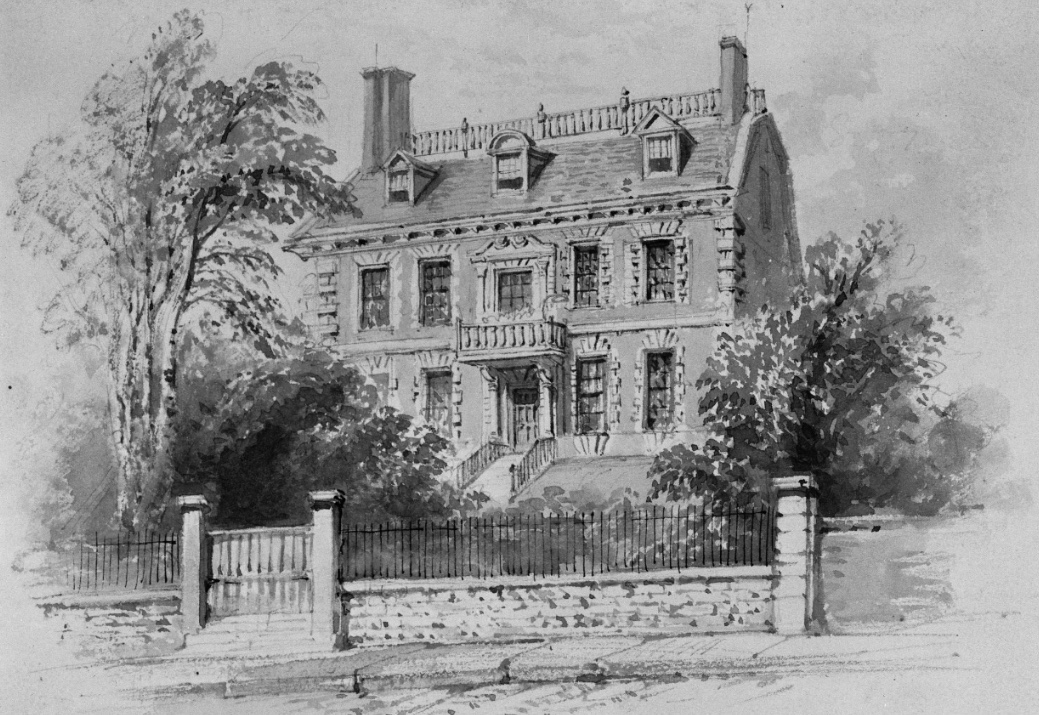
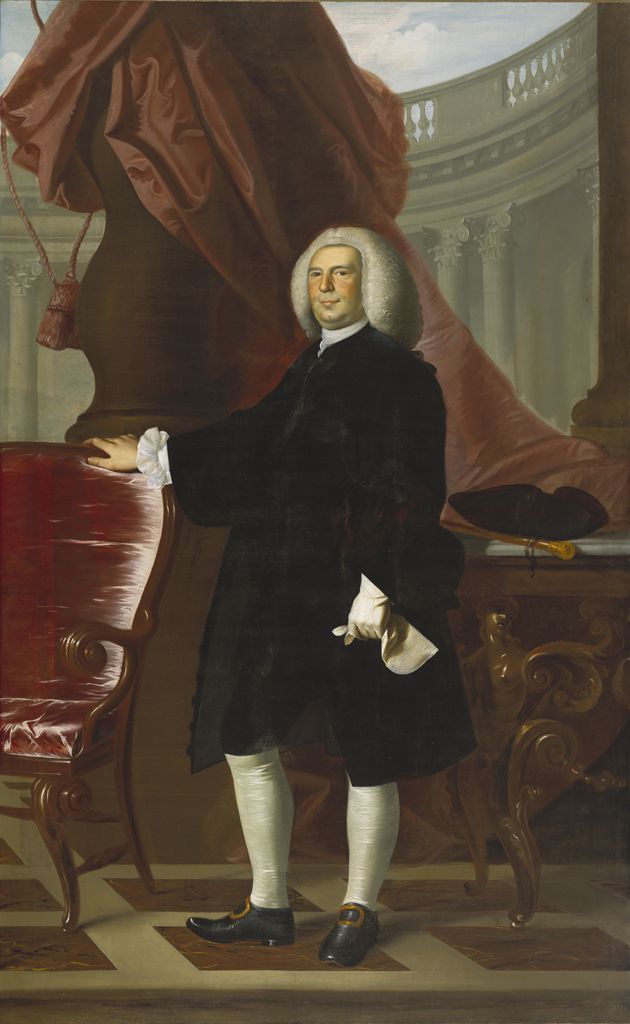

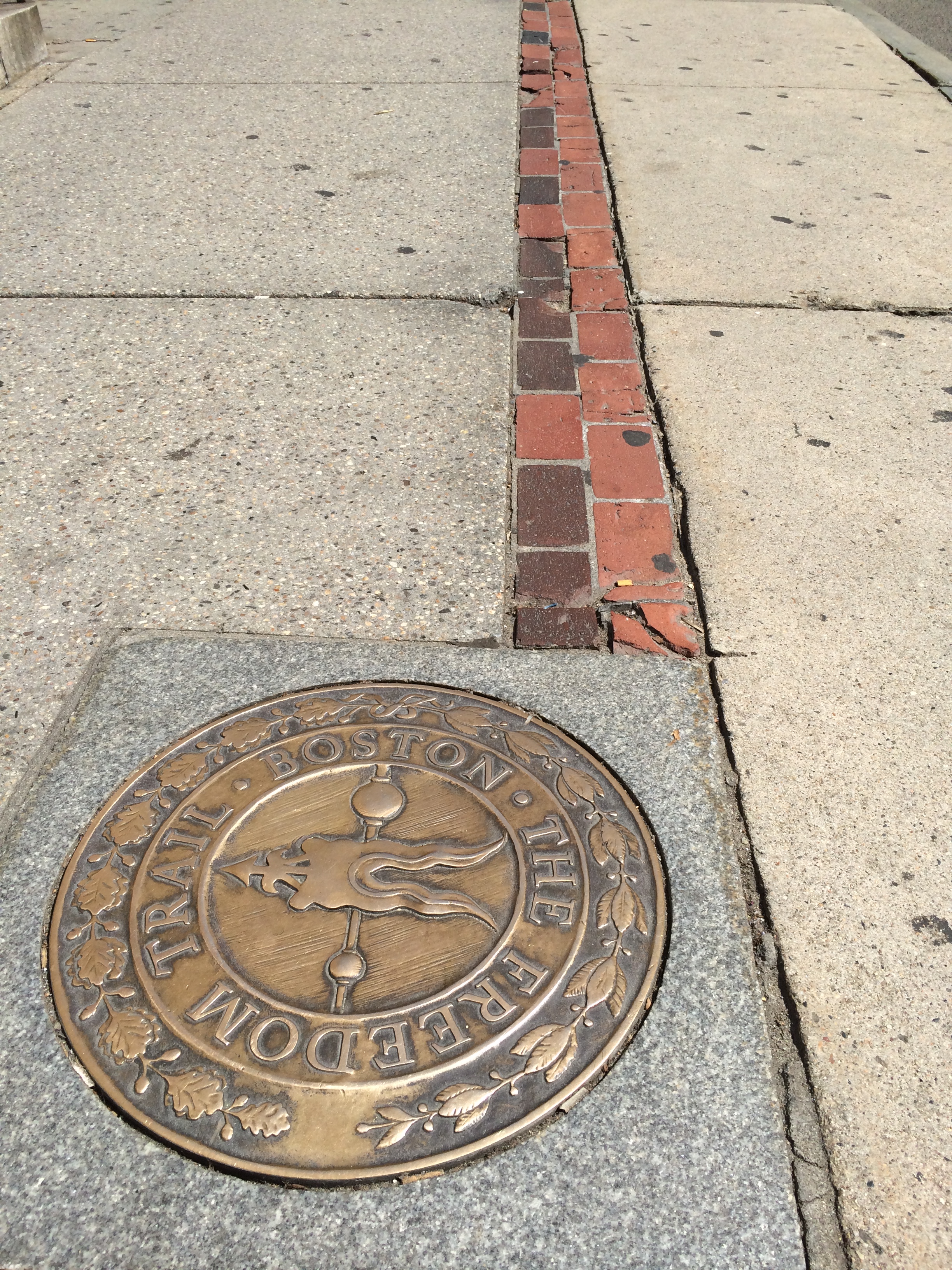
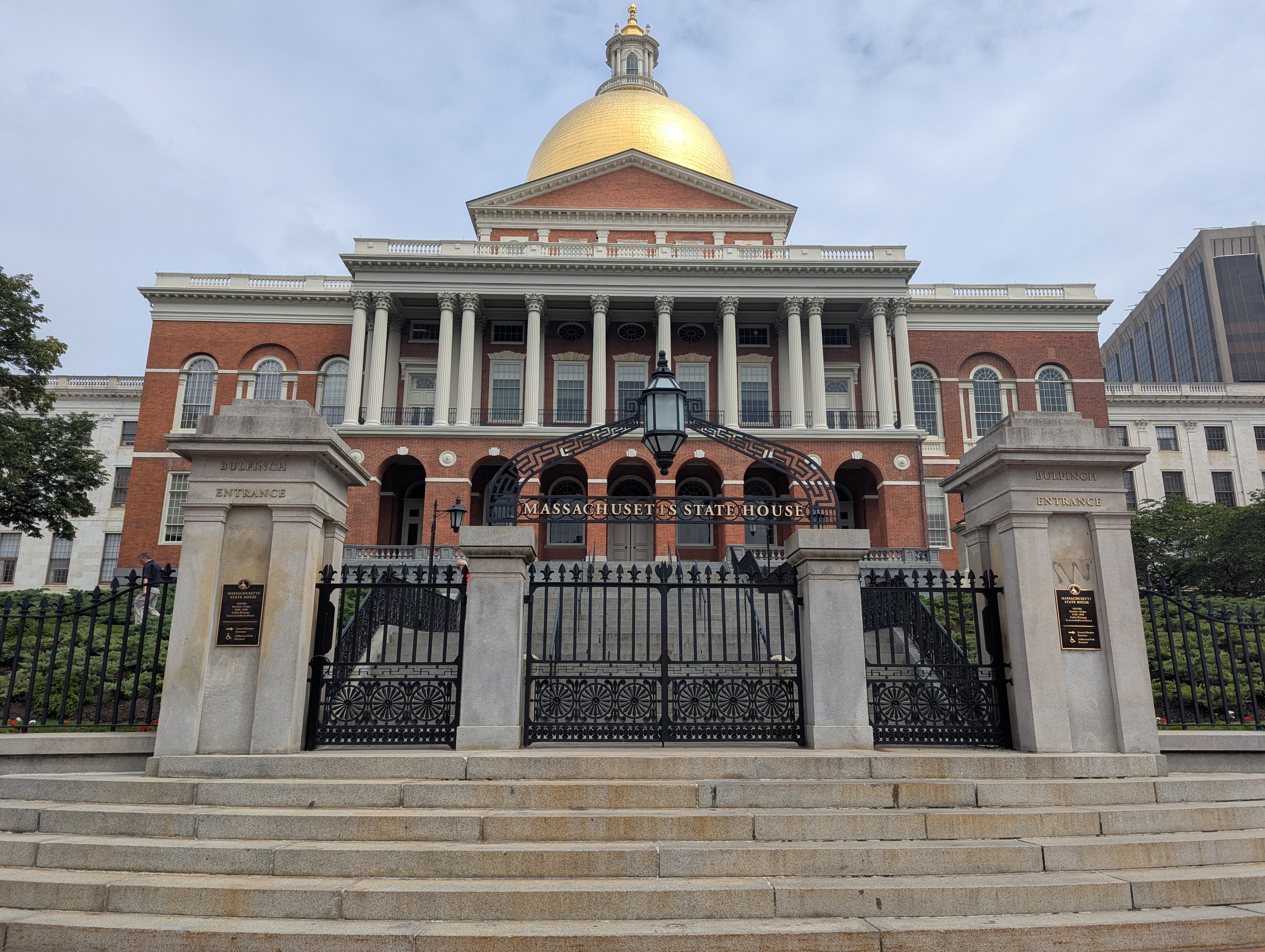


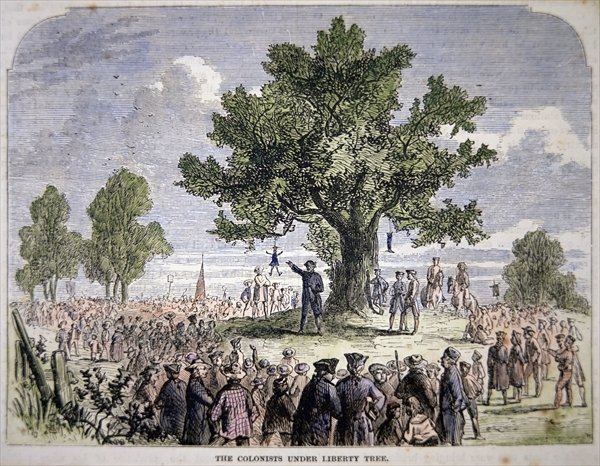

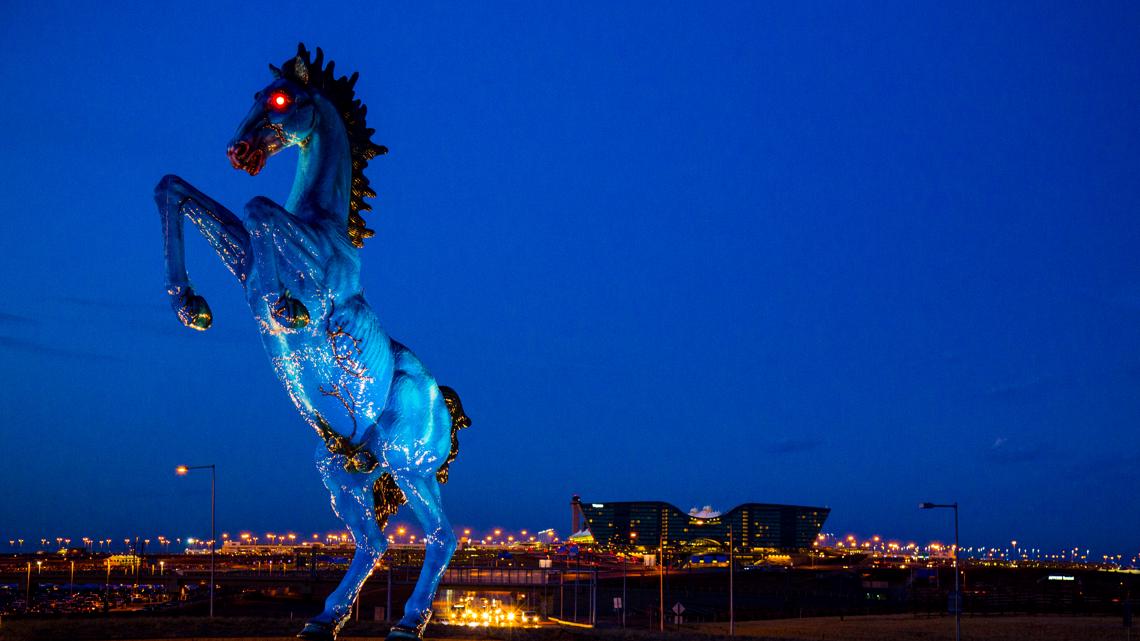
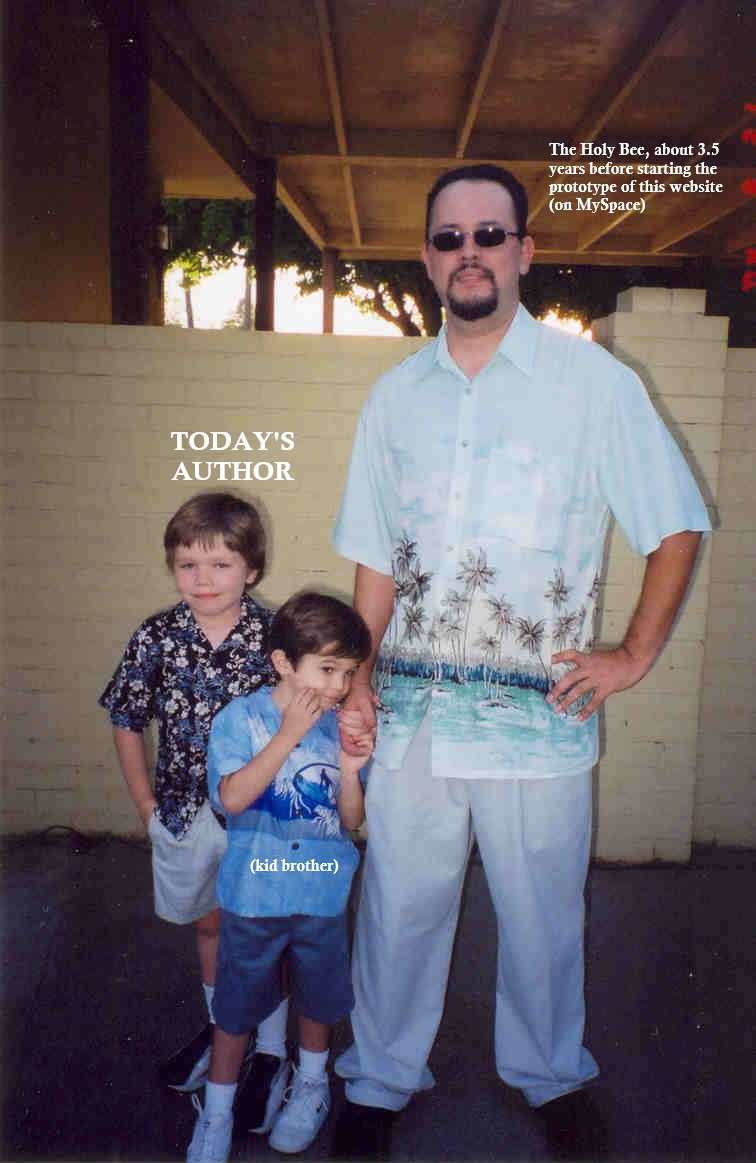
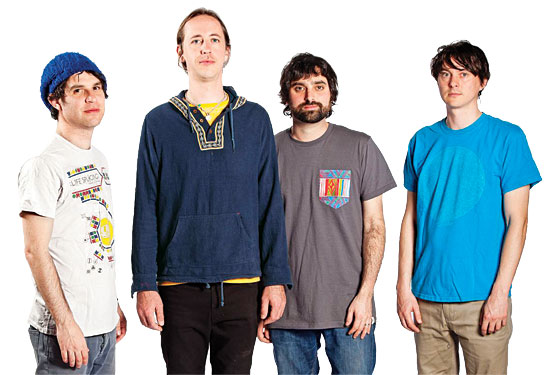
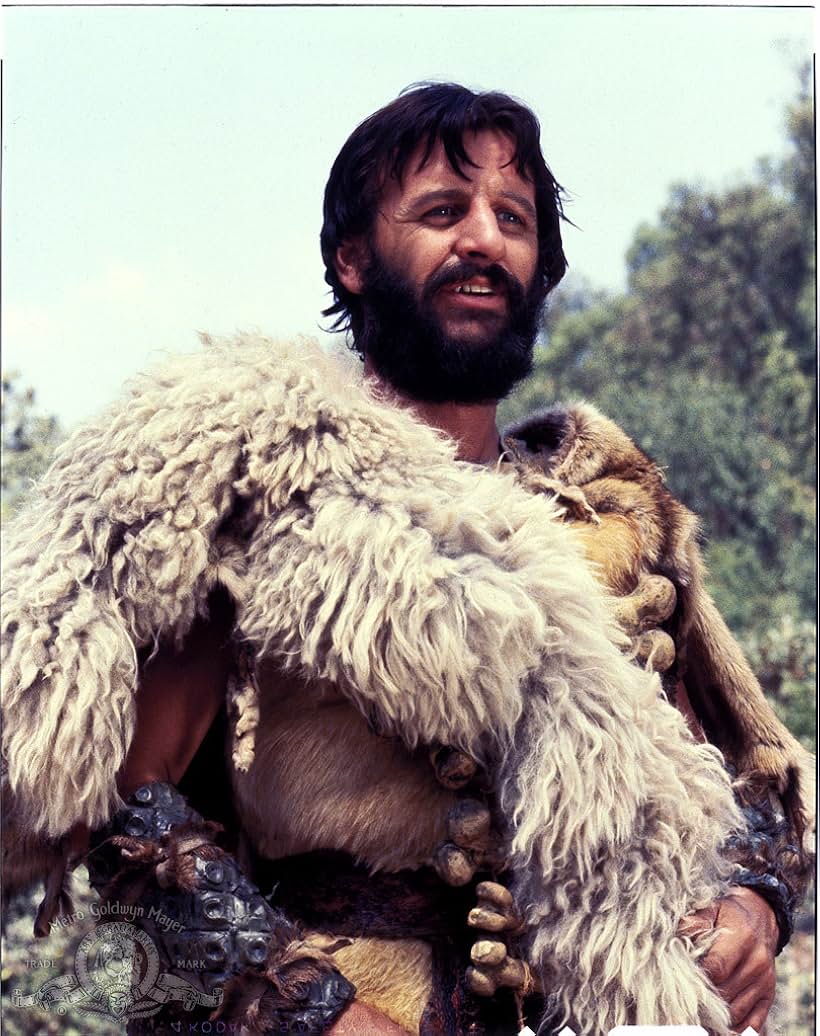


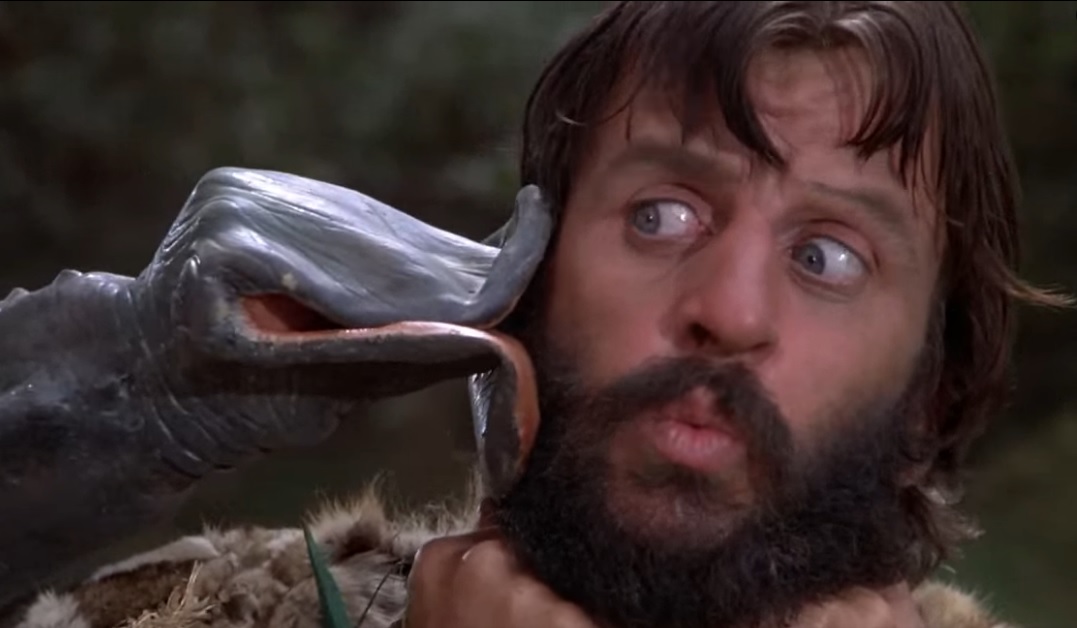


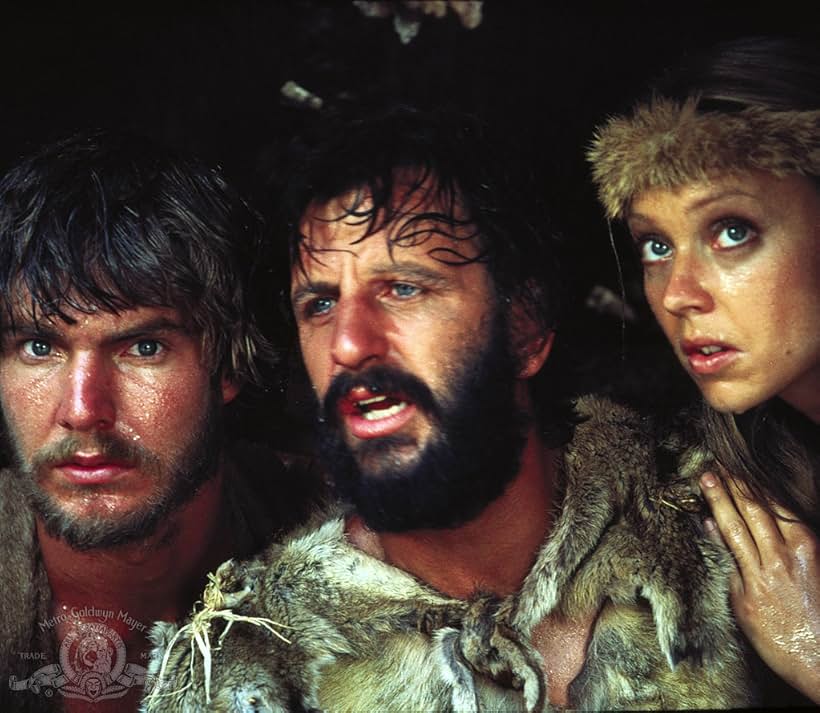


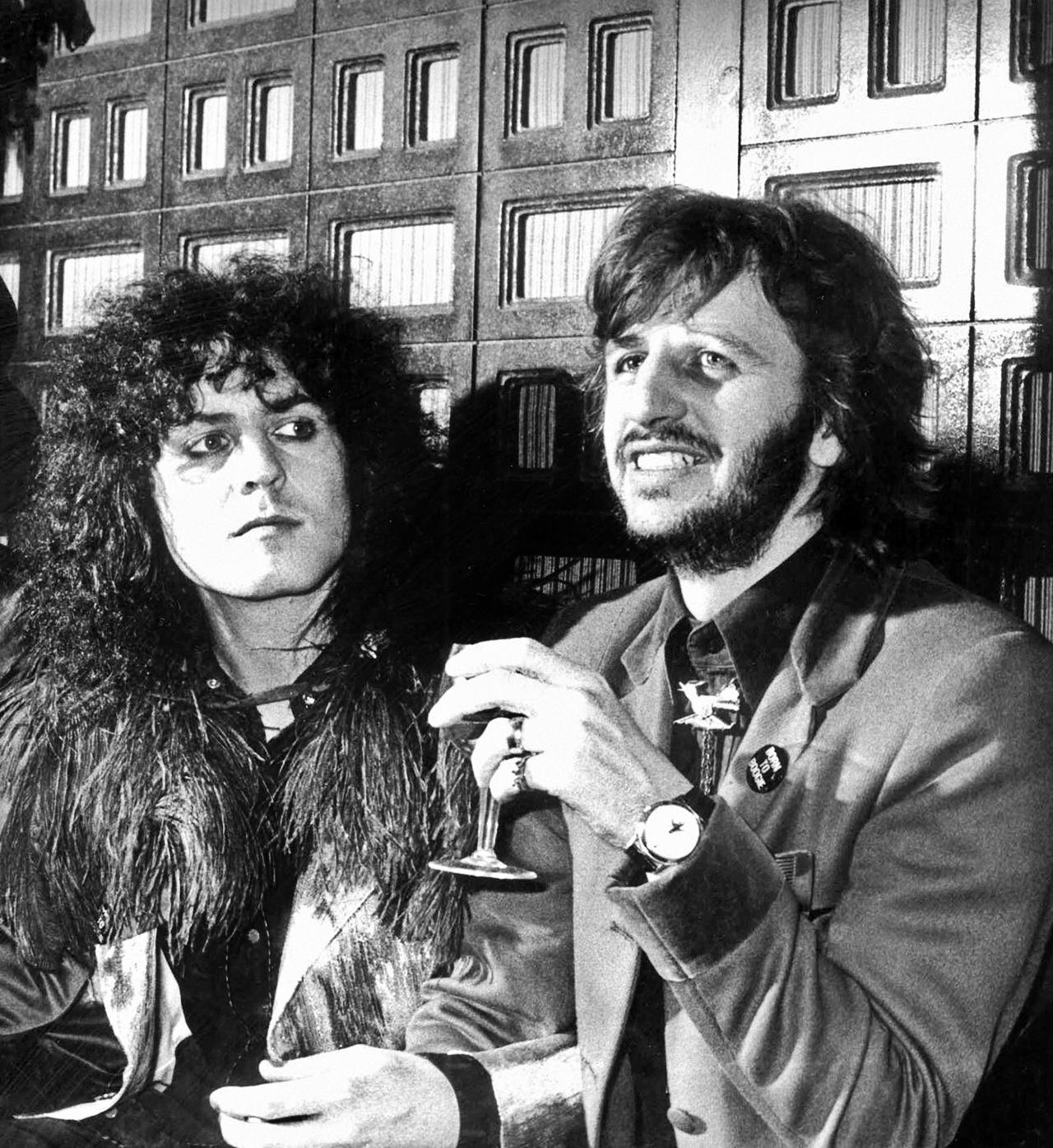


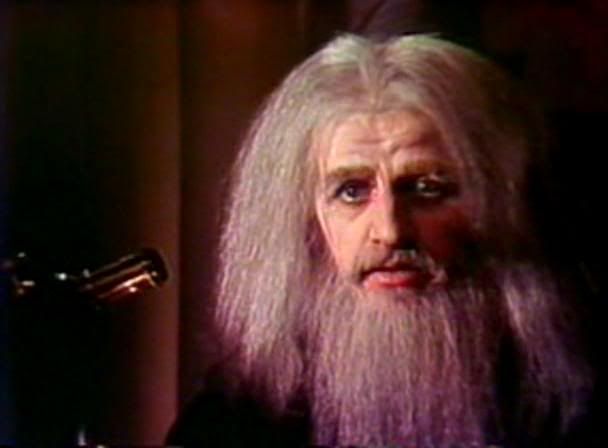

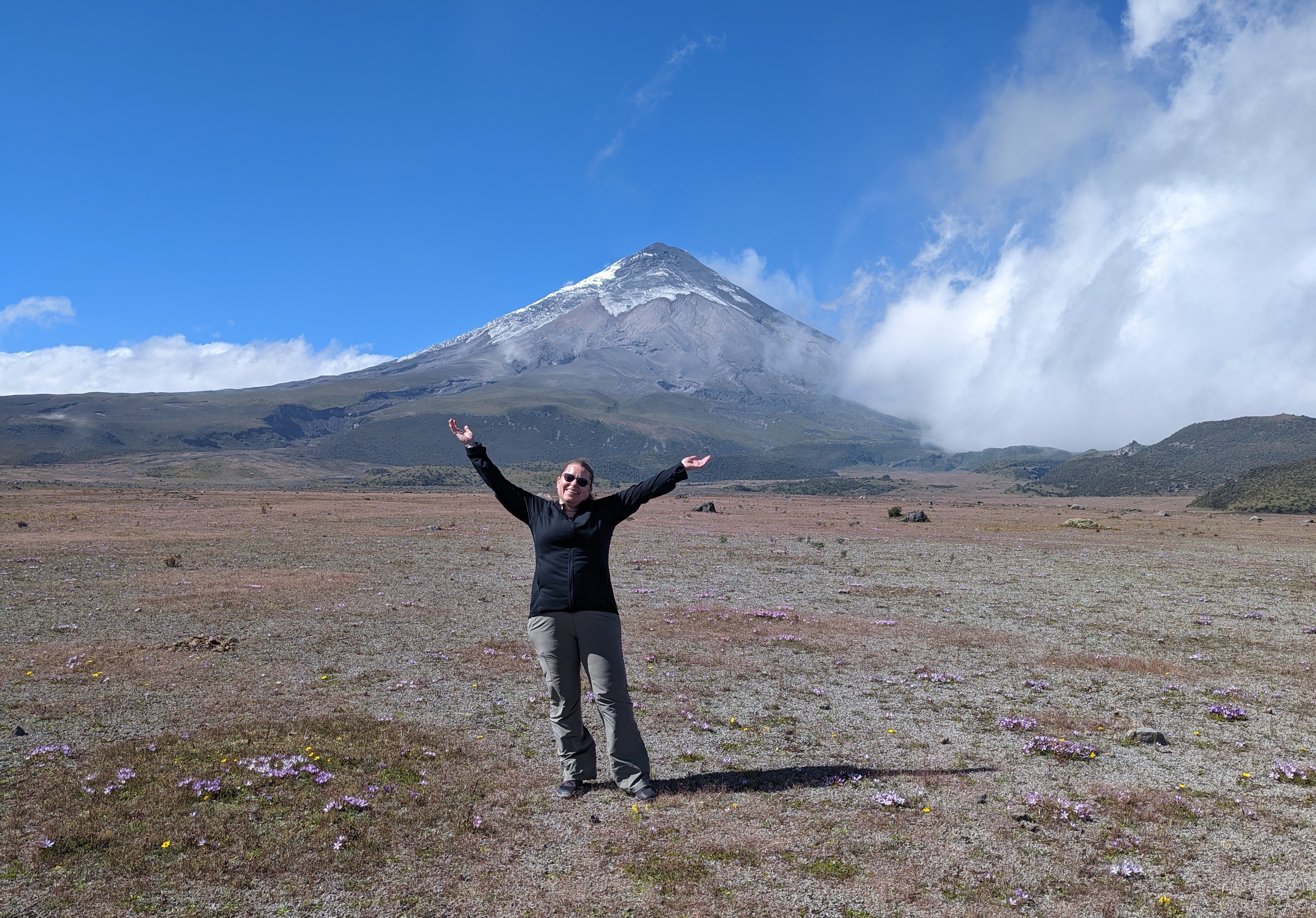

 Holy Bee of Ephesus