Category Archives: History

“Tombstone” vs. “Wyatt Earp”

As is often the case with the Holy Bee, to understand the entertainment, we must start with the history…

People of Tombstone, Arizona remembered October 26, 1881 as particularly cold. A bone-chilling wind whipped off the nearby Dragoon Mountains, and many residents assumed a flurry of light, dry snow was on its way to the little silver-mining town. A storm of a different kind came instead. Two groups of men faced off against each other in a nondescript vacant lot. (The OK Corral, which would soon lend this confrontation its name, was actually on another street on the other side of the block. Its rearmost portion could be accessed by a tiny alleyway, the entrance to which was still several yards from the vacant lot. But, as author Jeff Guinn points out, “Shootout at the Vacant Lot on Fremont Street” doesn’t have much of a ring to it.)

Animosity between the larger interests each group represented had been growing for the past eighteen months. A tangled mess of politics, personality clashes, and a long series of incidents such as stolen U.S. Army mules, the semi-accidental shooting of the Tombstone city marshal, and a botched stagecoach robbery just outside of town limits all contributed to the tension that had been humming through the town since early the year before.

On one side of the lot were five men — Joseph Isaac “Ike” Clanton and his younger brother Billy, brothers Tom and Frank McLaury, and Billy Claiborne — who represented the “cowboys.” Small-time ranchers who openly rustled cattle from over the Mexican border less than forty miles south, they were viewed with suspicion by the town leaders and businessmen. Most were legitimate ranch hands with a rowdy streak, coming into town to drink and raise a little hell. Dealing in stolen cattle was something everyone did to keep their ranches afloat, and most people looked the other way (especially if the cattle came from Mexico.) Other cowboys were more sinister — genuine “bad men” from Texas, who fled that area when the legendary Texas Rangers started cracking down on outlawry. Politically Democratic and sympathizers to the old Confederacy, they also had many allies in the town who appreciated their free-spending business and admired their free-spirited resistance to authority.

On the other side were four men — city marshal Virgil Earp, his two brothers Wyatt (a deputy federal marshal) and Morgan (deputy city marshal), and the notorious John “Doc” Holliday (a well-educated dentist-turned-professional gambler) — who represented the order- and community-minded townspeople. The clannish, uptight Earps were never incredibly popular with the people they were charged to protect. Wyatt in particular was viewed as a dour, self-aggrandizing social climber, with a checkered past on both sides of the law, who spent most of his time running card games in a variety of saloons and investing in mines that didn’t pay off. He viewed his off-and-on career as a lawman as a means to an end (that end being authority and respectability that would lead to wealth).  He had formed a close, unlikely friendship with Holliday, who was slowly dying of tuberculosis. Holliday was known to have a vicious temper when drinking (which was most of the time by 1881), and his reputation for unstable behavior and violence preceded his arrival in Tombstone. Wyatt Earp’s own reputation suffered in many people’s eyes due to his association with what many considered a degenerate. But one of Wyatt’s good qualities was loyalty to his friends. The Earps were politically Republican and staunch Unionists, perpetually on the make to enhance their status and make money. The cowboys were a threat to that goal.

The Earps and Holliday confronted those five cowboys that day to disarm them — they were carrying firearms within city limits, against the local ordinance. It was a shaky accusation to make, as the cowboys were ostensibly on their way out of town, and therefore justified in taking the weapons (which they had lawfully turned over on their arrival the day before) with them. They were just taking an awfully long time to make an exit. Lingering. Almost trying to spark a confrontation. Harsh, drunken words and threats had been spouted in the saloons the night before (mostly by the loud-mouthed Ike Clanton), and the Earps had had enough. As they approached the vacant lot, they were stopped by county sheriff John Behan — a friend and ally to the cowboys. He assured the Earps — falsely and dangerously — that the cowboys had already been disarmed. He was ignored, and wisely took cover.

Billy Claiborne fled at the sight of the approaching lawmen. After the tiniest moment’s stand-off, either Wyatt or Billy Clanton fired their weapon.  The unarmed Ike Clanton fled as soon as the shooting started. Thirty seconds later, it was all over, and the remaining three cowboys were dead or dying in the lot and the adjacent street. Tom McLaury was also revealed to be unarmed, but was shot several times as he desperately grabbed at the rifle in his saddle holster. Only Frank McLaury and Billy Clanton had weapons on them. The worst of the cowboys — true outlaws and killers like Curly Bill Brocius and John Ringo — were nowhere near Fremont Street that day.

But it did not end there. Controversy and retributions continued for several months. The Earp party were tried and acquitted of murder. Virgil and Morgan were victims of fearsome ambushes orchestrated by Ike Clanton and the more violent-minded cowboys. Wyatt and Holliday led a posse of dubious legal authority to cleanse the countryside of cowboy influence. The so-called “Vendetta Ride” became almost as legendary as the shootout itself… Continue reading

19 Comments

Filed under Film & TV, History

Family Jewels

(NOTE: Edited for minor corrections and updates in 2022.)

Greetings. I hope my summer hiatus from writing hasn’t killed off what little readership I have. I know I said that in a previous post that my work ethic was virtually non-existent during the summer months, but that’s not 100% factual. I have been working, sometimes feverishly. Just not on this blog. On what? You are justified in asking.

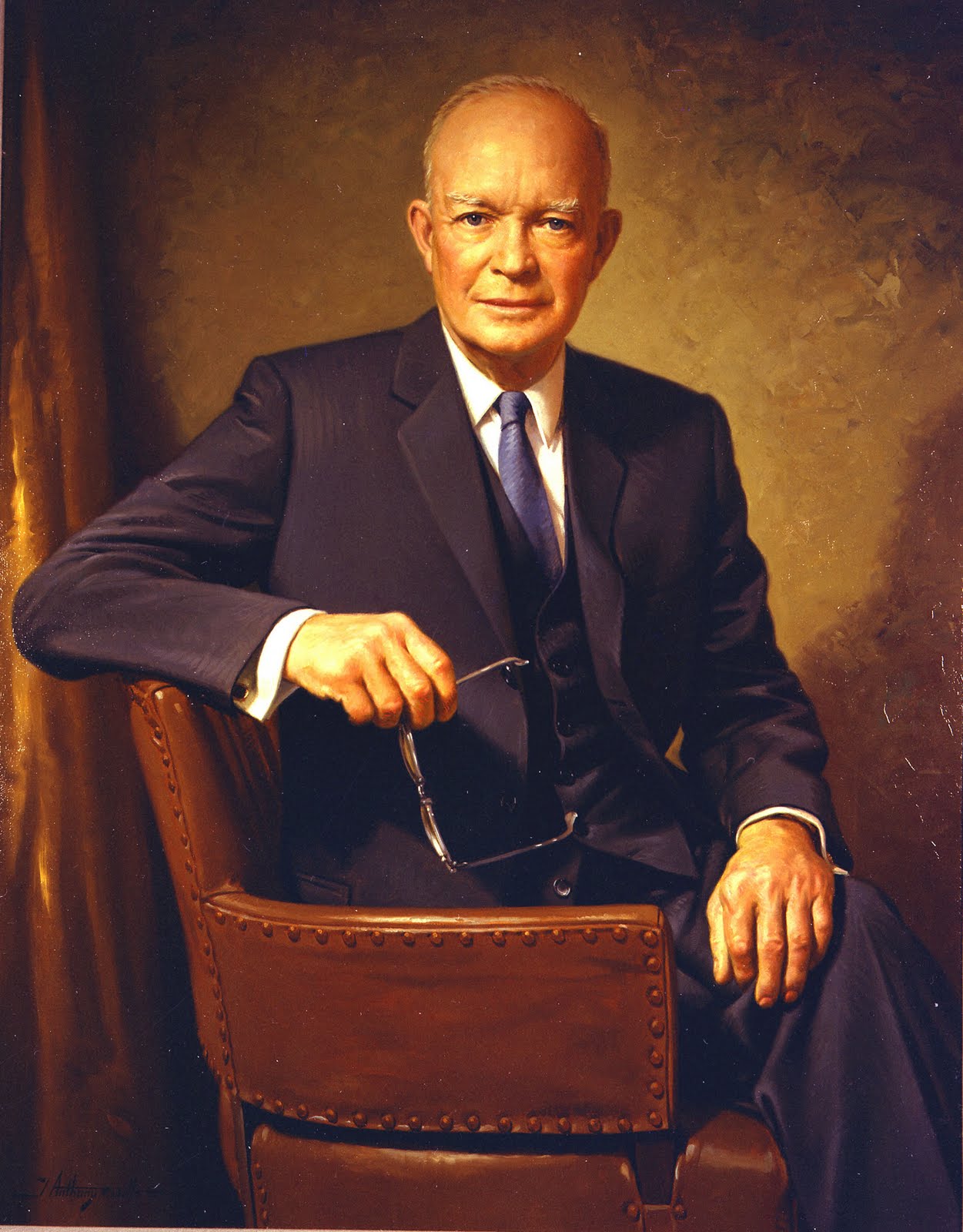
President Eisenhower

On my family history. The Big Summer Project has been scanning, digitizing, and organizing the thousands of family pictures that have come into my possession over the years. Doing this has also revived my periodic interest in genealogy.

Say what you will about obsessing over the Magic: The Gathering or the minutiae of Harry Potter, but exploring genealogy truly outranks them in sheer nerdiness. It’s the hobby of Mormons and retired people (nothing against those folks, it’s just that they’re not your go-to for cutting-edge activities). But I suppose I’m one of them. The only lower rung on the hobby ladder is metal-detecting. Maybe next summer.

As someone with the last name of Isenhower, I have been subjected repeatedly to the well-meaning but irritating question “Any relation to the President?” These instances are diminishing greatly since those with any knowledge that there had once been a President Eisenhower are rapidly dying off. “No, it’s spelled differently,” I would always say.

Out in the retail world, I had a little routine. If there was an older person manning the counter, I would observe them always checking the “E’s” first when I would go to pick up a prescription or my developed film. (The fact that I once picked up developed film is itself evidence that I, too, am heading into the “older person” zone.) I would let them look, and allow them to give me a puzzled, apologetic shrug, before I told them, with exaggerated patience as if it were the most obvious thing in the world, “Check the I’s.”

Yes, I was kind of an ass. Continue reading

10 Comments

Filed under History

Apocalypse Wow: The Gospel According To The Holy Bee

“Well, I guess hard times flush the chumps. Everybody’s lookin’ for answers…”

–Ulysses Everett McGill, O Brother, Where Art Thou?

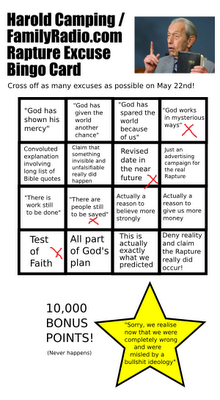
As our friend Col. Hans Landa would say, “That’s a bingo!” I got my card early, found about fifteen of this guy’s followers to monitor on Facebook over the weekend, observed their varying reactions, and marked off the excuses as they came up. (Actually, the most common one used by a factor of about 1000 was the “convoluted explanation” one, second down from top left, but it wasn’t in a neat row like the rest.)

Religion as a topic of study will never cease to fascinate me, as the very title of my entire blog suggests. Within arm’s reach of my computer at all times, along with my complete works of Shakespeare, is my King James Revised Bible (and my New Oxford Annotated Bible, and my biblical atlas and concordance.) Since the Holy Bee was in short pants, he’s always said if you want to truly understand the history, breadth, and beautiful capabilities of the English language, you should have a familiarity with the speeches of Churchill, the plays of Shakespeare, and the KJV Bible. (Students of the English language’s close American cousin would do well to know his or her Lincoln and Twain.)

Fascinated as I am by its history and sociological impact, for as long as I can remember, actually adhering to a religion has been anathema to me. I have always found it oppressive, creepy, cloying, and ultimately empty. I have no questions about my purpose or existence. I don’t need any outside set of doctrines to give me a code of ethics or morality. (And as far as my moral lapses — of which there are many — as long as they are confined to victimless pettiness like snickering at the fundamentalist rubes on Facebook without their knowledge, who the hell cares?) Continue reading

Leave a comment

Filed under Current Events, History

The Holy Bee’s 2010 Halloween Special, Part II

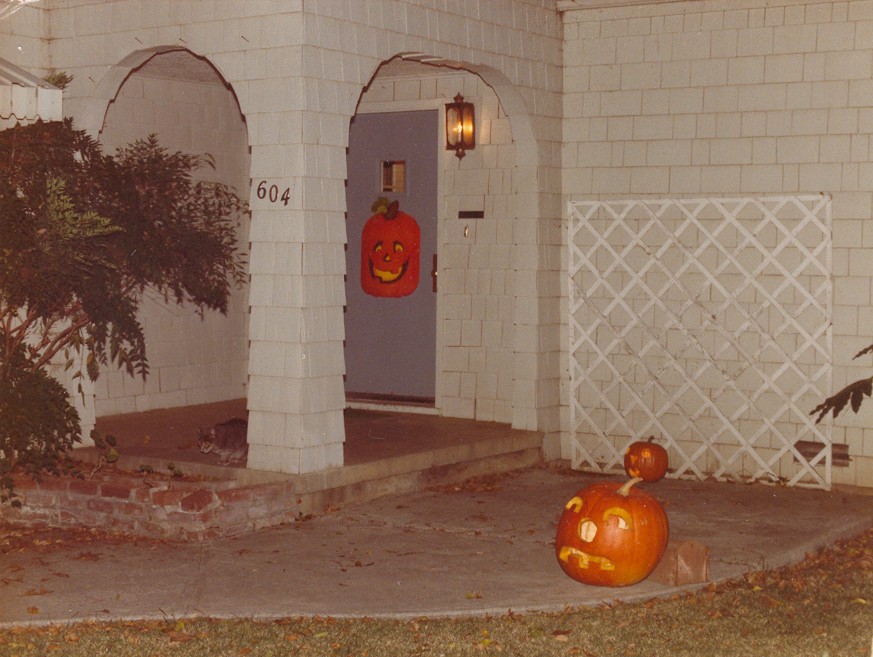
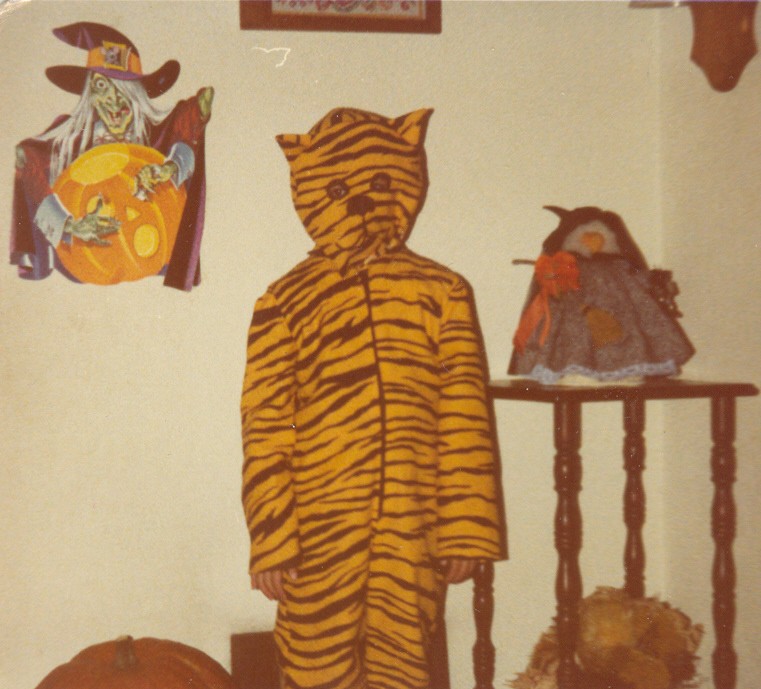
Chez Holy Bee, on a Halloween night sometime in the early 1980’s…


Funnily enough, I don’t remember any family trips to the pumpkin patch. I went regularly to our local patch as a school field trip in my early elementary years, but we only got to pick one to take back with us on the bus. I do remember a copious amount of pumpkins around the house each October, at least four of which went under the knife to become jack o’lanterns. They came from somewhere, but I was either not involved in getting them (pretty unthinkable) or this is a rare case of a holiday tradition of which I have no memory (equally unthinkable.) I don’t know.

Flipping through one of my picture books sometime in 1980, I came across an illustration of a boy in a tiger suit. This, for some reason, went off like a rocket in my five-year-old skull. I decided then and there that the acquisition of, and proud wearing of, a tiger suit would be the focal point of my existence.


The cardboard witch cutout in the background was a mainstay of our Halloween decorations until at least 1990, along with the green skull in the Dracula pic below

The end result, hot off my mother’s sewing machine, was a minor disappointment — it was not the plush, upholstered, fuzzy theme-park-mascot-style suit from the illustration, but rather a limp, featureless thing made of the thinnest tiger-print cotton with a mask like a grain sack. My bare hands dangled from the sleeves instead of being concealed in paws, and my battered size 1 Keds gave away my humanness at the suit’s bottom. The disappointment lasted only a moment, however, for this was an honest-to-goodness tiger suit. I decided I was immensely pleased with it no matter what. (In retrospect, I’m kind of glad it wasn’t a deluxe tiger suit, as that might have spun me off into a life of being a “furry,” and I’d be off somewhere yiffing right now instead of entertaining and informing you good people.) The fact that the tiger suit was completed close to Halloween was a happy coincidence. My tiger-suit mania could have hit me in January just as easily as late September. Continue reading

Leave a comment

Filed under History, Life & Other Distractions, Pop Culture

The Holy Bee’s 2010 Halloween Special, Part I

“This is the Holy Bee coming at you with music and fun, and if you’re not careful, you may learn something before it’s done. Hey, hey, hey…”

Americans claim to love tradition, but rarely have the patience to allow real traditions to develop. We have the media to force-grow traditions for us. Remember, Christmas was once a relatively obscure Catholic holiday, little recognized in the United States until the 1820s or so. What caused it to take off? The media. “The media” back then, of course, was print: books, newspapers, and magazines — and their editors spotted a hot trend in the Washington Irving’s “olde English Christmas” writings. Very soon, Christmas became safe, Protestant…and profitable. Don’t try to say Christmas has only recently “gone commercial.” Just take a look at the advertisements in any mid-19th century magazine’s November or December issue. Christmas in America has always been a way for retailers to clean up, and there’s nothing wrong with that — it’s still a special, awesome, cheerful time of year. You can ascribe that to the religious aspect of the holiday if you need to (I don’t), but we needn’t be ashamed of its media-driven, profiteering origins as a uniquely American holiday. There was no “golden era” to which we can roll back the clock. (Yes, there was a time when the commercialism was less brazen, but that’s a reflection on society as a whole, not just Christmas.) And, please, don’t get me wrong — I love Christmas, and you should, too. My point here is we invent things over a very short period of time, and then pretend those things have always existed. Continue reading

3 Comments

Filed under History, Life & Other Distractions, Pop Culture

The Holy Bee Recommends, #4: "Plain and gentle…and, in every respect, an estimable man."

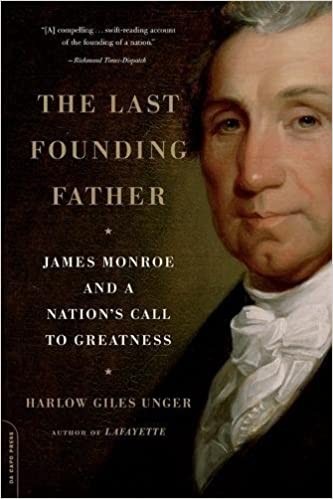
Anyone with even a passing interest in 51hrGiI5xDL._SX331_BO1,204,203,200_ early American and/or presidential history should take a few days with Harlow Giles Unger’s 2009 book The Last Founding Father: James Monroe and a Nation’s Call to Greatness, and acknowledge the enormous and unsung impact our fifth president had on the United States.

James Monroe seems to be consigned to the historical dustbin even though he was, as the title states, “The Last Founding Father.” The term “Founding Father” is somewhat elastic – it can be used to describe the first colonists at Jamestown and Plymouth in the early 1600s, the signers of the Declaration of Independence in 1776, the framers of the U.S. Constitution, veterans of the Revolutionary War, or – as is most often the case – a vague, convenient shorthand for all of the above.

Monroe, if he’s remembered at all, is remembered only for the Monroe Doctrine, which was given as part of his State of the Union report in 1823: a bold statement from a juvenile country just starting to flex its international muscle, informing Congress and the rest of the world that the entire Western Hemisphere was closed to any further European colonization, and providing one of the basic building blocks of our foreign policy to this day.

The appellation “Last Founding Father” is given to Monroe, I suppose, because he was the last person to serve the country on a national level (his presidency lasted until 1825) who was of age at the time of the Revolution in the 1770s. His successors to the presidency, John Quincy Adams and Andrew Jackson, were both pre-teens in short pants when the “shot heard ‘round the world” rang out at Lexington in 1775. Monroe, as a teenage Continental Army lieutenant, made the famous crossing of the Delaware with Washington’s tattered troops (in the famous painting, he is depicted as the one holding the flag, even though he occupied a separate boat in reality.) Continue reading

Leave a comment

Filed under Books, History, The Holy Bee Recommends

Marysville: Then & Now, Part 4

[NOTE: This piece was ported over from a much-older website, and some of the formatting and photo sizes aren’t presented as originally intended. As soon as I hire a quality control staff, these errors will be corrected.]

At long last, the conclusion of this little historical photo essay. Some of the pictures I originally took last summer to illustrate “Marysville Now” are already edging out of date! If you have a moment (and if you’re already reading this, I suspect you have several) catch up with Part One, Part Two, and Part Three. Here we go…

The Marysville Water Company had enormously thick walls on its first floor to support the reservoir on its roof.


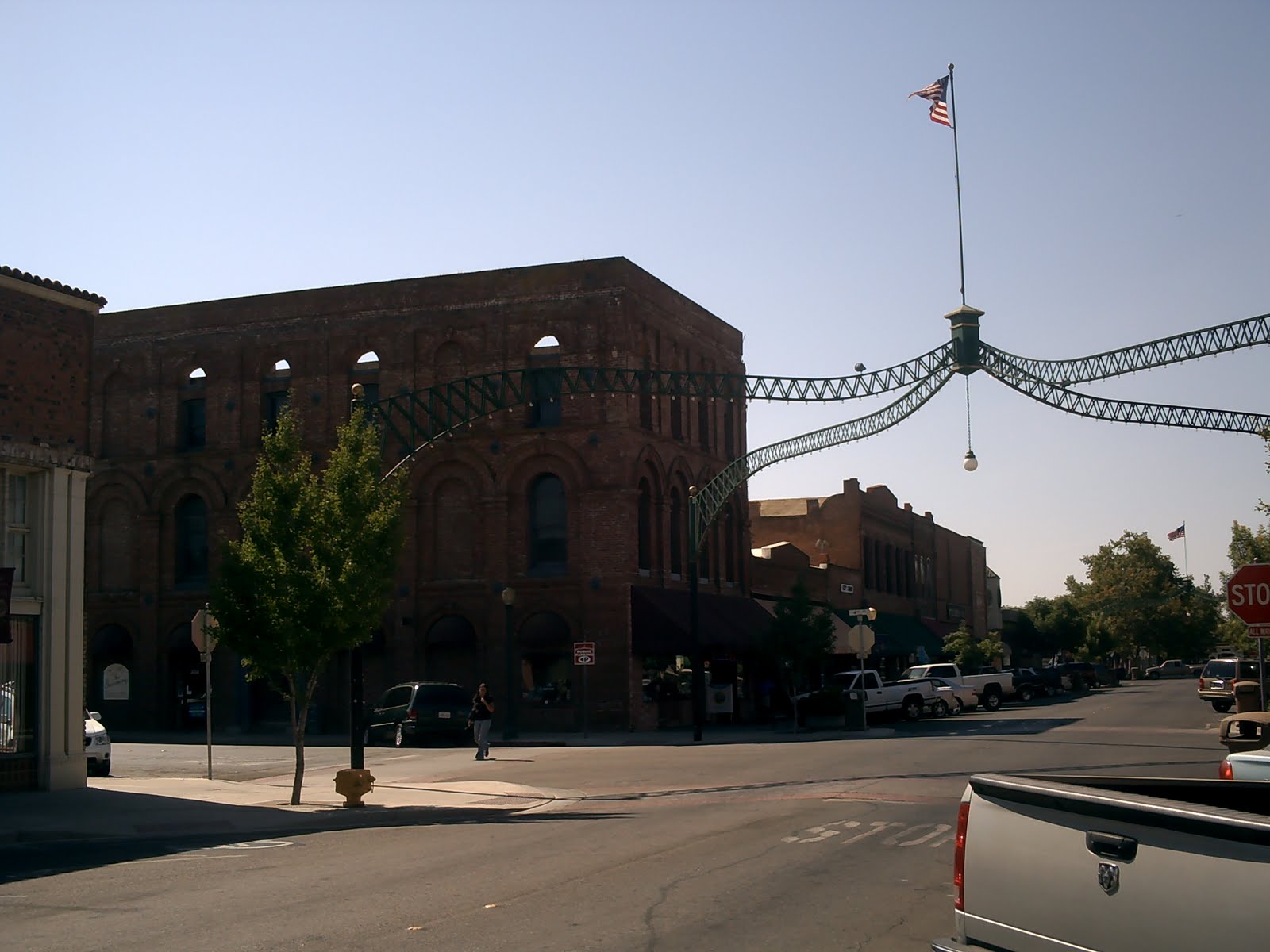
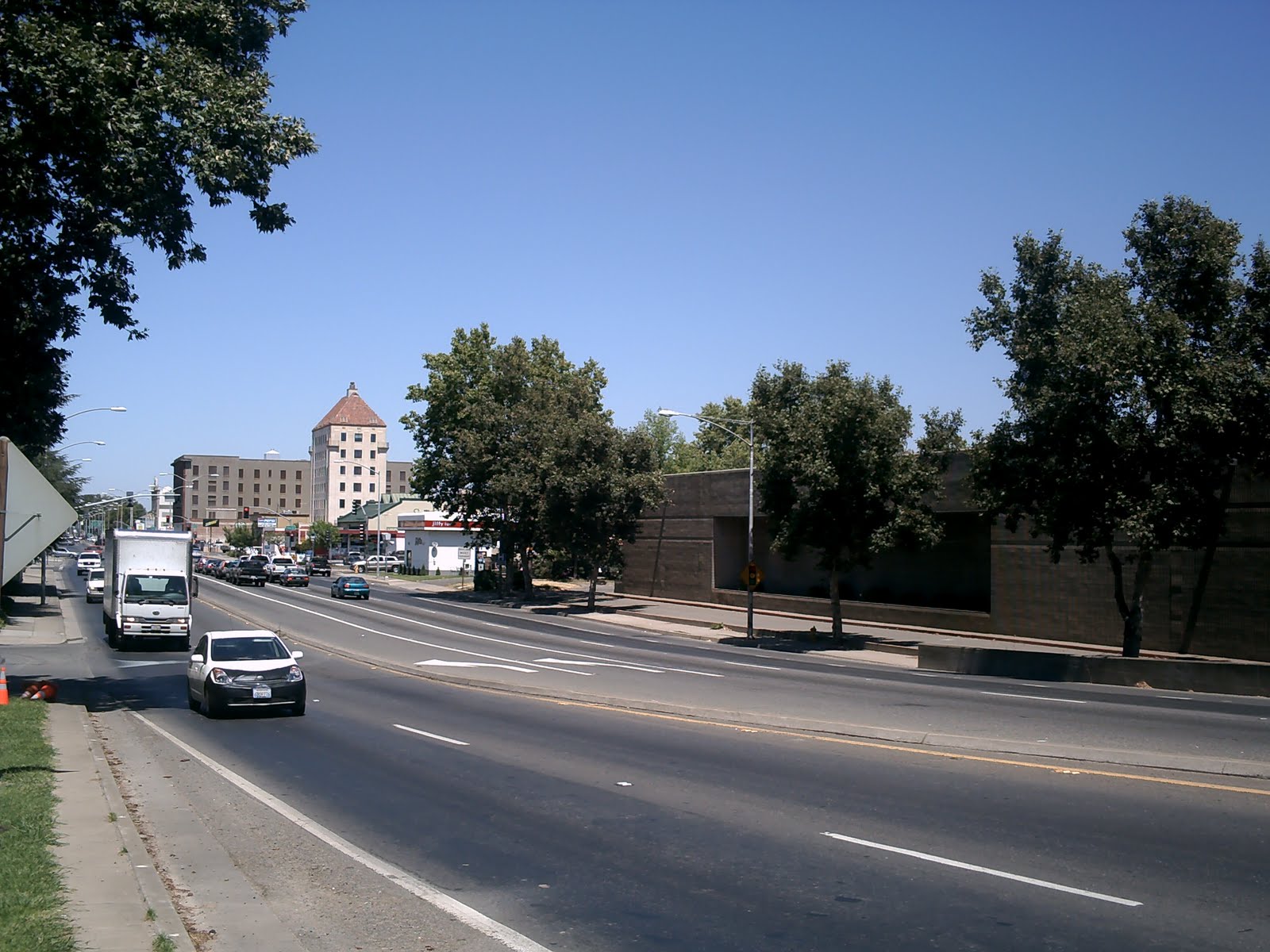
The old water company building is now home to Marysville Music on its first floor, but its second floor is vacant, and its third floor is a roofless shell.
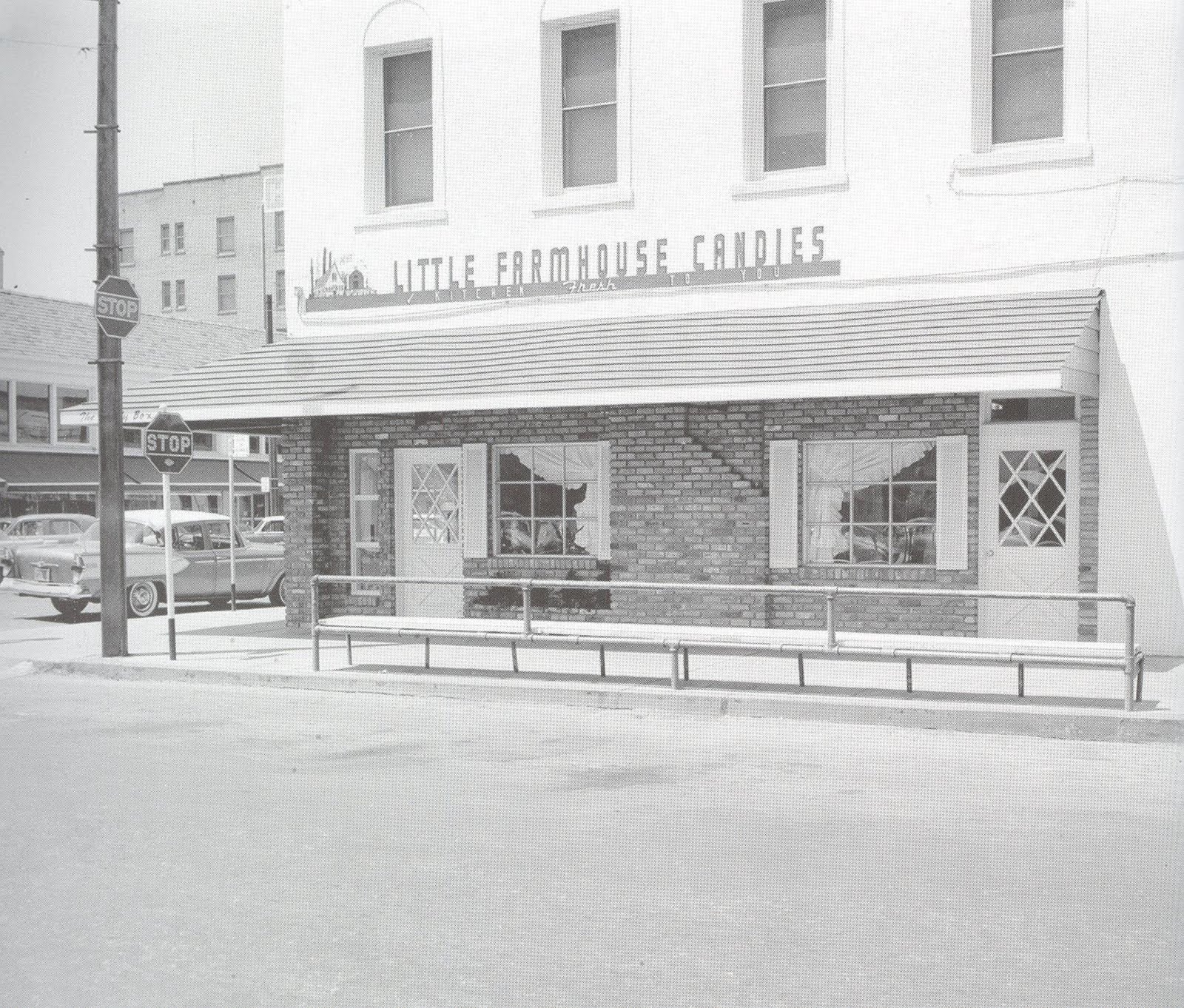
Man alive, who doesn’t love a good piece of candy? Well, me for one. I prefer a saltier snack — your potato chip, your pretzel, your cashew or other fancy nut. With my lack of willpower as regards snacks, this preference is probably the only reason I have a tooth left in my head. However, other people’s love of candy has made the Candy Box/Little Farmhouse confectionary store a Marysville landmark. Continue reading

20 Comments

Filed under History

Marysville: Then & Now, Part 3

[NOTE: This piece was ported over from a much-older website, and some of the formatting and photo sizes aren’t presented as originally intended. As soon as I hire a quality control staff, these errors will be corrected.]

Welcome back to this little historical photo essay after a long delay. I was originally hoping to complete this series with one more entry, but there is enough material to pad it out to two more. If you haven’t read them yet, click for Part One and Part Two of this series. Onward…

As stated earlier, D Street was once the real main street of Marysville, and E Street (above) was a semi-industrial secondary road. The cars here make are making a big turn to the east and the approach to the now-demolished D Street Bridge. At right, the triangular top of the Hart Building and dark-brick edge of the Hotel Marysville can be seen peeking from behind the white Masonic Lodge building (burned down in 1956.)
E Street is now part of Highway 70, and the main route in and out of town. The Hart Building and Hotel Marysville are now visible, but Cal’s Square Gardens roller rink has been replaced by Mervyn’s. Continue reading

2 Comments

Filed under History

Marysville: Then & Now, Part 2

[NOTE: This piece was ported over from a much-older website, and some of the formatting and photo sizes aren’t presented as originally intended. As soon as I hire a quality control staff, these errors will be corrected.]

Okay, all informed and/or refreshed on Marysville’s rather snake-bit history after reading Part One? Splendid. On we go.

Up until 1956, if you were coming into Marysville from Sacramento or other parts south, you crossed the Yuba River and entered town via the D Street Bridge. D Street was essentially Marysville’s “Main Street.” E Street and its associated bridge, which brings in squirrel-crushingly copious amounts of traffic nowadays due to it being part of the I-70 corridor, was back then still a secondary street, populated mostly by warehouses and light industrial buildings (and, after 1927, the Marysville Hotel and the State Theater.)

D Street once was where all the action was, and like many small-town Main Streets, it has seen better days. Once the new E Street freeway bridge was opened (the D Street Bridge was fatally weakened in the 1955 Christmas floods and dismantled), D Street pretty much shriveled on the vine. Oh, there are still signs scattered around boasting about “Historic Downtown Marysville” and there are a tiny handful of preserved buildings, but unless you want a boutique gift or discount office furniture or to be unsettled by the eerily mellow hippies that run the used bookstore (excuse me, “literary arts center”), “Historic Downtown Marysville” doesn’t have much to offer the average person anymore.

One of Marysville’s most famous bits of history is the Bok Kai Temple, built by the local Chinese community in 1880 and the only one of its kind in the United States. It’s located at the foot of D Street, but faces away from the street toward the river – or rather, it was built facing the river, now it faces a blunt levee wall.


The temple itself seen from the levee, recently re-painted and spruced up, is behind a locked gate to keep Marysville’s less-upstanding citizens from urinating in it, but to it’s right (or left, I guess, as it was built facing the “wrong” way) is a rather picturesque pavilion and small park open to the public.


The M&M Trading Company building (“The Building That Melts In Your Mouth, Not In Your Hands”), was on the east side of the D Street Bridge, once the main entry into Marysville. The M&M building itself dates from the 1800s, and has been put to a myriad of uses.


The M&M has now changed into the Silver Dollar Saloon, whose website boasts that its second floor used to be a brothel in the 1800s. (A couple of other websites say it remained in that capacity until the 1970s, and I have reason to suspect it remains so in the 2000s, but that’s a story for another day.) The bridge entry is now the aforementioned Bok Kai pavilion and park.


On the west side of D Street was the W.J. Brown Furniture Store, and just visible behind is the intersection that took drivers to and from the more industrialized E Street a block to the west.


This area is now a continuation of the Bok Kai park, and is usually pristine and peaceful, even though it’s just a few steps away from the very busy E Street bridge/freeway combo. Occasionally, some of Marysville’s more “colorful” characters, or transients passing through, will be spotted lounging under the shade trees here, but they usually move on quickly, leaving the place once again to the birds and squirrels.

The view from the bridge as you came into town.


The view is now obliterated by foliage and the Bok Kai pavilion. Not that there’s much to see anymore, anyway.


Another view from the bridge.


And another view of the trees that replaced it. Where Studebakers and Hudson Hornets once rolled into town, lizards now scamper in the underbrush, and a set of cement steps leads you to the Bok Kai temple gate, and beyond them, a set of rickety wooden steps leads you still further to the top of the levee. If you turn around from where I’m standing to take the above picture…

…you can see the remains of the D Street bridge supports still jutting from the Yuba River like a pair of rotting teeth.

D St. 1920s


1940s


By 1977, it was decided that D Street from 1st to 3rd Streets had become an eyesore, a flea-bitten collection of bars and flophouses, plus it had brought unwanted notoriety as a cruising ground for serial killer Juan Corona, so the whole two blocks had to go.

Much of it was replaced with a drab 70s-style strip mall called “Downtown Plaza” (hey, at least they had the name before Sacramento) on the east side of the street, and the Mervyn’s department store on the west side. Trees were planted, hobos and stewbums were (for the most part) rousted out, and everyone congratulated themselves on a job well done.


D Street between 1st and 3rd is now shadier (in the good sense), safer, cleaner – and pretty much abandoned. The Downtown Plaza sits half-unoccupied, and as we learned in the last entry, Mervyn’s sold its last bath towel in December 2008.

The tiny Lyric Theater once co-existed side-by-side with the Tower Theater. My dad got his tattoos somewhere around here in the 1950’s.

By the seedy 1970s, I doubt the Lyric was showing The Apple Dumpling Gang. While the state and usage of these buildings may not have boosted civic pride, at least they had character.

Unlike their replacement, the Downtown Plaza.


As the east side of D Street spiraled into debauchery, the west side clung to respectability, with businesses like Payless Drugs (not pictured, but after 1956 on the site of the Western Hotel), the Star Grill, Gallenkamp Shoes and United Jewelers still peddling their wares.

The Mervyn’s parking lot replaced them all.

What better place to hang out in the mid-20th century than the Brunswick Billiard Parlor? A swell fella could grab a shave and a haircut (complete with a splash of bay rum and some Wildroot Cream-Oil), buy a Hav-A-Tampa, and pat a dog on the head, then shoot some stick, all in the company of other swell fellas, and without a lot of yip-yap from the skirts.


Well, I guess you can’t turn back the hands of time, and Mervyn’s needed a parking lot more than an average joe like me needed a place to hang out.

Oh, yes, I promised more fires.

Remember the Kelly Brothers’ Stables? The brothers could console themselves after the 1915 fire that destroyed it with the fact that their very successful undertaking business was still going strong.

Kelly Brothers Mortuary was located on the first floor of the Elk’s Lodge building on D Street.


Which burned down in the 1926 (taking the Atkins Theater with it.) I don’t really know what became of the Kelly Brothers after that. The site became a much smaller storefront business (left) and the entrance to the Tower Theater.

The northeast corner of 1st and D seems to have been a theater site since the turn of the century. The Marysville Theater was first to occupy the area, built in 1907, and the site of many live stage performances.


The corner lot itself is now parking for the Tower Theater (see below).

Around the time it switched from live performances to a cinema screen in the early 1920s, the Marysville Theater changed its name to the Atkins Theater

The Atkins Theater is visible in the background of this picture of 1st and D on Rotary Day, when local business donated goods to charity.


The same corner as it appears today.


The Atkins Theater burned down along with the adjacent Elks Lodge building in 1926. It was replaced by the Liberty Theater shown here (the burnt-out frame of the Elks building is still visible in the background.)


The hastily-built Liberty was replaced with the much bigger Tower by the late 1930s. The L-shaped Tower has its entrance near the old Elks building site, but curves around and to the back, encircling the small area where the Atkins/Liberty stood.

The Tower Theater is, of course, no longer a movie theater, and hasn’t been for some time. But everyone’s a sucker for Art Deco, so the building was allowed to remain when the rest of lower D Street was wiped out. For a short while in the late 90s it hosted live music events (I went to a few). Now, somewhat restored and remodeled, it’s the headquarters for the Marysville chapter of the New Age-y Center for Spiritual Living, and private office space. Moving on to the other Marysville Theater…

The State Theater opened as the National Theater in 1927 on E Street, across 5th from the Marysville Hotel, which opened at the same time. Its name went from “National” to “State” in 1938.


The State as it appears today, fifteen years after it showed its last movies in 1996.(The John Travolta vehicle Phenomenon, and the kids’ adventure flick Alaska, if you’re interested. The posters, which I put up, remained in their cases until 2003 or so, fading to almost pure white.)

Yes, I was the State’s assistant manager for its final year of operation (December 1995 – November 1996), so you can expect to hear a few State stories in This Used To Be My Playground. I like to claim credit for running the place into the ground, but it was clearly dying without my help. For the final month or so, it was a discount theater, all seats a dollar. The company that ran the place came up with a hideous mascot (“Buck The Chick”), and one of my final tasks as a State Theater employee was to put up those posters and marquee letters reading “Buck The Chick Says CHEAP CHEAP!” The axe deservedly fell a few days after that, before they got a chance to put someone in the baby-chick costume and have them prance around on the street corner.

The State’s new owners (a couple of shady Hungarians) are currently embroiled in the usual finger-pointing battle with the obstructionist Marysville City Council over taxes and fees and grandfather clauses. If it re-opens in any capacity within the next decade, you can knock me over with a feather from Buck The Chick.

There has been some confusion as to whether the State ever suffered a serious fire at any point in its history. Many are convinced it did, but my research has only turned up records of the Atkins theater fire, a few blocks away. The people & websites that say the State burned all date the fire to 1926 – when the Atkins burned. I think people are a little confused, compounded by the fact that late 1926 was when construction on the State began.

I’ll try to bring this whole thing to a conclusion in the next entry, and get back to the 90s playlist (which now seems to be stretching into next summer, thanks to my apathy and ability to become distrac…hey, Robot Chicken is on! Later.)

7 Comments

Filed under History

Marysville: Then & Now, Part 1

[NOTE: This piece was ported over from a much-older website, and some of the formatting and photo sizes aren’t presented as originally intended. As soon as I hire a quality control staff, these errors will be corrected.]

I certainly have no regrets about leaving Marysville – my home of two years – behind in favor of the relatively cosmopolitan Sacramento (insert snickers from San Franciscans here), but I do owe Marysville a little bit of respect for its history. It was already a bustling city when California gained statehood in 1850, although little remains to be seen of its original character. This is due primarily to two undisputable facts: 1) The pioneers and a couple of generations after them seemed unable to prevent themselves from burning things to the ground every few years. In Marysville, this tendency stuck around well into the 1950s, long after fire departments had been invented. Maybe it’s something in the water. 2) City planners in the 1960s and 70s seemed to get some kind of perverse kick out of replacing handsome, vintage buildings with buildings that looked like giant cinder-block shoeboxes. I understand that it’s sometimes too expensive to restore old buildings and they have to go, but it’s unfortunate so many of them went at a time when the Hideously Ugly school of architectural design was in vogue. (If you can find one example of a nice-looking building designed and built between 1961 and 1979, e-mail it to me and I’ll send you a prize.)

Anyway, most of you who know me personally know that I like history, and I particularly like to observe how things change, subtly or radically, over time. It’s why I chose to include the “This Used To Be…” series of photos in my 90’s Playlist series. I was also inspired by a series of books called Then & Now which juxtapose vintage pictures with those taken at the same place in modern times. I decided I could do the same thing based on the pictures in Images of America: Marysville by Tammy L. Hopkins and Henry Delamere. So I headed out with my camera and a copy of the book to document the changes that Marysville has gone through. It sometimes took some hardcore squinting at the old photos, and a little guesswork, but I think I matched things up okay. My photos don’t look too great for the simple reason that I’m a shitty photographer with cheap equipment, and also because occasionally time or guesswork failed me when I was on site in Marysville (I took a few shots of the wrong side of the street), so I used images captured from Google Street View instead.

So, with your patient indulgence, allow The Holy Bee of Ephesus to present MARYSVILLE: THEN & NOW.

First of all, a map to orient any of you unfamiliar with the town.

Most of the historic stuff we’ll be seeing is in the rectangular area bounded by E St. to the west, B St. to the east, Ellis Lake to the north, and 1st St. to the south. There are some exceptions, but that’s pretty much it. Over the Feather River to the west is Marysville’s “twin” city of Yuba City, which is much bigger and fancies itself more sophisticated. I lived off of 14th Street, on the north side of Ellis Lake (outside the map’s top boundary.)

Excuse me while I go into full historian mode for a moment (picture me lighting a pipe and brushing the lint off one of my suede elbow patches).

In 1842, California was still part of Mexico, albeit a part in which no one but American settlers had any interest in residing. The Mexican government gave huge land grants to anyone who could fog a mirror, and much of it ended up in the grip of California grand poobah and somewhat lunkheaded businessman John Sutter. Sutter leased some of his approximately one kajillion acres of northern California land to Prussian immigrant Theodor Cordua, who established an adobe trading post at the convergence of the Yuba and Feather Rivers. As the bemused Maidu Indians looked on, munching their acorn paste, Cordua presumably shouted something to them like “Hey, can you give me a hand with this crate?” and by 1849, all the slower Indians in the area were “employed” as laborers by Cordua and his business partners. The rest had understandably scattered. (The term “Yuba,” which was applied to the river and general surroundings came from either a small band or sub-tribe of these Native Americans, or a variation on the Spanish word for “grape” — uva. Take your pick.)

Cordua gave his settlement the name of “New Mecklenburg,” but his more sensible neighbors decided that was a blazingly stupid name, and took to calling it Cordua’s Ranch, or simply “The Plaza.” When the Gold Rush hit, it became an important way station for people traveling to the ore-rich Sierra Nevada foothills, which began a few miles to the east. A few of the bigger steamboats coming up from the Bay Area began making New Mecklenburg a stop. (The first steamboat to navigate the Yuba River was the Linda, whose name lives on in a scuzzy little meth town just south of Marysville.)

A watercolor of how “The Plaza” once looked
The general area of “The Plaza” nowadays, buried deep under the Yuba River levee I’m standing on to take the picture.
It was decided that the Silver Dollar Saloon on 1st St. (my favorite Marysville watering hole when I have to choose one – sheriff’s car optional), which backs up to the levee, is the presently standing structure that’s as near as possible to the old Cordua place, so that’s where they chose to stick the New Mecklenburg” historical plaque.

Cordua sold off big chunks of his holdings to various speculators, but much of it went to a French immigrant named Charles Covillaud, who was rolling in profits from the early days of the Gold Rush. Everyone was making money hand over fist. (Except for the Chinese immigrants who poured into Marysville by the wagonful, and established a mini-Chinatown around 1st and C Streets. The Chinese referred to Marysville as “Sam Fow,” or “Third City” as it was the third city they came to after passing through San Francisco and Sacramento.) Covillaud then sold portions of his holdings to professional adventurers Jose Ramirez of Chile and John Sampson of Britain (by way of Chile) for another tidy profit. It was that kind of time. Frenzied buying, selling, subdividing. Entrepreneurs, soldiers-of-fortune, and various miscreants flocking in from everywhere, everything coated with a fine layer of gold dust. Craziness.

The portion of land Covillaud cannily kept for himself is what became the city of Marysville proper. He named it after his wife, Mary Murphy, who was a Donner Party survivor (and thus, a suspected cannibal, which never seems to get mentioned.) Much was made of this, though I don’t see why. In the mid-1800’s, if you survived one gruesome life-threatening event, another was waiting in line almost immediately. Sure enough, ol’ Mary checked out at age 36.

A woodcut depicting the earliest days of what was by now called “Marysville.” It could be depicting Professor Harelip Jenkins and His Magical Dancing Bananas for all I can see, as these fucking woodcuts are impossible to look at without getting a migraine. But, y’know, they’re historical and all, so they must be important.

There seemed to be no limit to what Marysville could accomplish. It was the seventh (or possibly eighth) incorporated city in the new state of California, and there was talk of it even becoming the state capital. Developers began selling it as the “New York of the Pacific.” Imposing brick structures replaced the adobe huts and canvas tents. Greatness was in their grasp.

Then the dumb bastards went and burned it all down within a year.


Upon rebuilding, the citizens of Marysville soon discovered that their settlement was just as susceptible to flooding as any other town in the central valley of California. Californians loved building permanent settlements on floodplains, because that’s where the best farming is. But listen to the word: floodplains. See what it does there? The word is its own definition. Floodplains have a tendency to flood. It’s not that the Hardy Pioneers weren’t aware of the situation, but they seemed not to care, relying on engineering (bypasses and levees) to solve the issue. Difficult as it is to envision now, the earliest descriptions of Marysville describe it as being situated on bluffs above the Yuba River, so at first it seemed like flooding wouldn’t be a problem at all. Marysvillians could enjoy a sense of smug superiority, being literally above it all.

Then the place started flooding anyway.

It gradually dawned on the smarter ones that hydraulic mining upriver was increasing the sediment load and, thus, raising the level of the riverbed. The bluffs were disappearing. In 1875, a team of engineers put together an intricate series of levees designed to protect the town and its precious commerce. When they finished up, wiped their brows and had a look around, they realized they had entirely hemmed in the city with levees. It would forever be confined to its 1875 borders.

Adding insult to injury, the increased sediment in the riverbed caused the big paddle-wheeled riverboats to be unable to navigate as far north as Marysville. Sacramento got all of its business. Marysville as a major shipping port with the potential to be the “New York of the Pacific” was no more. So, Marysville population circa 1853: about 10,000. Population circa 2009: just under 12,000. For most of its existence, Marysville has been a slightly bitter, kind of backward little town that had all of its hope to be something better snuffed out over 130 years ago.

OK, let’s make with the photos before I put you all to sleep…Click on the pics for a more close-up look.

A touch of Marysville’s original Wild West flavor can be seen in this photo of Kelly Brothers’ Stables on E Street
It burned down in 1915. (Note the man in the foreground being conspicuously unhelpful, for fear his snazzy straw boater might blow away.) The Kelly Brothers also ran an undertaking business on D Street.
As rootin’ and tootin’ as it tries to be, the Java Detour that today sits at the same location just doesn’t cut it.
Another glimpse of life on the frontier as we look south down C Street at the Golden Eagle Hotel.

The Golden Eagle’s interior.

Looking south down C Street at the grassy vacant lot (just beyond the cement traffic pillars) where the Golden Eagle once stood. I don’t know if it burned down, but I kind of suspect it did.
Ah, here’s one of the earliest J.C. Penney stores in California merrily burning away at 316 D Street.
To be replaced with a coffee shop. (In the 1990’s, this was called “Mahler’s,” and you’ll be reading about it in an upcoming This Used To Be My Playground.)
Up until the 1950’s, the Del Pero’s California Market was the most modern and pristine supermarket to be found north of Sacramento, pioneering developments in portion control and freeze-drying, and employing a fleet of vehicles to make home deliveries. (If you squint, you can make out the slogan We’re Glad To Meat You on one of the trucks. If this is what passed for humor in the 1950s, you can tell why the world was ready for Lenny Bruce.)
Looking for it today? Uh-uh. Burned down. Evidently, a sausage-making machine went kerflooey on Christmas Day, 1956, and roasted the joint, taking the Masonic Lodge building next door with it for good measure. True story. Today it’s a Jimboy’s and its associated parking lot.
The Masonic Lodge that perished in the Great Christmas Sausage Fire of 1956.
The parking lot where the Masonic Lodge used to be.
The Western Hotel once stood at the corner of 2nd and D. In its early years of operation, it was a miracle of 19th-century hotel design, boasting the only elevator, steam heaters, and electricity in any hotel between Sacramento and Portland.
I guess I can’t technically say the Western “burned down,” but the inevitable fire caused enough damage that the building was demolished in 1956.
Today, the area where the Western Hotel once was is occupied by a bus stop and the tree-lined parking lot of Mervyn’s, which went out of business at the end of 2008. The large Mervyn’s building now sits empty, staring eerily out at the downtown business district it was meant to save.

Tired of fires? Okay.

Here’s the equally prestigious United States Hotel on 3rd and C Streets.

My otherwise reliable Marysville book states fancifully that “In 1867, while campaigning, Ulysses S. Grant stayed at the [U.S.] Hotel.” For one thing, Grant was still in the military in 1867, had his hands full dealing with Reconstruction, and never left D.C. For another, no self-respecting 19th-century presidential candidate would “campaign”(as we understand the term) a full year before the election, before receiving the nomination, and certainly not in the wilds of California. Grant did not even attend his own party’s convention in 1868. A little research and common sense is all it takes, people! Get it right if you’re going to put it in a book. (Blogs get more leeway.) If Grant stayed in the hotel (I’m not saying he didn’t), it was most certainly in the fall of 1879, when he was on his post-presidential world tour. He passed through California after crossing the Pacific from Yokohama. OK, lecture mode “off.”

Where the United States Hotel once stood is now the shady backside of the Yuba County Library.
Next to the U.S. Hotel was Marysville’s original City Hall and Fire Station.
Which leads us to a continued view of the ass-end of the Yuba County Library that now occupies the spot.

The first Marysville Court House stood at 6th and D Street.
The parking lot of the Gold Country Bank has a historical marker to indicate the old court house’s location.
What about the “new” courthouse? Well, here’s a look at Cortez Square, a shady spot bordered by 5th & 6th Streets and B & C Streets, and site of the fifth California State Fair in 1858.
And its replacement – the eye-wateringly ugly “new” courthouse of 1962.
The post office building on C Street was built in 1934-39.
And little has changed. I mean, how much can you really do with a post office building?

The Packard Library across the street from the post office opened in 1906 as the first free library west of the Mississippi. (Most libraries charged a small membership fee back in those days.)

It also still exists relatively unchanged, except for the fact it’s no longer a library. We’ve already seen the “new” library (the back of it, anyway) earlier. Nowadays the Packard Library Building is home to a few private offices, as well as the headquarters of the Yuba-Sutter chapter of everyone’s favorite teen sobriety program Friday Night Live, and the high-ceilinged central hall can host your wedding or special event.

Some pretty nice old private residences still exist in the area west of E Street, but a lot of the ostentatious mansions of the city’s founders are gone.

The house of Mayor Norman Rideout once stood on 5th and E Streets. It was later converted to a hospital that bore his name.

Rideout Hospital relocated several blocks southwest, and the old house was demolished and replaced with the Marysville Hotel in 1927.
The Marysville Hotel got less than a half-century of glory. It was derelict and abandoned long before I moved to the area as a child. Every once in awhile, there’s some big talk about refurbishing it into “luxury condominiums” or “prime office space,” but look at it, for chrissakes. No one’s ever going to do anything with it except put it out of its misery, and even that won’t come anytime soon.
This was the home of the Ellis family at 8th and D, who gave their name to the lake that lies a block to the north.
It is now the site of St. John’s Episcopal Church.
The Belcher family were prominent city attorneys instrumental in halting the destructive hydraulic mining on the Yuba River. Their home stood on C Street.
The “new” City Hall (dating from 1939) now occupies a space just to the north of where the Belcher house once stood.

As it happens, three of the oldest houses in Marysville are still standing.

First is Chilean Jose Ramirez’s “The Castle,” which dates from 1851, and is rumored to be built like a fortress to withstand an Indian attack. Although even as early as 1851, the half-dozen or so Indians still hanging around the area were in no condition to attack anything except a bottle of whiskey. The little bands of valley Maidus weren’t exactly raging Apaches to begin with. Ramirez’s Castle once looked out upon Cortez Square. (This 1960s shot was the earliest picture I could find.)

The place still looks pretty much the same, though it’s in need of some restoration, and instead of looking out on Cortez Square, it now looks out at the new courthouse. Scroll up if you need a reminder of what that dungpile looks like.

Former adjutant general for the state of California and founder of the California National Guard, Edward Forbes lived in this house on D Street, built in 1854.

Until recently, the building served as the Historic Forbes House Restaurant, but now sits vacant.

The 1856 house of Francis Aaron, founder of Marysville Water Co. and Northern California Savings & Loan, also went for the “medieval castle” look that was all the rage in the mid-1850’s.

Now it is the Mary Aaron Museum, a well-meaning if slightly underwhelming collection of antique furniture and clothing. They’ve got some good pictures, though.

Want more? I gots more. But let’s call it a day for now. I’ve been beavering away at this time-waster for (checks time) over five hours now. And that’s just the text. I’m committed to finishing this because I already spent last night scanning and sorting all the pictures.

Next entry coming soon. There’ll be more fires, I promise.

38 Comments

Filed under History