Category Archives: Books

Holy Bee Recommends, #7: "On Writing"

Stephen King…the name still conjures images of his 80’s heyday, when his novels about vampires, re-animated corpses, haunted hotels, and psycho killers defined horror fiction. His work took a broader turn beginning about twenty years ago, giving a subtler, more psychological twist to his grim terror tales, and also expanding far beyond the confines of the horror genre.

I am an unabashed fan of King’s work, but not for the reasons one would expect. Nothing that the printed word conveys can truly terrify me (this is the failing of my own imagination, not of King’s skill), so I read King for the clever twists and turns of his stories, and for his authorial voice — informal, highly descriptive, pop culture-savvy, and often laugh-out-loud funny. Continue reading

Leave a comment

Filed under Books, The Holy Bee Recommends

The Holy Bee Recommends, #6: "Marry him, murder him, do what you like with him."*

I freely confess that I am a library junkie. I realize that this puts me in a category with lonely spinsters and elderly men who can only read a newspaper if it’s threaded through a wooden baton, but it got its claws into me early.

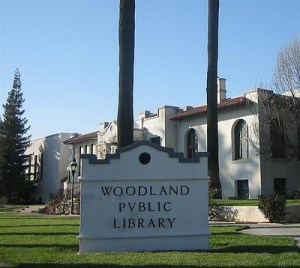
1985? 1986? I know I was barely into the double digits in age when I forsook the beanbag chairs and Betsy Byars books in the children’s section in the basement of the old Woodland Public Library for the adult section upstairs, with its musty-smelling stacks and high-arched windows. And the fireplace! On cold winter days, there was always a blazing fire in the periodicals section (in the fireplace, not actually amongst the periodicals, which would have been quite alarming), and those high-arched, iron-banded windows seemed made to have rain spattered against them. It always seemed to be raining on days I visited the library. Continue reading

1 Comment

Filed under Books, Film & TV, The Holy Bee Recommends

Books of the Holy Bee, 2010

Here’s ten books of recent vintage (2009-2010) that the Holy Bee found especially entertaining and/or informative this past year…


BOOK OF THE YEAR for 2010:

Washington: A Life by Ron Chernow

Unlike the last noteworthy Washington bio, Joseph J. Ellis‘ brief 2004 His Excellency, Chernow’s work is not a cover-the-basics summary for the casual reader. (Not a criticism. That was the book’s purpose.) Chernow delves into amazingly rich detail, while never losing his grip on the forward momentum of the narrative flow. Interested in Washington’s famous dentures? Chernow provides lengthy paragraphs on not only the materials used in their construction (not wood, you simpletons), but how they affected Washington’s appearance and interactions, and deep background on his relationship with his dentists. (Washington was very ashamed of his dental deficiencies, and the letters to his dentists are in kind of a code language, to spare him embarrassment if his correspondence was ever made public.)

Chernow also sheds light on the difficult relationship between Washington and his battle-axe mother (who lived to see him become president, not that she seemed to care — she was more interested in hitting him up for money.) His somewhat lazy, shiftless step-son also caused him much worry, although it seems doubtful that any offspring could live up to his exacting standards. He never had biological children of his own. His marriage to rich widow Martha Custis, though a happy one, was made as more of a business arrangement, which was the custom of the time among 18th century landowners. Washington admitted privately to a friend that there wasn’t a lot of “fire between the sheets” (I’m paraphrasing, but not by much), but straying beyond his marriage would be unthinkable for someone of Washington’s level of self-control and sense of honor. Chernow believes there’s simply not enough evidence to confirm or refute the commonly held belief in G.W.’s infertility. A similar lack of evidence prevents Chernow from making any conclusions on Washington’s much-ballyhooed (in previous bios) youthful dalliance with his married neighbor Sally Fairfax — it seems the relationship was affectionate but chaste. [Anyone remember the ’84 CBS mini-series with Barry Bostwick as G.W.? In an otherwise even-handed telling of Washington’s life, former Charlie’s Angel Jaclyn Smith (!) stuck out like a sore thumb, portraying Sally Fairfax as a panting, sex-starved seductress.] Whatever level on which his feminine relationships existed, Washington always preferred the company of women, where he felt he could be truly relaxed and less scrutinized.

Continue reading

Leave a comment

Filed under Books

The Holy Bee Recommends, #5: "The devil is waiting for them…the fire pent up in their own hearts is struggling to break out*…"

The 1950s and 1980s had some similarities. During both decades the country was in the hands of a slightly doddering, grandfatherly president, we were economically stable (if you ignore the skyrocketing – pardon the expression – defense spending), and American society swung toward the conservative. One of the side-effects of this swing was the screeching, reactionary killjoys who were obsessed with the damaging effect rock music was having on the younger generation. It was…the devil’s music.

In the 1950s, it was the jungle throb of the rhythm – of African-American origins – and the blatant sexuality it seemed to invite, that upset people so. Racism aside, their reaction was understandable. It was sex music. The 1980s were actually a little more hysterical. They had come to terms with the sex (mostly), but now it was the devil himself they were wringing their hands over. The cartoon Satanism espoused by second-tier heavy metal acts as a way to be provocative did just that. The 1980s were steeped in media stories about “Satanic cults” and “ritual murders.” Don’t hear too much about those things these days, because society eventually grew up and realized it was all a load of shit. There were a few blips on the radar later (Marilyn Manson, gangsta rap), but it was those two decades in which the most people got their knickers in a twist about the “devil’s music.”

Ferriday, Louisiana’s own demon-child, Jerry Lee Lewis – often referred to simply as “The Killer” – burst onto the scene in the first wave of rock and roll in the mid-1950s. From behind his poor, abused piano, Lewis bashed out the fastest, harshest, most defiantly alive music of that repressed decade. His 1957 single “Great Balls Of Fire” lasts one minute and fifty seconds, but it seems eternal – in the same way someone who holds on through a thirty-second earthquake swears it lasts forever. Just before that, his “Whole Lotta Shakin’ Goin’ On” was a blatant come-on, a declaration of sexual prowess only slightly couched in metaphor. (Only Billy Ward & The Dominoes’ “Sixty Minute Man” from 1951 was more explicit in its bedroom bragging, and guess what? Lewis covered it later.) Lewis was a howling, leering, stomping madman, and the only reason he wasn’t lynched for the length of his hair was because he kept it brushed back (unlike those Liverpool fruits who came over a few years later). All you have to do is watch the YouTube clips linked above to understand what a bomb had been dropped on the 1950s. He was an untamed force of nature, like Keith Moon and G.G. Allin. Of course, unlike those two, The Killer still lives and breathes. Continue reading

Leave a comment

Filed under Books, Music -- 1950s & Before, Music -- 1970s-80s, The Holy Bee Recommends

The Holy Bee Recommends, #4: "Plain and gentle…and, in every respect, an estimable man."

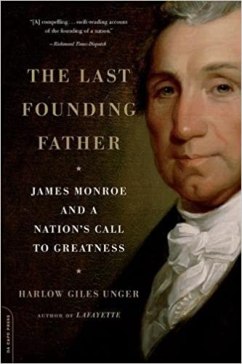
Anyone with even a passing interest in 51hrGiI5xDL._SX331_BO1,204,203,200_ early American and/or presidential history should take a few days with Harlow Giles Unger’s 2009 book The Last Founding Father: James Monroe and a Nation’s Call to Greatness, and acknowledge the enormous and unsung impact our fifth president had on the United States.

James Monroe seems to be consigned to the historical dustbin even though he was, as the title states, “The Last Founding Father.” The term “Founding Father” is somewhat elastic – it can be used to describe the first colonists at Jamestown and Plymouth in the early 1600s, the signers of the Declaration of Independence in 1776, the framers of the U.S. Constitution, veterans of the Revolutionary War, or – as is most often the case – a vague, convenient shorthand for all of the above.

Monroe, if he’s remembered at all, is remembered only for the Monroe Doctrine, which was given as part of his State of the Union report in 1823: a bold statement from a juvenile country just starting to flex its international muscle, informing Congress and the rest of the world that the entire Western Hemisphere was closed to any further European colonization, and providing one of the basic building blocks of our foreign policy to this day.

The appellation “Last Founding Father” is given to Monroe, I suppose, because he was the last person to serve the country on a national level (his presidency lasted until 1825) who was of age at the time of the Revolution in the 1770s. His successors to the presidency, John Quincy Adams and Andrew Jackson, were both pre-teens in short pants when the “shot heard ‘round the world” rang out at Lexington in 1775. Monroe, as a teenage Continental Army lieutenant, made the famous crossing of the Delaware with Washington’s tattered troops (in the famous painting, he is depicted as the one holding the flag, even though he occupied a separate boat in reality.) Continue reading

Leave a comment

Filed under Books, History, The Holy Bee Recommends

Books of the Holy Bee, 2009

Happy New Year. Some Holy Bee New Year’s Resolutions:

  1. Floss more regularly. Floss swords are awesome and make it much easier.
  2. Watch more movies. From my peak of watching 5-6 movies a week, I’ve dwindled to about two a month. The last time I went to the theater was for Inglourious Basterds at the end of August. The Hangover, District 9, Paranormal Activity, and just about every other major 2009 release are all as yet unseen by me. (I did see Year One, so I’ve got that going for me. Which is nice.) My Netflix has fed me a steady diet of TV shows over the past year (House M.D., It’s Garry Shandling’s Show, How I Met Your Mother, many others). I r dum.
  3. Read more fiction. See below.
  4. Don’t be such a filthy alkie and quit taking drinks to bed. I shouldn’t pretend I’m going to “sit up & watch a DVD”. I will fall asleep almost instantly, wake up at 3:30 to the Family Guy DVD menu on a constant loop, and the drink will have gone to waste (not that it will stop me from taking a watery sip as I turn off the DVD player.) I probably set a record by breaking this resolution six minutes after the Times Square ball dropped. But I will do better. So to start the Holy Bee Year-End Round-Up, we’ll be taking a look at the books I’ve gone through this year, followed in a later entry by the Holy Bee Top 20 Albums of the Year. (No Movies of the Year entry for reasons described above.)

I’ve been keeping a list of books that I’ve read each year since 2004, and this is the first time I’ve made it public. In looking it over, I see most of my interests are covered, but I am slightly surprised to find no “heavy” history represented. Usually each year, I burrow my way through at least one weighty, shoebox-sized tome detailing the life of a president, a noted statesman, or a war. I hope my attention span isn’t being atrophied by my dedication to websites like Failblog or Passive Aggressive Notes.

Bear in mind, this is a list of stuff I’ve read cover-to-cover (including Prefaces, Introductions, and Author’s Notes. In some cases, I’ve even found myself poring over the source notes.) This list does not include the dozens of books that I’ve skimmed, dipped in and out of, or abandoned partway through. It does not include old favorites that I’ve re-read (I do that way too often.) Only a few of them were actually published in 2009. We’ll start with the ten best/most interesting (in no particular order):

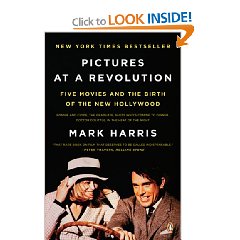
1. Pictures at a Revolution: Five Movies and the Birth of the New Hollywood by Mark Harris (2008)
An examination of the development, production, and release/promotion of the five films nominated for Best Picture at the 1967 Academy Awards. This was a transitional time, when the old Hollywood studio system was breathing its last, but before the new wave of “movie brats” (Coppola, Scorsese, Spielberg) had fully picked up the gauntlet. Edgy, unsettling films appealing to a growing trend of cynicism and anti-authority feelings (represented by Arthur Penn’s Bonnie and Clyde and Mike Nichols’ The Graduate) squared off against comfortable, crowd-pleasing, middle-brow fare with an impeccable pedigree (what we now call “Oscar-bait,” represented here by the Tracy-Hepburn-Poitier Guess Who’s Coming To Dinner, and a fixture at the Oscars ever since: think Seabiscuit, Forrest Gump, etc.) Throw in an indie-with-a-social-conscience (In The Heat Of The Night) and a bloated “family” musical that represented “old Hollywood” excess at its worst (Doctor Doolittle), and you’ve got a perfect snapshot at the state of filmmaking on the cusp of the biggest change since the dawn of talkies. This book makes an interesting sort-of prequel to Easy Riders, Raging Bulls, which tells the tale of the movie brats’ takeover, and how it eventually led to the same sort of wretched excesses that almost sunk Hollywood in the previous decade.

2. Untold Stories by Alan Bennett (2006)

Alan Bennett first came to the public notice as part of the long-running British satirical stage show Beyond The Fringe in 1960. He has since become one of Britain’s foremost playwrights, authoring The Madness of George III, The History Boys and many others. Not so much an autobiography as a series of autobiographical sketches and diary entries, Bennett tells of growing up in the shabby university town of Leeds, his mother’s mental illness, his brutal beating at the hands of muggers in Italy, his coming out in his fifties after years of self-denial, and his battle with colon cancer. And he makes it all funny, or at least warm and engaging in his gentle, self-deprecating style. I could have done with a few more anecdotes about Bennett’s Fringe co-star Peter Cook, but that’s just me.

3. Don’t Know Much About The Bible: Everything You Need To Know About The Good Book But Never Learned by Kenneth C. Davis (1998)
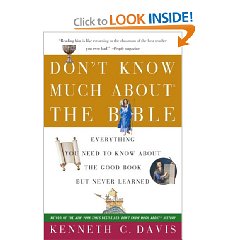
Part of Davis’ epic “Don’t Know Much About…” series, this is a solid primer on Biblical lore and history. Despite my conspicuous absence of anything resembling faith or belief in any religion, it’s a fascinating topic of study and I’ve always told myself I would educate myself properly on it. I made an early attempt when I was 21 or 22, taking some Religious Studies classes and reading a few books. But beyond confirming the suspicion I’d harbored since I was ten or so that religion held nothing for me spiritually, my attempt to educate myself on the nuts and bolts of western religion was sketchy and facile.

Now that I have a few years of adulthood under my belt, my mind is a little more disciplined (I wouldn’t say “mature”), and I feel the time is right to try again. Davis takes the reader through both books of the Bible, chapter by chapter, and explains the historical and political context of the writings. A good, basic introduction (or re-introduction) to an area of study I am going to try to make something of a priority over the next year or two.
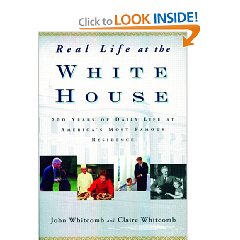
4. Real Life at the White House: 200 Years of Daily Life at America’s Most Famous Residence by John & Claire Whitcombe (2000)
A behind-the-scenes look at how the White House functioned as a home, rather than a symbol or seat of power. President by president, the Whitcombes take the readers through the routines and changes each occupant brought to the building.

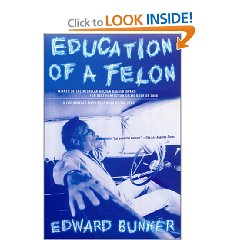
5. Education of a Felon: A Memoir by Edward Bunker (2000)
I’ll quote myself from an earlier entry:  Another young L.A. thug-turned-writer is Edward Bunker. Bunker spent the late 1940s and 1950s in and out of juvenile hall and foster homes, or living on the streets. Bunker was unable to resist the easy money of drug-dealing and armed robbery, despite an off-the-chart IQ and a taste for Shakespeare and Dickens – which he had plenty of time to peruse once he started doing hard time in places like San Quentin and Folsom prisons. Bunker’s memoir, Education of a Felon, recounts his escapades, both as a criminal and his attempt at a “straight” job: working as an assistant and confidant for the mentally unstable wife of Paramount Pictures’ super-producer Hal B. Wallis. His descriptions of prison life make it sound not so bad for someone who follows the official and unofficial rules, at least until the race wars began in the late 1960s, and suddenly no one was safe. Upon his release in 1975 after almost two decades behind bars, he was already a published author — his autobiographical 1973 novel No Beast So Fierce was adapted into the 1978 film Straight Time, with Dustin Hoffman as the Bunker character. Bunker continued to write and also dabble in bit-part acting – culminating in his crowning achievement, at least as far as most people are concerned: his performance as Mr. Blue in Reservoir Dogs.

6. Hellraisers: The Life and Inebriated Times of Richard Burton, Richard Harris, Peter O’Toole, and Oliver Reed by Robert Sellers (2009)
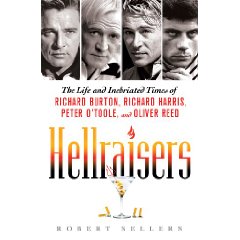
A quadruple biography…of sorts. It almost entirely ignores the professional accomplishments of these distinguished performers in favor of anecdotes about their excessive boozing. Naturally, I loved it. Yes, its shallow and sensational, in a style more befitting a British tabloid than a serious examination of what drove these four men to such self-destructive behavior — but the book is totally unapologetic, just like it’s subjects. The author’s informal style extends to the use of Cockney rhyming slang (he would never say “phone” when he could say “dog and bone,” and “porky pies” repeatedly took the place of “lies”).

It also introduced me to the sublime-yet-humble, unpretentious, masculine, stolidly British cocktail: the gin-and-tonic. I had always had it in my head that I don’t like gin, but inspired by its frequent appearances in this book, I decided to give it another shot. I liked it so much that it’s currently my facebook profile picture. (And make sure it’s real tonic water with quinine, not club soda or that flat piss that comes out of the soda gun at your local bar.) Oliver Reed would have his mixed in a bucket with plenty of lemon slices, and simply dip his pint mug in it at frequent intervals. I prefer lime slices and the traditional collins glass, but who knows what the future holds?

7. Escaping the Delta: Robert Johnson and the Invention of the Blues by Elijah Wald (2003)
Despite Wald’s narcissistically academic, self-aggrandizing writing style (Hello, pot? This is kettle), this is a solid attempt to not only separate fact from myth in regards to the fabled Mississippi bluesman, but also a concise history of blues as a genre. In conjunction with some other material I’ve read on the topic (see the list below), a picture emerged of a style that was not necessarily an authentic expression of oppression and heartache emanating directly from the cotton fields, but rather a much more commercially-oriented case of giving an audience what they wanted.

The original itinerant blues performers of the 1920s and 30s considered themselves “songsters,” human jukeboxes, happy to play a paying audience whatever kind of song they wanted – minstrel tunes, Broadway show numbers, country, jazz, you name it. When white academic folklorists such as John Hammond and Alan Lomax, or “race record” label owners came calling to record these performers for posterity, it was the more hard-edged blues numbers they were interested in, and the performers were happy to oblige. In their well-meaning-but-still-slightly-condescending way, Lomax and his ilk considered this primitive style more “authentic.” It was, of course, brilliant stuff, and it sold, sending more talent scouts and folklorists out to juke joints and shantytowns for more blues artists, creating a situation that fed on itself. The “bluesmen”’s versatility was forgotten, as was the songster tradition. It was all twelve-bar, slide guitar, my-woman-done-left-me from then on. Not that I’m complaining.

8. When Giants Walked The Earth: A Biography of Led Zeppelin by Mick Wall
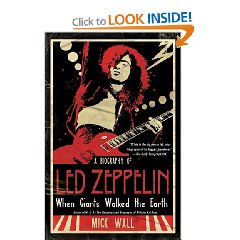
A solid bio that neatly balances musical & personal, and brings the story up to date as of the big reunion concert at the O2 Arena in December 2007, and the subsequent out-of-left-field success of Robert Plant’s collaboration with Allison Kraus that seems to have permanently scuppered the more lasting reunion that was within our grasp. The perfect book to replace that worn-out, well-thumbed copy of Hammer of the Gods that should be sitting on the bookshelf of anyone who loves the rock and roll. One small quibble: Frequent interludes where each band member’s backstory is told in their first-person “voice,” as imagined by the author. Kinda lame. One smaller quibble: Wall has a pretty shaky grasp of American culture and geography. But it’s probably better than the average American’s grasp of British culture and geography.

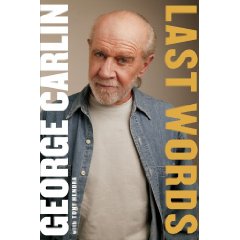
9. Last Words: A Memoir by George Carlin (2009)
The late George Carlin’s autobiography. (Although he detests that word – “only criminal business pricks and politicians write autobiographies.” He prefers the term sortabiography.) It is the influential comedian’s final project, pieced together by collaborator Tony Hendra (a British ex-pat known for his association with National Lampoon and his role as Spinal Tap’s manager Ian Faith) from hours of tape-recorded conversations spanning a decade. Carlin tells of being raised in New York City by a single mother, his days as a class clown (of course) and misfit Air Force enlisted man, the beginnings of his comedy career as a radio DJ and member of the nightclub comedy team Burns and Carlin, his 1960s fame as a middle-of-the-road comic appearing frequently on The Tonight Show and Ed Sullivan Show, and the 1970 epiphany that caused him to abandon his career in “safe” comedy and blaze a trail of goofy outrageousness, and at times seething anger. Throw in a bit of a love story, the usual show-biz “nightmare descent” into drugs and alcohol, rocky recovery from same, and a bittersweet ending (the material in the book was originally meant for a one-man Broadway show, New York City Boy, which he didn’t live to realize) and you have all the makings of a fitting last statement from one of the greatest comedic minds of all time.
10. Just After Sunset: Stories by Stephen King
My sole foray into fiction this year, these stories are some of King’s best work in over a decade (and includes one old story from the Shining/Stand era of 1977 that’s actually the weakest link here). I always tell myself I’m going to read more fiction, to go deeper into Charles Dickens’ oeuvre, to explore Flannery O’Connor and T. Coraghessen Boyle, and really try to get a feel for fictional storytelling. But every time I pick up a fiction book, it’s usually popcorn genre-type stuff, like Andy McNab’s British spy novels, the Godfather sequels, and Stephen King. And even that doesn’t happen too often. I re-read King’s It and Danse Macabre every few years (and I did so this past summer) — both amazing examinations of horror’s place in pop culture, one fiction, one non-fiction. (I actually read Moby Dick three years ago and I’m still patting myself on the back for it.)
Other Books Read in 2009:

Moon Shot: The Inside Story of America’s Race to the Moon – Alan Shepard & Deke Slayton

Titanic’s Last Secrets: The Further Adventures of Shadow Divers John Chatterton & Richie Kohler – Brad Matsen

Donnie Brasco: My Undercover Life in the Mafia – Joseph D. Pistone & Richard Woodley

Mythmaker: The Life and Work of George Lucas – John Baxter

John Wayne: American – Randy Roberts & James S. Olson

Spencer Tracy: Tragic Idol – Bill Davidson

Niv: The Authorized Biography of David Niven – Graham Lord

Howard Hughes: The Untold Story – Peter Harry Brown & Pat H. Broeske

Down at the End of Lonely Street: The Life and Death of Elvis Presley – Peter Harry Brown & Pat H. Broeske

Delta Blues: The Life and Times of the Mississippi Masters Who Revolutionized American Music – Ted Gioa

The History of the Blues – Francis Davis

Brown Eyed Handsome Man: The Life and Hard Times of Chuck Berry – Bruce Pegg

The Man Called Cash: The Life, Love, and Faith of an American Legend – Steve Turner

Martini Man: The Life of Dean Martin – William Schoell

Exile On Main St: A Season in Hell With The Rolling Stones – Robert Greenfield

Gasping For Airtime: Two Years in the Trenches on Saturday Night Live – Jay Mohr

Smile When You’re Lying: Confessions of a Rogue Travel Writer – Chuck Thompson

Born Standing Up – Steve Martin

The Holy Bee’s Gin-and-Tonic Recipe

Quarter a small lime, and squeeze two quarters’ worth of juice into the bottom of a tall collins glass. (Toss in the two quartered lime pieces as well.) Fill to the brim with ice. Add 4 oz. of your favorite gin. Fill the rest of the glass with tonic water and enjoy. Save the other half of the lime for the second drink you will undoubtedly have. Cheers.

Leave a comment

Filed under Books

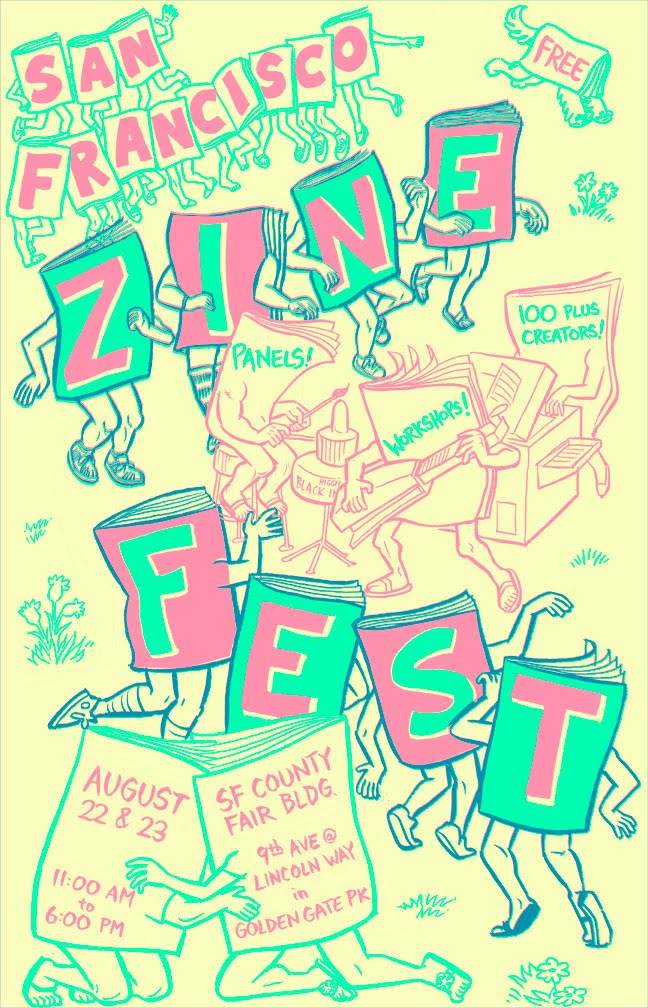
"Are You A Collective?": The Holy Bee’s Adventures at the San Francisco Zine Fest

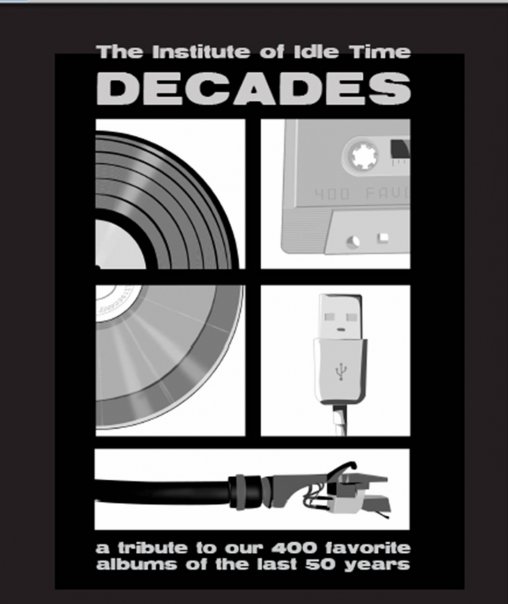
A number of developments marked the last few weeks of August for the Institute of Idle Time “collective.” First of all, WH and I went back to work after a summer break (MDG runs a summer camp, so no break for him, poor chump), and our place of employment is under new management. Second of all, our grand project — DECADES — hit the streets on August 21st. A thought-provoking, argument-starting ranking of our favorite 400 albums of the past fifty years, complete with individual write-ups for each album. It’s published by ComiXpress and written in large part by the membership of the Institute of Idle Time. (If I’ve never introduced them by name officially in this forum, they are: myself, MDG, WH, RF, 3D Chain, Arcturus the Boy-Tune Wonder, and JH. For a reminder of what we’re all about, click here.) Even the seven of us could not possibly do write-ups for 400 albums in the time we had, so there are also contributions from over thirty of our friends and family. You might know one. You might be one. It’s a damn good bathroom read, contains original art by Jim Shepherd and photography by John Muheim and George Umpingco, and looks nice on a coffee table. Copies are available through me for $12.

Third of all, we decided to pack up our new books and several copies of our zine that we printed in late ’08 and early ’09, and make a fortune at the San Francisco Zine Fest.

A “zine” is simply a self-published magazine that initially came of age in the underground-punk-rock-DIY 70’s, a paper-and-staples relic being made increasingly irrelevant by the very thing you’re staring at right now. Sporadically produced, lovingly assembled, and indifferently distributed out of copier paper boxes and duffel bags, a zine is a soapbox guaranteeing your extremist and incindiary opinions will be read by literally tens of people, and discarded unread by dozens more. The Institute of Idle Time produced three issues of Idle Times between September 2008 and March 2009, with threats of a fourth issue made every so often. Mostly harmless pop-culture piffle (articles on monster movies and breakfast cereal, interviews with local artists and sub-minor celebrities, etc.), they have some pretty good stuff in them, and like the book, are available through me at a buck a throw.

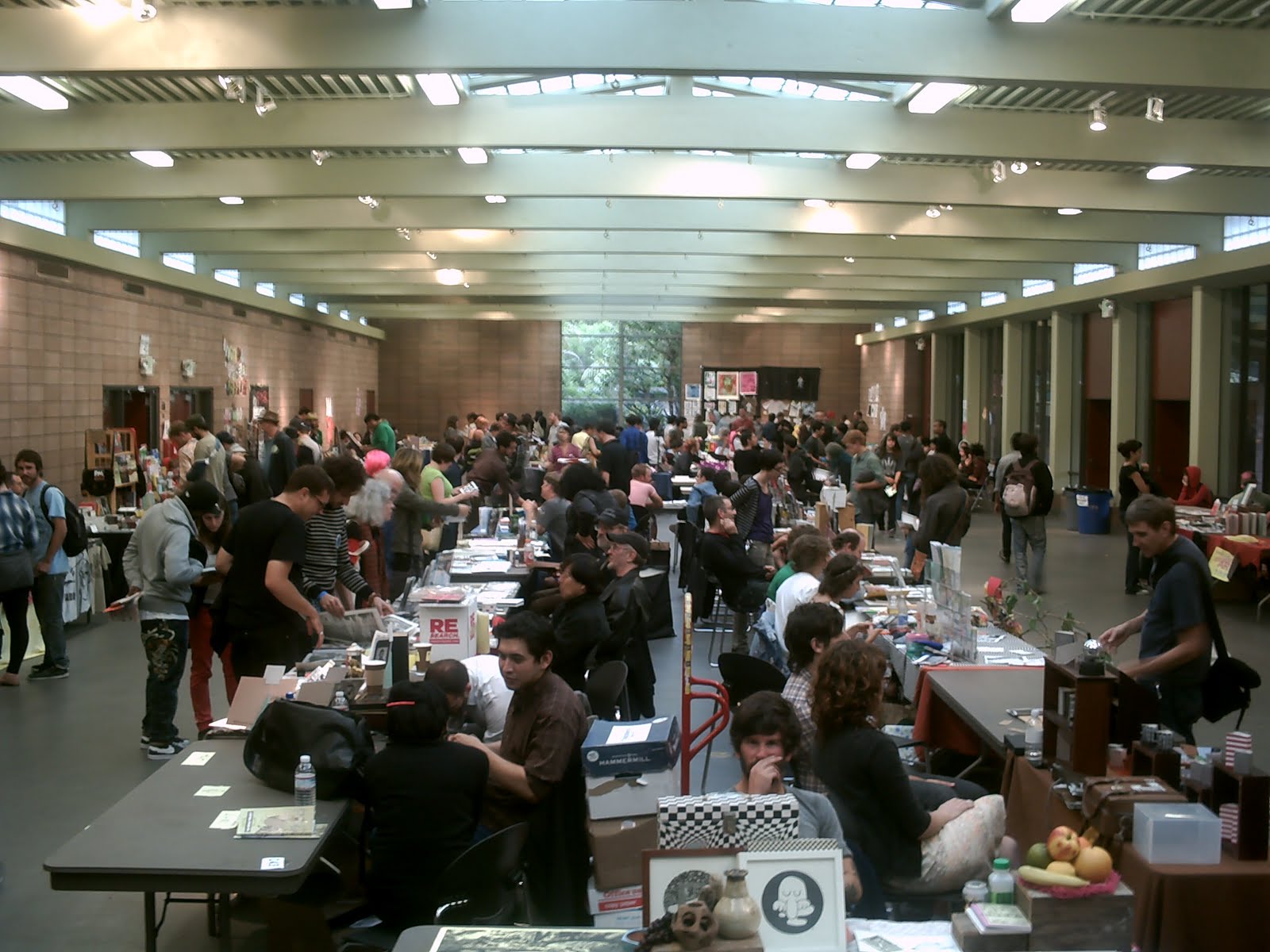
So a couple of Saturdays ago, I made my leisurely way down to San Francisco’s Golden Gate Park, and the County Fair Building therein, where MDG and his girlfriend Sherice, along with his brother Matt, photographer John Muheim, and fellow Idle Timer Arcturus the Boy-Tune Wonder, had set up the official Idle Time merch table. I was there to keep everyone company and lend moral support. I certainly wasn’t there for my salesmanship. I took the preschool advice “don’t talk to strangers” to heart, and it’s still a credo I try to live by. When forced to deal with large numbers of people I don’t know, my stomach clenches, my palms sweat, and when I’m not communicating in a hoarse whisper, I’m setting records for awkward pauses. (Low-level social anxiety disorder? Or just a misanthropic asshole? Who can tell?) But by the time I arrived, MDG was ready for a coffee break. I was counting on MDG’s megawatt personality to be a buffer between my reticent, surly self and the general public.


And this was not exactly the “general” public we’re talking about here. These were the denizens of the San Francisco Zine Fest, and within five minutes of my arrival, I was the official representative of the Institute of Idle Time to a crowd of hundreds of people who were each trying in their own special way to be as different and off-putting as possible.

Pic snapped by MDG as he left me in charge of the table. L to r: John Muheim (standing), Your Humble Narrator, Sherice Wu, Matt. My expression says it all.
 
Almost immediately, our table was approached by a young girl of indeterminate ethnic origin and about the size of a border collie standing on its hind legs. She peered at me through eyes fringed with neon-blue mascara. “So, what are you guys all about?” she all but snapped.I blinked in small-town confusion. Sherice blinked. I blinked again. “Don’t everyone talk at once,” she said and lit the fuse on a firecracker string of staccato chuckles. I shifted into my brand-new role as Group Spokesperson and stammered out a thumbnail sketch of what we’re all about. She seemed enraptured, propping her tiny elbows on the table and leaning into us. I was suspicious immediately. She asked us several follow-up questions, among them “Are you a collective?”
In the fifteen minutes that I had been there, this was the second time I had heard that term. “Some friends and I from the east coast are trying to get a collective together…”was a snatch of conversation I overheard as I was walking in from an erudite young lady in a suede coat and (presumably fake) fur collar, complete with knee-high boots and what appeared to be a bandolier. I expected her to announce at any moment that she was, in fact, Inigo Montoya, and that I had killed her father, and should be prepared to die. I had only the vaguest idea what the term meant, but people kept trying to apply it to us.
Anyway, our new friend finished her interrogation of us, and immediately launched into her own completely-expected sales hustle. She was starting a fest of her own in September, and was trying to gather sponsorship. We took her flyer and watched her move on to the next table, where she plunked her elbows down and asked them what they were all about. Within the next few minutes, someone else dropped the collective terminology on us.”What’s a collective? Are they asking if we all sleep together and raise soybeans?” I asked Sherice.”I think you’re thinking of a co-op,” said Sherice. I pondered awhile.

[So here’s an official definition of “collective” that I looked up later: a group of people who share or are motivated by at least one common issue or interest, or work together on a specific project to achieve a common objective. So far, I guess we are, indeed, a collective. Collectives are also characterized by attempt to share and exercise political and social power. And that’s where the similarites end for us. We know and accept that we’re merely opinionated attention-whores, which is exactly like everyone else there, but we use no pretense of activism or artistry as a smokescreen.]


MDG’s coffee break extended into attending a screenprinting workshop, which extended my duties as Chief Salesman. Not that there were many sales to be made. As MDG pointed out, “A free zine fest does not attract the type of person with gobs of spending money.” What it does attract:

  1. A person with what appeared to be a gutted sheep carcass on his head. Upon closer examination, it turned out to be a particularly horrid set of dreadlocks, with what I’d wager to be a population density greater than San Francisco itself.
  2. A person who thought a plum-colored blazer gave him the air of a sophisticated bon vivant, but this belief was undercut by the many cigarette burn holes dotting the garment like moon craters.
  3. Women (now well into their thirties) who still think striped stockings and zany hair color are the height of alterna-culture.
  4. Bi-polar lesbian vampire enthusaists. (I’m not kidding, their table was right next to ours.)

MDG finally returned, but business at our stall remained slow, even when not fronted by the scintillating personality of Your Humble Narrator. Why?

  1. We in no way espoused a radical political cause. (One prominent silkscreened poster nearby depicted an armed, masked thug with the legend This Isn’t A Smash-And-Grab…This Is A REVOLUTION! stencilled across the bottom. Whatever. You’re not Thomas Paine, you criminal shitbird. It is a smash-and-grab, and they will probably catch you because you’re stupid. Good luck with the “political revolution” defense in court.)
  2. Our material in no way depicted or endorsed the activities of vampires, zombies, or a fiendish blend of both.

We were strictly music, which actually put us odd-man-out amongst this conglomeration of oddities. I was mistaken in my initial belief that these folks would gravitate to stuff of a musical nature. Music was a distant second (or third) to whatever other fringe hobbyhorse occupied their fevered minds.

I wasn’t getting any more comfortable working the table. What I need most in situations like these is a little infusion of Dutch courage. So not long after MDG came back, I was off like a shot to find the nearest public house. I didn’t have to look far.

On Lincoln Way, just across the street from the zine fest, is the Little Shamrock, and it is just the place to kill a few hours. The barkeep had his poodly hair tied back with a leather thong and was draped in tie-dye, but was such a font of hearty goodfellowship I immediately forgave him his unfortunate sartorial taste and decided he was one of the Good Ones. His obvious fondness for his products and his liberal use of the word “fuck” as noun, verb, adjective, and preposition marked him as a man after my own weaselly, wicked heart. He extolled the virtues of the recently-discovered Three Olives bubblegum-flavored vodka, and was generous with the free samples.

“My buddies and I had way too much of this last night,” he declared to his coterie of adoring female barflies. “We were like a bunch of fuckin’ Bazooka Joes!”

After three fingers of Bushmills on the rocks and a couple of IPAs, I felt much better about manning the zine fest table. It must have shown on my face as I returned, with Matt remarking “Looks like Popeye’s had his spinach.”

“Let’s sell some fuckin’ zines!” I hollered as I parked myself and prepared to press the flesh. But the only person who made a lengthy stop at our table for the remainder of the evening was a blind guy. He was one of those non-sunglasses-wearing blind guys, with his spooky eyes on full display, along with the white tapping cane. Seriously, he couldn’t have looked more blind (this will be important in a moment). All he lacked was a dog, but I guess he felt he didn’t need a dog when Matt would do just as well.

“Excuse me, sir, could you direct me to the restrooms?”

Matt looked up, and did exactly what I’d hoped he’d do.

He pointed.

“Go about ten tables down and take a left.”

It was my favorite moment of the day.

Blind people have acute hearing to compensate for their lack of sight, so he must have heard by involuntary chuckle die an embarrassed, choked-off death in my upper thorax. But he chose to continue his awkward conversational waltz with Matt.

“Excuse me, sir, but as you may have noticed, I’m visually-impaired.”

Shooting the rest of us a hangdog, why-me stare (unseen by its cause, of course), Matt put down his copy of Decades ($12, e-mail me) and walked the man to the bathroom, leaving us to ponder how he knew Matt was a “sir.” We supposed he could see vague shapes, but even so, a six-foot-plus shape with a booming bass voice was no guarantee it was a “sir” at the zine fest, which ended soon after.

After an awesome meal at Pizza Orgasmica, the next item of business was a Decades-themed DJ set at uber-hot downtown San Francisco nightspot House of Shields presided over by 3D Chain, WH, and MDG. I understand it was a roaring success. I wouldn’t know personally. I never found a parking spot. It was Saturday night in the busiest part of one of the busiest cities in the world. WH and JH got there hours early (they didn’t bother with the Zine Fest). MDG, an SF native, parked 200 blocks away in the Financial District. I could have found somewhere to get cash to pay for the exorbitantly expensive (and dangerously seedy) public lots, but I decided, in the Great Holy Bee Tradition — fuck it. Home was a more attractive option. I pointed my car toward the Bay Bridge and got the hell out.

I’m told there will be a Sacramento Decades DJ set soon. That’s more my speed.


MGD DJ’ing at House of Shields. Photo by JH. I wasn’t there…

Up next, the final installment of Marysville: Then & Now, and a return of This Used To Be My Playground…

6 Comments

Filed under Books, Current Events, Life & Other Distractions

Holy Bee Recommends, #2: L.A. Noir

One of my many minor obsessions is the seedy underbelly of Los Angeles. Not so much in the present day, but in the middle part of the 20th century. Although many people associate the noir genre with the grimy alleyways of Chicago or the humid waterfronts of New York, its natural home is really Los Angeles. There seems to be more desperate, broken people in Los Angeles than the rest of the world combined. Many were lured there with the dream of making in big in the entertainment industry and found nothing but disappointment and despair, many others just naturally gravitated there to be in the company of thousands of other drifters, losers, hustlers, thugs, eccentrics, and full-blown psychos. What makes the darkness and ugliness of the place more palpable is it’s glamorous surface, beautiful people doing beautiful things under palm trees and hazy SoCal sunshine. But it’s all a sham. The good life in L.A. is lived by about 5% of its population.

Whether it’s a fleabag hotel downtown, or a (relatively) inexpensive apartment in Covina, on the other side of the door, there’s a good chance that someone’s soul is slowly rotting from the inside out.

Every so often, I get the urge to take a drive down to L.A. and explore. Take a cruise past where the Black Dahlia’s corpse was found. Past the nightclub where the unsuccessful hit on Mickey Cohen went down. Past the blocks and blocks of stucco apartments in West Hollywood inhabited by waiters who want to be actors. Down the notorious skid row of Fifth Street (affectionately referred to in Tom Waits songs as “The Nickel”), where any vice is available for rock-bottom prices. Luckily, thanks to Google Street View, I can get a little taste of it without driving almost 800 miles round trip, discover that the location was obliterated for a Quizno’s, or risk my soft suburban neck in insanely dangerous neighborhoods.

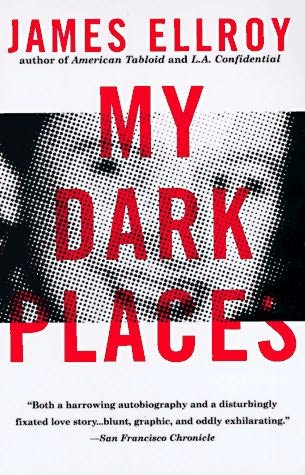
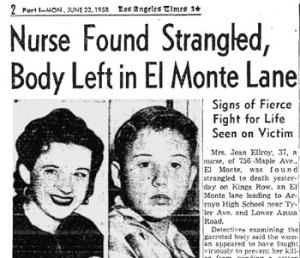
James Ellroy, author of The Black Dahlia and L.A. Confidential, is the greatest current purveyor of period L.A. crime fiction. He knows the subject in and out, because he lived a good deal of his life on the skids in the City of Angels — drunk and pilled up, either homeless or in jail for shoplifting – or breaking and entering plush Wilshire homes to fondle ladies’ underwear.
All of this is revealed in Ellroy’s riveting autobiographical book, My Dark Places: An L.A. Crime Memoir.

It doesn’t take Freud to uncover the reasons for Ellroy’s downward spiral. It was triggered by the brutal slaying of his mother in 1958, when he was ten years old. Ellroy admits his mother, vivacious redhead Geneva “Jean” Ellroy, was not a model parent: she was an alcoholic who was not particular about the company she kept, and would often leave young Ellroy alone at night to go drinking and dancing at the dive bars that lined Valley Boulevard in El Monte, just east of L.A. One night, she didn’t come home. Her strangled body, pantyhose tied around her neck, was found the next morning in the shrubbery next to Arroyo High School. Despite several strong leads, including several eyewitnesses who spotted her with a swarthy man in a blue convertible, the murder was never solved and the case went cold.

Ellroy was placed in the custody of his father, an embittered invalid who was dead (of natural causes) before Ellroy was out of his teens. Once he went through the crucible of being a drug-addled petty criminal pervert and emerged on the other side as a respected author (“The Demon Dog of American crime fiction”), he became interested in the incident that started him down his life’s path. Working with detectives, Ellroy re-opened his mother’s case, and began sifting through the grisly photos and statements, re-interviewing witnesses, and attempting to come to grips with the psycho-sexual hold his mother had over his subconscious for most of his existence.

There are few dark places darker than Ellroy’s, and his unflinching honesty at examining himself, expressed in the same vivid staccato prose he uses in his fiction, makes for a gripping, if sometimes uncomfortable, read.

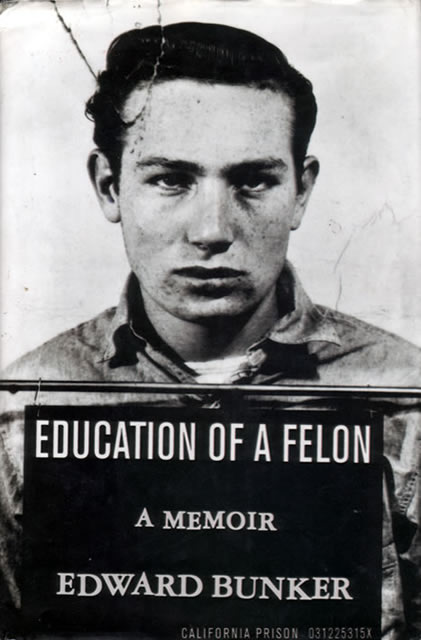
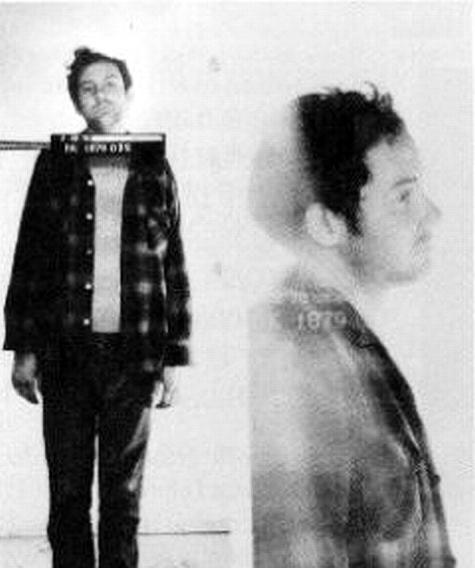
Another young L.A. thug-turned-writer is Edward Bunker. Bunker spent the late 1940s and 1950s in and out of juvenile hall and foster homes, or living on the streets. Bunker was unable to resist the easy money of drug-dealing and armed robbery, despite an off-the-chart IQ and a taste for Shakespeare and Dickens – which he had plenty of time to peruse once he started doing hard time in places like San Quentin and Folsom prisons.

Bunker’s memoir, Education of a Felon, recounts his escapades, both as a criminal and his attempt at a “straight” job: working as an assistant and confidant for the mentally unstable wife of Paramount Pictures’ super-producer Hal B. Wallis. His descriptions of prison life make it sound not so bad for someone who follows the official and unofficial rules, at least until the race wars began in the late 1960s, and suddenly no one was safe. Upon his release in 1975 after almost two decades behind bars, he was already a published author — his autobiographical 1973 novel No Beast So Fierce was adapted into the 1978 film Straight Time, with Dustin Hoffman as the Bunker character. Bunker continued to write and also dabble in bit-part acting – culminating in his crowning achievement, at least as far as most people are concerned: his performance as Mr. Blue in Reservoir Dogs. (“I liked her early stuff – ‘Borderline’ – but when she hit that ‘Papa Don’t Preach’ phase, I tuned out.”)

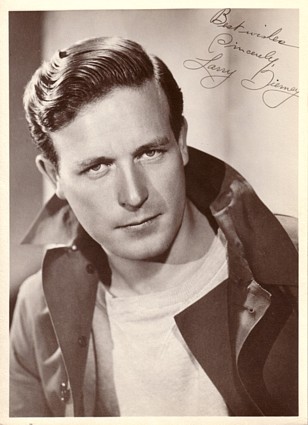
A special treat: On the bonus disc of the 10th anniversary Reservoir Dogs DVD, there is a driving tour of L.A. with Bunker, where he points out the locations of his nefarious doings. It’s certainly better than ogling the locations on Street View, and you get the benefits of Bunker’s hard-boiled narration. Best part: Bunker’s story of meeting up with future Reservoir Dogs co-star Lawrence Tierney, in the process of putting a beatdown on someone outside of a bar. It was not surprising that Tierney, an actor with one foot in the criminal underworld, and Bunker, a criminal with one foot in the movie world, should have crossed paths in 1950s L.A., almost forty years before they met up again in front of Tarantino’s cameras. This fascinating tour is not included on the most recent (15th anniversary) edition of the DVD. Boo.

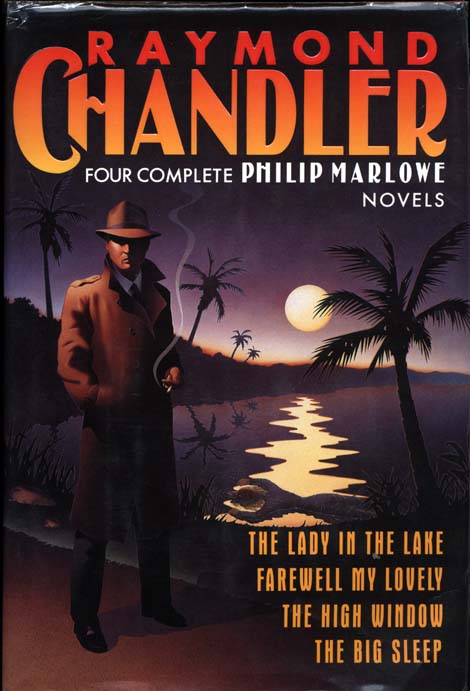
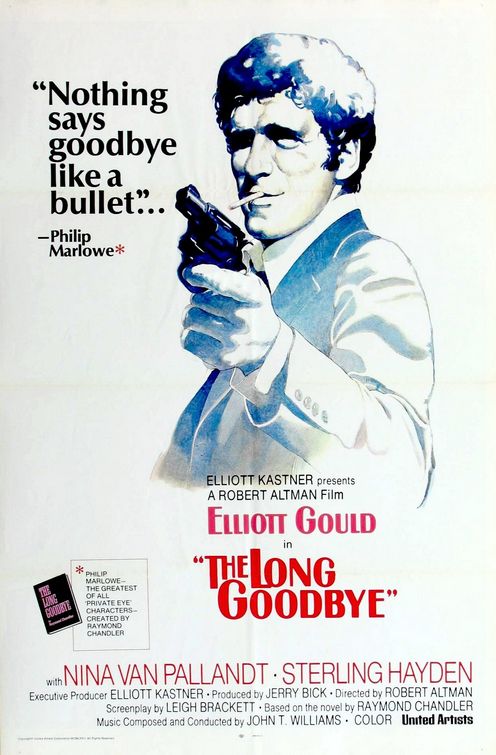
I’ll conclude by acknowledging of the Granddaddy of L.A. Noir, Raymond Chandler. Beginning in 1939, his iconic private eye, Philip Marlowe, smoked, drank, and snooped his way through such classics as The Big Sleep, Farewell My Lovely, and The Long Goodbye. Only Dashiell Hammett equals Chandler as the primary architect of literary noir. Philip Marlowe has been played onscreen by such noted cinematic tough guys as Humphrey Bogart, James Caan, Robert Mitchum and…Elliott Gould?

Yes, Ross and Monica’s father once donned Marlowe’s trench coat and snub-nosed revolver in director Robert Altman’s shaggy-dog 1973 adaptation of The Long Goodbye. Disjointed and quirky as only an Altman film can be, this Long Goodbye is updated from the booze-and-dames 50s to the cocaine-and-nudists 70s. The plot of the book and the plot of the novel are distant cousins, and the new time period allows Altman opportunities to satirize the shallow and hedonistic lifestyles of most of the characters. Gould’s take on Marlowe is decidedly un-heroic, and unlike the rich shadows of traditional film noir, The Long Goodbye utilizes a gauzy palette of washed-out pastels.

Also recommended: The film version of L.A. Confidential (avoid the Black Dahlia film), Wonderland (not a great film, but an incredibly creepy tone and atmosphere), Hollywoodland, Chinatown, any one of Tom Waits’ first seven albums, Chandler’s final Marlowe novel Poodle Springs (unfinished at his death, it was completed thirty years later by Spenser author Robert B. Parker), Ellroy’s novels The Big Nowhere and White Jazz (together with Dalia and Confidential, they make up his “L.A. Quartet”), and what is probably Tarantino’s best film, Jackie Brown (yes, you read that right.)

Leave a comment

Filed under Books, Film & TV, Pop Culture, The Holy Bee Recommends

Holy Bee Recommends, #1: "Too ugly for a leading man, not ugly enough for a villain"

Here at the Holy Bee, music reviews are dealt with in the year-end wrap-up. Movie reviews are nigh on impossible, because I steadfastly refuse to subject myself to the modern movie theater experience, unless it’s under extraordinary circumstances. Even DVDs take me forever to get around to. (To give you an idea how behind the curve I am movie-wise, I just watched Pineapple Express last weekend. It was very good.) In Bruges and Burn After Reading still sit on top of my DVD player.

Which leaves us with books as the last item of mass culture that can be realisitcally reviewed by me. I wouldn’t call myself a voracious reader, but I believe I do get through more books than the average schmuck. Like a lot of people, internet bullshit has cut deeply into my reading time. Who wants to crack a musty old book when there are fucked-up cakes to look at?

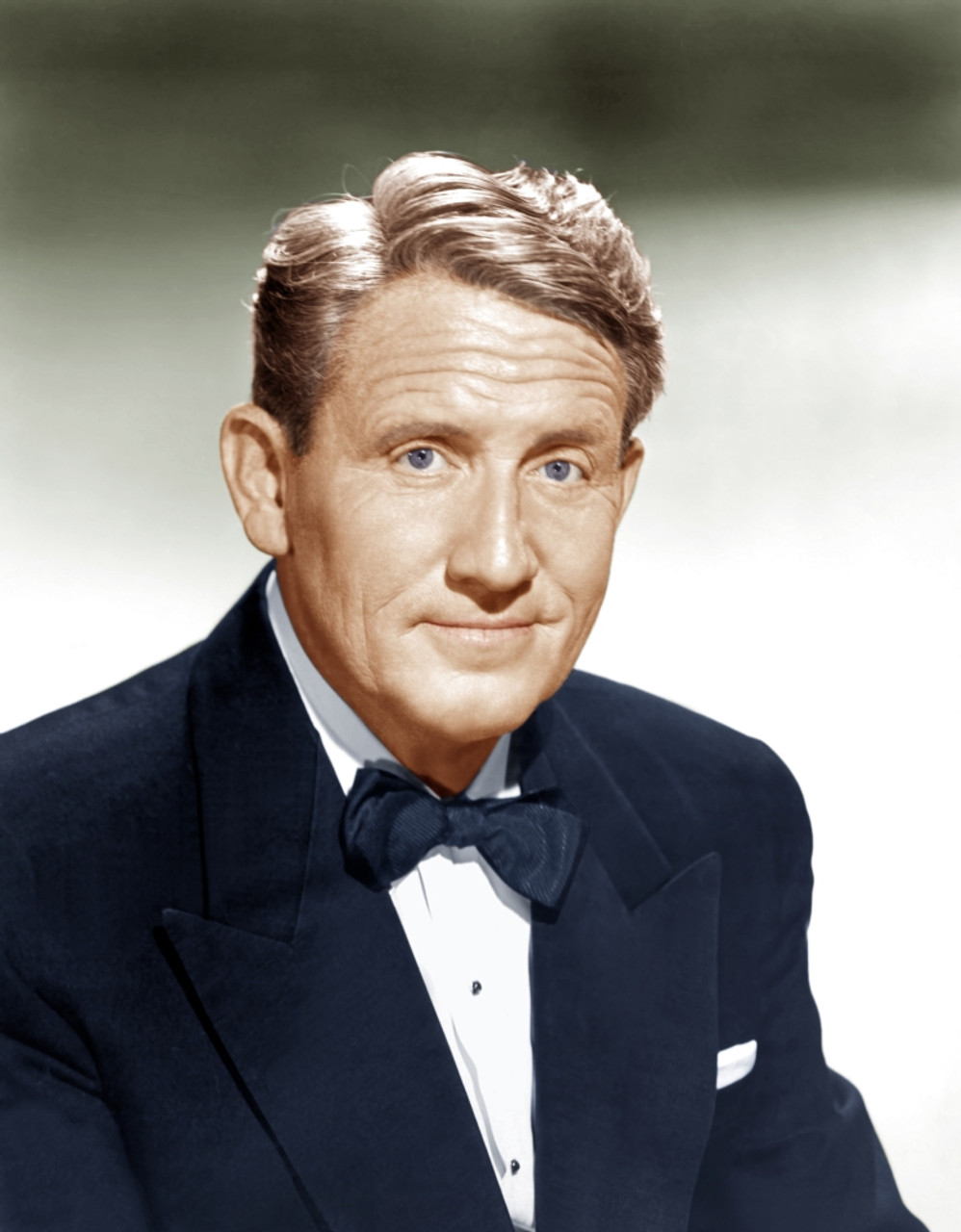
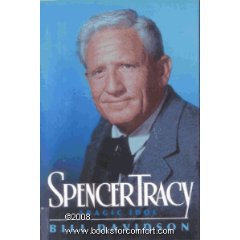
The first item on the Holy Bee Recommends list is the over-dramatically titled Spencer Tracy: Tragic Idol, by Bill Davidson. If you asked any actor working from the late 1930s to the mid 1960s “Who is the finest film actor around?”, most of them would unhesitatingly respond “Spencer Tracy.” The first actor to win back-to-back Oscars (for 1937’s Captains Courageous and 1938’s Boys Town), Tracy was never #1 in audience polls like John Wayne or Humphrey Bogart, but among those working in his profession, he was considered the best.

But Tracy seems fated not to be remembered as well as many of his co-stars by modern audiences, which is sadly ironic because Tracy may have been the first film actor to act in what we would consider a modern style. Unlike the stagey, larger-than-life performances of other actors in mid-20th century films, a Tracy performance could play, unaltered, in a 2009 film and not stand out as mannered or old-fashioned. He inhabited his character without drawing attention to his own “star” persona, which went against the style that prevailed in the 1930s and 1940s. “Comedians are always doing impressions of guys like me and Bogart,” said James Cagney. “Nobody does Tracy.” Every moment was underplayed and thoughtful, built around glances and expressions, and a speaking style that was down-to-earth and absolutely real. No fodder for impressionists and comedians there. That lack of imitatable quirks and mannerisms is probably a factor in why he’s so little known by modern audiences. (Case in point: Jimmy Stewart, who is distratctingly terrible in almost everything I’ve seen him in, is easy to imitate, and thus, still revered.)

Despite Tracy’s quiet style, he managed to dominate his scenes, even alongside noted scene-dominators like Clark Gable, Frederic March, Robert Ryan, Sir Cedric Hardwicke, and the formidable Katharine Hepburn. (“I think I’m a little too tall for you,” said Hepburn when they first met. Tracy, predictably, said nothing. But screenwriter Joe Mankiewicz, who had just introduced them, said “Don’t worry. He’ll cut you down to size.”)

Just as he had refused to showboat in the hammy 30s and 40s, he had no patience for the “method” movement of the 50s and 60s, with all its psychological underpinnings and questions of “motivation.” “Learn your lines and don’t bump into the furniture,” was his famous advice to young actors. He even lost patience with the over-analytical Hepburn on occasion. (“Goddamn it, Katie. Just say the words the writer wrote and do what Stanley tells you to do. Quit talking like you’ve got a goddamn feather up your ass.”) What there was of Tracy’s “technique” was entirely instinctual.

He even managed to make the most stage-bound of acting traditions, the monologue, seem fresh and natural. Most notable in this area are some of his later performances: his cross-examination as the pro-evolution defense cousel in Inherit The Wind, his handing down of the decision in Judgment At Nuremberg, and, especially, his devastating defense of true love in the dated-but-still-good Guess Who’s Coming To Dinner, his final film appearance. Everyone who was on the set when it was being filmed (and every audience member who has seen the film since) could see clearly that he was directing his words to longtime partner Hepburn. Tracy died seventeen days after completing the monologue scene. Hepburn refused to ever watch the finished film.

What’s the tragedy in Tragic Idol? Alcoholism. Tracy was one of Hollywood’s most notorious drunks. Or at least notorious to insiders. Unlike carousing, good-time partiers like John Barrymore and Errol Flynn who used their heavy drinking to further their public personas, Tracy’s drinking was semi-private, and came in massive blackout binges where he would lose all control. Studio publicists covered up a trail of smahed-up hotel furniture, countless broken dishes and plate-glass windows, injured journalists and co-stars, and a myriad of health problems. Everyone close to him knew of his patented “two-week lunch breaks,” where he would disappear from a film currently in production, check into a hotel with a suitcase full of whiskey bottles, strip down, climb in the bathtub, and proceed to drink himself insensible. When the whiskey ran out, he rinsed himself off, checked out with a suitcase full of empty bottles, and returned to work on the film. Tracy’s liver and kidneys were shot by the mid-1950s, and the fact that he lived until 1967 was credited to Katharine Hepburn, who essentially gave up her career for almost ten years to care for him.

It is a shame that Tracy has not received the first-class biography treatment that some of his peers have gotten. Guys like Grant and Gable (neither of whom could touch Tracy as an actor) have had multiple, deeply-researched historical tomes written about them, and the Sperber-Lax bio of Humphrey Bogart moved me to tears. What does Tracy get? A couple of gossipy co-biographies pairing him with Katharine Hepburn, implying he was not interesting enough to carry a bio on his own. And the subject of this blog entry, Bill Davidson’s slightly hack-y, show-bizzy 1987 effort. Davidson is not a writer with pretensions of literary greatness (he’s also cranked out a book on Gary Coleman), but his prose is serviceable, and at a relatively breezy 232 pages, I was able to finish the book in a single afternoon. Davidson has also been a Hollywood hanger-on long enough to get first-hand interviews with people like James Cagney, directors Edward Dmytryk and Stanley Kramer, among several others. Rather than incorporate these interviews into his own writing, Davidson simply plops large quoted passages into the narrative. A very lazy technique, but it does let a lot of the story unfold in people’s own words. The book, for all its flaws, is still recommended as a good introduction to Tracy’s life and work, along with a viewing of Bad Day at Black Rock (one of the best crime-dramas ever), Adam’s Rib (the best Tracy-Hepburn pairing, IMHO), Thirty Seconds Over Tokyo (which demonstrates Tracy’s ability to loom over an entire film despite a smaller role), the original Father of the Bride(showing off Tracy’s skill at light comedy beyond his team-ups with Hepburn — his performance is the only thing funny on purpose in an otherwise embarassingly outdated film), and the films already mentioned above.

4 Comments

Filed under Books, Film & TV, The Holy Bee Recommends