[NOTE: This piece was ported over from a much-older website, and some of the formatting and photo sizes aren’t presented as originally intended. As soon as I hire a quality control staff, these errors will be corrected.]
I certainly have no regrets about leaving Marysville – my home of two years – behind in favor of the relatively cosmopolitan Sacramento (insert snickers from San Franciscans here), but I do owe Marysville a little bit of respect for its history. It was already a bustling city when California gained statehood in 1850,  although little remains to be seen of its original character. This is due primarily to two undisputable facts: 1) The pioneers and a couple of generations after them seemed unable to prevent themselves from burning things to the ground every few years. In Marysville, this tendency stuck around well into the 1950s, long after fire departments had been invented. Maybe it’s something in the water. 2) City planners in the 1960s and 70s seemed to get some kind of perverse kick out of replacing handsome, vintage buildings with buildings that looked like giant cinder-block shoeboxes. I understand that it’s sometimes too expensive to restore old buildings and they have to go, but it’s unfortunate so many of them went at a time when the Hideously Ugly school of architectural design was in vogue. (If you can find one example of a nice-looking building designed and built between 1961 and 1979, e-mail it to me and I’ll send you a prize.)
Anyway, most of you who know me personally know that I like history, and I particularly like to observe how things change, subtly or radically, over time. It’s why I chose to include the “This Used To Be…” series of photos in my 90’s Playlist series. I was also inspired by a series of books called Then & Now which juxtapose vintage pictures with those taken at the same place in modern times. I decided I could do the same thing based on the pictures in Images of America: Marysville by Tammy L. Hopkins and Henry Delamere. So I headed out with my camera and a copy of the book to document the changes that Marysville has gone through. It sometimes took some hardcore squinting at the old photos, and a little guesswork, but I think I matched things up okay. My photos don’t look too great for the simple reason that I’m a shitty photographer with cheap equipment, and also because occasionally time or guesswork failed me when I was on site in Marysville (I took a few shots of the wrong side of the street), so I used images captured from Google Street View instead.
So, with your patient indulgence, allow The Holy Bee of Ephesus to present MARYSVILLE: THEN & NOW.
First of all, a map to orient any of you unfamiliar with the town.

Most of the historic stuff we’ll be seeing is in the rectangular area bounded by E St. to the west, B St. to the east, Ellis Lake to the north, and 1st St. to the south. There are some exceptions, but that’s pretty much it. Over the Feather River to the west is Marysville’s “twin” city of Yuba City, which is much bigger and fancies itself more sophisticated. I lived off of 14th Street, on the north side of Ellis Lake (outside the map’s top boundary.)
Excuse me while I go into full historian mode for a moment (picture me lighting a pipe and brushing the lint off one of my suede elbow patches).
In 1842, California was still part of Mexico, albeit a part in which no one but American settlers had any interest in residing. The Mexican government gave huge land grants to anyone who could fog a mirror, and much of it ended up in the grip of California grand poobah and somewhat lunkheaded businessman John Sutter. Sutter leased some of his approximately one kajillion acres of northern California land to Prussian immigrant Theodor Cordua, who established an adobe trading post at the convergence of the Yuba and Feather Rivers. As the bemused Maidu Indians looked on, munching their acorn paste, Cordua presumably shouted something to them like “Hey, can you give me a hand with this crate?” and by 1849, all the slower Indians in the area were “employed” as laborers by Cordua and his business partners. The rest had understa ndably scattered. (The term “Yuba,” which was applied to the river and general surroundings came from either a small band or sub-tribe of these Native Americans, or a variation on the Spanish word for “grape” — uva. Take your pick.)
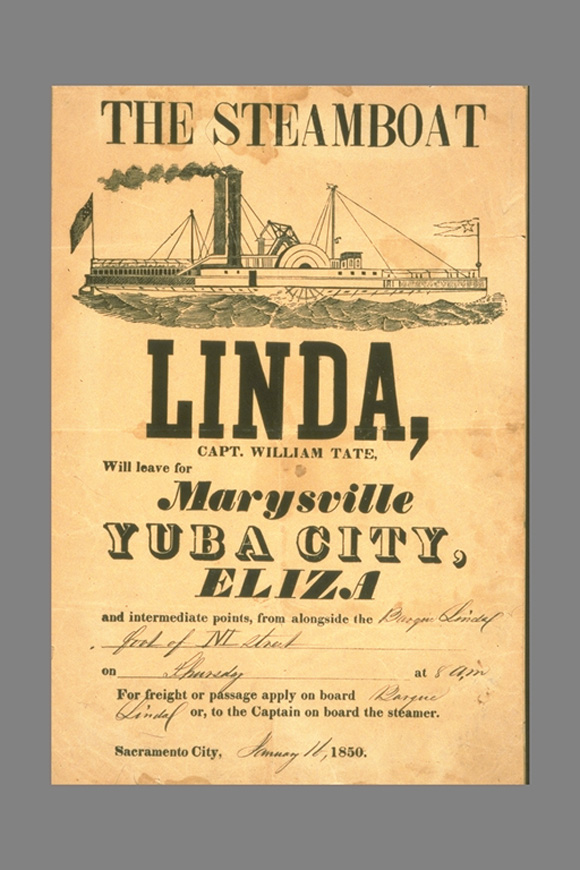
Cordua gave his settlement the name of “New Mecklenburg,” but his more sensible neighbors decided that was a blazingly stupid name, and took to calling it Cordua’s Ranch, or simply “The Plaza.” When the Gold Rush hit, it became an important way station for people traveling to the ore-rich Sierra Nevada foothills, which began a few miles to the east. A few of the bigger steamboats coming up from the Bay Area began making New Mecklenburg a stop. (The first steamboat to navigate the Yuba River was the Linda, whose name lives on in a scuzzy little meth town just south of Marysville.)
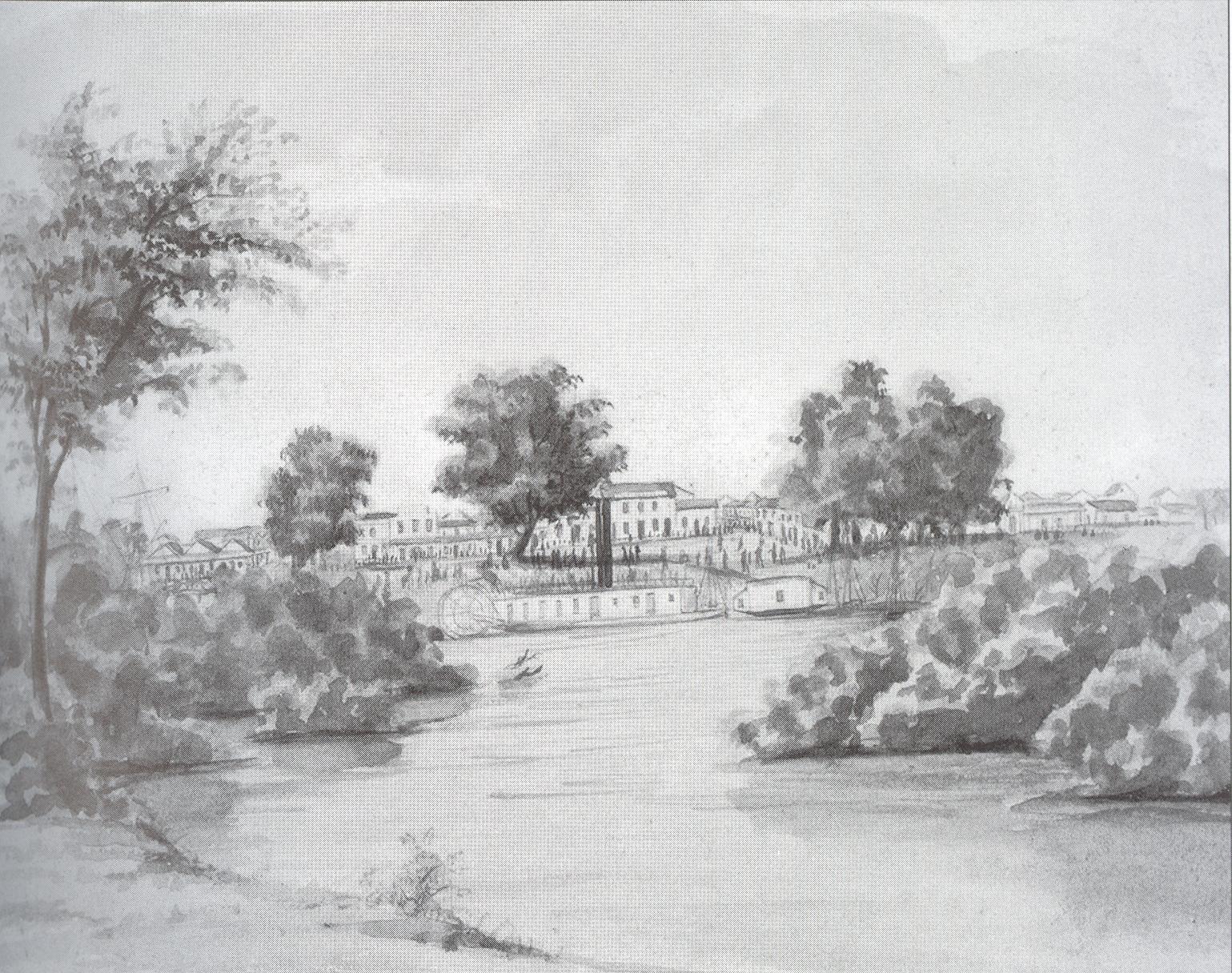
 A watercolor of how “The Plaza” once looked
 The general area of “The Plaza” nowadays, buried deep under the Yuba River levee I’m standing on to take the picture.
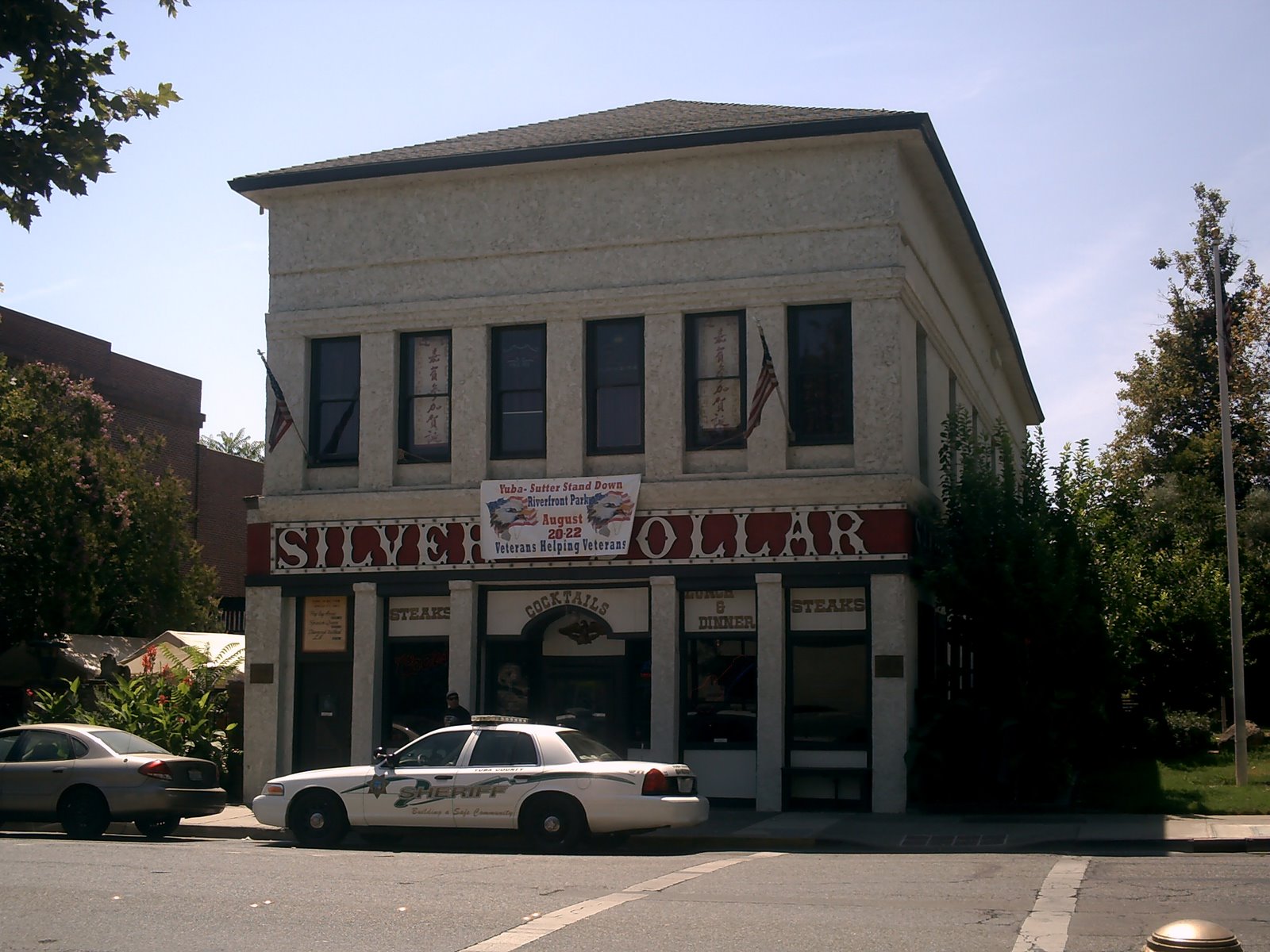
 It was decided that the Silver Dollar Saloon on 1st St. (my favorite Marysville watering hole when I have to choose one – sheriff’s car optional), which backs up to the levee, is the presently standing structure that’s as near as possible to the old Cordua place, so that’s where they chose to stick the “New Mecklenburg” historical plaque.
Cordua sold off big chunks of his holdings to various speculators, but much of it went to a French immigrant named Charles Covillaud, who was rolling in profits from the early days of the Gold Rush. Everyone was making money hand over fist. (Except for the Chinese immigrants who poured into Marysville by the wagonful, and established a mini-Chinatown around 1st and C Streets. The Chinese referred to Marysville as “Sam Fow,” or “Third City” as it was the third city they came to after passing through San Francisco and Sacramento.) Covillaud then sold portions of his holdings to professional adventurers Jose Ramirez of Chile and John Sampson of Britain (by way of Chile) for another tidy profit. It was that kind of time. Frenzied buying, selling, subdividing. Entrepreneurs, soldiers-of-fortune, and various miscreants flocking in from everywhere, everything coated with a fine layer of gold dust. Craziness.
The portion of land Covillaud cannily kept for himself is what became the city of Marysville proper. He named it after his wife, Mary Murphy, who was a Donner Party survivor (and thus, a suspected cannibal, which never seems to get mentioned.) Much was made of this, though I don’t see why. In the mid-1800’s, if you survived one gruesome life-threatening event, another was waiting in line almost immediately. Sure enough, ol’ Mary checked out at age 36.
 A woodcut depicting the earliest days of what was by now called “Marysville.” It could be depicting Professor Harelip Jenkins and His Magical Dancing Bananas for all I can see, as these fucking woodcuts are impossible to look at without getting a migraine. But, y’know, they’re historical and all, so they must be important.
There seemed to be no limit to what Marysville could accomplish. It was the seventh (or possibly eighth) incorporated city in the new state of California, and there was talk of it even becoming the state capital. Developers began selling it as the “New York of the Pacific.” Imposing brick structures replaced the adobe huts and canvas tents. Greatness was in their grasp.
Then the dumb bastards went and burned it all down within a year.
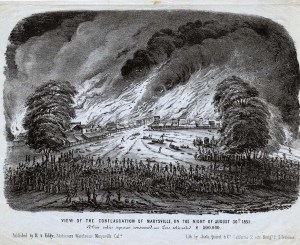
Upon rebuilding, the citizens of Marysville soon discovered that their settlement was just as susceptible to flooding as any other town in the central valley of California. Californians loved building permanent settlements on floodplains, because that’s where the best farming is. But listen to the word: floodplains. See what it does there? The word is its own definition. Floodplains have a tendency to flood. It’s not that the Hardy Pioneers weren’t aware of the situation, but they seemed not to care, relying on engineering (bypasses and levees) to solve the issue. Difficult as it is to envision now, the earliest descriptions of Marysville describe it as being situated on bluffs above the Yuba River, so at first it seemed like flooding wouldn’t be a problem at all. Marysvillians could enjoy a sense of smug superiority, being literally above it all.
Then the place started flooding anyway.
It gradually dawned on the smarter ones that hydraulic mining upriver was increasing the sediment load and, thus, raising the level of the riverbed. The bluffs were disappearing. In 1875, a team of engineers put together an intricate series of levees designed to protect the town and its precious commerce. When they finished up, wiped their brows and had a look around, they realized they had entirely hemmed in the city with levees. It would forever be confined to its 1875 borders.
Adding insult to injury, the increased sediment in the riverbed caused the big paddle-wheeled riverboats to be unable to navigate as far north as Marysville. Sacramento got all of its business. Marysville as a major shipping port with the potential to be the “New York of the Pacific” was no more. So, Marysville population circa 1853: about 10,000. Population circa 2009: just under 12,000. For most of its existence, Marysville has been a slightly bitter, kind of backward little town that had all of its hope to be something better snuffed out over 130 years ago.
OK, let’s make with the photos before I put you all to sleep…Click on the pics for a more close-up look.
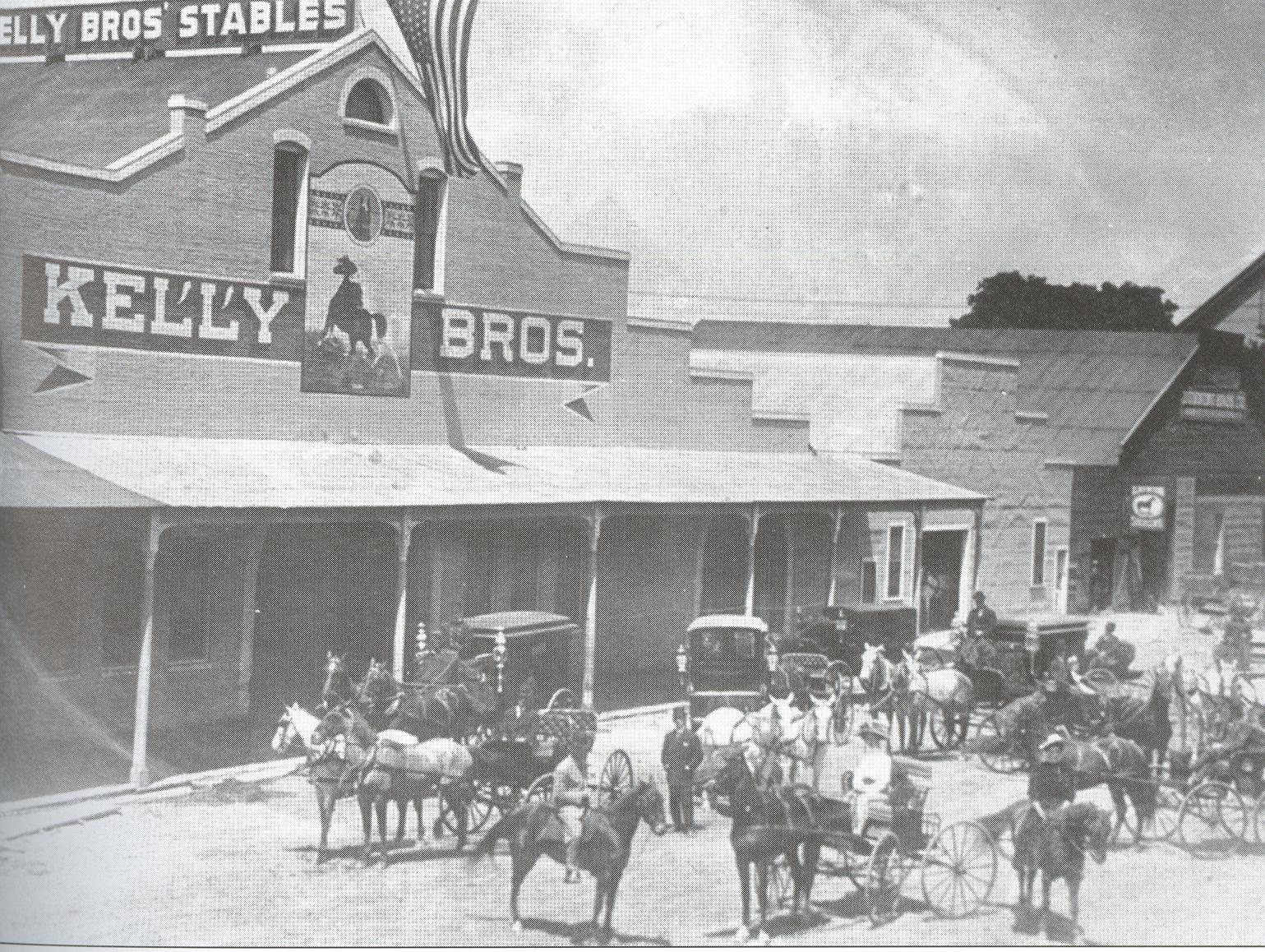
 A touch of Marysville’s original Wild West flavor can be seen in this photo of Kelly Brothers’ Stables on E Street
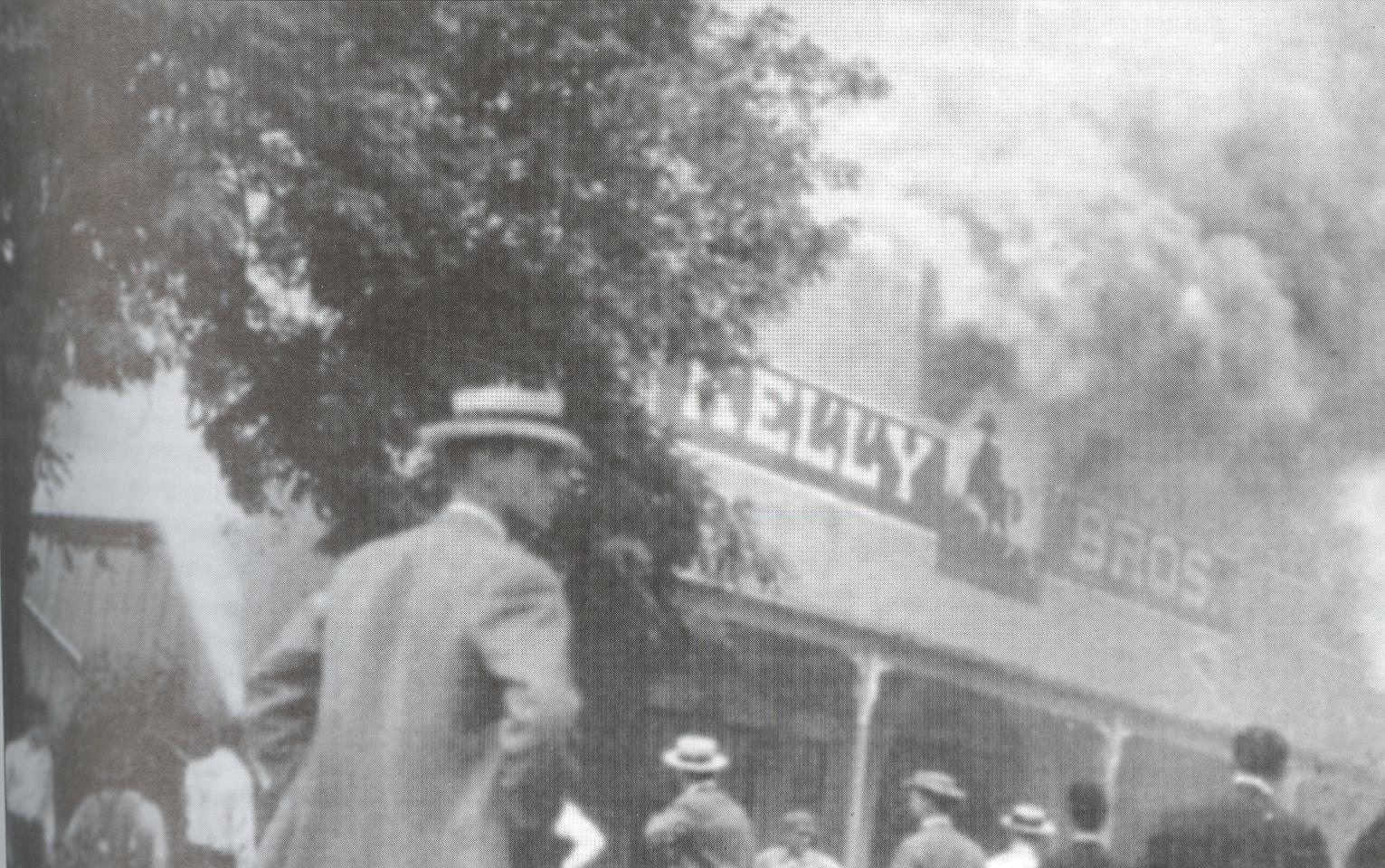
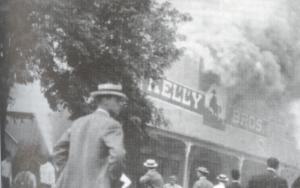 It burned down in 1915. (Note the man in the foreground being conspicuously unhelpful, for fear his snazzy straw boater might blow away.) The Kelly Brothers also ran an undertaking business on D Street.
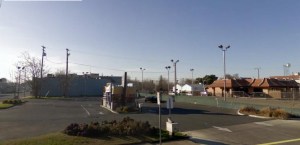 As rootin’ and tootin’ as it tries to be, the Java Detour that today sits at the same location just doesn’t cut it.
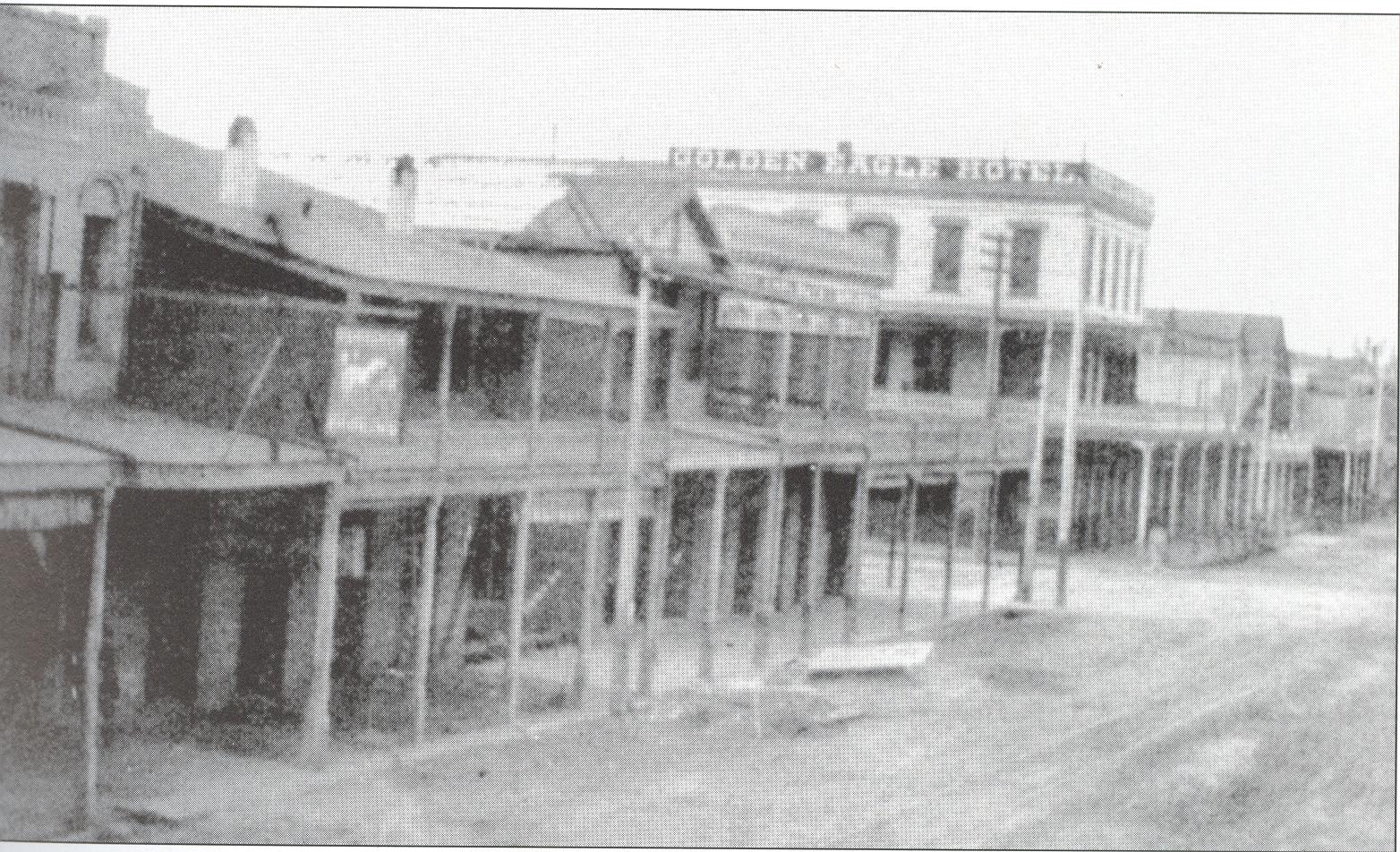
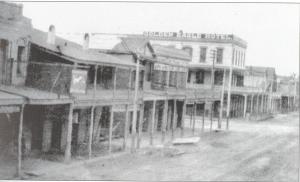 Another glimpse of life on the frontier as we look south down C Street at the Golden Eagle Hotel.

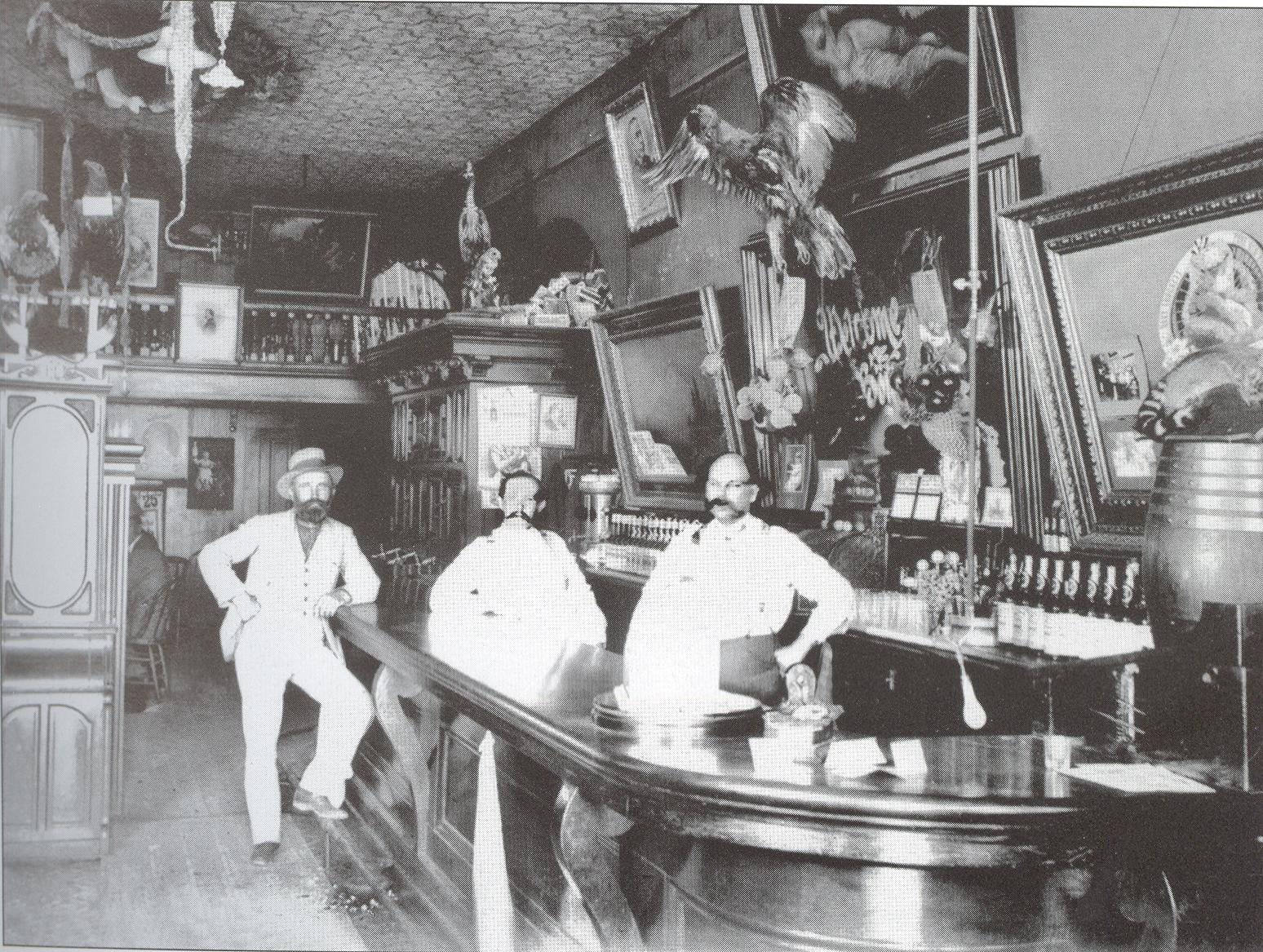
The Golden Eagle’s interior.
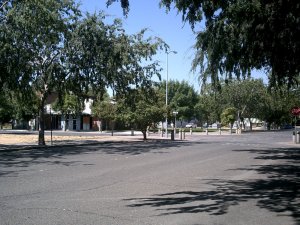 Looking south down C Street at the grassy vacant lot (just beyond the cement traffic pillars) where the Golden Eagle once stood. I don’t know if it burned down, but I kind of suspect it did.
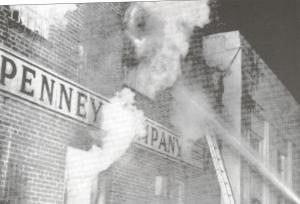
Ah, here’s one of the earliest J.C. Penney stores in California merrily burning away at 316 D Street.
 To be replaced with a coffee shop. (In the 1990’s, this was called “Mahler’s,” and you’ll be reading about it in an upcoming This Used To Be My Playground.)
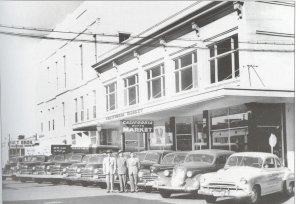 Up until the 1950’s, the Del Pero’s California Market was the most modern and pristine supermarket to be found north of Sacramento, pioneering developments in portion control and freeze-drying, and employing a fleet of vehicles to make home deliveries. (If you squint, you can make out the slogan We’re Glad To Meat You on one of the trucks. If this is what passed for humor in the 1950s, you can tell why the world was ready for Lenny Bruce.)
 Looking for it today? Uh-uh. Burned down. Evidently, a sausage-making machine went kerflooey on Christmas Day, 1956, and roasted the joint, taking the Masonic Lodge building next door with it for good measure. True story. Today it’s a Jimboy’s and its associated parking lot.
 The Masonic Lodge that perished in the Great Christmas Sausage Fire of 1956.
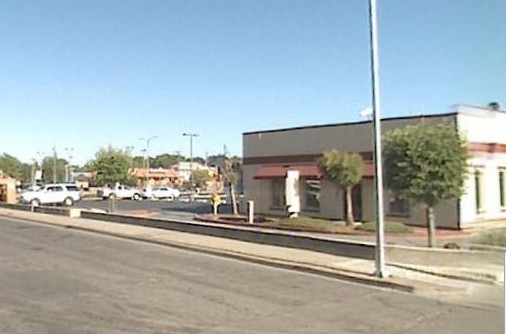
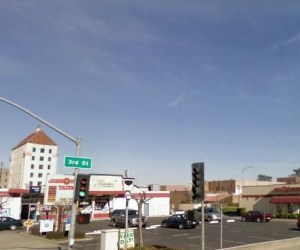 The parking lot where the Masonic Lodge used to be.
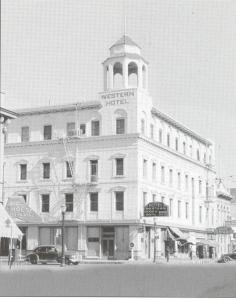 The Western Hotel once stood at the corner of 2nd and D. In its early years of operation, it was a miracle of 19th-century hotel design, boasting the only elevator, steam heaters, and electricity in any hotel between Sacramento and Portland.
 I guess I can’t technically say the Western “burned down,” but the inevitable fire caused enough damage that the building was demolished in 1956.
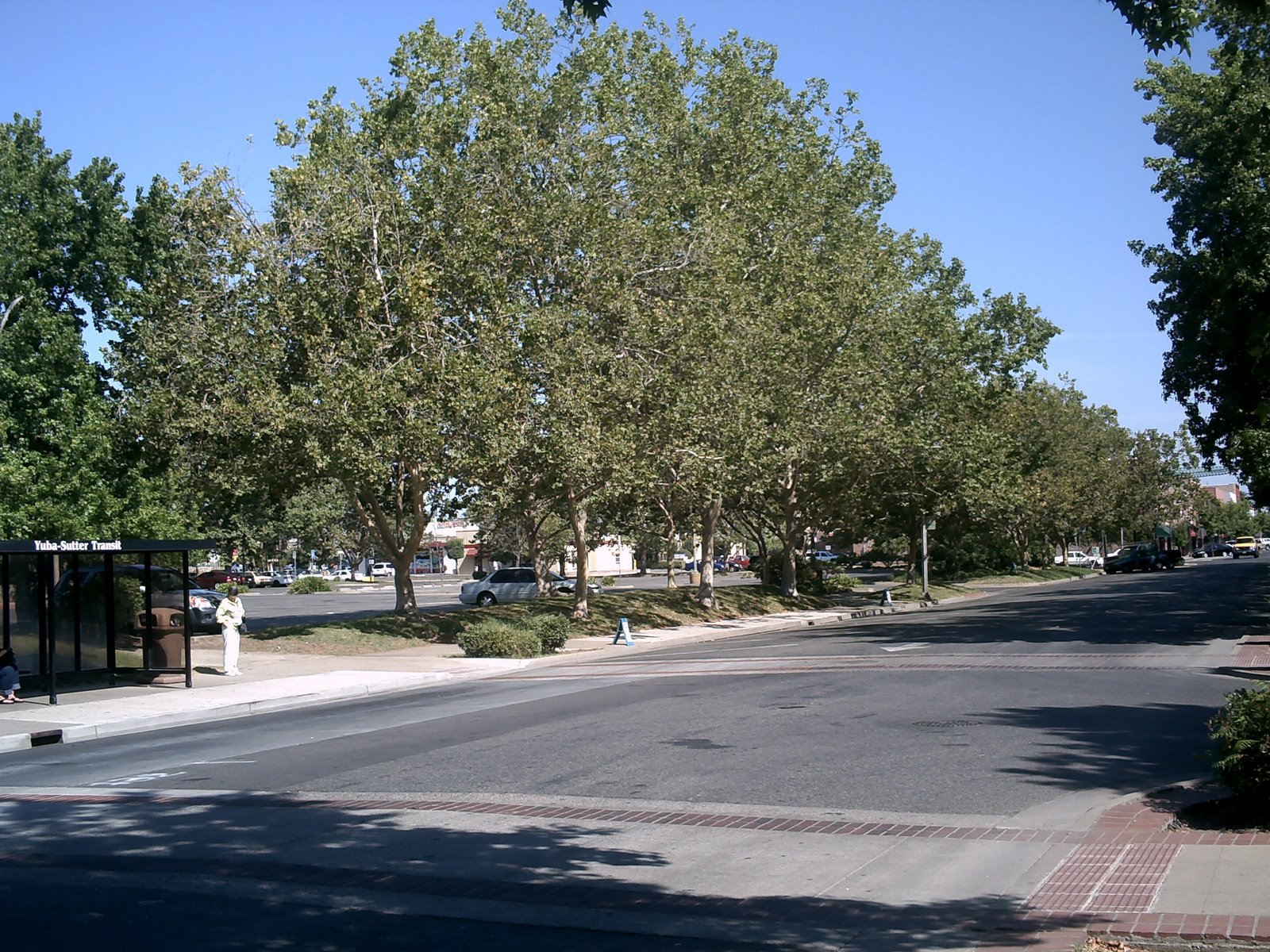
 Today, the area where the Western Hotel once was is occupied by a bus stop and the tree-lined parking lot of Mervyn’s, which went out of business at the end of 2008. The large Mervyn’s building now sits empty, staring eerily out at the downtown business district it was meant to save.
Tired of fires? Okay.
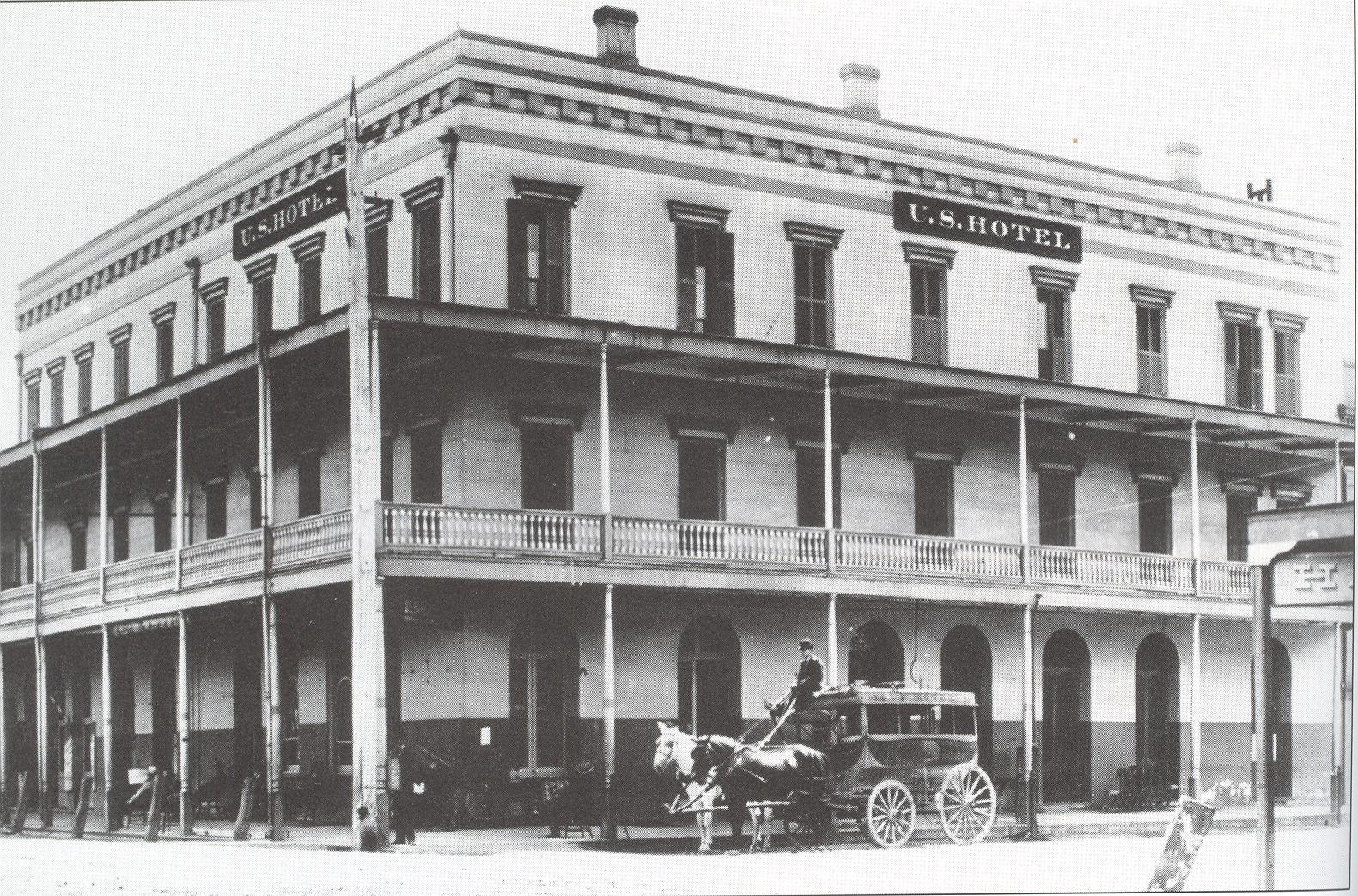
 Here’s the equally prestigious United States Hotel on 3rd and C Streets.
My otherwise reliable Marysville book states fancifully that “In 1867, while campaigning, Ulysses S. Grant stayed at the [U.S.] Hotel.” For one thing, Grant was still in the military in 1867, had his hands full dealing with Reconstruction, and never left D.C. For another, no self-respecting 19th-century presidential candidate would “campaign”(as we understand the term) a full year before the election, before receiving the nomination, and certainly not in the wilds of California. Grant did not even attend his own party’s convention in 1868. A little research and common sense is all it takes, people! Get it right if you’re going to put it in a book. (Blogs get more leeway.) If Grant stayed in the hotel (I’m not saying he didn’t), it was most certainly in the fall of 1879, when he was on his post-presidential world tour. He passed through California after crossing the Pacific from Yokohama. OK, lecture mode “off.”
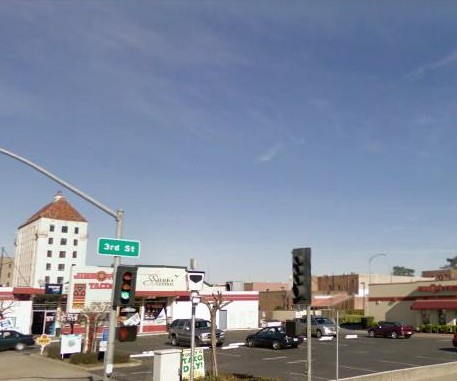
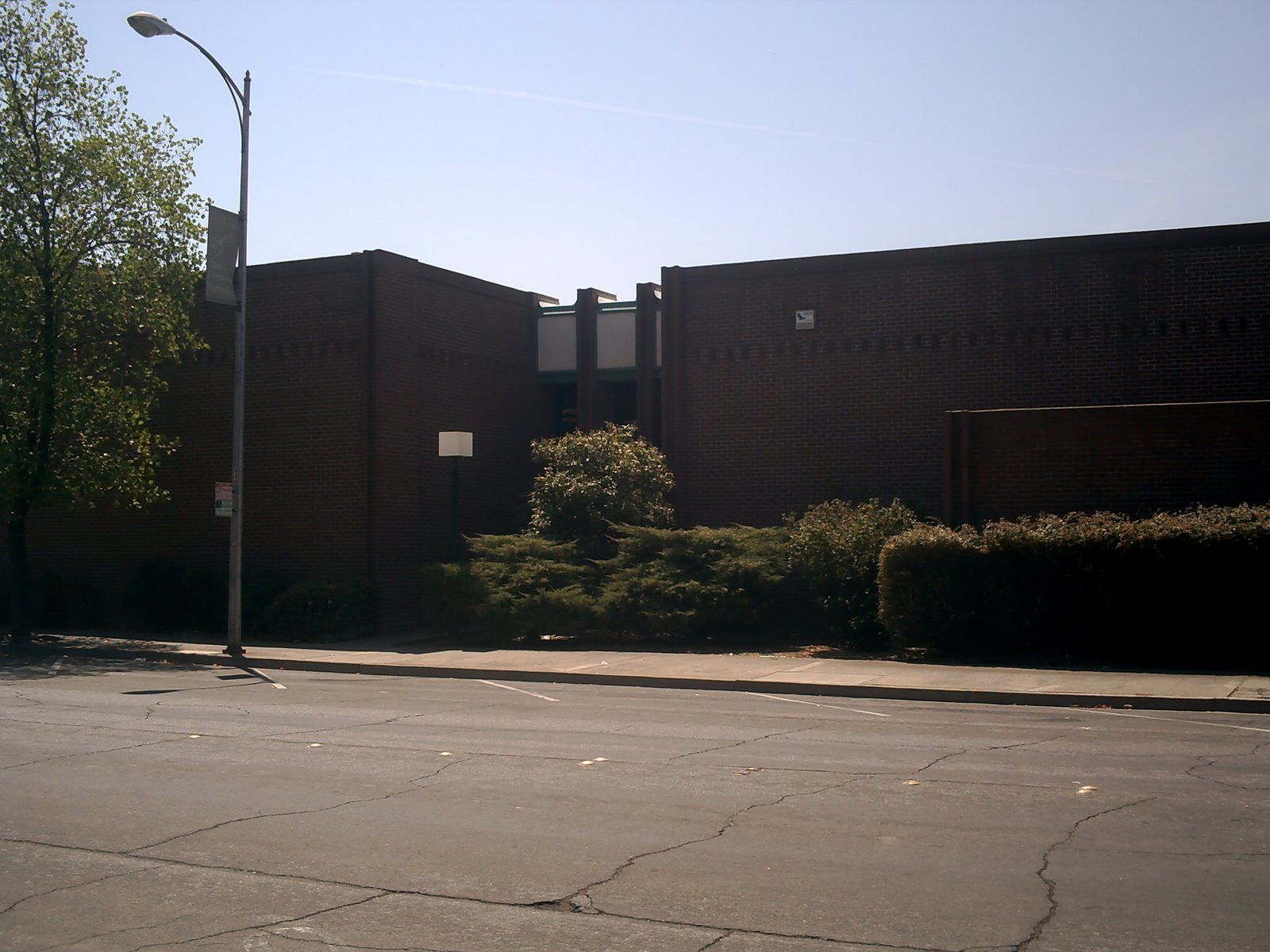
 Where the United States Hotel once stood is now the shady backside of the Yuba County Library.
 Next to the U.S. Hotel was Marysville’s original City Hall and Fire Station.
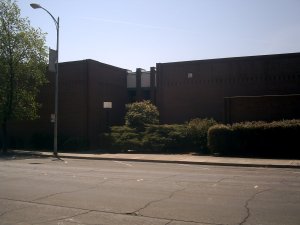 Which leads us to a continued view of the ass-end of the Yuba County Library that now occupies the spot.
The first Marysville Court House stood at 6th and D Street.
 The parking lot of the Gold Country Bank has a historical marker to indicate the old court house’s location.
 What about the “new” courthouse? Well, here’s a look at Cortez Square, a shady spot bordered by 5th & 6th Streets and B & C Streets, and site of the fifth California State Fair in 1858.
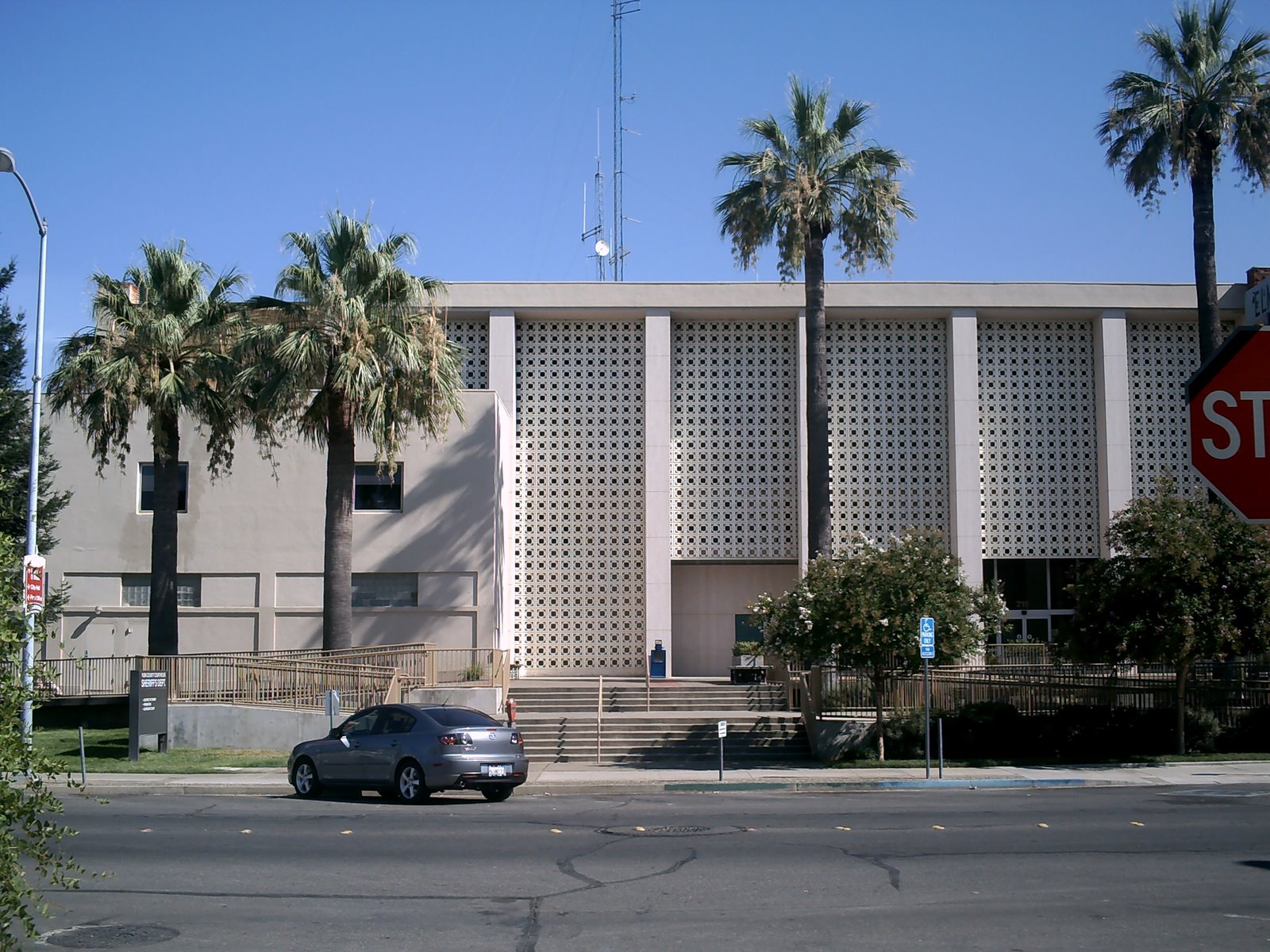
 And its replacement – the eye-wateringly ugly “new” courthouse of 1962.
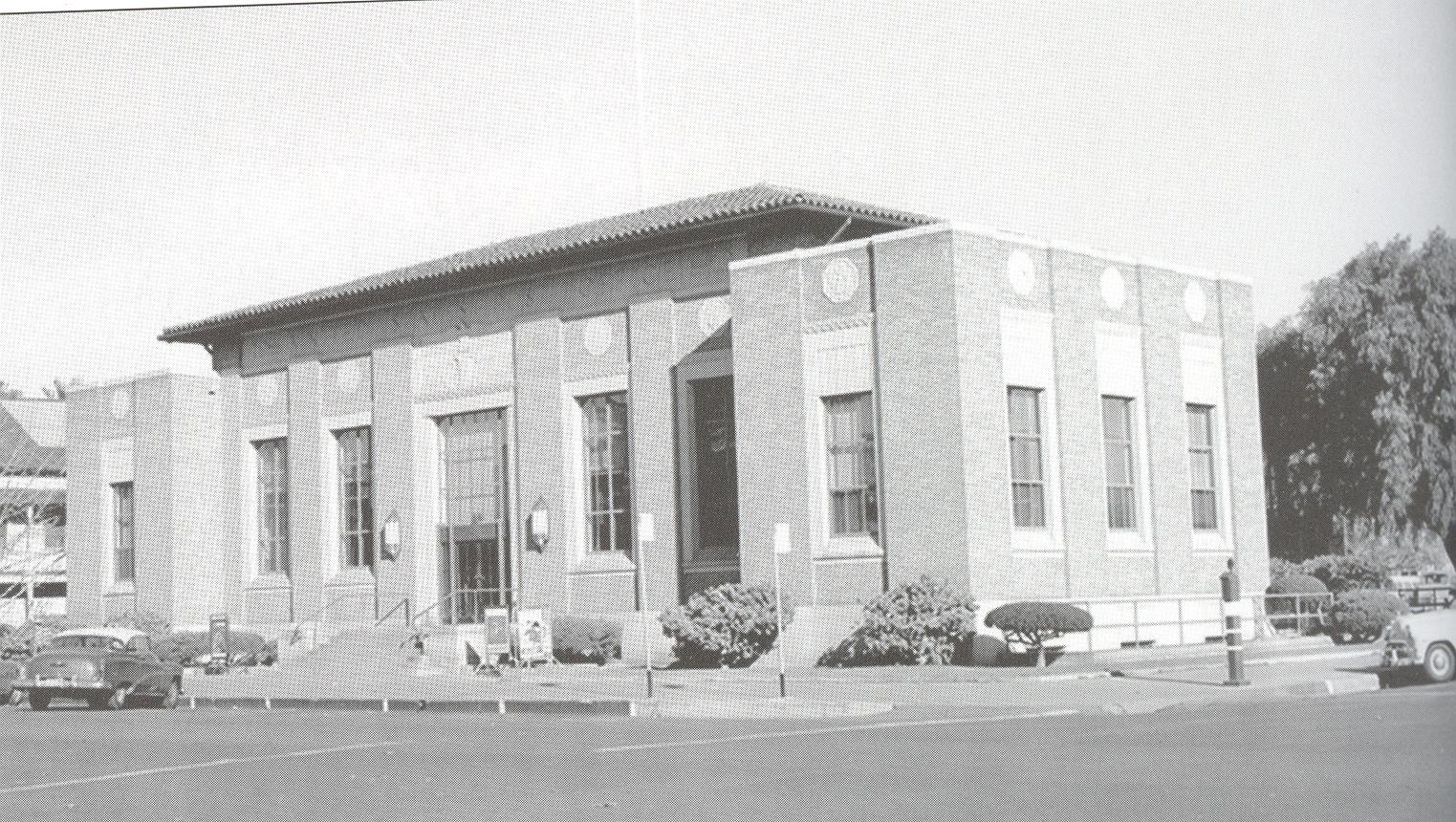
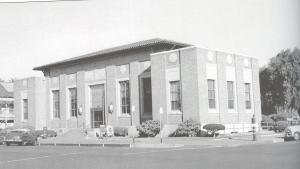 The post office building on C Street was built in 1934-39.
 And little has changed. I mean, how much can you really do with a post office building?
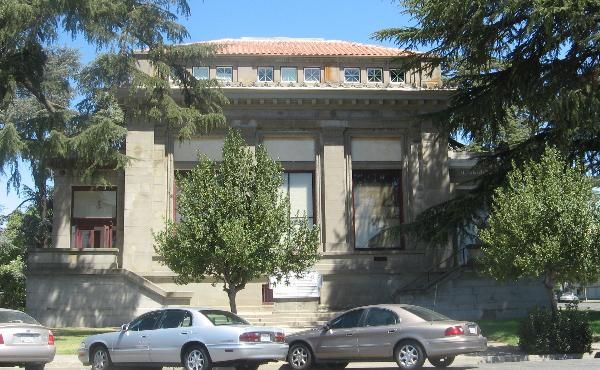
 The Packard Library across the street from the post office opened in 1906 as the first free library west of the Mississippi. (Most libraries charged a small membership fee back in those days.)

It also still exists relatively unchanged, except for the fact it’s no longer a library. We’ve already seen
the “new” library (the back of it, anyway) earlier. Nowadays the Packard Library Building is home to a few private offices, as well as the headquarters of the Yuba-Sutter chapter of everyone’s favorite teen sobriety program
Friday Night Live, and the high-ceilinged central hall can host your wedding or special event.
Some pretty nice old private residences still exist in the area west of E Street, but a lot of the ostentatious mansions of the city’s founders are gone.
 The house of Mayor Norman Rideout once stood on 5th and E Streets. It was later converted to a hospital that bore his name.

Rideout Hospital relocated several blocks southwest, and the old house was demolished and replaced with the Marysville Hotel in 1927.
 The Marysville Hotel got less than a half-century of glory. It was derelict and abandoned long before I moved to the area as a child. Every once in awhile, there’s some big talk about refurbishing it into “luxury condominiums” or “prime office space,” but look at it, for chrissakes. No one’s ever going to do anything with it except put it out of its misery, and even that won’t come anytime soon.
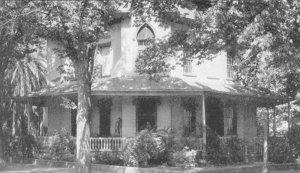 This was the home of the Ellis family at 8th and D, who gave their name to the lake that lies a block to the north.
 It is now the site of St. John’s Episcopal Church.
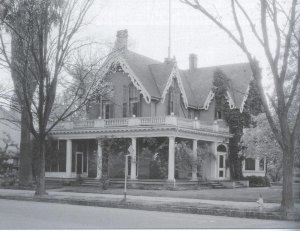 The Belcher family were prominent city attorneys instrumental in halting the destructive hydraulic mining on the Yuba River. Their home stood on C Street.
 The “new” City Hall (dating from 1939) now occupies a space just to the north of where the Belcher house once stood.
As it happens, three of the oldest houses in Marysville are still standing.

First is Chilean Jose Ramirez’s “The Castle,” which dates from 1851, and is rumored to be built like a fortress to withstand an Indian attack. Although even as early as 1851, the half-dozen or so Indians still hanging around the area were in no condition to attack anything except a bottle of whiskey. The little bands of valley Maidus weren’t exactly raging Apaches to begin with. Ramirez’s Castle once looked out upon Cortez Square. (This 1960s shot was the earliest picture I could find.)
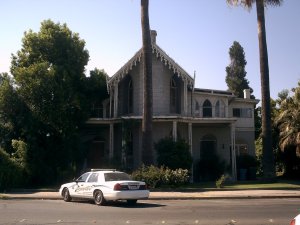 The place still looks pretty much the same, though it’s in need of some restoration, and instead of looking out on Cortez Square, it now looks out at the new courthouse. Scroll up if you need a reminder of what that dungpile looks like.
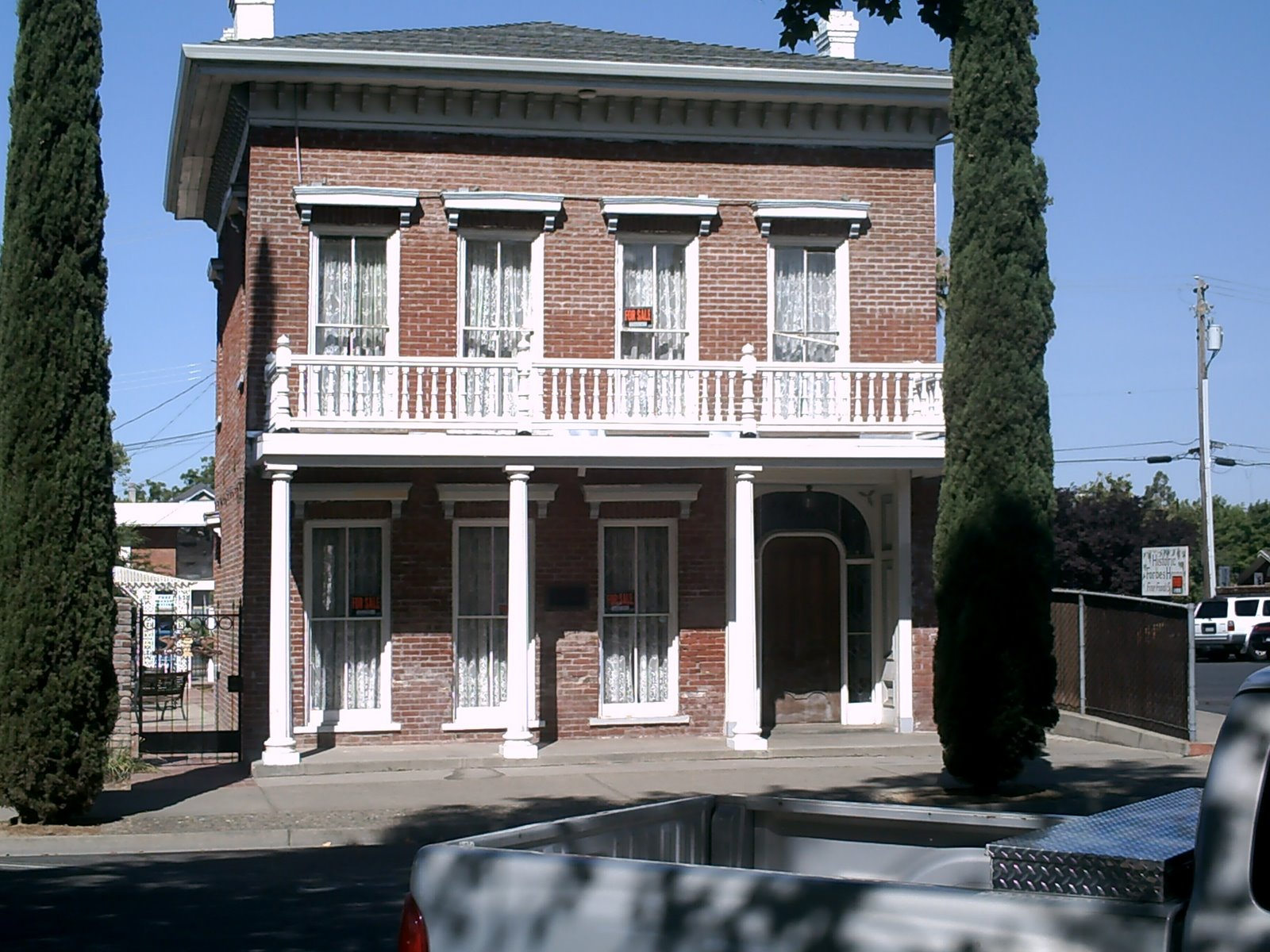
 Former adjutant general for the state of California and founder of the California National Guard, Edward Forbes lived in this house on D Street, built in 1854.
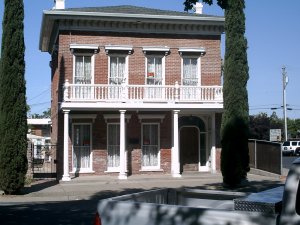 Until recently, the building served as the Historic Forbes House Restaurant, but now sits vacant.
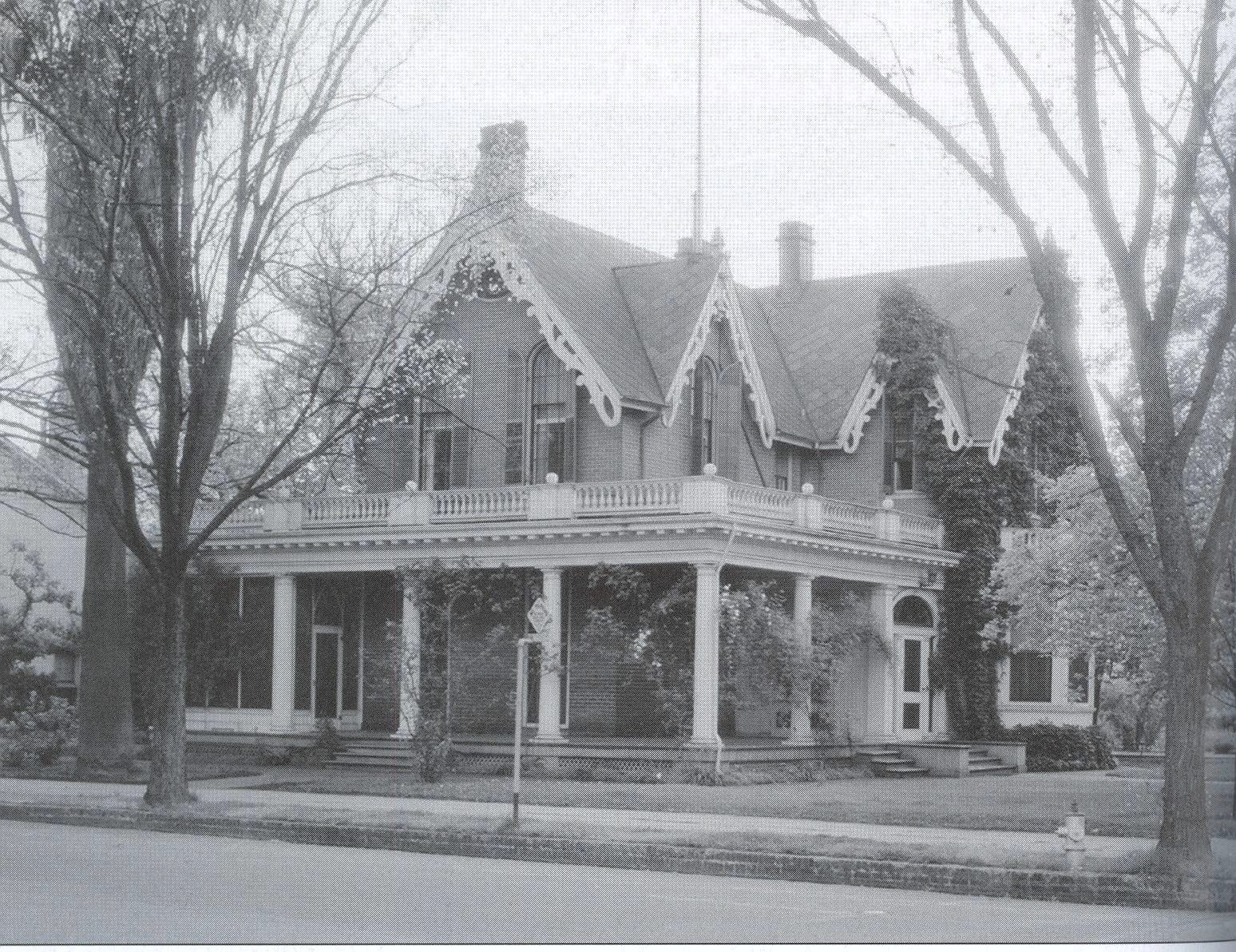
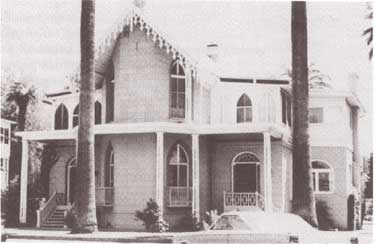
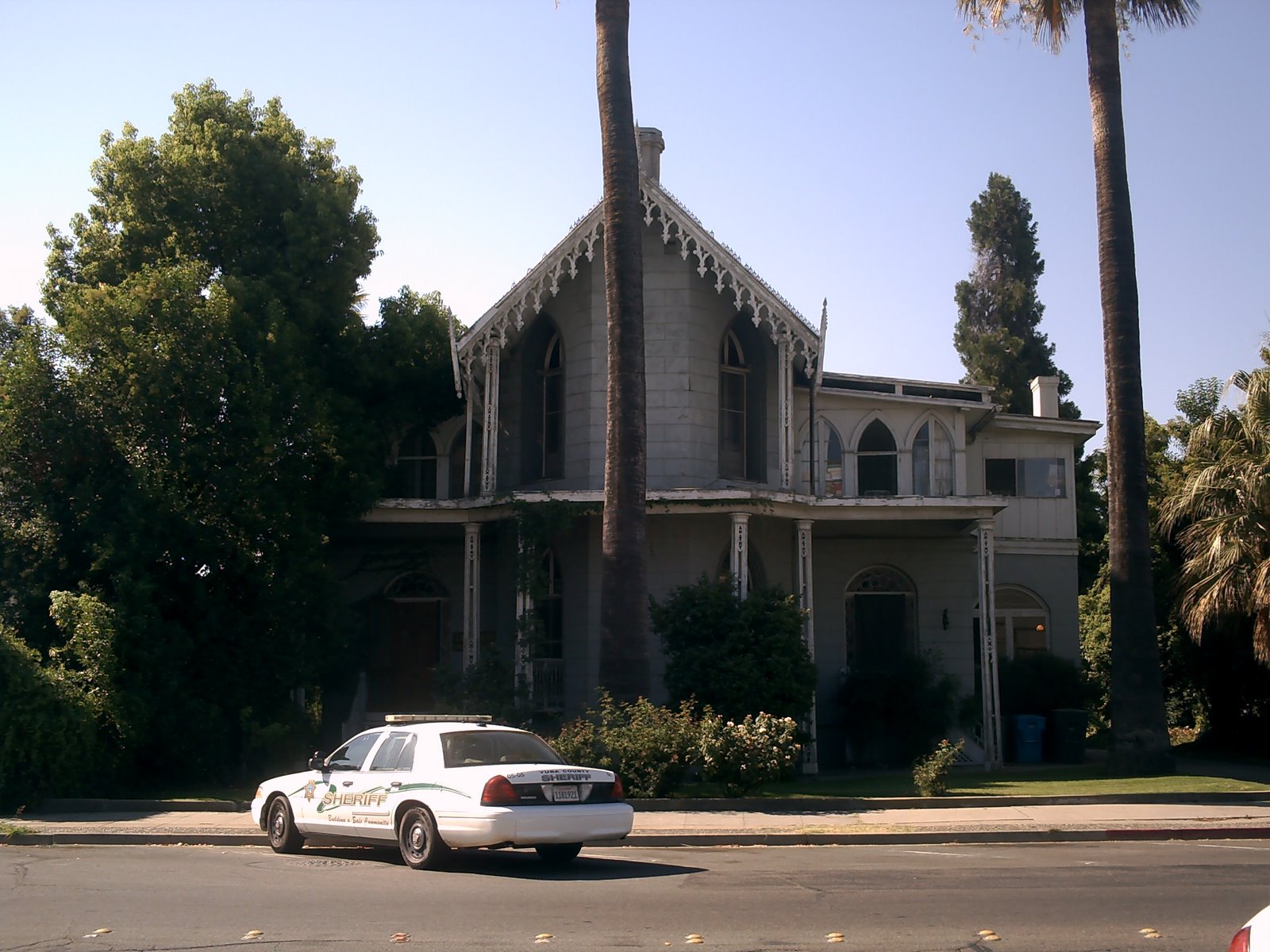
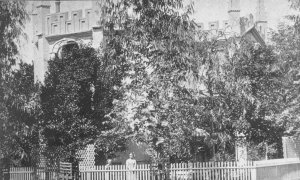 The 1856 house of Francis Aaron, founder of Marysville Water Co. and Northern California Savings & Loan, also went for the “medieval castle” look that was all the rage in the mid-1850’s.
 Now it is the Mary Aaron Museum, a well-meaning if slightly underwhelming collection of antique furniture and clothing. They’ve got some good pictures, though.
Want more? I gots more. But let’s call it a day for now. I’ve been beavering away at this time-waster for (checks time) over five hours now. And that’s just the text. I’m committed to finishing this because I already spent last night scanning and sorting all the pictures.
Next entry coming soon. There’ll be more fires, I promise.


























 Holy Bee of Ephesus


