The Holy Bee’s 36 Hours of Christmas (Part 2)

It’s A Wonderful Life

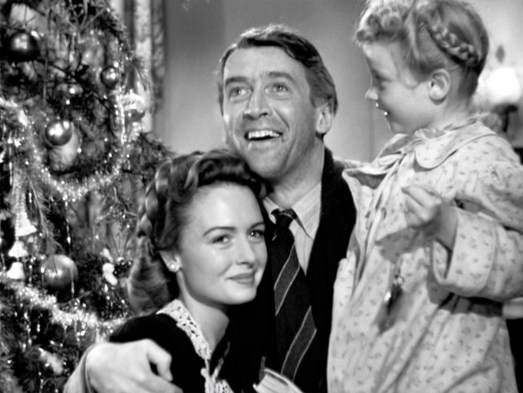
This Frank Capra film was pretty much ignored when it came out in 1946, but it became a holiday staple when it went out of copyright in 1974, and dozens of local TV stations across the country ran it and re-ran it until everyone was thoroughly sick of it. NBC got its claws on it a few years back, and curtailed its infinite loop, usually showing it only twice during the holiday season.
its-a-wonderful-life

There are three types of people: 1) those who love the film despite being beat over the head with it on television for over thirty years, 2) those who despise it for its sappy sentimentality (and the incessant figurative head-beatings), and 3) those who have successfully avoided it for their entire lives. I fell into the latter category for most of my existence, and was content to remain there, until I was essentially forced to watch it by my wife’s family, who are all type one. As everyone was dissolving into big puddles of tears at the end, I found myself almost joining them. But through sheer grit, fortitude, and more than a little biting the inside of my cheeks, I succeeded in remaining stoic and dry-eyed. Take that, Capra. (SLEEP OPPORTUNITY: If you’re a type two and nothing will ever change that, go ahead and grab forty winks.)

So, yes, the movie is pretty good. Just as Miracle On 34th Street is surprising in how much of a sharp comedy it is, It’s A Wonderful Life often shocks first-time viewers by how grim it is, until the redemption in the last reel. (A Christmas Carol Trivia: Lionel Barrymore, who plays mean old Mr. Potter here, played Ebenezer Scrooge every year on an annual live radio broadcast of A Christmas Carol from the 1930s to the early 50s. He was supposed to play Scrooge in the 1938 film version, but had to drop out for health reasons, and was replaced by Reginald Owen. Some say Barrymore would have been the definitive film Scrooge had he made the movie.)

In order to convince NBC to share It’s A Wonderful Life this year, the Holy Bee had to agree to a little deal.
2016-0407-agt-key-art-image-1920x1080-cv

RETURNING IN 2017 — WEDNESDAYS @ 8:00, ONLY ON NBC!!

Moving on…

Bad Santa

Up next is the polar (no pun intended) (not a pun, anyway) opposite of the Capra tearjerker, 2003’s Bad Santa — one of the crassest, foulest, and most lovable Christmas comedies in cinema history. The titular “bad Santa” is suicidal, late-stage alcoholic Willie (Billy Bob Thornton), who uses his yearly employment as a shopping mall Santa to rob said shopping malls blind.

bad-santa

When you peel back the surface crudity and wall-to-wall profanity, you find a film that actually has a lot of heart. The clever script, which received uncredited assistance from the Coen Brothers, who also produced, is never truly mean-spirited. (When Willie shreds a child’s advent calendar and eats all of the chocolates in a drunken blackout, he at least tries to make amends by replacing the chocolates with NyQuil gelcaps and candy corn — “they can’t all be winners” — and taping it back up.) The direction by Terry Zwigoff (Crumb, Ghost World) is visually deft and quick-paced. There are also great supporting performances by two comic geniuses no longer with us: John Ritter as the timid shopping mall manager, and Bernie Mac as the head of mall security.

Sadly, Bad Santa 2, made this year by different writers and a different director, fails because it’s nothing but surface crudity, missing the poignancy and, yes, subtlety of the original. (SLEEP OPPORTUNITY: If the sight of Santa, red fuzzy Santa pants around his ankles, having loud back-door sex with a heavyset woman in a department store changing room, is just too much for you, grab your sleep now.)

Frosty The Snowman

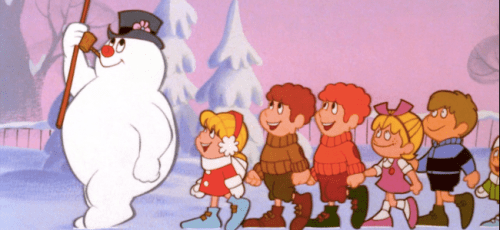
Rankin/Bass is known mostly for its stop-motion animation, but it did produce the occasional traditional cel animation special from time to time. 1969’s Frosty the Snowman expands on the lyrics of the song (popularized by Gene Autry in 1950) by adding an evil magician, a rabbit named Hocus Pocus, and a race-against-time plot to get Frosty up to the North Pole so he won’t melt. The Big Man himself, Santa Claus, makes a cameo appearance to get the evil magician to change his ways — and write formal apology letters to everyone he had wronged! What it lacks in depth (even The Year Without A Santa Claus had a little bit of layering going on), it makes up for in brevity (it sails across the finish line in about 25 minutes), along with the voices of long-forgotten comedian Jackie Vernon as Frosty, and Jimmy Durante as the narrator — and singer of the theme song, which he performs in his unique style.
frostythesnowmanfinal

Red Skelton’s Christmas Dinner

Like Emmett Otter’s Jug Band Christmas, this is an old childhood favorite from 1981 that was shown on HBO for many years. Wholesome family entertainer Red Skelton, like Andy Williams, had politics slightly to the right of Barry Goldwater, but boy was he gifted in the art of pantomime and character creation. He also had a slightly creepy obsession with clowns. He did over 1000 clown paintings though the years. (When asked why, he said “I have a reason…but I don’t want to talk about it.” Creepy, right?)

xmasdinner

It wasn’t actually in black-and-white, but was so old-fashioned it might as well have been

Luckily for everyone, the clown he played in person wasn’t creepy at all, but utterly charming. “Freddy the Freeloader” was a typical “hobo” style clown, with minimal make-up, a battered hat, and the stump of an unlit cigar in the corner of his mouth. He has scraped together enough funds to treat himself and his pal, “The Professor,” to a nice Christmas dinner, but gets sidetracked by various distractions along the way, including returning a lost dog to its owner, and asking a Christmas tree vendor what he can get for twenty-five cents. (“A pine cone on the end of a plumber’s helper” is the response.) Out of everything here, this may rank the highest on the Syrupy Sweetness Scale (at one point he entertains a literal hospital full of sick children), but if your fillings can take it, it’s worth it to see Skelton in all his mawkish glory, ably supported by Vincent Price as the Professor, and Imogene Coca as a rather absent-minded lady hobo.

Home Alone

1450409218466_macaulat-culkin

Whatever, kid

I only included this one because the KHBE office would be flooded with mail if I didn’t. Personally, I don’t care for it. The sadistic cartoon slapstick of the “Wet Bandits” is lame, and Macaulay Culkin’s performance is the worst kind of artificial child-acting — alternately hammy and robotic. There appears to be very little going on behind his slightly out-of-focus eyes. Enjoy, if this is what does it for you. (This space could just as easily be filled by The Santa Clause, which I also don’t care for, mostly because if it involves Tim Allen, and isn’t a Toy Story, it will give me painful hives.)

A Colbert Christmas: The Greatest Gift of All

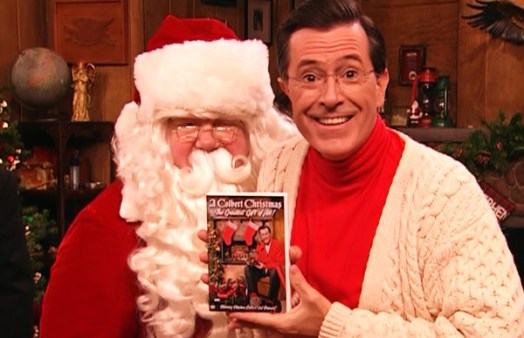
The old-fashioned Bing Crosby-style Christmas special, by turns staid and silly, has always been ripe for parody. As the A.V. Club website points out, “this type of TV programming is kept alive in the public imagination largely by those making fun of it.” But nobody did it better than Stephen Colbert in 2008. Still using his self-aggrandizing, blowhard “Stephen Colbert” persona from The Colbert Report, he gambols about in a cardigan sweater on an absurdly bright “mountain cabin” set, answering the door for “surprise” guests (including Toby Keith, and a bear), and eschewing traditional Christmas songs in favor of “Little Dealer Boy” (a duet with Willie Nelson) and “Can I Interest You In Hanukkah?” (a duet with Jon Stewart.)
colbert-christmas-the-greatest-gift-of-all-stephen-colbert-dvd-gift-santa-claus-george-wendt

Continue reading

2 Comments

Filed under Film & TV, Pop Culture

The Holy Bee’s 36 Hours of Christmas (Part 1)

At the end of last year’s “24 Hours of Halloween” — a marathon of spooky movies and TV shows curated by me for my imaginary TV station (“KHBE”) — I remarked jokingly that “48 Hours of Christmas” would follow. The joke turned quite serious when I realized I was short a Christmas entry this year. So the project is on!

andy-color-dancers

The first thing that struck me was that actually watching a 48 hour marathon would stretch the limits of human endurance, unless a very different kind of Christmas “snow” was involved. Thirty-six hours is just about do-able, and I’ll be offering suggestions as to when to catch some shut-eye. Also, have some food on hand. In fact, go ahead and have some turkey. That whole thing about tryptophan making you sleepy is just as big a bullshit myth as sugar causing hyperactivity (so quit making excuses for your poorly-behaved children.)

Part of what made the original “24 Hours of Halloween” marathon work was that my notional cable station would run the programs commercial-free, and start everything promptly on the 0s and 5s. Any one-to-four-minute downtime between shows would be filled by quips and double-entendres from everyone’s favorite horror hostess, Elvira, Mistress of the Dark. Since no equivalent pop-culture icon could fill her dress in a Christmas capacity, I decided to go ahead and pack those tiny spaces with commercials — but only vintage, holiday-themed commercials from the late 70s to the early 90s.

You want Hershey’s Kisses ringing like bells? You got it. (This one still pops up on real TV from time to time.)

You want Ronald McDonald ice-skating? You got it.

You want Joe College, in that horrid cable-knit sweater, home for winter break and waking up the whole damn house by brewing a pot of Folger’s? You got it.

And more Budweiser clydesdales than you can shake a peppermint stick at.

If there’s any other awkwardly-timed space to be filled, KHBE will just show footage of a Yule log for a few moments, maybe with some tasteful snippets of Mannheim Steamroller in the background.

(You’ll notice there’s not a lot of Disney stuff here, and that’s because Disney never really “did” Christmas very much, or all that well. I think they see Christmas as a competing brand of magical happiness. Maybe I’ll throw in that Chip ‘n’ Dale short where they hide from Donald Duck in the Christmas tree in the place of a few vintage commercials.)

The “36 Hours of Christmas” marathon will run from noon on December 22nd to midnight on the 23rd, so you can get a good night’s sleep and be up (bright-eyed and bushy-tailed) on Christmas Eve morning, and are able to stop being a lazy shut-in, and handle all of your family obligations. For those bound and determined to continue being a lazy shut-in, and/or those whose families are annoying fundamentalists or obnoxious Trump voters who can’t stop making quasi-racist remarks over the figgy pudding, the marathon will re-run in its entirety through the 24th and 25th. You’re welcome.

img_20161212_094301

These marathons don’t just organize themselves

OK, the clock is striking twelve, you’ve cashed in some vacation hours from work, you’ve dumped a splash of peppermint schnapps into your hot cocoa (yes it’s noon, but no one will judge you), and you find KHBE down in the 800s of deep cable…what do we start with?

Santa Claus Is Comin’ To Town

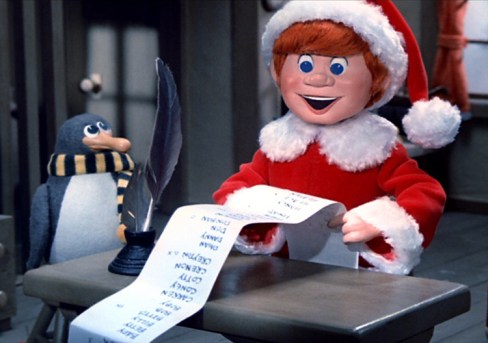
What better way to kick things off than with a bunch of creepy, plastic talking dolls? Over the past five decades, the Rankin/Bass production company has become practically synonymous with “kids’ TV Christmas specials,” and their stop-motion “Animagic” aesthetic (a song every few minutes, polyester snow, jerky, spastic movements and lifelessly staring eyes for the characters) is as beloved by some as a favorite ugly sweater.

santa.88

Another reason we start the marathon here, besides the general ubiquitousness of Rankin/Bass at yuletide, is that it’s an origin story. 1970’s Santa Claus Is Comin’ To Town, based on the 1934 song by the wonderfully-named songwriting team of Coots & Gillespie, explains how an orphan child, who was left on a doorstop with the nametag “Claus” around his neck, was taken in and raised by a family of toy-making elves (the Kringles), and grew up to be the familiar figure of Santa. He had to work his way up to delivering on a global scale. He started by bringing happiness to the gloomy children of Sombertown, although his methods may raise an eyebrow or two. During the song “If You Sit On My Lap Today (Be Prepared To Pay),” a beardless young Kris Kringle (voiced by well-known degenerate letch Mickey Rooney) demands a kiss from every child before he will give them their present. No wonder Burgermeister Meisterburger wanted to kick his ass out of town and back over the Mountain of Whispering Winds. Continue reading

2 Comments

Filed under Film & TV, Pop Culture

The Holy Bee Recommends, #15: “Beatles ’66: The Revolutionary Year” by Steve Turner

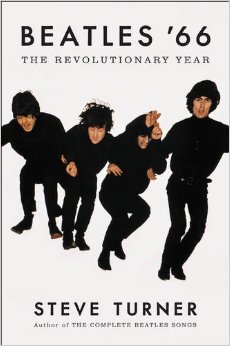
In these virtual pages, we’ve already discussed why 1966 was a revolutionary year in 41tfo6prkll-_sy344_bo1204203200_general. Now, to continue our celebration of this landmark year’s 50th anniversary, we’ll get specific. What did 1966 mean to the Beatles? According to Steve Turner’s excellent new book, Beatles ‘66: The Revolutionary Year, it was the crux of their existence as a working band — building on past triumphs, peaking with their most remarkable work, and even sowing the seeds of their eventual demise. Turner considers the events of 1966 too important to be condensed and shoehorned into a typical Beatles bio, and the year deserves its own book.
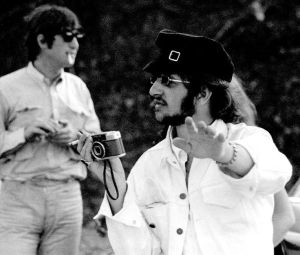
It was first and foremost a transformative year for them. In the space of just a few months, they went from their matching suits and famous pudding-bowl haircuts, bashing out “She’s A Woman” into a wall of deafening screams, to being draped in beads and velvet, sporting moustaches and soul patches, and beginning the recording process for Sgt. Peppers Lonely Hearts Club Band. In between, they made the momentous (and unprecedented for a 60s “pop group”) decision to quit touring, produced what many feel is their greatest album, Revolver, and its accompanying single, “Paperback Writer/Rain,” and embarked on individual journeys of personal growth and self-education that fundamentally altered their relationship with each other and how they approached their art.

The catalyst for all of this was the fact that the first part of 1966 was the least active period of their professional lives. It wasn’t always going to be that way. 1966 was supposed to follow the pattern of 1964 and ‘65: film a movie in the first few months of the year, a world tour in early summer, a U.S. tour in late summer, a U.K. tour in the autumn — and writing and recording three hit singles and two hit albums in the midst of all that.

The pattern was broken when a suitable film idea could not be found. Initial talk about adapting Richard Condon’s 1961 Western novel A Talent For Loving came to naught. The film was eventually made in 1969, with Richard Widmark, Cesar Romero, and Topol in the older character parts, and two attractive young cowboys in competition for the favors of the sexy heroine. Boggles the mind how anyone thought a very-adult Old West sex farce would be a suitable vehicle for four English musicians, but stranger things have happened. One presumes it would have been expanded to include four attractive young (English) cowboys competing for the heroine.

So after a soul-punishingly brutal schedule since the onset of Beatlemania, with no movie 8d389a137df76159148ff5091cba9ba1shoot happening, the Beatles had over three months off. The only thing on their work calendar for January was doing some overdubs for the film of their famous Shea Stadium concert from the previous summer. Once that was done, John and Ringo skipped town to vacation in Trinidad, where Ringo celebrated being out of the public eye by growing a full beard a year before they “officially” debuted their facial hair look. George married his girlfriend of almost two years, Patti Boyd, and also headed for the Caribbean for a honeymoon. Paul remained in London, and plunged into intellectual pursuits.
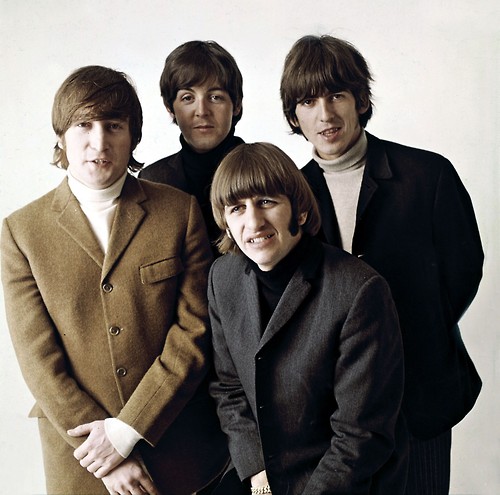
John often gets credit for being the “experimental” Beatle, but the trend was started by Paul around this time, who began being associated with places like the Indica Art Gallery and people like art dealer Robert Fraser, artists Peter Blake and John Dunbar, and writer Barry Miles. He assisted with the launch of the famous “underground” newspaper International Times, attended lectures and concerts by modernist composers, and basically gorged himself on every scrap of intellectual stimuli he could get his hands on. He was the first Beatle to really experiment with the possibilities of home recording, creating sound-saturated tape loops by removing the eraser head of his Brennell Mark V reel-to-reel recorder.

A lot of this may have been instigated by living for almost three years with the family of his long-time girlfriend, actress Jane Asher. The influence of the unconventional and sophisticated Ashers was bound to rub off on Paul. Jane’s father, Dr. Richard Asher, was a brilliant endocrinologist, mother Margaret was a music instructor at the Guildhall School (specializing in oboe — she taught Beatles producer George Martin in his formative years), and brother Peter was half of the music duo Peter and Gordon. The press at the time reported Paul’s unusual living arrangement (millionaire pop star living in girlfriend’s parents’ attic) as being quite chaste — like another sibling. But given how open-minded the Ashers were, one would have to assume nocturnal navigations between the two bedrooms were undertaken. Even so, after a couple of years, Paul realized he needed a place of his own. He bought a large townhouse on Cavendish Avenue, just around the corner from Abbey Road Studios, in 1965. By the time it was ready for him to move in it was early 1966, and Paul had begun his cultural crash-course. By staying in London, he was staying close to the action.

John realized he had miscalculated by opting for the mansion way out in the countryside, and frequently expressed his envy of Paul’s being at the heart of things. He did what he could from his more isolated environs, mostly reading — and experimenting with another new development of 1966: LSD. More on that below.

George, although he did not eschew the acid experience at this stage, was choosing to expand his consciousness via more spiritual means. His interest in Indian religion and philosophy was growing by leaps and bounds, and now he found the time to devote himself to studying it — and struggle with learning the difficult-to-master sitar.

Their desire to improve their minds in this fashion was typical of intelligent people who had missed large portions of traditional education. “Having gone from the classroom to the Cavern, they leapfrogged the university experience,” said journalist Tony Barrow.

During this time, the individual Beatles sat for lengthy interviews with radio and print journalists such as Alan Freeman, Ray Coleman, and Maureen Cleave, who took them seriously and asked sophisticated, grown-up questions — a welcome change from their inane group press conferences when on tour. Although the philosophical underpinnings of these interviews would come back to haunt John in the coming months.

tumblr_nvh0tl3gdy1tga28so1_500

March 1966 — back to work

Continue reading

1 Comment

Filed under Books, Music -- 1960s, The Holy Bee Recommends

“Nothing Is Too Much Trouble”: A Chronology of Ian Fleming’s James Bond (Part 3)

md6733474402_thumb.jpgOctober 1962 – March 1963

Bond is rescued by a girl from a Japanese fishing village, but the bullet that grazed his skull damaged his prefrontal lobe, and he has lost all memory of his identity. For several months he lives as a fisherman on a small island off the coast of Japan. He takes the name Taro Todoroki. (YOLT)

Early 1963

The Secret Service pronounces Bond missing and presumed killed. His official obituary appears in the London Times. It is written by M, and gives a somewhat accurate overview of Bond’s life (though some dates are off by three or four years, see Appendix C.) (YOLT)

Spring 1963

Bond begins having fragmentary flashbacks to his previous life. He is certain he had something to do with a place called “Russia.” He travels on a mail-boat to the Russian island of Sakhalin. (TMWGG)

April – November 1963

Bond is picked up by Soviet police on the waterfront at Valdivostok. In a scuffle, he receives another blow on the head, and begins to vaguely recall who he is.

After discovering Bond’s true identity, the KGB interrogates him for weeks (learning nothing due to his partial amnesia), then sends him for brainwashing at “The Institute” in Leningrad. (TMWGG)

November 1963md3995449602

Due to a mind and psychological will left weak by the after-effects of amnesia, the KGB brainwashing is successful. Bond is sent by the KGB back to London to assassinate M. The assassination attempt fails, and Bond is put under the care of Sir James Molony, for what M calls “un-brainwashing.”

November – December 1963

Bond’s rehab includes neurosurgery, followed by four weeks of intensive psychiatric rehabilitation at “The Park,” a discreet convalescent home in Kent. This is followed in turn by physical therapy and shooting practice. (TMWGG)

Late December 1963

Bond receives first post-illness assignment, a seemingly impossible mission to test if his abilities have been fully restored: track down and eliminate Francisco “Pistols” Scaramanga, also known as the Man With the Golden Gun, the most dangerous hired assassin in the world. Scaramanga is currently employed by the Communist government of Cuba. If Bond successfully completes this mission, he will be reinstated to his previous status within Secret Service. (TMWGG)

January – February 1964

Working undercover as “Mark Hazard,” a courier/security guard for Transworld Consortium, Bond tracks Scaramanga for six weeks through Mexico and the Caribbean, finally cornering him in Jamaica. He succeeds in eliminating Scaramanga, but receives serious gunshot wounds in the shoulder and stomach.

Felix Leiter and the CIA lend their assistance. (TMWGG)

41D8jdd-WjL._SY346_Early March 1964

After making the global intelligence community (including his own MI6) believe the assassaination attempt on M was delayed but successful, Bond is sent back to Russia to infiltrate Stalnaya Ruka (“Steel Hand”), the rogue group of former SMERSH leaders who brainwashed him. He foils their plot to assassinate Soviet premier Nikita Khrushchev. (WMTK)

Early 1965

On an unspecified assignment in the U.S. (Bond only refers to it as a “discourtesy visit.”) (CS)

June 1965

Bond is in Hong Kong to assist with inserting another agent into China, but the mission goes awry. (CS)

colonel-sunSeptember 1965

M is kidnapped by terrorists in the employ of Colonel Sun Liang-Tan, of the Chinese People’s Liberation Army, who is planning an attack on a Middle East peace negotiation being held in Greece. (M is to be used in a bit of misdirection to make people think Britain is behind the attack.) Bond travels to Athens to prevent the attack, and succeeds, but not before being subjected to his most brutal torture session since the Casino Royale mission. (CS)

1965

Bond reaches the age of mandatory retirement from the Double-0 section. It would appear this has been waived in his case, or perhaps the overall policy has been changed since it was first mentioned.

May – June 1967

On a three-month sabbatical from the Service, Bond must decide whether or not to continue as a Double-0. He spends a month in Barbados (where he finally takes up tennis, after disdaining it his whole life), then travels along the Cote d’Azure in the south of France, before ending up in Rome. (DMC)

June 1967200px-devilmaycare

The sabbatical is cut short when he is summoned by M to investigate Dr. Julius Gorner, a pharmaceutical magnate suspected of illegal narcotics trafficking. Bond discovers that not only is Gorner a drug lord, he is also a terrorist planning an attack on the Soviet Union using a hijacked British airliner (to goad the Soviets into retaliating against Britain.) Bond’s mission to thwart Gorner’s plans takes him through Iran and into Russia. (DMC)

1969

Bond celebrates his “45th” birthday alone at the Dorchester Hotel in London. (He’s really 49 — but the fiction that was concocted to shave four years off his age seems to have taken hold. See Appendix C.) Continue reading

3 Comments

Filed under Books

“Nothing Is Too Much Trouble”: A Chronology of Ian Fleming’s James Bond (Part 2)

imag0824-1

[NOTE: The events through 1945 are based primarily on John Pearson’s James Bond: The Authorized Biography of 007 unless otherwise noted, and may be altered or eliminated as more current canonical material on Bond is published. Based on references in the original Fleming novels, it seems Pearson placed some events from 1936 through early 1939 roughly a year, or even two years, too early, so I have made the adjustment to keep things in line with the original novels as much as feasible.]

September 1936 – April 1937

Bond’s Swiss relations, the Delacroixs, arrange to move him to the University of Geneva, where he could live off-campus (supposedly “supervised” by a landlady, whom Bond found quite easy to charm and manipulate) and set his own schedule.

Bond attends lectures on psychology and law, and reads widely, but mostly does as he pleases, at times recklessly. He refers to the forthcoming year of his life as his era of les sensations fortes (“strong feelings.”)

After completing the intensely dangerous Aiguilli de Midi ski run, Bond gains a reputation as the “wildest skier in the university.” He also participates in bobsledding and mountain climbing that winter, taking particular delight in climbing under hazardous conditions — and climbing in the same area of the Aiguilles Rouges that claimed his parents. (OHMSS, FRWL, supported by AB)

It is probably also around this time that he begins doing some auto racing, in pursuit of the life-threatening thrill to which he is now addicted. (After he begins his Double-0 work in the post-war years, motoring in his rare and vintage Bentley racer is described as his “only personal hobby.” Although he still makes time for cards and golf, it’s clear that his car is his true passion.) (CR)

classic-magazin-grandprix-rennen_titel_1180x686_1

A typical 1930s Grand Prix auto race

April 1937

Bond travels to Paris for his Easter break, where he visits a brothel on his very first night — he is summarily de-flowered and has his wallet stolen at almost the same time. The brothel madam, Marthe de Brandt, recovers his wallet. De Brandt is nearing thirty years old, notorious, wealthy — and something of a freelance spy, mostly in the employ of Eastern European powers. (AB; supported by FYEO.)

April 1937 – January 1938

Bond and de Brandt engage in a tempestuous affair, despite (or because of) their twelve-year age difference. The head of the British Secret Service in Paris, a man named Maddox, confronts Bond regarding de Brandt, explaining that she is the most likely the source that recently leaked information damaging to the English-French alliance…and has also been frequently and flagrantly unfaithful to him (he has the photos to prove it.) Driven by a cold, furious mix of patriotism and romantic hurt, Bond drives himself and de Brandt off an embankment into the Seine. She is killed instantly, he suffers a few broken bones and a concussion. (The crumpled Bentley remains in storage for the next thirteen years — and sometimes Bond recalls this as the incident that gave him his distinctive scar.) (AB; fate of the Bentley from FAAD.)

Maddox covers up Bond’s involvement, and establishes a mentoring relationship with him as he recuperates. Bond later discovers that de Brandt was probably not the source of the leaked information, and the pictures Maddox had shown Bond were from before her time with him.

University-of-Geneva_thumb.jpg

The University of Geneva

Early 1938

Maddox convinces Bond to work in an as-yet-undetermined capacity for the Ministry of Defence. (Maddox was surely aware that his Secret Service had been keeping tabs on Bond since 1934.)

Mid-1938

Bond falsely adds two years to his age (to make him nineteen), provides a letter of recommendation from a cooperative former Vickers colleague of his father, and officially joins the Secret Service. He returns to London and is vetted by various medical, linguistic, and firearms experts at the Ministry of Defence. His probationary period for top secret intelligence work has begun. (YOLT; FRWL provides 1938 date)

Late 1938

Maddox suggests he continue as a student at the University of Geneva to provide himself cover.

He is attached to the Paris station, and begins doing routine courier and contact work through Europe, at times going as far as Moscow.

He vacations again at Kitzbuhel, Austria, skiing and climbing with Hannes Oberhauser.

Early 1939

Bond ends his time at the University of Geneva, and moves to Paris, where he can now concentrate on his intelligence career full-time, gradually gaining experience and building his skill-set. When not on assignment, he obsessively practices shooting, swimming, and unarmed combat.

Continue reading

1 Comment

Filed under Books

“Nothing Is Too Much Trouble”: A Chronology of Ian Fleming’s James Bond (Part 1)

A guy named John Griswold passed away at the end of May this year at the age of 65. He may not be a household name, but he is viewed with a great deal of reverence by fans of Ian Fleming’s James Bond novels.

Although a huge fan of the 007 film series, to me the “true” James Bond is the literary one, the one who spies, seduces, and kills in the pages of Fleming’s series of Cold War thrillers published between 1953 and 1966. The one who is a much more complicated and multi-faceted character than he is often given credit for.

A non-stop activity among literary Bond-philes is trying to tie 007’s book adventures to a real-world chronology. When was he born? When did he become a naval commander? When did he become a Double-0? What year(s) did he save the world from SPECTRE? There have been several (now mostly 41 OG076r1L._SY344_BO1,204,203,200_defunct) websites dedicated to it, and in 2006, John Griswold published an entire book on the topic.

Griswold’s work was and remains invaluable, but there are a few theories and interpretations I disagree with, and a few things that Griswold doesn’t cover (mostly minor asides in the novels making brief mention of something that happened earlier.) Plus, the recent publication of a new series of officially-sanctioned “Young Bond” books — that Griswold, becoming lost in the cruel fog that is early-onset Alzheimer’s disease, never got a chance to read — sheds lots of light on the character’s formative years, and throws off Griswold’s findings by a couple of years. So I couldn’t resist taking a stab at it myself.

Or rather, returning to it.

The last time I read all of Fleming’s novels, one after the other, was eighteen years ago. Those were the last few weeks before my son was born, and it is also at that time I began taking notes on the chronology.  I clearly remember at the time thinking it was the final opportunity to do something that stupidly self-indulgent, before the responsibilities of parenthood curtailed my ability to sit and read an entire book series in one go. Now that the kid is going off to college, it’s a good time to dig out my old chronology notes and finish the project off properly.

Ian Fleming, 1908-1964. A lot of himself went into James Bond.

Ian Fleming, 1908-1964. A lot of himself went into James Bond.

Fleming died in 1964, and his final two 007 books were published posthumously. With the blessing of the official gatekeeper of Bond’s literary existence, Gildrose Publications (later Ian Fleming Publications), other authors have continued Fleming’s work. Kingsley Amis, John Pearson, Sebastian Faulks, William Boyd, and Anthony Horowitz all have contributed Bond tales set firmly in, and just after, Fleming’s timeline.

The Bond novel series of John Gardner (1981-96) and Raymond Benson (1997-2002), and a one-off by Jeffrey Deaver (2011), are quasi-reboots and place Bond in a modern timeline, so they won’t be part of this chronology. Continue reading

3 Comments

Filed under Books

The Class of ‘66: Scaling Rock’s First Mighty Peak

It is a long-established trope among classic rock aficionados that 1966 has a special place in music history — something was in the air, something that pushed bands and artists to experiment and explore new sonic territory, producing their very best work. Music that made rock, pop, and soul “grow up” and become music for discerning adults, rather than disposable entertainment for the bubble-gum set. Any time there’s a poll in some dinosaur-rock magazine or website, three specific 1966 albums (you know what they are) always seem to swap around the top spots.103751_max

Fifty years down the road, is it time for a re-examination of 1966? Do the vaunted, classic albums actually hold up, or has “1966” just become a lazy shorthand for an incredibly brief period of musical development that will never be replicated in a space of twelve months ever again, while the actual albums themselves grow inflated and overrated, and at the same time, dusty and rarely listened to?

First of all, it must be remembered that in 1966, the rock album was still in its infancy. Bands like the Beatles and solo artists like Bob Dylan were working hard to change that, but even in 1966, the album charts were dominated by traditional, non-rock artists (Herb Alpert, Frank Sinatra), soundtracks (Dr. Zhivago), and left-field novelties (The Ballad of the Green Berets).

I had a good time re-listening to these recordings from almost nine years before my birth with an eye on their place in history, and I came to the conclusion that 1966’s reputation is deserved, but should be looked at as the beginning of something, the first of many peaks, at least as far as “good album years” are concerned. (1991, anyone?)

And the albums that made the year’s reputation — and kicked open the door to the format becoming commercially dominant — were actually very few in number. Both Britain and the U.S. each had a group of albums I call “The Big 5.” By general consensus, these are the what made 1966 “1966”:

A note on chart positions: The U.S. has one generally accepted music sales chart — Billboard. (There was also Cashbox for awhilebut it was considered very secondary.) The U.K. had several different publications — Disc, Record Retailer, New Musical Express, and Melody Maker — each with their own method of charting a record’s success, and each considered a viable source. I used whichever was the highest for a particular album.

TEAM U.K.

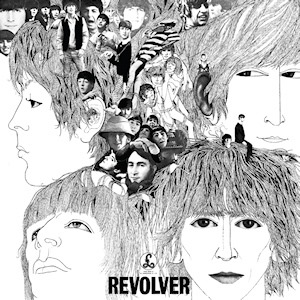
The Beatles — RevolverRevolver

Release Date: August 5

Highest Chart Position: #1 (U.S. & U.K.)

The “what-is-the-best-Beatles-album” question is as pointless as it is personal. You’ve got the Abbey Road boosters, the Rubber Soul fanatics, the people who love the innocence and energy of their debut Please Please Me, and the people who love the hippie-baroque intricacies of Sgt. Pepper’s Lonely Hearts Club Band. Then there’s people like me, who say Revolver is their best (by a slim whisker — it’s the most formidable discography in popular music.) My group has has been growing larger over the past several years. Sgt. Pepper’s star has faded a little, and Revolver’s reputation has finally clawed its way past it. The swaggering confidence they had as masters of the recording studio has seeped into the grooves of this record. They opened a dizzying bag of studio tricks: varispeed, tape loops, flanging, phasing, everything tried backwards, upside down, and sideways. The sheer musical variety from track to track demonstrates their effortless ear for genre and pastiche. From Harrison’s classical Indian piece “Love You To” to McCartney’s brass-saturated Memphis soul tribute “Got To Get You Into My Life,” to Lennon’s attempt (often imitated, never bettered) to create the audio equivalent of an LSD trip on “Tomorrow Never Knows,” Revolver shows off a band at the absolute top of its game. And I didn’t even mention “Eleanor Rigby.” Or “Yellow Submarine.” Or “Taxman.” Or “Good Day Sunshine.” Or “She Said She Said.” Each worthy of an essay of their own. And there’s still more great stuff…it’s a hell of an album.

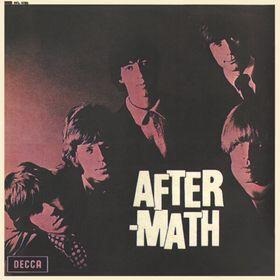
The Rolling Stones — AftermathRSAftermathUK

Release Date: April 15

Highest Chart Position: #1 (U.K.), #2 (U.S.)

The Stones started their career as a better-than-average R&B cover band, but didn’t truly come into their own until the Jagger-Richards songwriting team kicked into gear in ‘65 with two blistering singles, “The Last Time” and “(I Can’t Get No) Satisfaction.” By the spring of 1966, they were ready to unleash their first all-original album on an unsuspecting public. Their R&B roots were almost nowhere to be heard, replaced by a brittle, bitter form of power pop. The songs perfectly captured the mood of being a young, jaded rock star in Swinging London, and were underpinned by Charlie Watts’ light, jazzy touch on the drums. No heroics yet from future guitar god Keith Richards, who contributes a few stinging, fuzz-pedal lines here and there. The real show is band founder, multi-instrumentalist (and soon-to-be-ousted) Brian Jones, providing exotic textures on sitar, marimba, dulcimer, harpsichord, and a variety of bells, chimes, and random percussion. [Like many U.K. albums, Aftermath hit U.S. shores in altered form – a different cover and shorter track list. Unlike the clearly inferior U.S. version of Revolver, which simply cut the three Lennon tracks that had already appeared earlier in the year on the U.S.-only Yesterday…And Today, the American Aftermath is actually defensible – cutting four tracks (two of which were very sub-par) and adding the first-rate “Paint It, Black,” which had been a stand-alone single in the U.K.]

The Kinks — Face To FaceFace_to_Face_(The_Kinks_album)_coverart

Release Date: October 28

Highest Chart Position: #8 (U.K.), #135 (U.S.)

The Kinks outgrew the aggressive, distorted riffs that made their early reputation (“You Really Got Me,” “All Day And All Of The Night”), and began taking a gentler, subtler approach. Chief writer Ray Davies began focusing on evocative and eccentric character studies (culminating in the awesome “Sunny Afternoon” which closes this album), all steeped in distinctly British pre-rock traditions — music hall, pub singalongs, light classical, and flourishes of Celtic folk. When he wasn’t writing about dandies, session musicians, exclusive residences for sale, or Hawaiian vacations, Davies turned inward, exploring his own fragile psyche (“Too Much On My Mind” “Rainy Day In June”). Sessions for the album began right after Davies’ recuperation from a much-discussed, Brian Wilson-esque nervous breakdown. The album was well-received in Britain, then faded from memory, even going out of print for several years. Its fortunes were revived when people began talking about 1966 in reverent tones, and it has received several deluxe reissues.

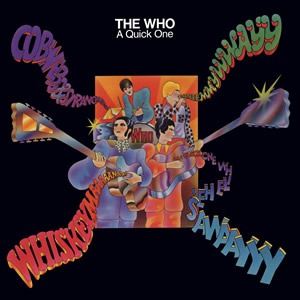
The Who — A Quick OneA_quick_one

Release Date: December 9

Highest Chart Position: #4 (U.K.), #51 (U.S.)

By their own admission, the Who’s second album was a patchy affair based on the half-baked idea that other band members should contribute two original songs, rather than relying solely on Pete Townshend. Roger Daltrey coughed up one (the decent “See My Way”), and drummer Keith Moon cribbed the melody from a half-remembered TV theme song (Man From Interpol) and turned it into the brass band instrumental “Cobwebs And Strange.” Moon’s second offering was a haunting little trifle called “I Need You” (supposedly about the ego-bruising experience of nightclubbing with the Beatles), which I suspect received uncredited help from Townshend. A perfunctory cover of “Heatwave” does no favors. Luckily, the strengths of the album are noteworthy. A Quick One did boast some underrated Townshend gems, including the sublime “So Sad About Us,” and showed off John Entwistle’s skills as a darkly comic songwriter in the Ray Davies vein with “Whiskey Man” and “Boris The Spider.” (Every future Who album except Quadrophenia would feature at least one weird and wonderful Entwistle jam.) Finally, the last track on the album paved the way to the band’s future: the first “rock opera” — a nine-minute, multi-section suite about an extramarital affair called “A Quick One While He’s Away.” (The album’s generic “pop art” cover brought it down a notch. It’s quite hideous.)

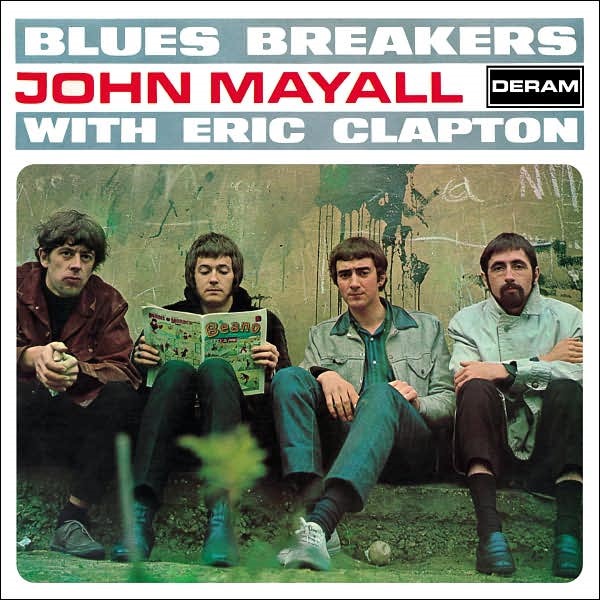
John Mayall & The Bluesbreakers – Blues Breakers with EricBluesbreakers_John_Mayall_with_Eric_Clapton Clapton

Release Date: July 22

Highest Chart Position: #6 (U.K.), did not chart in the U.S.

Guitarist Eric Clapton had already established such a reputation during his time with the Yardbirds that bandleader John Mayall included his name in the actual title of the album. Mayall was one of the earliest performers to popularize American blues in Britain (second only to Alexis Korner), acting as an inspiration and mentor to younger acts like the Rolling Stones and the Animals. The Bluesbreakers line-up was always fluid, with Mayall switching off between keyboards and guitar, and a rotating cast of musicians backing him. The band that powered Blues Breakers with Eric Clapton consisted of Mayall (mostly on Hammond organ and harmonica), future Fleetwood Mac bassist John McVie, drummer Hughie Flint, and, of course, Eric Clapton and his sunburst Les Paul playing those impeccable licks that made him a legend. The songs themselves are tasteful and restrained versions (no side-long jamming just yet — it’s still 1966) of classic blues numbers originally by Otis Rush, Robert Johnson, Mose Allison, Little Walter, and others, along with a couple of Mayall originals. (Clapton shyly gives his first ever lead vocal performance on “Ramblin’ On My Mind.”) Continue reading

2 Comments

Filed under Music -- 1960s

The Holy Bee Recommends, #14: “Andy & Don” by Daniel de Vise

r960-e3e07f80eaa2dd7cdb9cc4355d2faeb4I had seen this book, published last November, kicking around the shelves for a few months before I gave it a chance. I had never been much of an Andy Griffith Show fan. Syndicated reruns of it ran through my childhood, usually packaged with what I considered the superior show, The Dick Van Dyke Show. I much preferred the snappy pace and rapid-fire witticisms of Van Dyke over the pokey, measured plodding of Griffith. I remember the reruns always airing at noon, so it was a summer vacation show for me. My older sister liked it, so I had to get through it in order to get to Dick Van Dyke at 12:30. But from a more adult perspective, I realize that what I saw as the show’s weaknesses were actually its virtues.

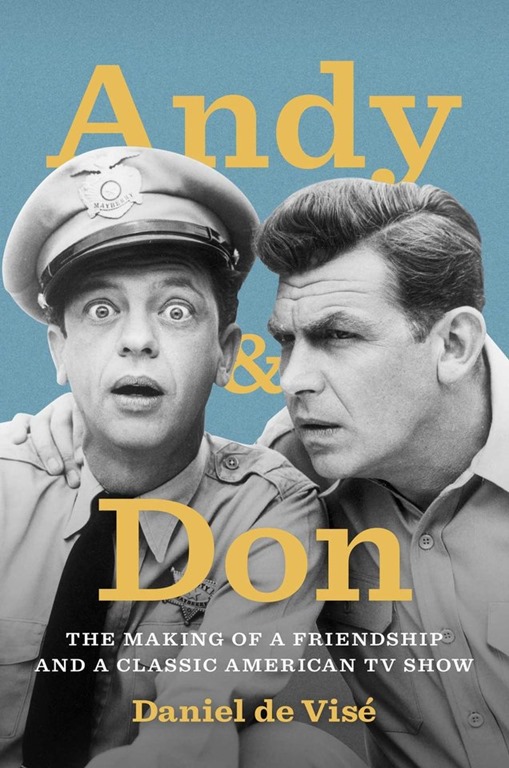
The dual biography Andy & Don: The Making of a Friendship and a Classic American TV Show by Daniel de Vise recounts the history of the long-time friendship between two slightly damaged men from rural Appalachian backgrounds. De Vise writes in a relaxed, informal voice, and makes lots of references and comparisons to things in modern pop culture, intending to strike a chord with Gen X readers or younger, few of whom were born during the show’s original run.

Andy Griffith and Don Knotts met in 1955 during the 796-performance Broadway run of the service comedy No Time For Sergeants, which starred Griffith and featured Knotts in a small supporting role. They hit it off right away. At the core of their relationship is the bond of having been two bumpkins from nowhere, scaling the ladder on raw talent, and proving to the big-city sophisticates that show business was not their exclusive domain.

“When we talked about our relatives, they all seemed to be the same. Our sense of humor clicked,” said Don.

“One thing we’ve talked about a lot is the way a comedian is born,” Andy recalled. “Don says a comedian is born out of either unhappiness or embarrassment…and you start to learn to protect yourself. When you’re laughed at, you turn it to your advantage.”

“Men very rarely are as intimate as they were together,” observed Don’s first wife, Kay Knotts. Don called Andy “Ange,” and Andy called Don “Jess” (a poke at his never-used real first name.)

8e5f2ee2f36dc9c4a22b55e2bfd5d144They both had embarrassment and unhappiness to spare in their formative years. Andy Griffith was born in 1926 and grew up in Mount Airy, North Carolina. He was not well-off and posh enough to be accepted as a peer by Mount Airy’s wealthier society on the north side of town, and not poor enough to be accepted by the hardscrabble, working class families (who often had ten or more children) on the south side. Andy, an only child, was stuck in the middle and friendless. It didn’t help that he was too gawky and uncoordinated for sports, and even when he discovered he had a talent for singing, his big ears and oversized pompadour hairstyle tended to provoke laughter whenever he performed as a youngster.

He got out of Mount Airy as soon as he could, and achieved success in the drama and music departments of the University of North Carolina at Chapel Hill, specializing in Gilbert & Sullivan operettas. Before, during, and after college, he was intermittently part of the cast of the “longest-running symphonic outdoor drama” in stage history, The Lost Colony, a regional NorthWhat_It_Was,_Was_Football_cover Carolina phenomenon still running to this day. He met his wife, Barbara, among the The Lost Colony’s rep company, and the pair became professional party entertainers, hirable for your neighborhood barbeque or Shriners’ banquet. She sang (beautifully, it was said), and he told folksy, Southern monologues. When one of these monologues, What It Was, Was Football was released as a 45-rpm single in late 1953, it was a monster seller, and Broadway came calling…

Although he used the internalized memories of his hometown when creating the The Andy Griffith Show, Andy never really forgave Mount Airy for all of its snubs. When the town began capitalizing on it reputation as “the real Mayberry” by selling merchandise, hosting cast reunions and “Andy Griffith Days” festivals, Andy himself always kept his distance.

Jesse Donald Knotts, Jr. was born in 1924, deep in West Virginia coal-mining country in the town of Montgomery. The Knottses were dirt-poor (little Don slept on the kitchen floor next to the stove, the warmest part of the house), and their troubles were compounded by the presence of Don’s father, who was not only a raging alcoholic, but also an increasingly paranoid schizophrenic, who frequently threatened family members’ lives. (Don remembered him holding a knife to his throat.) No wonder Don’s early comic character was known as “Nervous Man.”

images12Underfed and undersized, Don knew his tense expressions and flailing mannerisms gave him a comical appearance, and gravitated toward performing as a protective barrier. He taught himself ventriloquism, and made a few dollars with his dummy, “Danny,” here and there. After high school, he attempted to break into show business by traveling to New York. He spent most of his time loitering in talent agencies’ waiting rooms. Broke and chagrined, he returned to West Virginia and enlisted in the Army, where he (and Danny the Dummy) were assigned to “Detachment X,” an entertainment corps that served right on the front lines of World War II (it was sometimes referred to as “the USO with helmets.”) After a few months, Don began to view ventriloquism as limiting and small-time. Danny the Dummy was pitched overboard from a troop transport into the South Pacific, and Don joined the ranks of the comedians.

The first chapter of Andy & Don is quite rightfully called “Don’s Demons.” Memories of his monstrous father, dead since Don was 13 and bedridden long before that, still haunted him constantly. He always felt like a bad Christian because he never felt the passion he saw in the fire-and-brimstone services at the Pentecostal church of his youth. He developed intense hypochondria and insomnia, and frequently had panic attacks and psychosomatic sickness before  performances.

Intense psychotherapy finally allowed him to let go of his religious hang-ups and become agnostic. Andy was always religious — he seriously considered entering the ministry at one point (the Football recording was credited to “Deacon Andy Griffith”) — and became even more so in his last years, when he privately fretted about Don’s soul.

But for all of their deep talks over a half-century, they never really discussed religion.

The downside of psychoanalysis was that Don’s therapist was pretty free and easy with the sleeping pill prescriptions, and Don was hooked for much of his adult life.

After the Army and a bachelor’s degree on the G.I. Bill from the University of West Virginia, Don began to make inroads into radio and the earliest era of television, appearing in small but memorable parts on everything from soap operas to children’s shows. On a whim, he auditioned for an upcoming Broadway play called No Time For Sergeants, starring the overnight sensation Andy Griffith, who had done that funny football record… Continue reading

4 Comments

Filed under Books, The Holy Bee Recommends

Confessions Of A Hardcore Gamer*

*Not really.

But the engrossing, soul-consuming world of computer gaming is the reason I’mvault-boy taking forever to finish the multi-part series of blog entries I foolishly promised last month. In order to finish that series, there’s lots of stuff I have to read first, and who has time for reading boring old books when I can be crafting mods for my .308 combat rifle with the calibrated receiver, recoil compensated stock and reflex sight (nicknamed “Thunder”) or my laser rifle with the maximized capacitor, full stock, and beam focuser (“Lightning”)?

Or I can be magnanimously providing clean water options for tiny, post-apocalyptic survivor communities, or accepting assassination contracts on chem dealers preying on the inner cities, or protecting the settlers at Oberland Station from an onslaught of green-skinned Super Mutants and nefarious Raiders.

I should add that I also have a .50 sniper rifle with a night scope, a souped-up .10 mm pistol (“Cobra”), a .44 revolver that fires two projectiles with a single trigger pull (“Double-Down”), and a short-barreled, close-range shotgun that adds 10% plasma pulse damage with every hit (“Barker”). I can also build picket fences, practice taxidermy on horribly mutated wildlife, and select tasteful artwork for settlement walls, among a thousand other options.

fallout_4_logo

Yes, I am three weeks in to Fallout 4 (level 40 as of this writing), and I feel like I’ve barely scratched the surface of the incredibly intense, rich world the good folks over at Bethesda Softworks have concocted to gobble up every second of my free time. My formerly rewarding career is now merely the 8 hours a day in between Fallout 4 sessions. Family? One son is leaving soon for college, and the other is a sophomore in high school who spends most of his time in his room with the door firmly closed. My beautiful wife has her own obsessions (she is a chronic Candy Crusher and binge-watcher of various Netflix shows), so she doesn’t begrudge me mine. Books go unread on the end table (including the ones needed to complete the blog series). My TiVo has been on the fritz for almost two months, recording nothing, and I’ve barely noticed.

Pitfall!_CoverartFunny thing is, I have had far less experience with video games than most people of my generation. For large chunks of my life, I’ve had no interest in video games whatsoever. But it’s been a long, multi-decade dance of seduction. Video games and I would flirt, move closer for awhile, then split apart for months or years, until I was drawn in again, and the process would repeat itself.

Us Gen Xers were at the forefront of home gaming systems, not counting the archaic, late-70s Pong. (Pong was what Mom & Dad and older sister idly played in the downtime between our Kraft mac & cheese dinner and the latest episode of Alice.)

Like many others my age, I navigated Pitfall Harry over crocodile-infested ponds, and guided a weird, square-ish Pac Man around his maze, devouring dots with a loud “bonk”ing sound completely unlike the arcade version. This was 1983, or the “Summer of the Atari 2600.”

Atari2600

atari_2600_pitfall_screen_1

I even had the infamous E.T. game, which we picked up for a dollar at a garage sale. Its reputation is well-deserved.

After the appeal of maneuvering indistinct blobs of pixels randomly around my TV wore off, video games and I parted ways for a long time.

Pac-Man_Atari_2600_GameplayThe original, iconic Nintendo Entertainment System hit store shelves a couple of years later, when I was about eleven or twelve, and I suppose I could have had one if I wanted one, but I couldn’t care less. I thought of myself as above it all. I was reading Tolkein and Asimov and Vonnegut. I was an intellectual. Literally every single one of my friends had it, though, and I was often cajoled into joining them in a rousing round of Duck Hunt, silently seething every time that idiot dog giggled at me for missing both ducks. My eye-hand coordination was never (and still isn’t) anything to write home about, which is why I took no interest in sports, either. I just consoled myself with John Irving novels and the knowledge that I was superior.

Duck-hunt-dog

Except I wasn’t superior at all. In the fall of 1989, I discovered some deeply-buried pleasure center in my brain stem was tickled by Tetris, which I played at a girlfriend’s house until falling blocks and 8-bit versions of Russian classical music played in my head as I was trying to fall asleep hours later.

Tetris-8

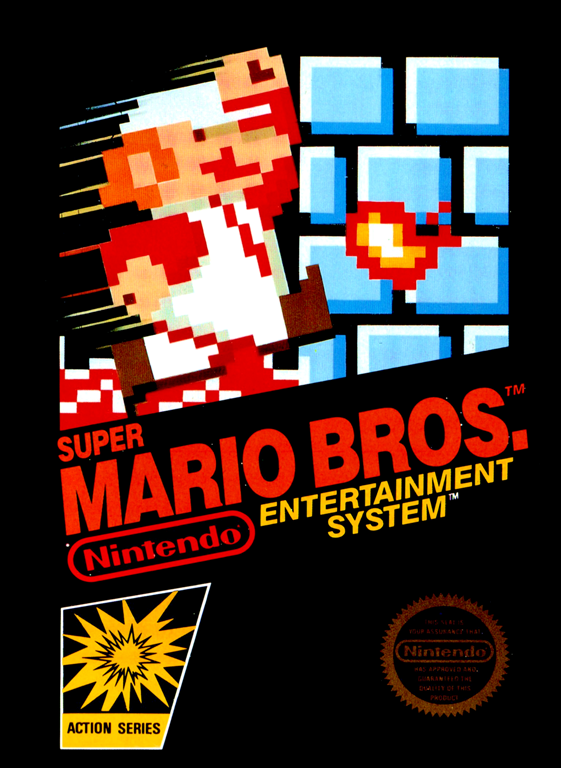
1992…At a later girlfriend’s house (I was a senior in high school by this time), I discovered her younger sister (a sophomore) had an NES in her room. Big deal, right? You bet it was a big deal — I discovered this obscure little title called Super Mario Brothers, and it was all I wanted to do. I spent a wildly inappropriate amount of time in my girlfriend’s sister’s Super_Mario_Bros._(NA)bedroom.

The girlfriend was understandably concerned, and asked me a number of pointed, suspicious questions. But the fact that I only had eyes for bricks, mushrooms, turtles, and Italian plumbers emanated from every fiber of my being. She correctly concluded the situation was harmless, and the obsession would pass.

smb-1

Flash forward a year or so. The same girlfriend was now working a full-time job. I was bopping around community college and working part-time at a video store — that also rented video games. This was the early 1990s — the grand era of Super Nintendo vs. Sega Genesis. The girlfriend still lived with her parents and had nothing to spend her relatively massive paycheck on, so she bought me one of the new Super Nintendo systems, which we used to play one game and one game only — Super Mario Kart. (“Press ‘B’ To Start.”)

mariokart

This is where my lack of true video game interest rears its head again. I had free and total access to my store’s massive stock of rental games. I touched almost none of them. I did not care for any of the sports games. No NHL ‘94 or Madden NFL for me. I thought the super popular “fighting” games were especially ludicrous — the various Mortal Kombats and Street Fighters could all be thrown in the river as far as I was concerned. The early quest-based fantasy RPG games like Legend of Zelda: A Link To The Past were just too visually primitive to hold my interest. I was anti-Sega for very good reasons that I have long since forgotten, so Sonic the Hedgehog remained a stranger. Continue reading

1 Comment

Filed under Life & Other Distractions, Pop Culture

More to come…

MoreToComeWatch this space. A new, multi-part saga is coming soon. But don’t get your hopes up, it’s a project that may be of interest solely to myself. And it’s one that other websites have already tackled, but the Holy Bee vows to do it better. (HINT: One might say that nobody does it better.)

Leave a comment

Filed under Life & Other Distractions