Category Archives: Film & TV

Zeppo = Zero? A Totally Unexamined Life

PRODUCER: Can you get some more variety into your part?Zeppo Marx, 1933

ZEPPO: How many different ways are there to say “yes”?

(Allegedly overheard during Animal Crackers Broadway rehearsals, 1928.)

“Zeppo Marx is a peerlessly cheesy improvement on the traditional straight man.” — James Agee, legendary film critic.

“Oddly enough, it proved to be Zeppo who was the most difficult to track down in terms of his post-team life. Perhaps if I had more time and money…though I expect that would have a pretty minority appeal.” —  Simon Louvish, Marx Brothers biographer.

One thing that comes from a reading list like mine that consists mostly of biographies is you get a glimpse of the difference between a well-known person’s public image and what he is like out of the spotlight. A seemingly simple, straightforward persona can hide immense depths of complexity (and vice versa).

It seems clear that no one is ever likely to write a biography of Zeppo Marx, the fourth Marx Brother and one who proved entirely superfluous and inessential to the act. [2024 Edit: I was wrong.] So much so that he dropped out halfway through their film career and barely anyone noticed. Zeppo, with his entirely normal appearance and lack of any sort of comedic character, has always been described as the “straight man,” but the Marx Brothers never really needed a straight man, at least as that term is normally understood. Their aggressive form of comedy took on authority, pretension, and stuffiness — external targets, which did not require a traditional straight man within the team feeding them set-up lines. And Margaret Dumont was the greatest straight woman in cinema history when one was needed. The Marx Brothers were three Great Comedians — Groucho, with his cigar, painted-on mustache, and endless flow of wisecracks, insults and non-sequiturs, Harpo, the gifted silent clown who communicated through exaggerated facial expressions and horn-honking, and Chico, the piano-playing sharpie with the inexplicable Italian accent — and one leftover.

The leftover has become a footnote in film history, and perhaps nothing more than a mostly-forgotten cultural punchline. “Zeppo” has become a euphemism for “unneeded.” So, who was Herbert “Zeppo” Marx, outside of his limited screen persona? This is a question that kept occurring to me as I’ve read through various Marx books and bios over the years, and Zeppo-the-real-person would pop up now and again and tug at my curiosity.

Zeppo does have his defenders, at least as a performing presence. It was an unwritten (but seemingly ironclad) rule that a musical comedy of stage or screen in the 1920s and 30s, no matter how off-the-wall or zany, had to have a romantic subplot featuring an attractive young couple. These parts are pretty bland and thankless, especially to the eyes of modern audiences, and Groucho, Harpo, and Chico were far too colorful and grotesque to play such a part. You would think that the role would fall naturally to young, relatively handsome Zeppo. In fact he has even been credited with undermining the entire nature of romantic lead, just by virtue of being a Marx Brother.

Marx-Brothers-Monkey-Business

The Four Marx Brothers, c. 1931

“Zeppo’s parts were always intended to be a parody of the juvenile role often found in sappy musicals of the 1920s-30s era. Sometimes, he would just have a few lines, and he would otherwise be reduced to standing in the background with a big smile on his face..and always stiff and wooden. In other films, Zeppo would have a more significant role as the romantic lead, but he would still always be stiff, wooden, and, yes, with a big smile on his face. Either way, he could never be considered a real straight man. He was a sappy distortion of the real thing, and sort of the gateway through which we connected with the other Brothers.” — Danel Griffin, film theorist, University of Alaska Southeast.

Joe Adamson goes on to say that Zeppo’s participation in the letter-dictating routine in Animal Crackers displays his obvious importance to the act. And Allen W. Ellis wrote a massive scholarly paper called “Yes, Sir: The Legacy of Zeppo Marx,” (for which I refuse to pay $35 to the Wiley Online Library for “24-hour access” to the PDF, enlightening as I’m sure it must be).

It’s nice to see poor Zeppo get this belated critical respect, but it is not backed up by what we see on the screen.  By their own admission, the brothers and their writers didn’t put all that much (or any, really) thought into Zeppo’s role. The letter-dictating routine is one scene in one movie. His presence in any other comedy routine in all the other movies is non-existent. Out of the five movies he did with his brothers, in only two (1931’s Monkey Business and 1932’s Horse Feathers) did he play anything close to a romantic lead…and acquitted himself fairly well. No worse than any other person playing that type of part at that time, and certainly nothing to indicate it was even the slyest of parodies. In his other three films, he played Groucho’s secretary/assistant, with a handful of unimportant lines. Not only did those films not appear to be parodying wooden, stiffly-smiling romantic leads, they went out and got other young actors to play actual wooden, stiffly smiling romantic leads. It didn’t even seem to occur to them to fit Zeppo into that role each time, where maybe he could poke fun at its conventions from within and be a real team member.

No, he didn’t have much to do because, historically, the fourth Marx Brother never had much to do, and no one was interested in changing the long-established procedures. Continue reading

13 Comments

Filed under Film & TV

“Deck Officer! Deck Officer!”: An Autobiographical Journey Through Star Wars Toys, Part 2

“Sir, your tauntaun will freeze before you get to the end of this blog post…”

“Then I’ll see you in hell!”

 Yes, I was a slight latecomer to the Star Wars universe. I was a child of The Empire Strikes Back, but I was keenly aware Empire was a sequel. I knew I had missed the boat on the original (which I referred to simply as “Old Star Wars”) and ached to see it. The gap was filled somewhat by my Star Wars storybook, which told the story of the first film through lots of lavish photographs and fairly advanced and detailed text for a young reader. (The book-and-cassette read-along version helped, too, as I dutifully turned the page when I heard the chimes.) The storybook also contained some material that was cut from the final film, including the famous lost Luke-Biggs dialogue scene.

This was my only reference point for the original Star Wars
storybook3

I distinctly remember the Empire illustrated storybook had its publication delayed for some reason, and my mom had to special order it from the mysterious “Random House,” which I pictured as a literal house full of storybooks. That Empire storybook and the excellent Marvel comics adaptation helped keep the plot and visuals fresh in my mind once Empire left theaters. The things we had to resort to in those dark days before home video…

The Marvel comics adaptation served as my "home version" of Empire
The Marvel comics adaptation served as my “home version” of Empire

The collecting fire was fueled by the TV commercials, which were in constant rotation during after-school and Saturday morning shows. They usually featured a pair of bowl-haired kids in 70s turtlenecks playing on a perfectly landscaped “backyard” set, making up atrocious dialogue (I still say “look both ways, dewback!” to myself as I approach intersections to this day), and failing to pull off C-3PO’s British accent.

“Playing Star Wars” was a common activity — but you could go down one of two paths, which we called “Real Life” or “Action Figures.” “Real Life” meant pretending to be the characters and acting things out. Actually, we were not the real characters, but rather the real characters’ kids. This was at my insistence. I could pretend to be in a galaxy far, far away, but I could not pretend to be any age other than my own. I was a peculiar child. (Or was I prophetic? This was years ahead of the “babyfication” fad that swept pop culture later in the decade.) Characters were assigned to my neighborhood crew based on age, gender and hair color. I was dark-haired so I got to be Han, Jr., Isaac had kind of dirty blonde hair, so he was Luke, Jr., Susie was a girl, so she was Lil’ Leia, and Mikey was three-and-a-half, so he played whatever he was damn well told, usually something demeaning.

Continue reading

1 Comment

Filed under Film & TV, History, Life & Other Distractions

Full-Course Kenner: An Autobiographical Journey Through Star Wars Toys, Part 1

KENLOGThere’s no big Star Wars-related milestone that inspired me to write a little bit (or not-so-little bit) about the line of Star Wars Kenner toys that were such a massive part of my childhood. The original three movies are 37, 34, and 31 years old, we won’t see a new film under the deal with Disney until at least the end of 2015, so things are pretty quiet in the Star Wars universe.

What set me off down this path was actually a podcast — The Star Wars Minute, hosted by Alex Robinson and Pete the Retailer. The concept behind star wars minutethe podcast is these two Star Wars geeks around my age (closing in on 40) dedicate each episode to a single minute of the original Star Wars movie. (I still have trouble calling it A New Hope or Episode IV.) A typical episode runs between 12 and 15 minutes, and it’s better than it sounds. They go into behind-the-scenes trivia (most of which I know, and I tend to yell corrections at my iPod when they flub something) and banter with their weekly guest, in addition to analyzing the minutiae of the film sixty seconds at a time. I may be biased, but I don’t see this working with any other film series. There’s a certain richness to the Original Trilogy that latter-day CGI-fests can’t match (terrific as some of those films are.) (EDIT: Alex and Pete have spawned a new podcast genre. There’s now an Indiana Jones Minute, Back to the Future Minute, Jaws Minute, Goodfellas Minute, all done by other podcasters. No, those movies are not “latter-day CGI-fests,” and no, they still don’t work as well in a minute-by-minute breakdown.)

Star Wars Minute has moved on from Star Wars, and are a ways into The Empire Strikes Back (they have promised to hang it up without doing the dreaded prequels. EDIT: They’re totally doing the prequels), and here’s my beef: they have remarked numerous times that they have received complaints about digressing too much into discussion of the Star Wars toys. It surprises no one that these complaints come from Generation II of the Star Wars fan base.

Generation I are the people who fell in love with the Star Wars movies during their original theatrical run (1977-83), and aside from yelling occasional corrections at their iPods, are content to bask in nostalgia and not rock the boat too much. (Maybe there’s a little irritation at the sub-par writing of the prequels.) Generation III is everyone from toddlers through high-schoolers who were born or began to watch the films after the “Special Edition” re-releases in 1997 and are totally uncritical and accept the series as a whole, prequels and all. New Generation III’ers are being made each day (welcome!).

luke

Generation II are the nitpicking assholes (born 1983-97). The eldest of them maybe got taken to Return of the Jedi as an infant and breastfed through it. They usually have older siblings or younger parents who were Generation I and got them into it…and then they really ran with it. They played all the video games, gobbled up the “Expanded Universe” novels and comics, and re-watched the movies endlessly on video. They are the ones who began to fetishize Boba Fett beyond all reason. They’re mostly in their mid-twenties to early thirties these days, and they’re the type who actually post complaints to podcasts. Which is fine, but when they say the toy discussions should stop, that’s where I have to step in and invoke a little Gen I seniority. (Sad 2018 post-Last Jedi EDIT: And I guarantee you all of the racist, misogynistic fuckwit trolls who are ruining Star Wars fandom are 95% Gen II.)

Generation II have never existed in a world without home video. To Gen I, the toys were the only way we could keep the movies alive in our heads. We squeezed in as many viewings as we could at the theater, and once it finished its run, we hoped it would show up on TV now and then.

In the meantime, we had the toys. The wonderful, wonderful toys produced by Kenner from early 1978 through 1985, which fired the imagination like nothing else could. Continue reading

1 Comment

Filed under Film & TV, History, Life & Other Distractions

The Best & Worst of the Solo Pythons, Part 6: Eric Idle

1305-ericidle.gl_0058-WEB-679x1024Although  ERIC IDLE was actually the second-youngest Python (Palin has the distinction of being the youngest by only a few weeks), of all the Pythons he’s the one who projected an aura of youthful rebellion. Cleese, only four years older by the calendar but light-years away in demeanor, might as well have been his father. He had rock-idol hair past his shoulders during the Python years, and even though it was mostly kept pinned under the wigs of his characters onscreen, the viewer sensed a certain anti-authority wickedness in his eyes.

Idle had none of the fuzzy, free-spirited anarchism of Jones & Gilliam, nor the warmth of Palin. You got the sense you didn’t want to piss him off. His writing and performances were more sharp-edged, and he quickly garnered the title “The Sixth Nicest Python.” With the Cleese/Chapman and Jones/Palin writing partnerships established early within the group (and Gilliam off doing his animations), Idle wrote solo. He didn’t mind, he said, but it did make it twice as hard to get his stuff in the show because he didn’t have a partner acting as a sympathetic laugh-track during group read-throughs. idle younger  

As the group branched into other media, Idle began building a niche as the “musical” Python — he was a decent guitarist and had a knack for catchy, witty lyrics. Many of the more memorable Python songs came from him, including Life of Brian’s mighty “Always Look On the Bright Side of Life,” which has practically replaced “God Save the Queen” as the British national anthem. (Idle’s collaborator on some of the melodies was composer and arranger John DuPrez, who scored Brian and The Meaning of Life, and provided the music for Idle’s Spamalot, see below.)

Idle, like Cleese, has raised some eyebrows (my own included) for seeming to be non-discriminating with many of the projects he’s chosen over the last 25 years or so, leading to accusations of money-grubbing. Idle himself has sometimes played on this, naming his two concert tours the “Eric Idle Exploits Monty Python Tour” and the “Greedy Bastard Tour.”

However, on his highly interesting website (well, highly interesting to me — it’s mostly his “reading diary”), he points out that the majority of his recent projects have been taken on with no expectation of profit, and if you really break down his choices, a lot of his more dubious stuff was something that may have seemed genuinely interesting at the time, or was done as a favor to a friend. So let’s give him the benefit of the doubt.

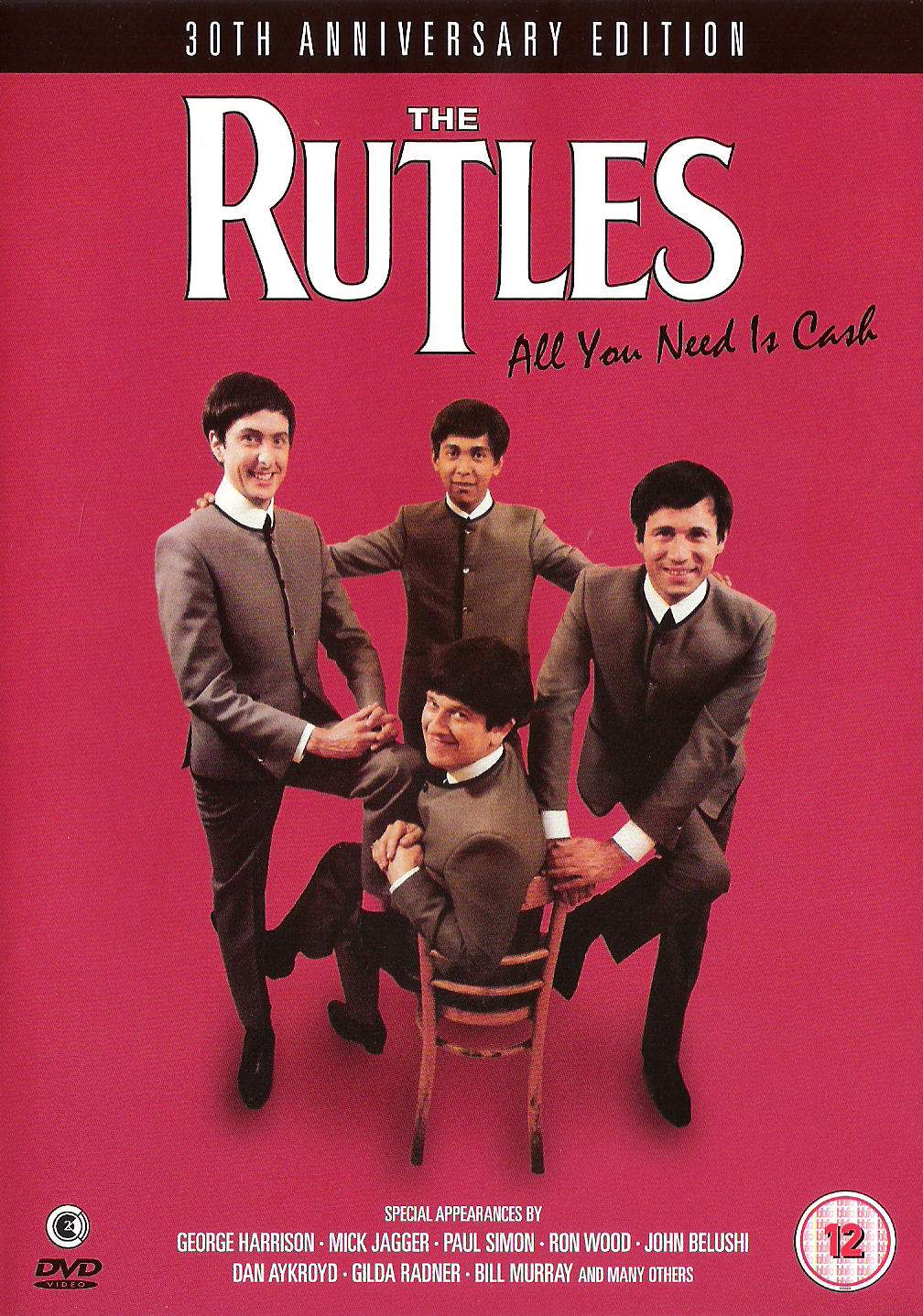
cash dvdBEST PROJECT: The Rutles — All You Need Is Cash

TV movie, first broadcast on NBC, March 22, 1978.

Rutland Weekend Television was part of the first wave of Python solo projects, coming to BBC screens in 1975, around the same time as Cleese’s Fawlty Towers and the pilot episode of Palin’s Ripping Yarns. Written by and starring Idle, and co-starring Neil Innes (another performer steeped in music and comedy — he was a member of the quirky British cult act Bonzo Dog Doo Dah Band), it was a sketch show based around the premise of being “Britain’s smallest television network” (a premise familiar to fans of Canada’s SCTV which began a year or so later). Under-staffed and low budget, the show came and went in two abbreviated seasons and hasn’t been seen much since. Idle himself owns the rights to the show, and has indicated he has no intention of re-issuing them in any form. So what is Rutland Weekend Television’s lasting legacy? The greatest Beatles parody/homage of all time, The Rutles.

The Rutles started life as a brief sketch on RWT, featuring Idle and Innes performing an original, note-perfect recreation of the circa-1964 Lennon-McCartney songwriting style called “I Must Be In Love.” It might have gone no further, but when Idle was the guest host of Saturday Night Live in the fall of 1976, he shared some clips from RWT. The Rutles caught the attention of SNL producer (and Beatles super-fan) Lorne Michaels.

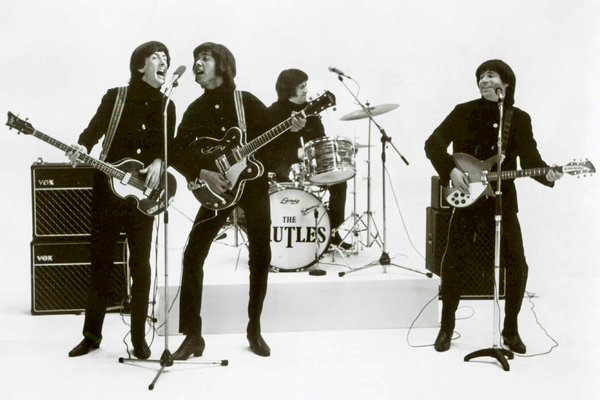
There was always a mutual admiration between Python and SNL, despite their different approaches to sketch comedy. The Python shows were meticulously written over a period of months, rehearsed, rehearsed, rehearsed, then filmed and edited tightly, weeks ahead of airtime. An average SNL episode was written on the fly in a night or two, rehearsed once (twice if there was time), and thrown at the public, ready or not, live every Saturday night. The story goes that Chevy Chase met Lorne Michaels while both were in line to see Monty Python and the Holy Grail. The younger SNL camp  idolized the Pythons, and the Pythons respected the fearlessness of SNL (they said it reminded them of their early days doing nerve-wracking live revue at their universities). Idle and Michael Palin guest-hosted several times each in the show’s first five seasons. 22RUTLES1_SPAN-articleLarge Lorne Michaels believed there was a lot of potential in The Rutles, and produced a TV movie built around them — All You Need Is Cash. Presented as a fake documentary, Cash fleshed out the Rutles “story” from inception to break-up. From the grainy black-and-white of postwar Britain, through the colorful Pop Art and psychedelic eras, and finally the dawn of the cold, gray ’70s, Cash captured the feel of a “rockumentary” perfectly. (Just as RWT foreshadowed the more well-known SCTV, Cash beat This Is Spinal Tap to the punch by several years.) Each era got a few Innes songs that sounded so much like Beatles songs they circulated as Beatles “outtakes” on a few bootlegs. Creating style pastiches of early Beatles stuff is relatively straightforward — songs like “Hold My Hand,” “Ouch!” and “Number One” faithfully matched the energy and innocence of the early days. The band’s later, weirder era was probably more of a challenge, but the challenge was met. “Penny Lane” is recast as “Doubleback Alley,” “All You Need Is Love” is echoed by “Love Life,” and the psychedelic epic “I Am The Walrus” meets its doppelganger in “Piggy In The Middle.” And there are several others, each of them charming and matching the sound and feel of a different Beatles song…without ever becoming an outright Weird Al-style parody or stealing any of the original melodies (Innes had to go to court to prove it.) Continue reading

1 Comment

Filed under Books, Film & TV

The Best & Worst of the Solo Pythons, Part 5: Michael Palin

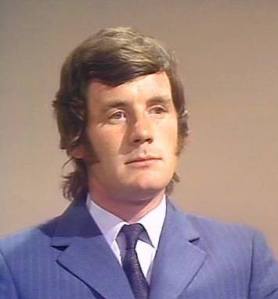
2011-02-11-MichaelPalinserious3Out of all the comedy legends the up-and-coming John Cleese rubbed shoulders with in the late 1960s, there was none he found funnier than the far less well-known MICHAEL PALIN. In fact, Cleese’s desire to work with Palin was the core of what became Monty Python.

The youngest Python has remained eternally-youthful looking. He played most of the meek and mild characters on the Flying Cirucs — the shopkeepers, the accountants, the milkmen. Ones that were particularly hilarious when playing against Cleese’s towering monstrosities and other more grotesque characters, though he could also do a bit of grotesque himself (see Ken Shabby). He excelled at smarmy game-show hosts and sunny young optimists, like Reg Pither, the cheerful bicyclist of the only Python episode that told a single story all the way through, season three’s “Cycling Tour.” His overall aura of amiability has earned him, out of all six Pythons, the title of “The Nice One.”

And therein lies a problem. How am I going to rip one of the “nicest men in Britain” a new one over his crappy projects? I’m not, of course. Like his Python writing partner Terry Jones, Palin is not responsible for anything that can be considered truly wretched. He has maintained a high standard, so even his “Worst Project” below will merely receive a gentle “it wasn’t for me.”

He’s done a lot of stuff for British TV (documentaries on railroads and art history, and the teleplay for an autobiographical TV movie called East of Ipswich) that has received glowing reviews across the pond, but didn’t get much play stateside. In fact, one of his early projects with Jones, a six-episode mini-series called The Complete and Utter History of Britain (London Weekend Television, 1969), is almost entirely lost, as it was common practice among British TV networks to erase shows already broadcast in order to re-use the videotape. Very thrifty, but tons of classic stuff exists only in the memories of those who saw them the first time. Re-runs did not exist. By a stroke of cosmic luck, this policy ended at the BBC just a few weeks before Monty Python’s Flying Circus went into production. I shudder to imagine what almost happened.

michael-palin1

None of the Pythons came to Flying Circus in mid-1969 as a TV rookie. Even at the tender age of 26, Palin had already hosted a pop music show (Now!, only broadcast in Wales — his first post-college gig), written for the esteemed Daily Show of his era (The Frost Report) and several other comedy/variety shows, co-created, co-wrote, and starred in a cutting-edge children’s show (Do Not Adjust Your Set) that adults loved as well (especially Cleese and Chapman), and was given free reign with kindred spirit and Chaucer expert T. Jones to write The Complete and Utter History…

The Complete and Utter History of Britain put Palin’s Oxford history degree and already-solid TV resume to good use by wondering what it would look like if television were around to cover all of British history. (Just reading about it in one of my Python books as a high-schooler inspired me to create a similar video project for history class — what if CNN covered World War One? The result shamelessly ripped off Python but also, I’m proud to say, had some original bits of anarchic comedy and also lots of factual info about WWI. Like The Complete and Utter History…its current status is “mostly lost.”) The Complete and Utter History… was a watershed moment for Jones and Palin, who chafed in small supporting parts and were dismayed to see their writing botched by actors and a director who just didn’t “get it.” Maintaining creative control by writing and performing became one of the underlying philosophies of Monty Python. The less-than-stellar result also led directly to the formation of the Python team. When the credits of last episode rolled, John Cleese, who had an open offer from the BBC to do a series, called up Palin and said bluntly, “I just saw Complete and Utter History. Since you obviously won’t be doing any more of those…let’s do something together.” The rest is history… Continue reading

Leave a comment

Filed under Books, Film & TV

The Best & Worst of the Solo Pythons, Part 4: Terry Gilliam

Terry-GilliamMost of the Pythons are Renaissance men, spreading their ideas over projects in a variety of media, and this fact alone means that this blog series will never be as complete as the Best & Worst of the Solo Beatles. It was relatively easy to listen to all the songs of the ex-Fabs, but it would be an impossible task to run down every solo project of the Pythons. I cannot time-travel back to 2008 then get myself to Lisbon, Portugal, which is thus far the only time and place to have witnessed a staging of Terry Jones’ opera Evil Machines. Nor is Eric Idle’s well-regarded 1975-76 TV show for the BBC, Rutland Weekend Television, available in any form. Other examples abound.

TERRY GILLIAM, on the other hand, focused with laser-like intensity mastering one medium — film. And that makes assessing his output relatively straightforward.

Although his face is not as familiar as John Cleese’s, Gilliam is, in his own way, one of the most widely-known members of the Pythons. His movies frequently — but not always — make it to cineplexes across the country. And if you ask one person who is not a regular Python viewer to name something they remember about the show if they’ve seen it, and they will almost always say “the cartoons.”KONICA MINOLTA DIGITAL CAMERA

To perhaps an even greater extent than Jones’ insistence on striking locations, Gilliam’s animations are the true visual hallmark of all the Python projects, especially on the Flying Circus TV show. Gilliam mixed up his own hand-drawn, airbrushed, paper cut-out grotesqueries with snippets of famous works of art and Victorian-era photographs in a stop-motion melange that caused the Python material to flow from concept to concept without awkward transitions. When a sketch ran out of momentum or stopped being funny, there was no need to bring it to a conclusion, which is the biggest headache in comedy sketch-writing. (More sketches fall flat due to a poor ending than for any other reason.) A Gilliam cartoon would simply take over and get them to their next idea.

Gilliam’s role within the group was initially unclear. He was the lone American among five Brits, a Vietnam-era ex-pat cartoonist who started scribbling for the second season of a kids’ show (Do Not Adjust Your Set, ITV, 1967-69) that Idle, Palin, and Jones had developed after earning their stripes in the David Frost writing room.  In the credits of the first five episodes of Flying Circus, he wasn’t even listed with the others. His sole credit was for animations. He spent most of his time in isolation, working from vague cues in the script (sometimes as bare as “insert a Gilliam sequence here”), going through the painstakingly slow animation process under a tight deadline. The voices and sound effects were done by Gilliam himself, getting under a blanket with a tape recorder and making his typical grunting and farting noises, and rattling pots and pans. If he were lucky, he could corner another Python in a BBC hallway to record “proper” voices. It became increasingly clear as the show went on that Gilliam was an integral member of the team, even if he did not write sketches nor appear much on-camera. (He would pop up in bit parts from time to time, because on studio shooting days — when the other five Pythons were the busiest — he had very little to do, having already submitted his animation reels to the director). Gilliam was a true Python, and was credited and regarded as such from the sixth episode on. He may have had second thoughts down the line…

Cut-out animation could not contain the visionary Gilliam’s ambitions for long. After the Flying Circus TV series ended and the team turned to feature films, less and less animation was used. What little animation there was in The Meaning of Life, Gilliam cheerfully admits, was done by a staff he hired. No, what Gilliam wanted to do was direct.

Continue reading

Leave a comment

Filed under Film & TV

The Best & Worst of the Solo Pythons, Part 3: Terry Jones

Terry_JonesI had originally intended to move through the solo Pythons in strict alphabetical order, just as they are listed in the credits of their TV episodes and movies (always reading “Monty Python’s [Insert Project Title] was conceived, written, and performed by…”), but I was bursting with so many things to say about TERRY JONES, I leap-frogged right to him.

A great ensemble means that no one member is more or less important than any other, but I really do feel that it’s Jones who makes Python Python. He was an early champion of the idea of moving the TV episodes along through a “stream of consciousness,” not allowing conventional sketch-show structure to dictate how the thirty minutes of TV comedy unfolded. This concept was greatly aided by the animations of Terry Gilliam (we’ll be getting to him next), and Jones and Gilliam can be credited with contributing the most to Monty Python’s Flying Circus’s unique look.

The look…that’s actually what first hooked me when I saw my first episode as a middle-schooler on “late night” PBS. Like absolutely nothing on American TV at the time…A surreal visual appeal that augmented and fed into all the absurdity. Much of it was due to how BBC programs shot things in those days — everything in the studio was done on videotape, and everything outside the studio was done on film.

And “outside the studio” could be anywhere. It was sometimes simply the residential west London streets just outside BBC Television Centre, but they frequently trotted off to the coolest-looking spots in the British Isles — windswept highlands and rugged coasts — to get 5313917369_600full_terry_jones_answer_5_xlargetheir filmed segments. Jones more than anyone favored and pushed for this policy. (It became a running inside joke among the Pythons that all of the sketches Jones wrote opened with “Slow pan across Yorkshire moor…mist swirls, music plays…a lone figure emerges…”) Filming these parts of each episode outside the confines of the studio was where Jones first began making his mark. He admitted to constantly pestering the credited director, Ian MacNaughton. “I was always saying, ‘Shouldn’t we put the camera over there, Ian?’” He also cops to backseat-driving the editing process, succeeding in getting the editors to put in a full workday on an episode, rather than the couple of hours they were used to. Getting a clock-watching BBC technical crew to listen to his dictates proves his reputation for being willful and tenacious (he credits it to his Welsh blood) was well-earned, and it’s why Python’s TV show looked far better than anyone else’s at the time.

Jones wrote most of his Python material in collaboration with Michael Palin, and their stuff tended to be longer, more conceptual, and more visual than the Cleese/Chapman sketches, which were more traditional and verbal. (It was the blend, of course, that made Python great.) In many ways, the raw, earthy Jones existed at the opposite end of the comedy spectrum from the coolly cerebral Cleese, which led to many spirited “discussions” at Python writing meetings. “I only threw a chair at John once,” Jones has said.

From a performance standpoint, Jones was the utility player. He was a great straight man when the situation called for it (“Nudge, Nudge”), and was often the put-upon Everyman, the straight-laced “city gent,” or his true specialty — the screeching, middle-aged ratbag housewife the Pythons called a “Pepperpot.” All of the Pythons played Pepperpots at one point or another, but Jones perfected them.

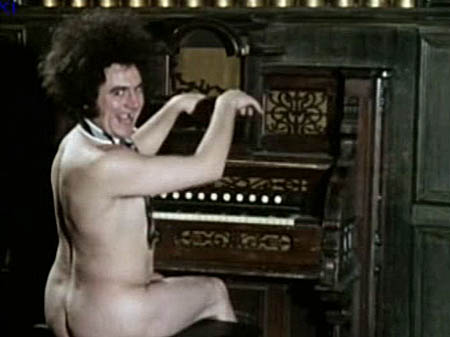
When the Pythons branched into film, it was only natural that the two “visual” Pythons, Jones and Gilliam, co-direct Monty Python and the Holy Grail. Gilliam found that trying to direct five mouthy, prickly, opinionated teammates full of their own ideas was more than his patience could bear, and the two subsequent Python films, The Life of Brian and The Meaning of Life were directed — quite happily — by Jones solo. And either through his own inclinations, or because the rest of the Pythons just thought it was funny, Jones managed to be nude on-camera a lot more than the others (including his iconic Nude Organist, which opened every third-season episode).

In all areas, Jones was absolutely essential to Monty Python as we know it. He was the glue, the heart. Yet he remains less well-known than all of the others, especially here in the U.S. (Sharing a name with a batshit-crazy fundamentalist preacher who made the news a few years back probably doesn’t help.) It all seemed so unfair that it caused me to create the very first Terry Jones fan website in 1996, on good ol’ GeoCities.

Film director. Historian. Children’s author. Opera librettist. Political journalist, even. Terry Jones, left to his own devices, covers a lot of ground. Continue reading

1 Comment

Filed under Books, Film & TV, Pop Culture

The Best & Worst of the Solo Pythons, Part 2: John Cleese

john_cleese-761027JOHN CLEESE was actually famous before Python, as a cast member for the very well-regarded series of comedy/satire programs starring David Frost in the mid-’60s. (5/6ths of the future Pythons wrote for Frost, but Cleese was the only on-camera personality among them.) His popularity was what caused the BBC to offer him his own show, which ultimately became Monty Python’s Flying Circus (with Cleese desiring to simply be part of the ensemble, refusing star billing, to the BBC’s confusion and disappointment.)

Then he was the first person to grow tired of Python, at least in its television incarnation, and did not participate in the final season of the show in 1974. Some members of the group were a little resentful, feeling that due to his fame and recognizability, he had the best chance of a solo career. They weren’t wrong.

Even the average non-Python fan in 2013 has a pretty good idea who John Cleese is.

Perhaps it’s his height. In Python sketches, the six-foot-four Cleese often played upper-class authority figures. Unlike Graham Chapman’s authority figures, though, Cleese’s were infused with a kind of cruel, maniacal glee that made them riveting and unsettling. Sometimes he played a very odd creation the Pythons referred to as “Mr. Praline,” always wearing a green plastic raincoat and complaining to a shopkeeper or civil servant (usually played by Michael Palin) in a clipped, nasal voice about his dead parrot or inability to purchase a fish license, always with an undercurrent of menace and suppressed rage. In both actual fact and in the audience’s mind, Cleese towered over the rest of the cast.

More likely, he’s known far and wide simply for his ubiquitousness. He’s everywhere. He has appeared in more films than the rest of the team combined (and deserves a special award for most supporting roles in terrible movies), has done hundreds of commercials for every conceivable product for the past four decades, has guest-starred in dozens of shows on British and American television (and had long-running recurring roles in several more), performed tons of voice work, and in general has been one of major faces of British comedy, streets ahead of his slightly less-recognizable Python teammates.

So let’s break down the fabulously successful solo career, shall we? Continue reading

1 Comment

Filed under Film & TV, Pop Culture

The Best & Worst of the Solo Pythons, Part 1: Graham Chapman

My website stats have proven conclusively that the most popular segment of this little blog has been “The Best & Worst of the Solo Beatles.” In the true spirit of sequels, I will now take the same basic premise and turn it into something that will likely prove somewhat less popular. Why not take on the solo careers of “The Beatles of Comedy”?

NYT2007090415181690C

Many collectives of funny folk have been referred to as “The Beatles of Comedy” — from the original Not Ready For Prime Time Players of Saturday Night Live to the cast of Seinfeld. But the group that has truly earned the title is the one that earned it from the Beatles themselves — Monty Python. They were shooting their very first episodes for the BBC in August of 1969, just as the last notes of Abbey Road were being committed to tape and the hassled, harried Apple board meetings were growing particularly hostile. George Harrison has said many times that he believes the impish Spirit of Genius vacated the dying rock band at this moment, and infused itself into the comedy troupe just being born.

As a group, Monty Python produced 45 episodes of Monty Python’s Flying Circus for the BBC, three original feature films, a compilation film of re-shot sketches from their TV show, two extended original episodes produced for German television, several books and record albums crammed full of material unavailable in any other format, and toured as a live act (resulting in a concert film, for a total of five movies). No other comedy team can top that output. They hung up their Gumby boots in 1983, but well before that, the six members had begun concurrent solo careers which continue to this day (well, except for one — see below.) Graham Chapman, John Cleese, Terry Gilliam, Eric Idle, Terry Jones, and Michael Palin have produced some very creative and funny works of art — and some dreck.

Here’s the format for our little examinations: Only projects that the individual Pythons had a direct hand in creating will be considered. This means writing or co-writing, directing, producing, or any combination thereof. If we expanded our project to include instances where they simply took an acting job for a paycheck, the “worst” portion would be impossible to sort through, especially concerning John Cleese and Eric Idle. (Every non-superstar actor has to take roles to pay the bills from time to time, but it pains me to say that Idle and Cleese have been particularly non-discriminating and mercenary in this regard, popping up in some of the most notorious turkeys of the last twenty years.)

And unlike the solo Beatles, we are not limiting ourselves to one medium. The solo Pythons have written and/or directed feature films, created TV series, written children’s books, self-help books, novels, and scholarly history books, and produced Broadway musicals, to name just a few endeavors.

There will be Best Project and Worst Project, followed by Should Probably Avoid, and to end on a positive note, a Worth Checking Out. This format will be adhered to strictly, except for the times when it’s not. Continue reading

Leave a comment

Filed under Books, Film & TV, Pop Culture

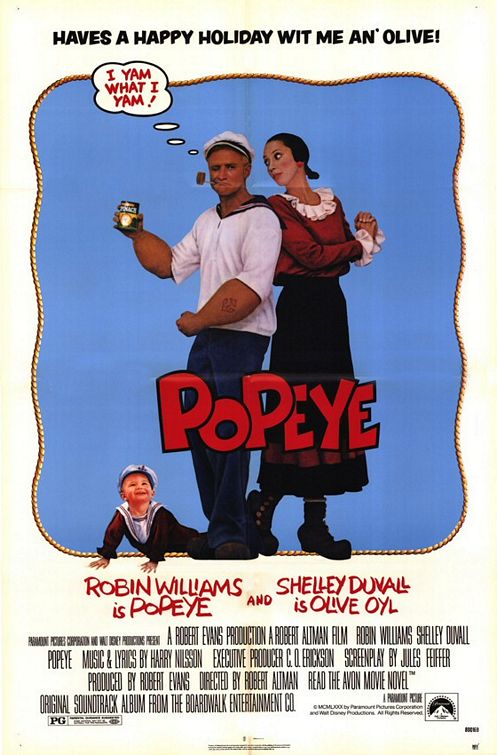
The Holy Bee Recommends, #9: Robert Altman’s Popeye (1980)

Perhaps it wouldn’t be such an odd idea nowadays, now that cartoons, comic books, and even comic strips are acceptable — even ideal — fodder for big live-action Hollywood films. In popeyefact, you can probably subtract $25 million from your opening weekend if your film isn’t based on some colorful funnybook creation.

But 1980 was a different world. Superman had been a success two years before, but that was more of an anamoly than the true beginning of the comic/movie phenomenon. And it made sense. Superman was a great character on which to base a film. But…Popeye?

A balding, muttering, one-eyed sailor with a seemingly stroke-induced speech impediment, a filthy, chewed-up corncob pipe jammed in the corner of his slack mouth at all times (even while asleep), freakishly swollen forearms and possibly rickets (or at least severe hip dysplasia)? This was leading man material? Someone evidently thought so… Continue reading

1 Comment

Filed under Film & TV, The Holy Bee Recommends