Holy Bee Recommends, #2: L.A. Noir

One of my many minor obsessions is the seedy underbelly of Los Angeles. Not so much in the present day, but in the middle part of the 20th century. Although many people associate the noir genre with the grimy alleyways of Chicago or the humid waterfronts of New York, its natural home is really Los Angeles. There seems to be more desperate, broken people in Los Angeles than the rest of the world combined. Many were lured there with the dream of making in big in the entertainment industry and found nothing but disappointment and despair, many others just naturally gravitated there to be in the company of thousands of other drifters, losers, hustlers, thugs, eccentrics, and full-blown psychos. What makes the darkness and ugliness of the place more palpable is it’s glamorous surface, beautiful people doing beautiful things under palm trees and hazy SoCal sunshine. But it’s all a sham. The good life in L.A. is lived by about 5% of its population.

Whether it’s a fleabag hotel downtown, or a (relatively) inexpensive apartment in Covina, on the other side of the door, there’s a good chance that someone’s soul is slowly rotting from the inside out.

Every so often, I get the urge to take a drive down to L.A. and explore. Take a cruise past where the Black Dahlia’s corpse was found. Past the nightclub where the unsuccessful hit on Mickey Cohen went down. Past the blocks and blocks of stucco apartments in West Hollywood inhabited by waiters who want to be actors. Down the notorious skid row of Fifth Street (affectionately referred to in Tom Waits songs as “The Nickel”), where any vice is available for rock-bottom prices. Luckily, thanks to Google Street View, I can get a little taste of it without driving almost 800 miles round trip, discover that the location was obliterated for a Quizno’s, or risk my soft suburban neck in insanely dangerous neighborhoods.

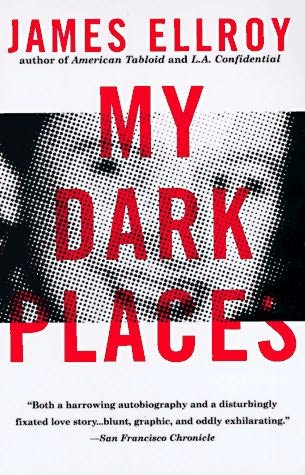
James Ellroy, author of The Black Dahlia and L.A. Confidential, is the greatest current purveyor of period L.A. crime fiction. He knows the subject in and out, because he lived a good deal of his life on the skids in the City of Angels — drunk and pilled up, either homeless or in jail for shoplifting – or breaking and entering plush Wilshire homes to fondle ladies’ underwear.
All of this is revealed in Ellroy’s riveting autobiographical book, My Dark Places: An L.A. Crime Memoir.

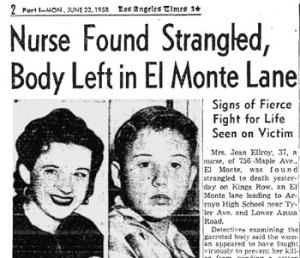
It doesn’t take Freud to uncover the reasons for Ellroy’s downward spiral. It was triggered by the brutal slaying of his mother in 1958, when he was ten years old. Ellroy admits his mother, vivacious redhead Geneva “Jean” Ellroy, was not a model parent: she was an alcoholic who was not particular about the company she kept, and would often leave young Ellroy alone at night to go drinking and dancing at the dive bars that lined Valley Boulevard in El Monte, just east of L.A. One night, she didn’t come home. Her strangled body, pantyhose tied around her neck, was found the next morning in the shrubbery next to Arroyo High School. Despite several strong leads, including several eyewitnesses who spotted her with a swarthy man in a blue convertible, the murder was never solved and the case went cold.

Ellroy was placed in the custody of his father, an embittered invalid who was dead (of natural causes) before Ellroy was out of his teens. Once he went through the crucible of being a drug-addled petty criminal pervert and emerged on the other side as a respected author (“The Demon Dog of American crime fiction”), he became interested in the incident that started him down his life’s path. Working with detectives, Ellroy re-opened his mother’s case, and began sifting through the grisly photos and statements, re-interviewing witnesses, and attempting to come to grips with the psycho-sexual hold his mother had over his subconscious for most of his existence.

There are few dark places darker than Ellroy’s, and his unflinching honesty at examining himself, expressed in the same vivid staccato prose he uses in his fiction, makes for a gripping, if sometimes uncomfortable, read.

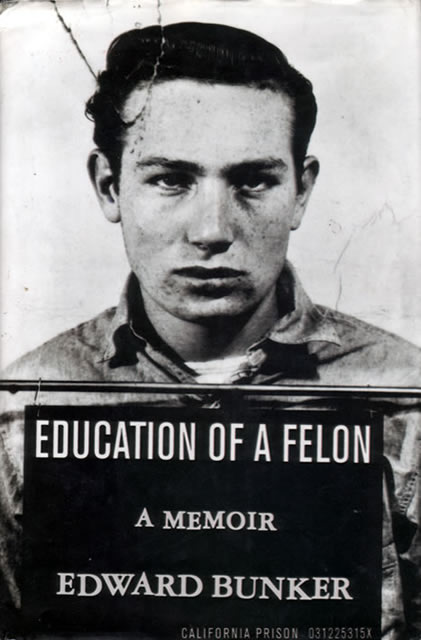
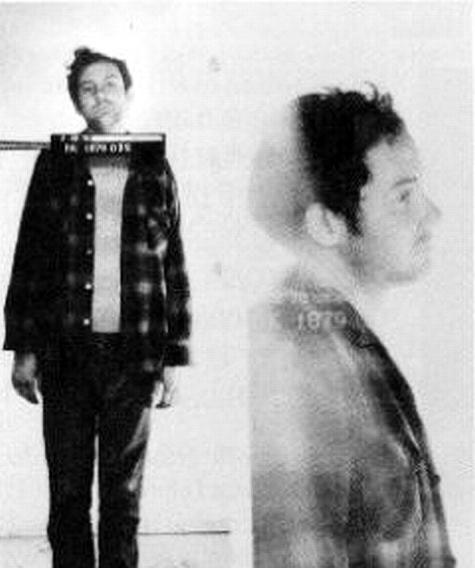
Another young L.A. thug-turned-writer is Edward Bunker. Bunker spent the late 1940s and 1950s in and out of juvenile hall and foster homes, or living on the streets. Bunker was unable to resist the easy money of drug-dealing and armed robbery, despite an off-the-chart IQ and a taste for Shakespeare and Dickens – which he had plenty of time to peruse once he started doing hard time in places like San Quentin and Folsom prisons.

Bunker’s memoir, Education of a Felon, recounts his escapades, both as a criminal and his attempt at a “straight” job: working as an assistant and confidant for the mentally unstable wife of Paramount Pictures’ super-producer Hal B. Wallis. His descriptions of prison life make it sound not so bad for someone who follows the official and unofficial rules, at least until the race wars began in the late 1960s, and suddenly no one was safe. Upon his release in 1975 after almost two decades behind bars, he was already a published author — his autobiographical 1973 novel No Beast So Fierce was adapted into the 1978 film Straight Time, with Dustin Hoffman as the Bunker character. Bunker continued to write and also dabble in bit-part acting – culminating in his crowning achievement, at least as far as most people are concerned: his performance as Mr. Blue in Reservoir Dogs. (“I liked her early stuff – ‘Borderline’ – but when she hit that ‘Papa Don’t Preach’ phase, I tuned out.”)

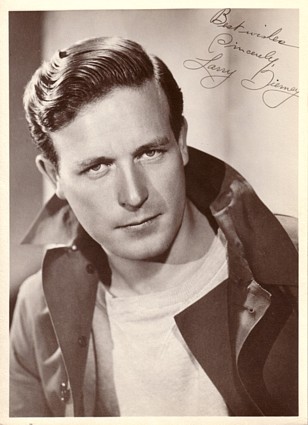
A special treat: On the bonus disc of the 10th anniversary Reservoir Dogs DVD, there is a driving tour of L.A. with Bunker, where he points out the locations of his nefarious doings. It’s certainly better than ogling the locations on Street View, and you get the benefits of Bunker’s hard-boiled narration. Best part: Bunker’s story of meeting up with future Reservoir Dogs co-star Lawrence Tierney, in the process of putting a beatdown on someone outside of a bar. It was not surprising that Tierney, an actor with one foot in the criminal underworld, and Bunker, a criminal with one foot in the movie world, should have crossed paths in 1950s L.A., almost forty years before they met up again in front of Tarantino’s cameras. This fascinating tour is not included on the most recent (15th anniversary) edition of the DVD. Boo.

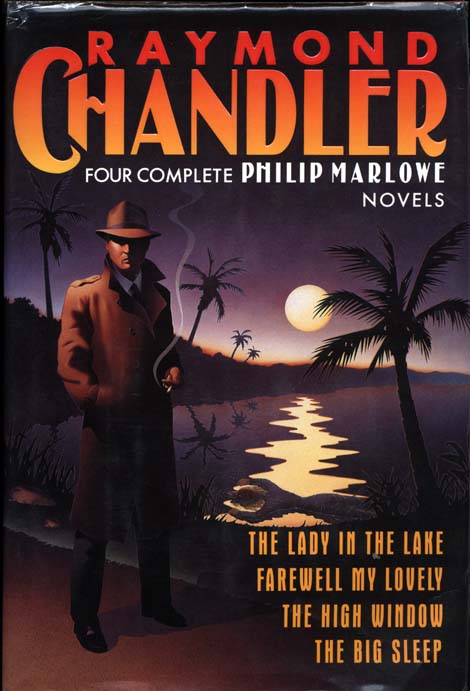
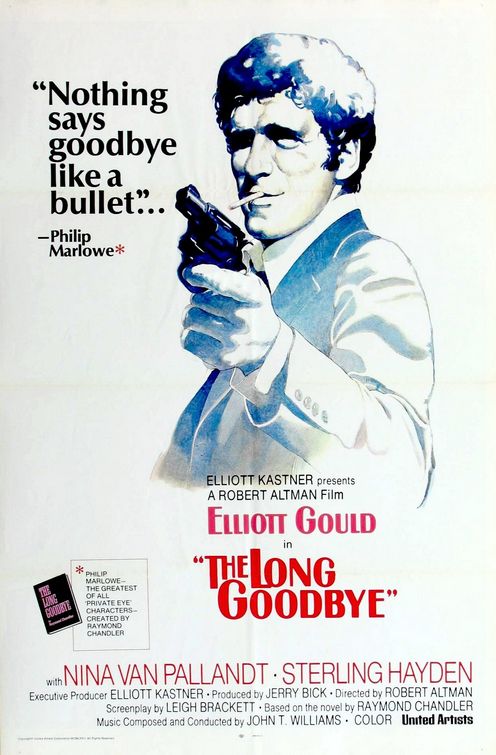
I’ll conclude by acknowledging of the Granddaddy of L.A. Noir, Raymond Chandler. Beginning in 1939, his iconic private eye, Philip Marlowe, smoked, drank, and snooped his way through such classics as The Big Sleep, Farewell My Lovely, and The Long Goodbye. Only Dashiell Hammett equals Chandler as the primary architect of literary noir. Philip Marlowe has been played onscreen by such noted cinematic tough guys as Humphrey Bogart, James Caan, Robert Mitchum and…Elliott Gould?

Yes, Ross and Monica’s father once donned Marlowe’s trench coat and snub-nosed revolver in director Robert Altman’s shaggy-dog 1973 adaptation of The Long Goodbye. Disjointed and quirky as only an Altman film can be, this Long Goodbye is updated from the booze-and-dames 50s to the cocaine-and-nudists 70s. The plot of the book and the plot of the novel are distant cousins, and the new time period allows Altman opportunities to satirize the shallow and hedonistic lifestyles of most of the characters. Gould’s take on Marlowe is decidedly un-heroic, and unlike the rich shadows of traditional film noir, The Long Goodbye utilizes a gauzy palette of washed-out pastels.

Also recommended: The film version of L.A. Confidential (avoid the Black Dahlia film), Wonderland (not a great film, but an incredibly creepy tone and atmosphere), Hollywoodland, Chinatown, any one of Tom Waits’ first seven albums, Chandler’s final Marlowe novel Poodle Springs (unfinished at his death, it was completed thirty years later by Spenser author Robert B. Parker), Ellroy’s novels The Big Nowhere and White Jazz (together with Dalia and Confidential, they make up his “L.A. Quartet”), and what is probably Tarantino’s best film, Jackie Brown (yes, you read that right.)

Leave a comment

Filed under Books, Film & TV, Pop Culture, The Holy Bee Recommends

Holy Bee Recommends, #1: "Too ugly for a leading man, not ugly enough for a villain"

Here at the Holy Bee, music reviews are dealt with in the year-end wrap-up. Movie reviews are nigh on impossible, because I steadfastly refuse to subject myself to the modern movie theater experience, unless it’s under extraordinary circumstances. Even DVDs take me forever to get around to. (To give you an idea how behind the curve I am movie-wise, I just watched Pineapple Express last weekend. It was very good.) In Bruges and Burn After Reading still sit on top of my DVD player.

Which leaves us with books as the last item of mass culture that can be realisitcally reviewed by me. I wouldn’t call myself a voracious reader, but I believe I do get through more books than the average schmuck. Like a lot of people, internet bullshit has cut deeply into my reading time. Who wants to crack a musty old book when there are fucked-up cakes to look at?

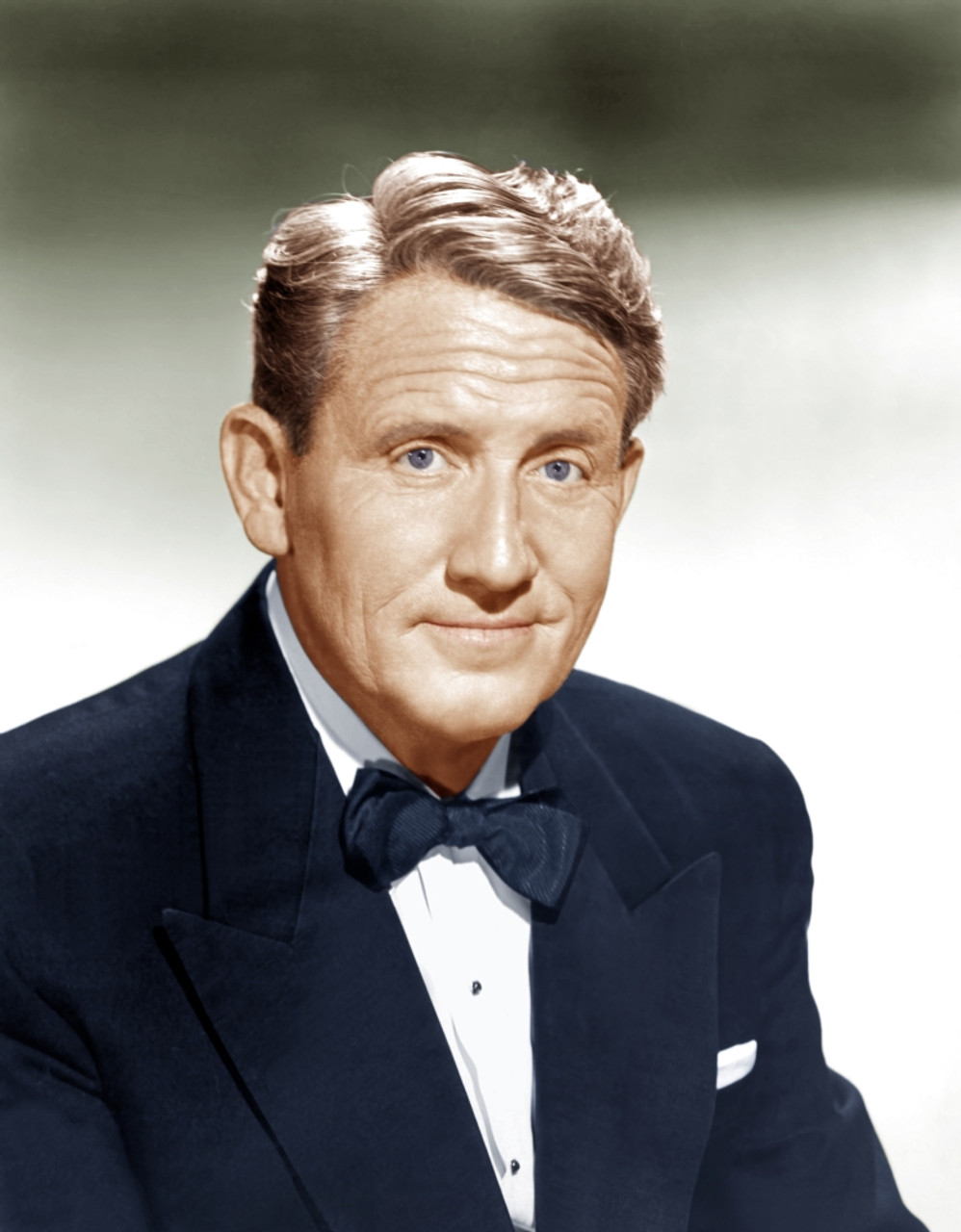
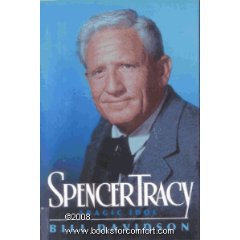
The first item on the Holy Bee Recommends list is the over-dramatically titled Spencer Tracy: Tragic Idol, by Bill Davidson. If you asked any actor working from the late 1930s to the mid 1960s “Who is the finest film actor around?”, most of them would unhesitatingly respond “Spencer Tracy.” The first actor to win back-to-back Oscars (for 1937’s Captains Courageous and 1938’s Boys Town), Tracy was never #1 in audience polls like John Wayne or Humphrey Bogart, but among those working in his profession, he was considered the best.

But Tracy seems fated not to be remembered as well as many of his co-stars by modern audiences, which is sadly ironic because Tracy may have been the first film actor to act in what we would consider a modern style. Unlike the stagey, larger-than-life performances of other actors in mid-20th century films, a Tracy performance could play, unaltered, in a 2009 film and not stand out as mannered or old-fashioned. He inhabited his character without drawing attention to his own “star” persona, which went against the style that prevailed in the 1930s and 1940s. “Comedians are always doing impressions of guys like me and Bogart,” said James Cagney. “Nobody does Tracy.” Every moment was underplayed and thoughtful, built around glances and expressions, and a speaking style that was down-to-earth and absolutely real. No fodder for impressionists and comedians there. That lack of imitatable quirks and mannerisms is probably a factor in why he’s so little known by modern audiences. (Case in point: Jimmy Stewart, who is distratctingly terrible in almost everything I’ve seen him in, is easy to imitate, and thus, still revered.)

Despite Tracy’s quiet style, he managed to dominate his scenes, even alongside noted scene-dominators like Clark Gable, Frederic March, Robert Ryan, Sir Cedric Hardwicke, and the formidable Katharine Hepburn. (“I think I’m a little too tall for you,” said Hepburn when they first met. Tracy, predictably, said nothing. But screenwriter Joe Mankiewicz, who had just introduced them, said “Don’t worry. He’ll cut you down to size.”)

Just as he had refused to showboat in the hammy 30s and 40s, he had no patience for the “method” movement of the 50s and 60s, with all its psychological underpinnings and questions of “motivation.” “Learn your lines and don’t bump into the furniture,” was his famous advice to young actors. He even lost patience with the over-analytical Hepburn on occasion. (“Goddamn it, Katie. Just say the words the writer wrote and do what Stanley tells you to do. Quit talking like you’ve got a goddamn feather up your ass.”) What there was of Tracy’s “technique” was entirely instinctual.

He even managed to make the most stage-bound of acting traditions, the monologue, seem fresh and natural. Most notable in this area are some of his later performances: his cross-examination as the pro-evolution defense cousel in Inherit The Wind, his handing down of the decision in Judgment At Nuremberg, and, especially, his devastating defense of true love in the dated-but-still-good Guess Who’s Coming To Dinner, his final film appearance. Everyone who was on the set when it was being filmed (and every audience member who has seen the film since) could see clearly that he was directing his words to longtime partner Hepburn. Tracy died seventeen days after completing the monologue scene. Hepburn refused to ever watch the finished film.

What’s the tragedy in Tragic Idol? Alcoholism. Tracy was one of Hollywood’s most notorious drunks. Or at least notorious to insiders. Unlike carousing, good-time partiers like John Barrymore and Errol Flynn who used their heavy drinking to further their public personas, Tracy’s drinking was semi-private, and came in massive blackout binges where he would lose all control. Studio publicists covered up a trail of smahed-up hotel furniture, countless broken dishes and plate-glass windows, injured journalists and co-stars, and a myriad of health problems. Everyone close to him knew of his patented “two-week lunch breaks,” where he would disappear from a film currently in production, check into a hotel with a suitcase full of whiskey bottles, strip down, climb in the bathtub, and proceed to drink himself insensible. When the whiskey ran out, he rinsed himself off, checked out with a suitcase full of empty bottles, and returned to work on the film. Tracy’s liver and kidneys were shot by the mid-1950s, and the fact that he lived until 1967 was credited to Katharine Hepburn, who essentially gave up her career for almost ten years to care for him.

It is a shame that Tracy has not received the first-class biography treatment that some of his peers have gotten. Guys like Grant and Gable (neither of whom could touch Tracy as an actor) have had multiple, deeply-researched historical tomes written about them, and the Sperber-Lax bio of Humphrey Bogart moved me to tears. What does Tracy get? A couple of gossipy co-biographies pairing him with Katharine Hepburn, implying he was not interesting enough to carry a bio on his own. And the subject of this blog entry, Bill Davidson’s slightly hack-y, show-bizzy 1987 effort. Davidson is not a writer with pretensions of literary greatness (he’s also cranked out a book on Gary Coleman), but his prose is serviceable, and at a relatively breezy 232 pages, I was able to finish the book in a single afternoon. Davidson has also been a Hollywood hanger-on long enough to get first-hand interviews with people like James Cagney, directors Edward Dmytryk and Stanley Kramer, among several others. Rather than incorporate these interviews into his own writing, Davidson simply plops large quoted passages into the narrative. A very lazy technique, but it does let a lot of the story unfold in people’s own words. The book, for all its flaws, is still recommended as a good introduction to Tracy’s life and work, along with a viewing of Bad Day at Black Rock (one of the best crime-dramas ever), Adam’s Rib (the best Tracy-Hepburn pairing, IMHO), Thirty Seconds Over Tokyo (which demonstrates Tracy’s ability to loom over an entire film despite a smaller role), the original Father of the Bride(showing off Tracy’s skill at light comedy beyond his team-ups with Hepburn — his performance is the only thing funny on purpose in an otherwise embarassingly outdated film), and the films already mentioned above.

4 Comments

Filed under Books, Film & TV, The Holy Bee Recommends

Podcast Round-up

It is getting closer and closer to the debut of the official Institute of Idle Time podcast, featuring myself and my cohorts MDG and WH. All of you should know what a podcast is, but in case you don’t, click here.

I commute almost 100 miles a day round trip, and listening to podcasts makes the trip bearable, even enjoyable. Here are the ones that travel with me day in and day out. All of these can be downloaded free of charge (except where noted), most of them produce a new episode roughly every week, and none of them should be listened to if you have young children or elderly relatives in the car. In the words of Jordan Morris, these podcasts wallow in “salty talk.”

Never Not Funny
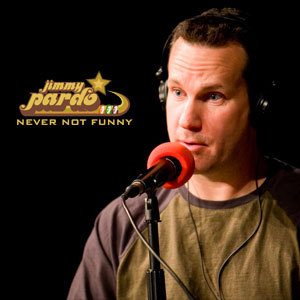
We’ll start with the award-winning, top-shelf, premium stuff, and the only podcast on this list that you have to pay for. $19.99 gets you about 25 weekly 90-minute episodes, plus a few special bonus episodes. It’s hosted by stand-up comedian Jimmy Pardo (former host of the Game Show Network’s Funny Money). The show, described as a “party conversation,” is basically a collection of personal anecdotes and pop culture commentary, a description which can be applied to almost all of the podcasts listed below.

Now wrapping up its fourth season, NNF has gone through several changes since its debut in April 2006. Initially, it was just going to be Pardo shooting the breeze with a rotating group of guests drawn from the L.A. comedy world, and centered primarily around those who work regularly at Hollywood’s Upright Citizens Brigade Theatre (a venue that supports alternative and underground comedy, in both sketch and stand-up forms.) Pardo has hosted a live talk-show at the UCB Theatre called Running Your Trap for some time, and initially the podcast was to be an internet version of that.

The first guest, Mike Schmidt (more on him later), became a “permanent guest,” essentially co-hosting the first season. The producer, Matt Belknap, was originally intended to have a very limited role, but this also changed. Belknap, not a comedian himself but kind of a comedy super-fan, founded the website and comedy record label A Special Thing. His role in the NNF conversation grew by leaps and bounds from the first few episodes on, and it is interesting to listen to his development over three years from what was essentially a straight man into a skilled comedic improviser in his own right. Other guests appeared every fourth episode.

At the end of the first season, Schmidt abruptly departed due to personal differences with Pardo. Neither man commented on specifics, but the careful listener could piece together a scenario where Pardo had grown tired of Schmidt’s quick temper and unpredictability, and needed a “break” from their friendship. [2010 Ed. Note: They have since reconciled, with Schmidt appearing as a guest on a sixth season episode.]

Beginning with the second season, guests joined Pardo and Belknap on every episode. Paul F. Tompkins, Patton Oswalt, Doug Benson, Graham Elwood, Rob Corddry, Maria Bamford, and even Mad Men’s Jon Hamm (a funny guy despite his dour TV character) have all been among the show’s guests, several of them multiple times. Now every fourth episode or so features Jimmy’s off-air best friend, Pat Francis, as the guest. Francis retired from stand-up comedy several years ago, but Pardo still insists he’s the funniest guy he knows, despite constantly haranguing him for being immature, or a “chimp.” Pardo admits that frequently he’s the only one amused by Francis’ antics, which include a loud Paul Stanley impression.

In the third season, the show began being videotaped. The videographer is Jimmy’s brother-in-law Andrew “AK-47” Koenig, son of Star Trek’s Walter Koenig, and former child actor. (Most people would know him as “Boner” from Growing Pains, a fact that was delicately tiptoed around until Koenig himself gave the go-ahead to let the cat out of the bag, which led to a flood of Boner-related jokes in nearly every episode from then on.) [2010 Ed. Note: The clinically depressed Koenig committed suicide in February 2010. The podcast took three weeks off, then returned with a compilation of Koenig’s most memorable moments before resuming normal shows. Pardo has been signing off every season seven episode with the words “AK-47, gone but not forgotten.”]

The show can be little L.A.-centric at times, but Pardo is a Midwesterner at heart, and unlike some of the younger comedians in the underground comedy scene who exist in a smug SoCal bubble, Pardo is a 20-year veteran road comic with all the skills that kind of experience provides. As a stand-up, Pardo insists that he has “no act,” and mostly relies on crowd work and improv. (His fast improvisational reflexes earned him the nickname “Shooter” early in his comedy career.) His comedic persona as an exasperated, impatient, borderline insult-comic carries over to the podcast, where he frequently berates guests, Belknap, and (especially) Koenig for slight transgressions of his arbitrary rules, and loudly wishes for the world to return to a simpler time, when people were “gentlemen” and wore “long pants and hard shoes” as opposed to cargo shorts and flip-flops. This earned him another nickname in the first season: “America’s Haircut Dad.”

Although other podcasts follow the same format, Pardo’s comedic chops and the amount of high-quality guests ensure that Never Not Funny remains the most consistently entertaining podcast out there.

SModcast
This was actually the first podcast I began listening to. I was on board from the first episode (entitled “Fisting Flipper”), which premiered in February of 2007.

No matter what you think of Kevin (“Silent Bob”) Smith as a filmmaker, if you’ve listened to his audio commentaries or watched any of his three “Evening with Kevin Smith” Q&A DVDs, there’s no denying his personal charm, and skill at being a raconteur. Frankly, at this point, I would rather listen to Smith talk than watch one of his films (or as Smith would say, “peep one of his flicks.”) So SModcast is ideal for me. It’s co-hosted by Smith’s long-time producer Scott Mosier (the “M” to Smith’s “S” in SModcast), whose deadpan baritone (he played “Snowball” in Clerks) is the perfect foil for Smith’s wild flights of verbal fancy. Smith, although a noted director with eight feature films to his credit, has never lost the perspective of the everyday person, the Regular Joe, who self-deprecatingly accepts the fact that his Hollywood life is the result of some witty writing, a lot of luck and good timing, but not necessarily filmmaking brilliance (and I say that as a fan.)

SModcast’s specialty is taking a topic, and stretching the discussion for that topic far beyond normal limits. A brief mention of light bulbs could turn into a twenty-minute spiel, with digressions and sub-digressions, and imaginary scenarios overlaid with a veneer ofSmith’s personal obsessions: scatology, genetalia, and homoeroticism. Not for every taste, but I find it pretty amusing.

Smith’s reminiscences of his lower-middle class upbringing in New Jersey in the late 80s (you can taste the hairspray and stone-washed denim in his descriptions), and his “behind the Hollywood curtain” Regular-Joe-makes-movies-and-meets-famous-people anecdotes tend to be far more entertaining than the role-playing improv scenarios he frequently concocts for himself and Mosier. These often lead to dead ends, although the Christmas episode where Smith plays an angel explaining the Virgin Birth to Mosier’s doubting-Joseph character is a classic. Also, the scenario where a fan (Smith) of Foreigner’s Lou Gramm (Mosier) accosts the hapless singer in a grocery store and chews him out for singing one of his own songs to himself as he shops is also pretty good. Smith also frequently displays the shortcomings of the New Jersey public education system by making egregious geographical and historical errors as he discusses things, although this tendency has decreased since they seemed to have started keeping Wikipedia open as they record the podcast.

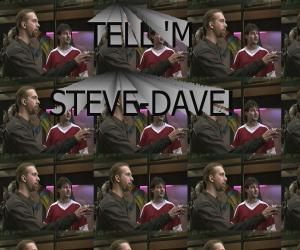
Whenever Mosier is unavailable to co-host, Smith’s old New Jersey friends Walt Flanagan and Bryan Johnston (familiar to Smith fans from their cameos in his films: “Tell him, Steve-Dave!”) often fill in, as does the notorious Jason (“Jay”) Mewes and fellow independent filmmaker Malcolm (Small Town, Gay Bar) Ingram. Smith’s astonishingly patient and tolerant wife Jennifer has also co-hosted, as has their nine-year-old daughter Harley Quinn, forcing Smith’s usual explicitness into PG territory. (There was still considerable talk of “doo doo” and “peepees.”)

Like most podcasts, it is home-recorded and has a low-tech, DIY ambience, frequently featuring Smith’s dachshund Shecky barking in the background, traffic sounds from outside the dining room window, and the recurring *click* of Smith’s cigarette lighter. [Feb. 2010 Ed. Note: In the wake of the relative box-office failure of his Zack and Miri Make A Porno, Smith stated that he tail-spun into a deep depression and sought solace in the sweet, sticky embrace of cannabis. Despite the pot-loving Jay and Silent Bob characters he created, Smith had heretofore been a “once or twice a year” smoker. The depression lifted by early 2009, but the hardcore waking-and-baking remained, and the Smodcast has suffered. They’ve become much more rambling, much less funny, and punctuated by Smith’s annoying new stoner giggle — you know the kind.]

The 40-Year-Old Boy
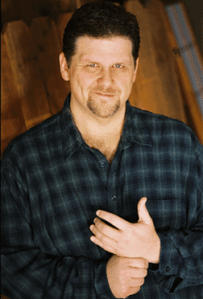
Schmidt, cast into exile by his NNF cohorts, spent over a year licking his wounds and then began a podcast of his own in early 2008. Schmidt pulls off the most difficult feat in podcasting: the one-man show. It is exceedingly tricky to not have anyone to bounce off of, to essentially talk non-stop and be amusing for over an hour on your own.

Schmidt may have the most brilliant improvisational mind (with the possible exception of “Shooter” Pardo) in podcasting. If there were any justice in the world, he would be a comedy superstar…but he is his own worst enemy. When you listen to him, you hear only the wit and charisma (and the poetic vulgarity.) But in the anecdotes he spins about his misspent life, he reveals himself to be destructively lazy, willfully immature (hence the title), and frighteningly combative. And when I say frightening, keep in mind Schmidt once tipped the scales at 500 pounds before gastric bypass surgery.

His non-comedy career escapades include working as an over-zealous bouncer, a night clerk at 7-11 who fell asleep on duty (allowing the place to be robbed), a deli employee who shaved a large chunk of his palm off in the meat slicer, and an armed bagman for a comically inept Lake Tahoe bookie. Raised in a tough-as-nails single mother Chicago household with four fellow delinquent brothers, Schmidt is always ready for a fight, and he has alienated or pissed off anyone who could have helped him further his career. Which is why he is now perpetually broke, “reduced” to emceeing a weekly burlesque show, working open mike nights at comedy clubs (instead of headlining, which he could be), and week after week, generating what may be the best comedy podcast on the net. He recounts tales of poor life choices and run-ins with a variety of perceived adversaries with barely a pause for breath, punctuated by his frequent refrain of “I’m not gonna lie to you folks.”

He is not entirely alone in creating The 40-Year-Old Boy. From the ninth episode on, his podcast has been produced by burlesque artist (and podcast host herself) Lili Von Schtupp, whose background gales of off-mike laughter have audibly improved Schmidt’s timing and confidence. Every episode, you think Schmidt’s well of stories must run dry eventually, but every episode he pulls another tale from his sordid past, or a recounting of a fresh incident from just that week. There is no reason for you to miss this podcast (unless you’re incredibly squeamish), but if you do, Schmidt frequently pops up as a guest on just about every other podcast out there. That’s because other people doing podcasts know that bringing him in as a guest essentially gives them the week off.

Uhh Yeah Dude
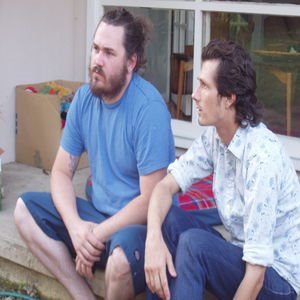
Subtitled “A Weekly Round-Up of America Through the Eyes of Two American Americans,” UYD is hosted by aspiring actor Seth Romatelli, and musician-and-son-of-famous-actor Jonathan Larroquette. The show’s format doesn’t look like much when described in writing, as much of it comes down to the personalities of the hosts, who must be heard to be truly appreciated. Romatelli, a veteran of dozens of commercials and movie bit-parts, is all coiled East Coast intensity, which is offset by the more laid-back, hippie-ish Larroquette. Both have hinted at wild, drug-fueled pasts, but are trying to live cleaner, semi-vegan lives these days.

In keeping with its late-night recording time, UYD focus on the darker, seedier side of things. They spin riffs on sordid news stories (usually originating from the state of Florida), bizarre psycho-sexual postings from Craigslist, detailed recaps of To Catch A Predator, and other unsavory topics, which they pick apart with gleeful enthusiasm and a mock sense of moral outrage. Seth is the more vocal of the two, often ramping up into a frenzied rant, while Jonathan dissolves into helpless giggles. Their unique verbal interplay blends hip-hop lingo, self-promotion and UYD sloganeering, and repetition of words and phrases in various inflections until they lose all meaning and become oddly hilarious, punctuated with frequent uses of “dawg” and “whatevs.”

Again, it doesn’t sound like much. But it works.

Jordan, Jesse, Go!

The sunnier flipside of Uhh Yeah Dude, Jordan, Jesse Go! features another pair of young Los Angelinos on the next-to-bottom rung of the show-biz ladder cracking wise on American culture. Jesse (“America’s Radio Sweetheart”) Thorn’s day job is hosting the public radio show The Sound of Young America, and Jordan (“Boy Detective”) Morris is an on-air correspondent for Fuel TV. Their original collaboration was a comedy radio show for UC Santa Cruz’s college station, and JJG! is an attempt to recreate and expand on that format for a larger, adult audience. In keeping with their radio roots, the show is more interactive than other podcasts, with listeners’ voicemails and phone calls playing an important role. Every episode usually sees Jesse and Jordan giving their listeners “action items,” special tasks to perform and then call the voicemail line with the results.

It is also more structured than the other podcasts, as most of JJG!’s content is based around several recurring segments. “Momentous Occasions” features listeners’ voicemails describing noteworthy events in their lives, preferably as they are happening, “Keep It Up or Hang It Up” is their off-kilter version of what’s hot/what’s not, “Judge John Hodgman” features comedian and writer Hodgman adjudicating a dispute between two listeners over the phone, and “Ask Juanita” has listeners getting advice from a sassy, middle-aged woman of color from Jesse’s night-school Spanish class. “Jordan Is Wrong” features callers correcting Morris on his incorrect assertations from previous episodes, and “Jordan Sings A Song” is exactly that. Many episodes feature guests (mostly comedians, like Mike Schmidt, but Jesse has a soft spot for underground rappers and DJs as well). Just as many episodes do not feature guests at all.

Like the hosts of UYD, Jesse and Jordan are in love with the sound of words and the vast possibilities of the English language, but their perpetual cheeriness provides a nice contrast with the creeped-out noir of Seth and Jonathan. [Feb. 2010 Ed. Note: This podcast has really taken off, and now it’s a rare episode indeed that doesn’t have a semi-celebrity guest.]

The Paul Goebel Show
Ostensibly a podcast discussing television, hosted by comedian and self-crowned “King of TV” Paul Goebel (also known as the “TV Geek” from Comedy Central’s defunct Beat The Geeks), this is really just another free-form “party conversation,” touching on all manner of pop cultural detritus. Each episode, Goebel introduces his co-host in an endearingly pre-pubescent way as his “best friend,” Jim Bruce. Bruce is a member of the sketch comedy group Trouser Shock, and the show often features other members of that troupe, such as Brian McNett and Tom Griffin.

Listening to all of these podcasts, one gets the feeling that the world of underground L.A. comedy is really kind of an extended family, where everyone knows everyone else. There is plenty of guest crossover between this and JJG! and NNF. As previously noted, Mike Schmidt is the most frequent common denominator.

Battleship Pretension

More earnest and less comedically-oriented than the other podcasts, this one features youngfilm school graduates Tyler Smith and David Bax talking about a different facet of the filmmaking or film-going experience every week. They are fairly witty, without ever being laugh-out-loud hilarious, extremely knowledgeable about film history, naïve as only recent college grads can be, and yes, at times, a little pretentious. They are very aware of this, and named their show accordingly. (They have mentioned that they’ve received e-mails complaining that their tastes are too mainstream, thereby making them not pretentious enough in some people’s eyes.)

With the demise of The Hollywood Saloon, this is probably the best film-based podcast available. Not surprisingly, Mike Schmidt has popped up as a guest here as well.

So check these out. Most are not asking for your money, just your attention.

[2010 Note: I should really write a Podcast Roundup Part 2 to talk about comedian Bill Burr’s “Monday Morning Podcast,” where Burr one-ups Mike Schmidt in the doing-it-alone category. Burr doesn’t even have an off-mike producer to giggle at his stuff. He simply barks it into a microphone in this thick Baaaahston accent, and it’s usually brilliant. The old “Don and Mike” radio show morphed into the “Mike O’Meara Show”after Don’s retirement, and then was canceled altogether when their home station changed to all-sports. It has found new life as a podcast starting in Dec. 2009. These two shows have pretty much replaced Paul Goebel (too many unamusing digressions into political talk) and Battleship Pretension (still great, just doesn’t bring the funny) in my regular rotation. I guess I just want my podcasts to be wall-to-wall laffs.]


Leave a comment

Filed under Pop Culture

He’s Just Not That Into Entertainment Weekly

No one has ever credited Entertainment Weekly with being a bastion of fine journalism. It does not have the wry, intellectual sophistication of a New Yorker, nor the weathered sturdiness of a U.S. News And World Report. But as a readable, workmanlike round-up of what is going on on a weekly basis in the world of film, television, DVD, music, and books, EW served its purpose, and I could always count on 45 minutes to an hour of perusal when it showed up in my mailbox every Thursday or Friday since my senior year in high school. The magazine provided me with some good behind-the-scenes stories (mostly favoring the films put out by EW’s parent company, Time Warner), an occasional in-depth interview, the mildly satirical Hit List, and decent capsule reviews of new releases in all of the above-mentioned areas with a simple letter-grade ratings system.

Sadly, I will no longer be reading Entertainment Weekly.

The February 20, 2009 issue (#1035) proves that EW has finally hit rock bottom. I read everything of interest to me in something less than seven minutes, and every turn of the page caused me to either cringe, moan, or bellow loudly as I rent my garments.

The downward slide started awhile ago (two years? three?) with some layout changes that I, the reader, was assured would be purely cosmetic, and the content would remain unaltered. I wanted so badly to believe that. But I began to notice a shift in emphasis. The stories got dumber. The celebrities they chose to feature got better-looking and less talented. Real interviews disappeared, and were replaced by fluffy public-relations ass-kissery. The film reviews and criticism lost their bite, and favored romantic comedies.

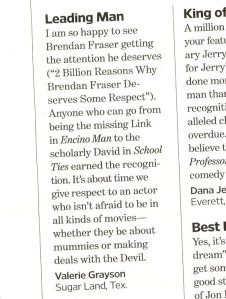
This sinister, subtle change began being reflected in the Letters section. It began to sound like the Letters section in People. (Want a good laugh? Read the letters people send to People. If you find this country’s tailspin into mediocrity and intellectual softness as grimly amusing as I do, you will truly soil yourself over the Letters section of People.) Here’s a brief taste of this week’s Letters section of EW: “I am so happy to see Brendan Fraser getting the attention he deserves…It’s about time we give respect to an actor who isn’t afraid to be in all kinds of movies…” My word, that’s a bold statement, Valerie Grayson of Sugar Land, Texas. Perhaps if you move

beyond renting your movies from the automated kiosk at the grocery store, you would figure out that there are literally dozens of actors who are fearless enough to be in “all kinds” of movies. Just a thought.

My ultimate point is that Entertainment Weekly has decided that their target audience,

their Ideal Reader, is a not-too-bright fifteen-year-old girl. A lot of back issues of EW are probably left laying around on the snack table at Sylvan Learning Center, if you get my drift.

Let’s start with the cover.

The third Twilight cover in as many months. Even most fans of the book agree the movie was dogshit, and the two dead-eyed leads couldn’t act hot if their hair was on fire. But the new EW can’t resist pretty, pretty people. (This month’s cover story featured the previously-unseen “Director’s Diaries.” What’s next? Garfield: The Lost Sketches? The secret Hannah Montana demos?)

Up next…Special Sunglasses Edition! A gripping report on celebrity shades, and where you can buy them if you have $345 and a crippling lack of self-worth. Evidently, EW’s mailboxes are straining under the weight of all the requests from people dying to get their sticky, Spaghetti-O-stained hands on 90210 star Erin Silver’s eyewear.

Aaaand the ever-popular post-awards show dress comparison. Mee-yow. If I wanted to regularly judge people based on their apparel, I’d go to church each Sunday.

And this headline:

Even fucking Us Weekly would be ashamed of that one.

It wouldn’t be the new EW without a multi-page tribute to rom-coms.

And the final insult. When all else failed, I could rely on EW, even quite recently, for level-headed film reviews.

Then this:

Confessions Of A Shopaholic. “Romantic comedy fizz…that bubbles like champagne.”

A-!

Go fuck yourself, Entertainment Weekly.

Leave a comment

Filed under Pop Culture

Democracy? No thanks


The very misleadingly-named Institute of Idle Time is hard at work again, this time compiling a definitive list dealing with the best albums of the 1990s. The topic got me to thinking about two of my favorite 90s bands, Weezer and Oasis. (Oh, who am I kidding? The topic of Weezer and/or Oasis is rarely far from my mind.) Both bands have fallen on hard times in the 00’s, putting out a string of mostly-forgettable albums, and coasting on the goodwill of chumps like me who still pony up for them. What happened?

I’ll tell you in one word, my friends: democratization. Both Oasis and Weezer were once ruled with an iron fist. In their golden era, Noel Gallagher and Rivers Cuomo were white-hot supernovas of ambition and megalomania, driven by demons, and would not allow any other band member to take the all-important songwriting reins. Since those days, bellies and bank accounts have reached their fill, ambition and passion have cooled, and both Gallagher and Cuomo have announced, with no little sense of self-congratulation, that the songwriting in their bands is no longer a one-man show. Weezer and Oasis have switched from an autocracy to a democracy. And they have clearly suffered for it.

Has Cuomo’s and Gallagher’s talent faded since they became well-adjusted family men relieved of their personal demons? (Noel’s personal demon: his valiant, one-man attempt to hoover up most of the world’s supply of cocaine. Rivers’ personal demon: being a difficult, twitchy weirdo.) Hard to say, since they no longer write enough to judge. They shrewdly realized it was silly to knock themselves out penning and polishing ten or twelve exquisitely crafted pop jewels for each album as they did in their mid-90s heyday. They’re not hurting for cash (i.e. royalties), and it’s far easier to deliver two or three knockout numbers on par with their earlier work, and a couple of filler tunes, then proceed to leave the rest to the second guitarist, or even the drummer (!). Surely the bassist has a bulging knapsack chock full of a backlog of songs written in his little Mead notebook (some even dating from his junior college days in a shoegaze band) that had previously been suppressed by the benign dictatorship of the resident band genius. Surely these unheard gems can be trotted out, tweaked and re-arranged a little, and made into a passable track #8 on the new album so the resident band genius can spend more time working on his 2011 solo album and being interviewed by Mojo. Sadly, this seems to be the case.

The only way these bands can reclaim their former glory is for these guys to roll the tanks of their songwriting genius into the Tiennamen Square of the recording studio, and crush the infant serpent of band democracy beneath their jackbooted heel.

And if at all possible, avoid posing on their album cover in a cowboy hat and Brooks & Dunn moustache.

2 Comments

Filed under Music -- 1990s, Music -- 2000s

Not Fade Away


We’re closing in on the 50th anniversary of the death of Buddy Holly, and the latest issue of Rolling Stone magazine is carrying a pretty good article about his last days. Check it out.

Everyone knows his dozen or so big hits (“That’ll Be The Day” “Peggy Sue”) from eons of exposure on oldies radio and nostalgic movie soundtracks, but a deeper dig into his catolgue reveals the breadth of his artistry. Take a listen to “Learning The Game.” Musically, it has a unique stop-start, Tex Mex kind of feel, and lyrically it may be one of the most cynical cautionary tales to come out of rock’s earliest era.

When that plane went down in a snowy field outside of Clear Lake, Iowa on February 3, 1959, no one can ever know the full scope of the paths that were closed off. We only know the tantalizing glimpses of what was left. Holly was the first rock artist to insist on direct control of the production of his recordings. He was one of the first singer-songwriters of the modern era to go beyond party music or trite romantic trifles. He was the first to take the infant form of rock music into uncharted stylistic territory. He was the first to utilize the recording studio as a sonic playground. With no Buddy Holly to blaze the trail, there may have been no Beatles, no U2, no Radiohead, at least not as they are known to us now.

So listen to “Learning The Game”

…and “Well…All Right”

…and “Words Of Love”

…and “It’s So Easy”

…and “Everyday”

…and “Not Fade Away”

…and “True Love Ways”

…and so may others recorded over a period of less than 30 months. And marvel that Buddy Holly was only 22 years old when his voice and Stratocaster were silenced forever.

Leave a comment

Filed under Music -- 1950s & Before

My Top 20 Albums of 2008 (#10-1)

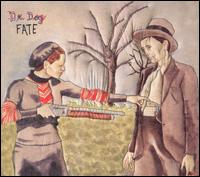
10. Dr. Dog – Fate
A long and winding Abbey Road leading to right to Big Pink’s door. There’s nothing wrong with wearing your influences on your sleeve as long as you find something interesting to say with them. Dr. Dog has focused its previously rambling, wild-hare sound into a precise, nimble approach where every instrument and voice makes itself known with a unique (and endearingly simple) role within the song, contributing to a mighty whole.
KEY TRACKS: “Hang On” “The Rabbit, The Bat, And The Reindeer” “My Friend”

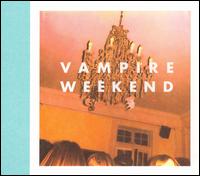
9. Vampire Weekend – Vampire Weekend
Pity poor Vampire Weekend. Praised to the skies in the blogosphere before the release of their first album, these collegiate cardigan enthusiasts then suffered a backlash as nasty as it was rapid. Know-it-all amateur critics giveth…and taketh away. Pay no mind. Their pleasant Afro-pop (shades of Paul Simon and Talking Heads) is still fun to listen to, and their head-scratching lyrics haven’t lost their ability to both puzzle and please.
KEY TRACKS: “Oxford Comma” “Cape Cod Kwassa Kwassa” “The Kids Don’t Stand A Chance”

8. Beck – Modern Guilt
Of the many creative folk who made 2008 a memorable year, production whiz Danger Mouse (mentioned twice elsewhere in this very list) must be at the top of the heap. Everyone’s favorite alt-rock troubador/sonic prankster Beck seemed to have lost his way on 2006’s unfocused The Information, but this fruitful collaboration with D.M. snaps him back into high gear. Like 2002’s melancholy Sea Change, Beck’s lyrics veer into some dark territory here, this time mourning not just his own personal heartbreak, but lamenting an entire world going down the wrong path. The bleakness of his words are offset by the propulsive, slinky arrangements (the slow-burning “Volcano” ranks among the very best songs he’s ever written).
KEY TRACKS: “Volcano” “Gamma Ray” “Modern Guilt” “Youthless”

7. Black Mountain – In The Future
Dark, disturbed tales of witches and sorcery eminating from a group of what appears to be mild-mannered, bearded Canadian grad-students? As a recent vice-presidential candidate might say, “you betcha.” Some of the more egregious Sabbath/Zeppelin bombast is reigned in by a natural indie-rock sense of decorum and self-consciousness, but enough Misty Moutain gloom and doom push through to ensure that by putting this album on at your next D&D tournament, you will be the coolest half-orc (or whatever) in the coven.
KEY TRACKS: “Stormy High” “Wucan” “Stay Free”

6. My Morning Jacket – Evil Urges
No ambitious artist wants to be known as a “jam band.” Being lumped in with Dave Matthews and The String Cheese Incident does no one any favors, and MMJ know it. They have been rebelling against that ridiculously reductive label ever since it was first stuck to them a few years ago, so their last two albums increasingly reigned in their reverb-heavy, country-tinged instrumental stretch-outs with touches of urban R&B (lead singer Jim James occasionally breaks out his Prince falsetto) and concise, straight-up hooks. Try to convince me 2005’s “Off The Record” or this album’s “I’m Amazed” doesn’t smack of old-school AM Top 40 pop.
KEY TRACKS: “I’m Amazed” “Librarian” “Thank You Too” “Sec Walkin’”

5. Old 97’s – Blame It On Gravity
This Dallas quartet has been a mainstay of my Top 20 lists for a decade, and their latest once again goes from strength to strength. They pull off a fantastic musical trifecta of powerful pop hooks combined with countrified lyrics of superior depth and literariness…and they’re a shit-hot live act to boot.
KEY TRACKS: “No Baby I” “Color Of A Lonely Heart Is Blue” “My Two Feet”


4. The Raconteurs – Consolers Of The Lo
nely
Basically the White Stripes minus the White Stripes’ arbitrary, self-imposed restrictions, the Raconteurs demonstrate the full flowering of Jack White’s preoccupation with rooting around in America’s musical attic. And oh, what dusty treasures he finds. When combined with co-leader Brendon Benson’s village-green Anglophilism, the result is an interesting batch of songs that give the listener a kaleidoscopic glimmer of old folk, old blues, and old Tin Pan Alley stylings while remaining comfortably anchored in the electric rock genre.
KEY TRACKS: “You Don’t Understand Me” “Old Enough” “Many Shades of Black” “The Switch And The Spur”

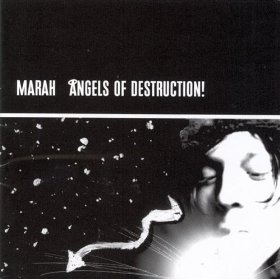
3. Marah – Angels Of Destruction!
Marah have sometimes been accused of “trying too hard.” Well, what the hell is wrong with that? It beats not trying at all. (Listen to Weezer’s latest. Or better yet, don’t.) AOD! is overproduced, yes. But the overproduction here feels like an everything-but-the-kitchen-sink thrill ride, rather than fussy technical wankery. The thinking man’s bar band, Marah churns out their best collection yet, careening from barreling rattlesnake shakes to torch songs awash in spritual imagery and regret, and always playing as if each song is the final encore.
KEY TRACKS: “Coughing Up Blood” “Angels On A Passing Train” “Blue But Cool”

2. The Gaslight Anthem – The ’59 Sound
The Gaslight Anthem have simplified and concentrated the tortured angst-rock of Roy Orbison’s “Running Scared” and the booming drama of the Darkness On The Edge Of Town-era E Street Band by forcing it through a spiky, post-punk filter. They don’t have a full orchestra or dozens of overdubbed Springsteens. Just a couple of battered Telecasters. Their lyrics are the most truly romantic of 2008, in the original, 19th century Byronic sense of the word. No greeting card platitudes here. The Afghan Whigs without the soul-music fixation and murder fantasies? A rougher, riskier Gin Blossoms? Something in between, I suppose. But those two bands were gone too soon, and I hope The Gaslight Anthem sticks around for a good long time.
KEY TRACKS: “Great Expectations” “Meet Me By The River’s Edge” “Old White Lincoln” “The ’59 Sound”

1. Blitzen Trapper – Furr
Blitzen Trapper race from idea to idea and mood to mood in an excited frenzy. Even their slower, melancholy songs seem to demonstrate their thoughts streaking ahead of their singing and playing. Rather than seeming schizophrenic (as last year’s Wild Mountain Nation sometimes did), the thirteen songs on Furr present themselves like an anthology of thirteen tiny one-act plays. The story and atmosphere is different for each one, but the listener can tell it’s the same creators and cast telling each tale. Like a series of fever dreams, a dusty Rocky Mountain saloon dissolves into an urban underground disco which becomes an open, unrecognizable stretch of lonely road. Not necessarily in that order. Then you wake up and try to put the pieces together.
KEY TRACKS: “Sleepytime In The Western World” “Furr” “Black River Killer”

Leave a comment

Filed under Music -- 2000s

…and The Fireman rushes in from the pouring rain…very strange


When was the last time you were excited about a Paul McCartney project? Never, you say? The last time “Macca” burped up anything decent you were in utero or a glint in your daddy’s eye? Well, shame on you for buying into the falsehood that McCartney is anything less than one of the founding fathers of all that we hold dear in modern popular music. Maddeningly inconsistent, yes. Sometimes follows the path of least resistance, yes. But this is the man who wrote the lines “Your day breaks/Your mind aches/You find that all her words of kindness linger on/When she no longer needs you.” Ridiculously simple, yet totally shattering. “Why she had to go/I don’t know/She wouldn’t say/I said something wrong/Now I long for yesterday.” Only three words there that are longer than one syllable. But each one perfectly chosen, and married to a melody that sounds like a whisper from the muses. That is a gift called “genius,” and flashes of that genius rise to the surface throughout his solo career with much greater frequency than he is given credit for.

McCartney has spent his career alternating between painstakingly crafted journeyman pop, and semi-improvised toss-offs. The former can be impressive, but more often somewhat labored. Albums like Flowers In The Dirt, Chaos & Creation In The Backyard, and Memory Almost Full get respectful three-star reviews and polite “refreshing-return-to-form” notices from the big-time magazines, but are written off by those who fancy themselves more cutting edge. Really, though, the worst that can be said about these releases is that McCartney is unapologetically playing it safe.

Luckily, there is the flip-side. The riskier McCartney, the one that doesn’t overthink. These off-the-cuff moments can be fun (The Beatles’ song “Why Don’t We Do It In The Road,” or the roots-rock album Run Devil Run), or painful (The entire Wings album Wild Life, where he repeatedly rolled tape on the the first idea that popped into his cannabis-addled brain, resulting in gibberish songs like “Bip Bop” and “Mumbo.”) What rescues even the worst of these efforts is his almost scary facility for creating melodies. McCartney leaks tunes the way the rest of us leak sweat.

His latest release is from his side project known as The Fireman. Electric Arguments is the third release produced from this collaboration between McCartney and former Killing Joke bassist (and Verve producer) Martin Glover, who has reinvented himself as the elcectronica artist known as “Youth.” McCartney and Youth’s first collaboration was a 1993 set of remixes using tracks from McCartney’s sub-par Off The Ground album, followed five years later by the all-original Rushes. Both were vocal-less, ambient sound experiments, and heard by practically no one. But the minute Paul lends his famous pipes to the mix, everyone sits up and takes notice. Electric Arguments is a throbbing, thoroughly modern journey through inner space, an electronic headphone classic that just happens to have been co-created by (and featuring the voice of) an honest-to-goodness Beatle. It definitely falls into the spontaneous category, with its 13 tracks created over 13 days, and having been released to the public late last November with virtually no publicity or promotion (it’s just a side project, after all.) Could it have been on my Best of 2008 list had I discovered it a little earlier? Very possibly. Is it a clear reminder never to give up on the promise of someone with a towering musical gift? Most definitely.

Leave a comment

Filed under Music -- 2000s

My Top 20 Albums of 2008 (#20-11)

20. The Switches – Lay Down The Law
This year’s Britpop spot goes to this explosive (U.S.) debut. (Bigger names like Oasis and Kaiser Chiefs were in the running, but both are trumped by this south-of-London quintent.) The Switches are nestled comfortably on the younger Franz Ferdinand/Arctic Monkeys side of the Great Modern Britpop Divide: pub shout-alongs and dance floor rump-shakers. As opposed to the older, statelier, rainy-day-mope-in-the-bedroom style of Travis and Coldplay. Another factor that raises Switches above their early-twentysomething competetion is that they have a familiarity with their instruments, and avoid plunking away at the same ringing chord through the whole damn song. I guess they’re trying to sound like The Edge, but The Edge they’re not. Many of these bands (eg. Bloc Party, Tokyo Police Club) sound like they just picked up guitars about eighteen months ago for the sole reason of making themselves more attractive to the opposite sex.
KEY TRACKS: “Drama Queen” “Message From Yuz” “Lay Down The Law”

19. Hot Chip – Made In The Dark
The electronica band for people who don’t care too much for electronica (i.e., me), Hot Chip’s synthesized bleeps and squiggles actually seem to have a human heart beating somewhere within. The relentless drum machine party is also crashed by the occasional atmospheric ballad, which keeps the album from slipping into the numbing, soulless monotony that is the stock in trade that of others of their genre, and appeals only to those on Ecsatsy, or those that like things cheap, plastic and shallow.
KEY TRACKS: “Shake A Fist” “Ready For The Floor” “One Pure Thought”

18. TV On The Radio – Dear Science
“Beggars all description” is a phrase which is rarely used anymore, but it applies here perfectly. This is the hardest capsule review of my entire top 20 to write because there is no easy way to describe the music presented here. It’s like trying to bottle smoke or pick up liquid mercury. The vocals croon and rage by turn, and icebergs of classic R&B, funk, and hip-hop break the surface in an ocean of thrumming U2-style atmospherics and modernist electornic noise. (Are you happy, TV On The Radio? You just inspired me to write the worst musical metaphor in recorded history.) An album that’s easier to admire than to love.
KEY TRACKS: “Golden Age” “Halfway Home” “Dancing Choose”

17. The Hold Steady – Stay Positive
The Hold Steady’s one weak spot – the vocals – has noticably improved, with a little less raspy talk-singing and a little more melodicism. Their strengths remain in play: story-songs soaked in booze and desperation, a solid rhythm section, and a shredding lead guitar.
KEY TRACKS: “Sequestered In Memphis” “Yeah Sapphire” “One For The Cutters”

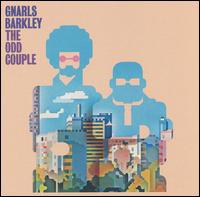
16. Gnarls Barkley – The Odd Couple
The fertile imaginations of instrumentalist/producer Danger Mouse and vocalist Cee-Lo once again harness up psychedelic soul to hip-hop beats. A little more disconnected and spaced-out than their debut, and continuing the thread of dark, eerie lyrics that belie the super-fun sunshine of the music (Cee-Lo has evidently not been cured of his paranoia and fragile mental health). Not as consistent as their earlier work, but still a nice chunk of ear candy.
KEY TRACKS: “Run (I’m A Natural Disaster)” “Going On” “Who’s Gonna Save My Soul”

15. Conor Oberst – Conor Oberst
This year’s fastest-maturing musician award goes to the Artist Usually Known As Bright Eyes. Oberst’s “solo” album continues the progression demonstrated on last year’s Bright Eyes album, leaving intolerable adolescent weepiness behind in the hands of those who seem to have no clue how to progress beyond it (i.e., the increasingly irrelevant Dashboard Confessional). Wistful without being too self-pitying (still, someone should keep him away from the steak knives lest we have another Elliott Smith on our hands), and grown-up without being boring, Oberst’s shivery, cinematic tales will keep you coming back to peel another layer.
KEY TRACKS: “Cape Canaveral” “Sausalito” “I Don’t Want To Die (In A Hospital)”

14. Ryan Adams & The Cardinals – Cardinology
Has Adams finally stopped genre-hopping and tossing out albums by the bucketload? Maybe. Adams-watchers have remarked that it’s been a whole year (gasp!) since the release of Easy Tiger, and his new backing band (at least new as of 2005, when they put out the excellent Cold Roses and Jacksonville City Nights) seems to have settled him into the classic-rock/country-rock groove where he thrives best. Perched on the summit of what came before, this album is the tipping point, and can easily serve as Adams’ entry ticket to the level of Neil Young or Gram Parsons.
KEY TRACKS: “Born Into A Light” “Let Us Down Easy” “Evergreen”

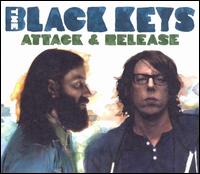
13. The Black Keys – Attack & Release
White people playing the blues is a dicey proposition. Try to be too reverent, and you get banal Starbucks mood music (Kenny Wayne Shepard, or every Eric Clapton album since he quit drinking). Try snazz it up with technical fireworks, and you undercut its simplistic purity, and end up just as banal. (Rest his soul, but Stevie Ray Vaughn was a fucking snooze. Seriously, does anyone get anything out of what he did apart from his admittedly amazing technical prowess?) So for the most part, it’s out of our performance realm. But The Black Keys’ two-instrument attack is not only not embarassing, it actually gets what the blues is supposed to sound like, without being a whiteface carbon copy. Another appearance by omnipresent producer Danger Mouse (there is one left to go) guides the Keys away from repeating themselves, and toward their best album yet.
KEY TRACKS: “Psychotic Girl” “Oceans & Streams” “Remember When (Sides A&B)”

12. Fleet Foxes – Fleet Foxes
Five guys on (mostly) acoustic instruments singing close harmony on songs that sound like they pre-date the Civil War. For me, they conjure up feelings of sunrise in the freezing cold, watching the crystal clear stars begin to fade after a night of staying up talking to friends or just listening to the wind. It makes me want coffee and a quilted jacket, or a feather bed.
KEY TRACKS: “White Winter Hymnal” “Tiger Mountain Peasant Song” “He Doesn’t Know Why”

11. Kings Of Leon – Only By The Night
The Kings weathered “southern Strokes” comparisons for their punchy first two albums, then disappeared into tuneless sonic murk with last year’s inscrutable Because Of The Times. They have emerged a better band, harnessing their new-found experimentalism to the rock-solid southern boogie that was always their bread and butter (or biscuits and gravy, if you like.) The result is less like a punky Skynyrd and more like an arty In Through The Out Door-era Zeppelin.

KEY TRACKS: “Crawl” “Revelry” “Notion”

1 Comment

Filed under Music -- 2000s

Goodbye 2008

After two-plus months of listening (and re-listening) to and scoring five other people’s “Best of 2008” albums for the Institute of Idle Time’s annual compilation (due out January 24, 2009, along with Issue #3 of the Idle Times zine), I am finally free to listen to music of my own choice again. This means a gleeful, Nestea-like plunge into the back catalog. I’ve been gorging myself on Bob Dylan and Prince, who are really two sides to the same coin, approaching similar levels of iconoclasm from two very different paths. Both artists have had their songs covered by others numerous times, but both remain the best interpreters of their own material. Compare that to Kris Kristofferson, who can’t sing a lick but writes good songs that only really come alive when others perform them.

Some artists, though, have such a personal voice that it seems impossible to imagine anyone else doing justice to their songs. 2008 marked the 15th anniversary of Liz Phair’s Exile In Guyville, which was reissued in a deluxe format this past summer. Like Kris, Phair is a writer who can’t really sing all that well, but unlike Kris, she writes songs perfectly suited to her vocal limitations, to the point where no one else could put them across with the same level of truth and intensity.

The songs on Exile were intended to be a response to the Rolling Stones’ Exile On Main Street, although having listened to both hundreds of times, I’ll be damned if I can see a specific connection. Phair’s Exile sounded like a series of diary entries from a very damaged soul. And I mean that in the best way. Phair’s innate sense of…well, taste is the wrong word for the self-described Blowjob Queen…I guess a certain lack of ego or self-obsession keeps her from going off the rails, lyrically. Korn songs sound like damaged-soul diary entries, too, but…yeesh.

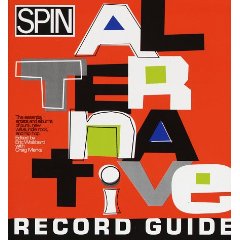
Exile In Guyville quickly gained Phair a lot of notice among musical tastemakers of the early 90s. And at no time were musical tastemakers less fun to be around than the early 90s. “Credibility” and deadpan seriousness were everything. In 1995, Spin magazine (a few years before it became essentially Rolling Stone Jr.) even put out a glossy Alternative Record Guide which, naturally, I bought the day it came out. The Spin guide was so desperate to distance itself from the uncool dinosaur bones of classic rock that it insisted Phair’s Exile In Guyville was a response to noise-rock act Pussy Galore’s track-by-track re-recording of Exile On Main Street (limited to 550 cassette copies) rather than the Stones’ original. That perfectly illustrates the level of hardcore music snobbery one was forced to deal with back then. Thank goodness those days are over.

Phair finished out the 1990s with two more pretty well-regarded albums (1998’s whitechocolatespaceegg featured “Polyester Bride,” which I think is one of the best songs of the decade), then, in 2003, committed one of the most gloriously jaw-dropping acts of career suicide ever witnessed in my lifetime. She signed to Capitol Records, abandoned her old producer Brad Whatshisnose and hired slicky-boy producer Michael (“No Myth”) Penn, ditched every aspect of her songwriting that made her special, posed for a series of photos where she’s basically naked as a jaybird, and lunged gloriously for the brass ring of pop-chart success…and fell flat on her face.

Her old fans abandoned her like rats fleeing a sinking ship, and she did not acquire new fans in any noticeable quantity. Even Capitol Records decided Penn’s production wasn’t “commercial” enough (imagine!), and sent Phair back into the studio with a production team known as “The Matrix” who had recently guided Avril Lavigne to superstardom. Lavigne, of course, made her reputation by pretending to be as rebellious and honest as Phair really once was. And instead of nursing wounded feelings at home alone or driving alone from nowhere to nowhere, Lavigne nurses hers at the mall. Y’know, with all her friends.

I guess we can’t begrudge Phair’s attempt to tap into Lavigne’s audience and go for the big bucks. Every performer wants as wide an audience as possible, and don’t let them tell you they don’t. (Although as a widely respected recording artist for Matador Records and a popular touring act, I don’t think she was exactly starving on the streets as her old self.) And this isn’t the early 90s anymore. Slick, commercial pop in the Pink or Gwen Stefani tradition isn’t viewed as inherently terrible, or the antithesis of true art anymore. It’s actually pretty fun. But Phair’s journey from what she was to what she is is sad because of its brazen crassness. The honesty that has always served her well in her early songs compels her to admit in interviews that selling out is exactly what she’s done. And she also admits, in a roundabout way, that she has stopped writing songs with any meaning:

Rod Stewart—I mean, he used to make, like, brilliant music, right? And then he kind of went the whole celebrity route, and he stopped making brilliant music. But I wasn’t mad at him. I didn’t go, like: ‘You fuckhead! You fuckwit!’ I don’t get that. I just stopped buying [his] records, which to me is the appropriate response.

I’m not mad at you, Liz. But I will respond appropriately.

(OK, I actually didn’t intend for this little good-bye message to 2008 to turn into a lengthy screed on an artist who ranks pretty far down on my favorites list, but that’s where it went. So be it. Maybe if I hired a “production team” that went by a single-word moniker I could stay on track…)

Coming Soon: My Top 20 Albums of 2008 (#11-20)…

1 Comment

Filed under Life & Other Distractions, Music -- 1990s, Music -- 2000s