
Despite the exotic-sounding name, this was never intended to be a “travel blog.” As a general rule, I don’t travel. I am a mostly-sedentary creature of habit. I don’t like chairs that aren’t mine, beds that aren’t mine, being thousands of miles away from my creaking, over-stuffed bookcases, or not knowing when my next cold beer is coming.
Blogging is by its very nature a self-indulgent exercise, reaching its nadir with the toxic spoor of the internet known as the “mommy blog.” Mommy blogs seem to be less about documenting activities with their dull, backward children and more about “look what an awesome mommy I am.” Travel blogs can fall into the same narcissistic reflecting pool — endless photos of meals, sunsets, and feet-on-the-beach. But well-done ones can be edifying, informative, and amusing, three things no mommy blog in the history of the universe has ever got within shouting distance of.
For the brief period of time that the Holy Bee of Ephesus will be prancing around in a “travel blog” costume, I will try to be those things, but probably not all of them at once. And there probably will be a few pictures of meals. In fact, there’s one below.
The accompanying photos are mostly my own (which explains their poor quality), except in situations where photography was not allowed, or whenever time, circumstance, or being too lazy to pull my phone from my pocket precluded me from snapping some shots. In these situations, I will shamelessly swipe pictures from the web or resort to screenshots of Google Street View.
So, what prompted me to clamber out of my chair, stuff an oversized suitcase full of socks and various medicated creams, and dust off my never-once-used passport?
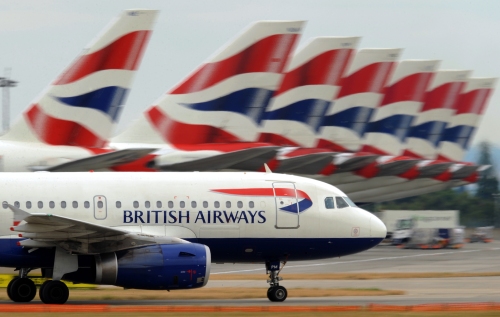
Because the destination was to be Great Britain.
Growing up steeped in the Beatles and Monty Python, and countless other bits of British cultural ephemera, a U.K. trip was a siren song not to be resisted. Plus they speak pretty good English over there (certain parts of Cumbria excepted), so making myself understood would be only a limited challenge.
And I would not be fending for myself. It was a trip for the extended family, and had been in the planning stages for years. Like myself, my wife, Shannon, has chosen a career in teaching, and therefore lives with me on the edge of pauperdom. Her parents and brother, however, entered the world of business, and through their ingenuity and hard work, have all been very successful. One of the ways they celebrate that success is seeing the world, often taking any black-sheep educators that happen to be related by blood or marriage along with them. Before my time with them, my wife and in-laws have tromped across Machu Picchu, the Alps, New Zealand, and various European cities. But, oddly enough, never London. Shannon went there for a few brief days after college in 2002 (as a small part of a larger European trip), but the British Isles have remained for the most part un-visited. And since Shannon’s family by nature are doers and planners, I could simply be hauled along like luggage and not have to concern myself with the nuts and bolts of organization, apart from taking part in an occasional vote about where to eat. (Most luggage doesn’t whine that it needs a beer, but whatever.)
The only downside was that my older son Cade, 20, was working an internship and could not join us. Shannon, myself, and my younger son Cameron, 18, were already on summer break, so we set off a few days ahead of the rest to get a feel for London and take our time at the massive British Museum.
Having never flown anything but coach, traveling in business class was an unexpected luxury. The seats in business class are sort of self-contained pods that can be reclined fully into sleeping positions. Each pod is twinned with another pod to the side. If your pod buddy isn’t a spouse or a friend, a privacy divider can be raised. When the dividers are down and the seats are upright, everyone’s head and shoulders are visible. A woman in a tube top nearby kept startling me out of the corner of my eye because it looked like she was taking a bath. Pillows were provided, along with a sealed package full of blankets (three different thicknesses), a sleeping mask, earplugs, and socks. Cold champagne and hot towels were distributed before take-off.
(The seats themselves weren’t much wider or plusher than standard airplane seats. The true gift of business class is leg room, so I wouldn’t repeat the gaffe of my most recent airline excursion the previous month. As an 8th-grade teacher, I was one of the chaperones on the annual graduation trip to Disneyland. Getting two dozen self-absorbed, half-awake 14-year-olds through security and onto an early morning flight was its usual nightmare, and I was literally the last person to board as they were closing the jetway door. It was a completely full Southwest flight with first-come, first-serve seating, so there was one single middle seat left available. I was so frazzled and out-of-sorts, I thought I could squeeze in front of the older lady in the aisle seat, as if I were at the movies or a basketball game. Her distressed squeals as I practically climbed into her lap brought me to my senses. As far as most embarrassing moments, it barely cracks the top 20.)
And since we were flying British Airways, all the flight attendants were wonderfully, authentically British. They were crisp, efficient, and referred to us all as “luv” and “darling.” The plane safety lecture was presented via a video featuring British celebrities only vaguely recognizable to American eyes, but warmly familiar to the Anglophile Holy Bee. “It’s Steve Coogan! It’s Jim Broadbent!” I kept saying exultantly to Shannon. Gillian Anderson used her English accent. She is evidently bidialectal.
The 747 jumbo jet hauled itself aloft out of San Francisco International Airport a little after 4:30 on Wednesday afternoon. The time difference meant we would arrive at London Heathrow Airport in the late morning of Thursday.
The dinner menu was a little vague in places. One course was simply listed as a “fillet of beef.” Trying to get any scrap of further information, Shannon asked the nearest flight attendant how it was prepared. “We heat it up, luv,” shrugged the attendant and moved on. Shannon wisely went for another dish, and I had the beef. It was indeed a totally non-descript brick of beef-like matter, wholly impervious to my attempts to cut it with the doll-sized knife and fork. It was at least flavorful, and the smoked salmon appetizer, with a healthy dose of horseradish cream and lemon juice, made me rethink my usual aversion to oily fish.
After dinner, washed down by a couple of Tribute Cornish pale ales, I attempted to sleep. It was twilight outside the plane’s window, and the tracking info on my little video screen indicated we were entering Canadian airspace at an altitude of 38,000 feet and a speed of 660 miles per hour. The cabin had gone dark, passengers vanishing as they put their seats into sleep mode. The glow of dozens of personal video screens was the only illumination. I tossed and turned as we streaked through the sky over Ontario and Quebec, but sleep would not come. Every time I would begin to drift off, a jolt of turbulence caused the aircraft to shudder. After two and a half hours, I gave up and fired up my Kindle, completing most of of Kerrang! writer Mick Wall’s Guns N’ Roses band biography Last of the Giants. Convinced it was the middle of the night, I cracked the window shade and was stunned to see bright North Atlantic sunlight. I snapped it shut before it disturbed anyone. We were just south of Iceland, and it was morning in Europe.
By the time the rest of the plane was stirring and breakfast was being served we were over the west coast of Ireland. According to my flight tracker, we flew directly over the Skellig Islands, the picturesque but incredibly windy location that served as Ahch-To, site of the first Jedi temple and hideaway of Luke Skywalker in The Force Awakens and The Last Jedi.
As we passed over the main part of Ireland, I noted that anyone who describes it as “green” is pretty spot-on.
As will be mentioned several times, Britain was in the grip of a heat wave at the time of our visit. The modest air conditioning of Heathrow Airport couldn’t keep up, and as we crawled through the line to have our passports checked, sweat began to pool in the small of my back. We finally were determined to be not of the terrorist type, picked up our luggage, and breezed through a totally unmanned customs zone. A huge room full of scales and stainless-steel inspection tables echoed emptily as we strode towards the airport exit.
We grabbed a cab (a mini-van, not one of the traditional “black cabs”) and headed towards London on the M4. The cabbie, I noted, was dressed in a floral Hawaiian shirt, cargo shorts, and flip-flops. All clothing items I left at home so I wouldn’t appear out of place. (Except for flip-flops, which I don’t own. Any grown man who wears flip-flops more than fifty feet from a swimming pool or other body of water should be fined. Any grown man who wears flip-flops with jeans should be executed by firing squad.) I took in my first view of a foreign country as it whizzed by our cab window. Not too different from home — car dealerships, big box stores, diversions for construction. The main difference was the style of traffic signs and the age of most of the buildings. Any random, anonymous building by the side of the motorway in suburban London was likely old enough to be an historical monument with a guided tour if it were in California.
As we got closer to London itself, the cabbie engaged us and began pointing out items of interest — and railing testily against the new bicycle lanes which he believed had destroyed the previously smooth flow of London traffic. The Natural History Museum, the Victoria and Albert Museum, Harrod’s, the Ritz, and Piccadilly Circus all went by our cab’s windows as we alternately zipped insanely or crawled interminably through the districts of Knightsbridge and Mayfair towards our hotel. Being Americans, it wasn’t long before the cabbie asked us about Trump. We assured him that we thought Trump was a vile, bloated toad and a national embarrassment, and conversation continued amiably.
Just over an hour after leaving Heathrow, we arrived at our hotel in the Bloomsbury area of London. Taking an hour to go sixteen miles was something that would take some getting used to, but I believe there is something positive in having quaint, narrow roads and a lack of eight-lane freeways. Continue reading
 It can be mildly frustrating being on the dividing line between generations. I am on the younger end of
  often, I (internally) cry out is dismay as the hosts reveal their status as ignorant pups bumbling across my audio lawn by completely misunderstanding — or missing entirely — an older cultural reference that Seinfeld will make from time to time. I can almost hear the whizzing sound as the name or phrase sails over their heads. How can a someone as grown-up as a pharmacist not recognize a reference to A Streetcar Named Desire? (They were baffled by Elaine’s Brando-esque cries of “Stella!” when she encounters someone of that name while stoned out of her gourd on painkillers.) And they seem to not realize Elaine and Jerry’s frequent inside-joke refrain of “all right sir” is quoting
 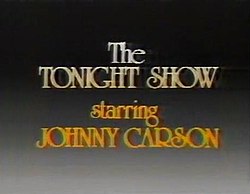 There is no rhyme or reason to the order that Antenna TV airs the episodes. A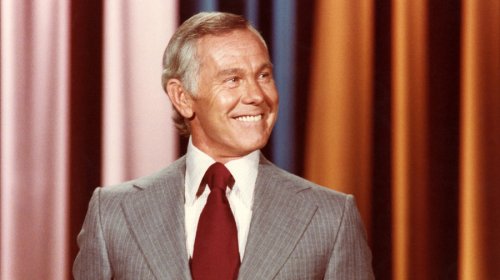
 Holy Bee of Ephesus