This Used To Be My Playground, Part 7: Cure-ination & Urination On Prom Night

Spring and summer 1992 — the warm months that closed out my junior year may have been the best time of my life. Afternoons of swimming and shooting pool at Bret K.’s house (was it elk jerky or bear jerky we were eating that one day?), long twilit evenings of “tennis” (see below) or spending quiet time with the girlfriend, nights full of innocent teenage fun (like the time Jeff O. sped through the Placer Video parking lot with Anthony on the hood of his car). We were easy to spot around town with our fleet of candy-colored early 70’s GM vehicles: my sky-blue Blazer, Bret’s shamrock-green GMC pickup, and Jeff W.’s Cheeto-orange Chevy pickup. Jeff O. and Eric L. broke the pattern with their turd-brown Mustang II (prone to overheating) and two-tone Eddie Bauer-model Bronco II, respectively. Bowling…moviesSNL…MTV…all backed by the soundtrack I’m featuring here…

#64. “Divine Thing” — The Soup Dragons

Those long, warm evenings of that particular spring were tennis evenings at Sam Brannan Park. Not that I played much — or at all. Jeff O. and Eric were the racket sports fanatics, and I was quite content to lounge along the baseline with a stack of magazines and keep up a running conversation with them as they lobbed the ball back and forth. Sooner or later, they would get tired and we could all go rent a movie, which was more my speed.

The tennis court was surrounded by a high wall of oleander bushes, and for several evenings running there was evidence that a poor soul in straitened circumstances was making these bushes a temporary domicile. After a week or so of noticing the tattered sleeping bag and empty government cheese boxes, the occupant himself finally made an appearance.

He was already there when we arrived. Seemingly asleep, he was curled up with his back against the tennis court’s chain-link fence. We all noticed, but said nothing. The game started. Fifteen feet away from us, he continued to sleep, or pretend to sleep. The game finished, and the next game in their set began. Conversation rambled from topic to topic. THWACK! went the ball as it volleyed between the two players. THWACK! The man stirred slightly. For almost forty-five minutes, it was as if nothing was out of the ordinary. Then Jeff O. piped up — loudly — between lobs:

“Hey, [Holy Bee].”

THWACK!

“What?”

THWACK!

“Wouldn’t it suck to live in a bush?”

Well, I thought it was funny at the time.

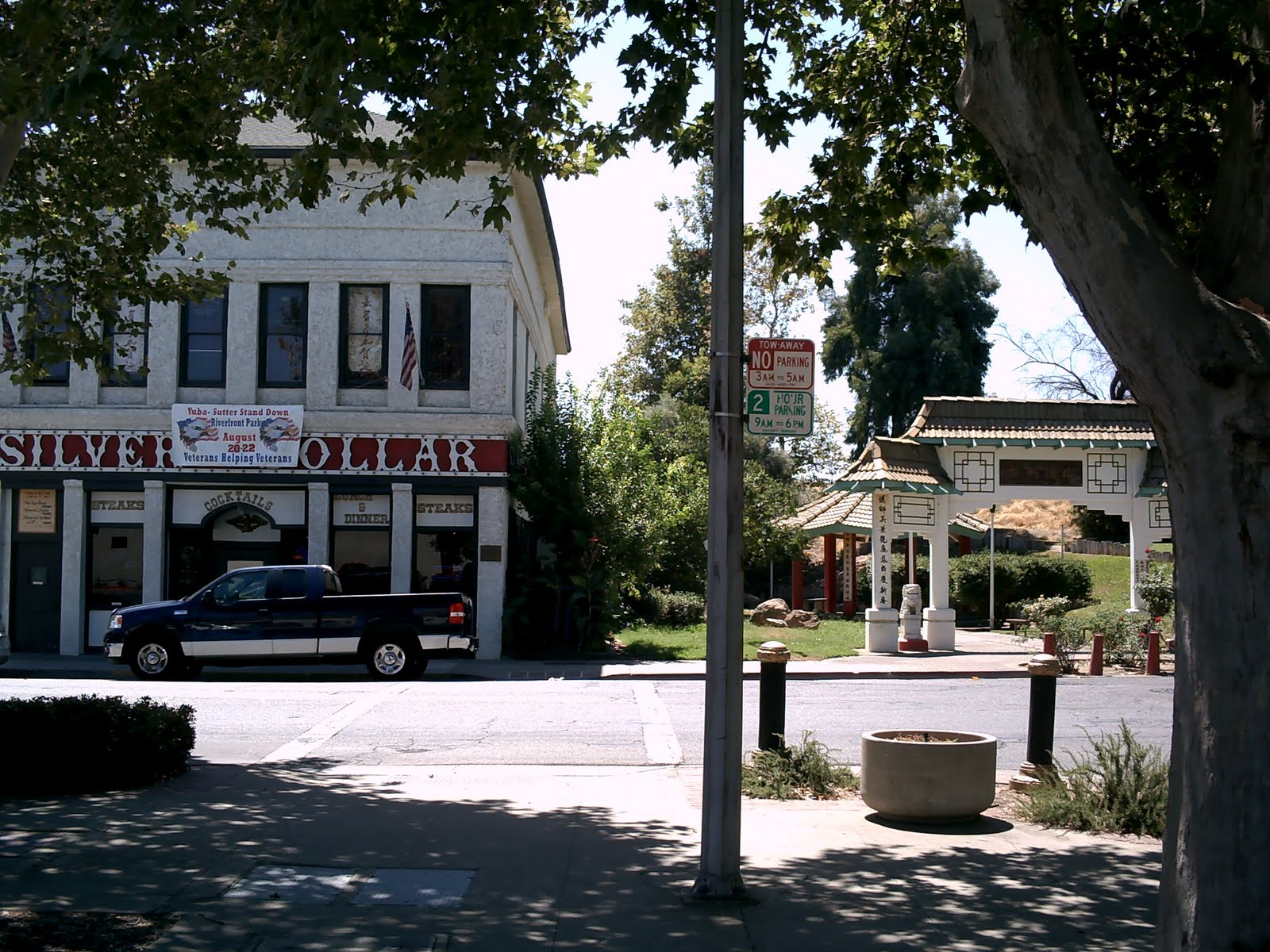
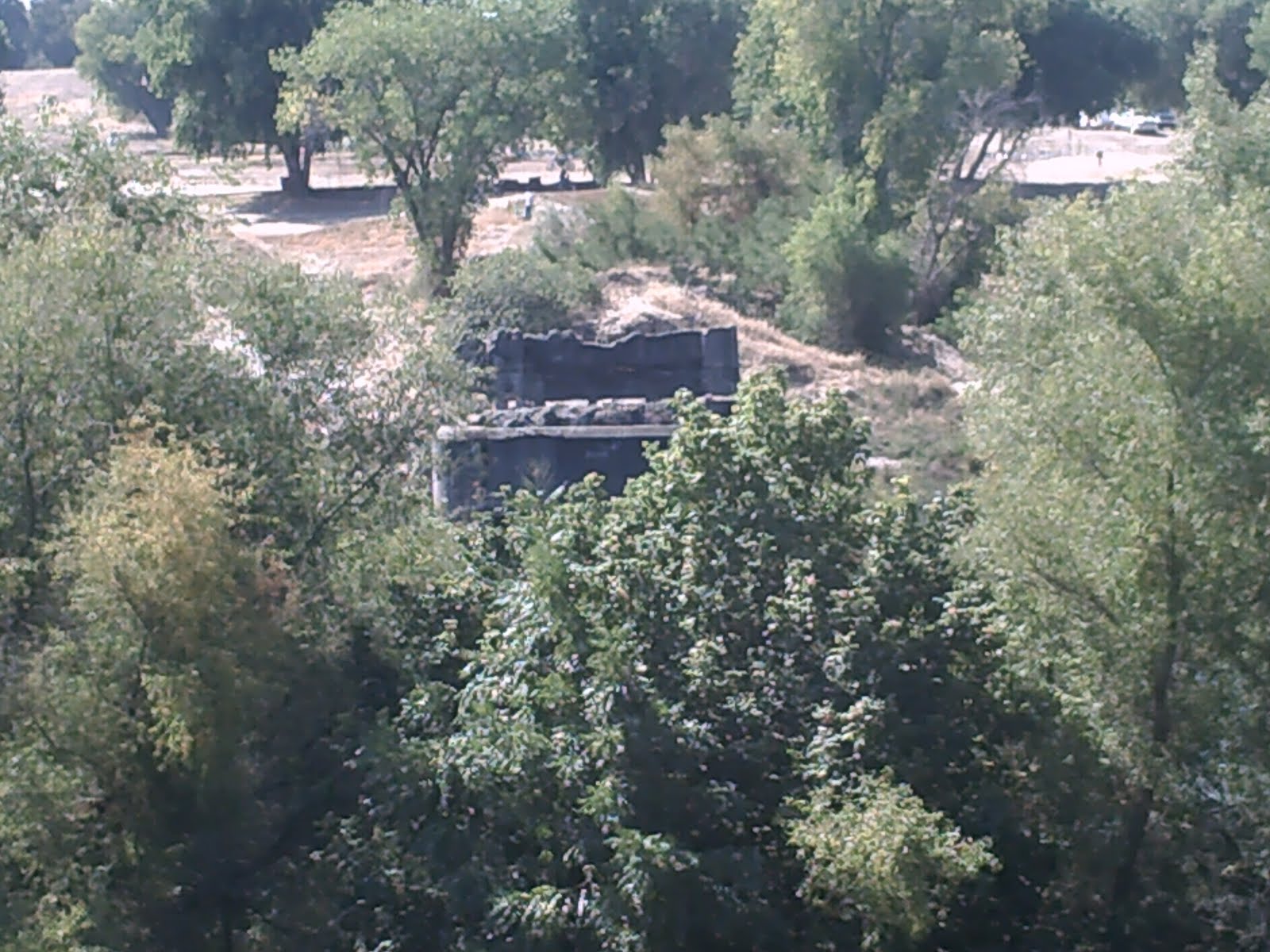
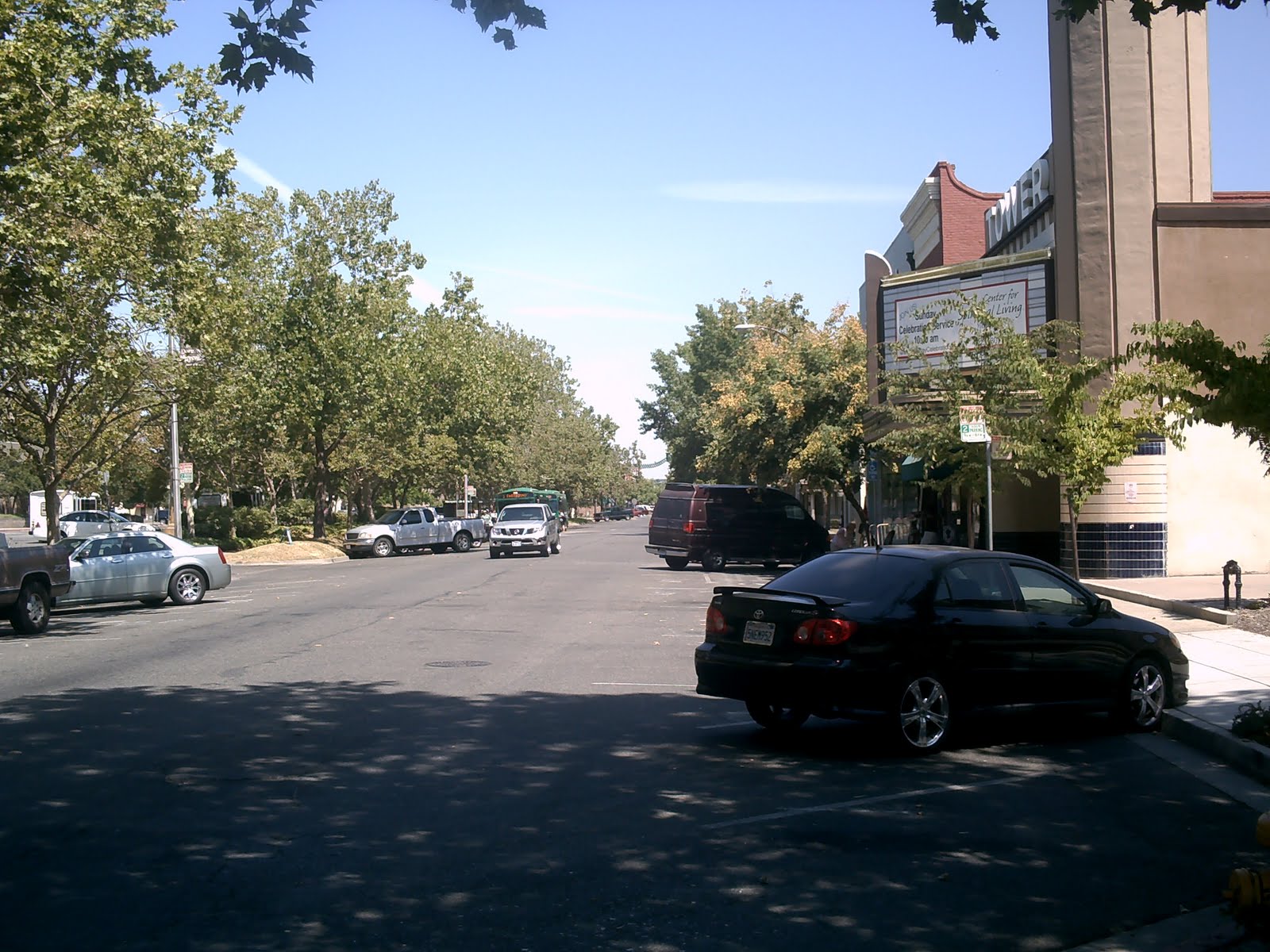
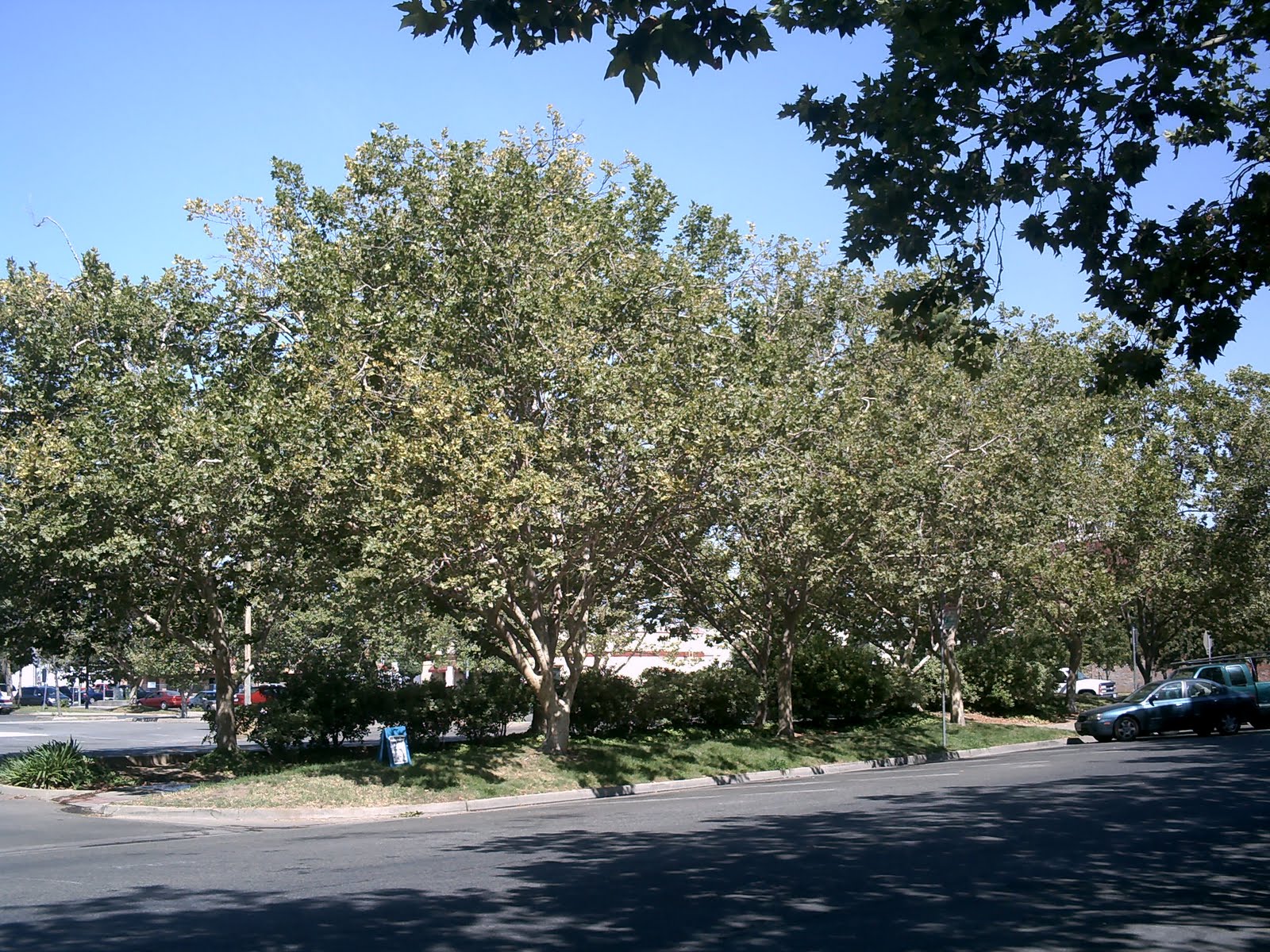
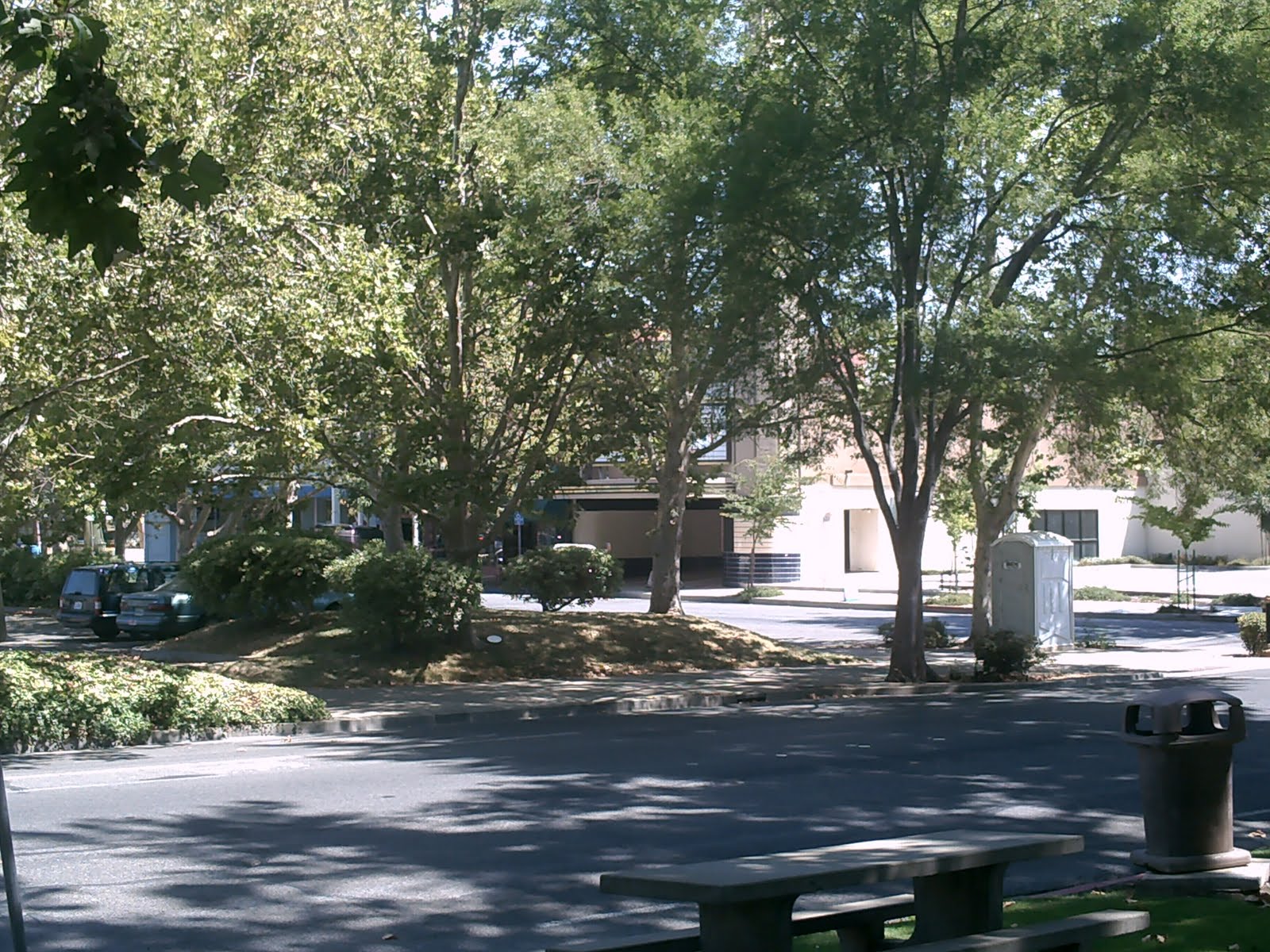
These Used To Be Surrounded By Oleanders: The Sam Brannan tennis courts as they are today. The skateboard park in the distant background replaced the homeless-friendly vacant lot

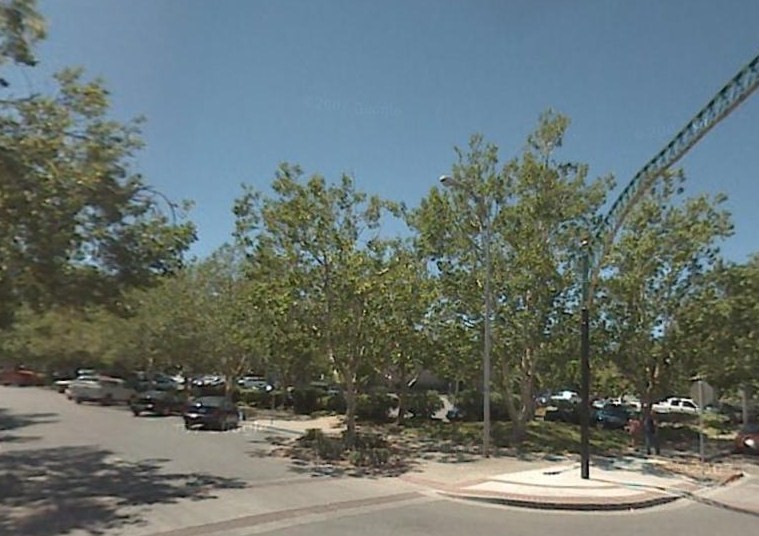
And the Soup Dragons? I was aware of them through their criminally inept cover of The Rolling Stones’ “I’m Free,” and I seem to recall Eric being a casual fan around this time. I have a clear mental snapshot of 3 or 4 of us listening to this in Eric’s Eddie Bauer Bronco in the Sam Brannan parking lot. In the very parking spot shown above. Eric was the only one of us who had a CD player in his car.

#65. “Friday I’m In Love” — The Cure

I spent most of my high school years actively despising two bands: The Cure and Depeche Mode. Emily was a world-class Curehead, however, so whenever we drove in her car I was assaulted by Robert Smith’s caterwauling. (Our deal was whoever drove picked the music. I was usually able to sweet-talk her into letting me pick the music even when she drove, though not often enough to escape learning Kiss Me, Kiss Me, Kiss Me and Disintegration forwards and backwards.)

Why did I hate The Cure so much? Because they just seemed so antithetical to everything I wanted out of music — swagger, confidence, general ass-kickery. I most certainly did not want to hear some lipsticked, cartoon-character freak with a rat’s nest of hair and raccoon eyes expound in an adenoidal yelp about how forlorn and misunderstood he was. Fuck that noise! Plus, they used lots of synthesizers, which was a no-no in my book back in ’92. I’ve since realized The Cure’s “Goth” (TM) look was no more of a pose than any other band, and that under all the mopey whining were some tight little pop songs — “Friday I’m In Love” perhaps the best of them.

Why did I hate Depeche Mode so much? Because they sucked and still do.

So The Cure’s Wish album came out in late April, right around the time everyone was gearing up for prom. In fact, it was probably blasting from the tape deck in Emily’s Datsun Z as we went dress shopping. (We had been spinning Wish so often at the time, I felt as though I should go ahead and get a dress too.) My junior prom was also directly responsible for me learning how to drive a standard transmission (“stick shift” for you non-gearheads.)

“I am not getting all dressed up and and going to a nice dinner and prom in that thing,” she said, gesturing at the battered but serviceable Blazer.

“We’ll take your Z,” I suggested.

“No. The guy drives to prom. That’s tradition.” [NOTE: I may have been the one to insist that driving to the prom was the male prerogative, but this is how I remember it, and if anyone doesn’t like it, they can get their own long-winded blog. E. definitely vetoed the Blazer up front, though.]

So began several nerve-wracking practice turns around south Yuba City in my mom’s non-Eddie Bauer Bronco II with the hair-trigger clutch that popped if you looked at it hard enough. I eventually got the hang of it, but I spent much of the month of May with a sore left leg.

#66. “Breaking The Girl” — Red Hot Chili Peppers

It was also around this time that I became a member of a band — we lasted one rehearsal. I was an admirer of the Chili Peppers’ Flea, plus I had, shall we say, limited musical ability. Those two facts about Your Humble Narrator made him perfect for the role of bassist. Jason Van Zant played lead (he owned two guitars — a blonde Telecaster and the arctic-white Stratocaster fetishized in the Wayne’s World movie.) Brian Cunningham and resident school weirdo Mike L. were also involved, but I forget in what instrumental capacity. I do remember we were drummer-less.

Cunningham conned someone’s grandma out of a Frankenstein’s monster of a bass guitar. It looked like it started life as a some kind of Fender knock-off, but its formerly solid body had been stuffed with cotton wool for some reason, and a piece of old leather had been thumbtacked over the enormous hole that had been gouged out of the body’s backside. Its never-been-changed roundwound strings had been worn smooth by the seventy-year-old woman who played in the country-western cover band that had been her late husband’s hobby.

Rehearsal time came. I plugged in, stood stock-still in Mike L.’s garage, clenched in concentration, and plunked the notes Jason told me to plunk. The bass sounded so terrible, it covered my lack of skill nicely. I made a warm, bass-y wash of sound that was at least in the neighborhood of the same key Jason was playing. We made it through two (or possibly one-and-a-half) Dead Milkmen-style snot-rock originals. (We didn’t get to my edgy songwriting effort, “Hatefuck.” Hoagy Carmichael I was not.)

We then began a 45-minute discussion of how our first video should look. In one of our nocturnal countryside cruising sessions, we had already ran across a perfect location — a set of grain elevators out in Sutter, a small(er) farming town about seven miles away. From a distance, they looked like a gigantic pack of twenty-four ounce beer cans. Up close, at night, they looked like a whirring, hissing, Gilliam-esque industrial futuristic nightmare-scape. All color washed away against the towering white silos floodlit by powerful flourescents. How cool would it look to set up band gear and rock out with all this as a backdrop? Security at the place was clearly minimal/non-existent as we had already paid it a night-time visit or two. In fact, it was clear we could simply back up a truckload of gear and film our video till the wee hours.

The Sutter grain dryers, still whirring away…

We never got that far. No one was motivated enough to plan even a second rehearsal. The old bass moldered under my bed until I handed it off to Jason when he got out of the army(!) the following summer. The grain elevators would re-enter my story, however.

On prom night.

But in between my first/last band rehearsal and my junior prom, something terrible happened. Check out the previous entry, “Interlude,” for the story.

#67. “Why” — Annie Lennox

Yes, she was slightly taller than me in heels. But look at that fucking hair. God, I used to be beautiful…

Continue reading

Leave a comment

Filed under Music -- 1990s, This Used To Be My Playground

This Used To Be My Playground — Interlude

#63. “Jeremy” — Pearl Jam

Jumping ahead slightly from where I left off, in the late summer of 1992, MTV began airing a video that kind of made all of us in the Yuba City area shift uncomfortably whenever it came on — it served as a reminder of the events of early May. Pearl Jam’s “Jeremy” was the last narrative (non-performance) video Pearl Jam would make for the better part of the decade. It depicts the violent suicide of a misfit child in front of his classmates. Thanks to some oblique editing, the video can also be interpreted as the “Jeremy” character shooting those classmates, which is the scenario that played out at Lindhurst High School on May 1, 1992.

Eric Houston did not have the fortitude to off himself, despite being a self-confessed miserable piece of shit. Instead he came to Lindhurst High School, about nine miles away from where I sat in Creative Writing at Yuba City High School, and began shooting. He killed three students and a teacher, and held eighty-five more as hostages late into the night, before being led meekly away in handcuffs.

It was the third day of the L.A. riots in the wake of the Rodney King verdict, so when an announcement came over the YCHS public address speaker stating that all students should go “straight home” after 6th period, I assumed that it had something to do with the tension and unrest that had been all over the media, and humming through the school, for the past couple of days. Everyone already had the protest bug, and it had been a year of student rallies and sit-ins for a variety of (mostly petty) causes so I genuinely believed that the YCHS administration was trying to defuse some kind of uprising by a group of well-meaning, mostly white, middle-class high school students acting in solidarity with disenfranchised inner-city African-Americans 400 miles away. As it turned out, it was the deadly situation rapidly unfolding at LHS to which they were reacting.

So I followed instructions and went straight home — which I would have done anyway. I was no longer gainfully employed by my father, who was in the process of shutting down his struggling body shop and going back to work for The Man. Afternoons were now filled with MTV, my stereo, and maybe a little homework. (What wasn’t filled? My wallet. I was back on a mow-the-lawn-do-your-chores allowance, which barely covered the Mattmobile’s enormous appetite for gas.) As soon as I flicked on the TV and saw the aerial shot of Lindhurst on the news, I understood why all of us were sent straight home.

I was surprised, then, when Emily showed up at my door hours before our usual late-evening hanging-out time. She was very upset. Her cousin was believed to be one of the hostages. She asked me to come back to the house to be with her.

And, as the horrible evening unfolded, we discovered that her cousin was one of the four fatalities.

I was a relatively new addition to Emily’s family scene, so I could do nothing except sit mutely at her house among all her relatives (including her uncle who had just lost his teenage daughter) and watch the grieving process unfold from initial shock to waves of anguish. I offered what comfort I could, later, to Emily, but I am a poor comforter. I don’t know if I’ve gotten any better since, but I’ve never been in a situation where I’ve had to be. I hated being there, and I hated myself for selfishly hating being there. Through luck and maneuver, I’ve never been around anything as terrible since then. But someday, I know I will have to be, since no one can duck dealing with tragedy his or her entire life.

The Lindhurst High School incident stands as the first on-campus shooting of students by another student (or rather, former student — Houston had dropped out) in anyone’s memory. It was overshadowed by the Columbine shooting seven years later, and has gradually faded from general awareness, but it certainly was on the minds of everyone I knew for a long time. And of course, there are four people who are no longer here — social studies teacher Robert Brens, and students Judy Davis, Beamon Hill, and Jason H. White were forcibly ejected from this world on a sunny spring day eighteen years ago.

I’m afraid I don’t really have a profound point to make here, but omitting this from my look back at my memories of the 90’s, or worse, briefly alluding to it in passing would do a greater disservice than including it. I guess what little point I have to make here, other than to give a brief remembrance of those who died, is to say that in spite of all this nostalgia I shovel out, I’m really not bitter about growing old because some people don’t get the privilege…

2 Comments

Filed under Life & Other Distractions, Music -- 1990s, This Used To Be My Playground

Top 20 Albums of 2009, #11-1

#11. Yeah Yeahs YeahsIt’s Blitz!

Both It’s Blitz! and my #10 pick below are similar in that their creators left behind their trademark buzzsaw guitar sound in favor of one that’s smoother, sleeker, more sophisticated. The aural equivalent of exchanging a leather jacket for a silk suit. The rough edges have been sanded away, and there’s more breathing room to explore the possibilities of the voice. There seems to be no escape from the throbbing synthetic influence of dance music in 2009, but if the electronic pulse of the discotheque is wielded with the amount of taste and confidence heard on It’s Blitz!, there’s no reason even the most Luddite classic-rock purist shouldn’t love it.

#10. Julian CasablancasPhrazes For The Young

Strokes frontman Casablancas (mostly) leaves behind the heavily-processed sneer that was the voice of his former band in favor of a more open, natural singing style. The strength of the melodies and the complexity of the arrangements — all by Casablancas himself — tips us off as to who the driving wheel of the Strokes’ songwriting really was. Other band members’ solo albums are certainly pleasant enough, but don’t give many hints of the powerhouse talent on display here. Much ink has been spilled (as with It’s Blitz!) over the use of synthesizers in place of guitars, and its Tokyo nightclub vibe, but rest assured Casablancas does vary up the styles and our friend the guitar is still very much in evidence. It’s not as good as I hope the next Strokes album will be (this fall, maybe? please?), but it’ll do for now.

#9. M. WardHold Time

Some fine, fine music has been made by just a guy or girl with a guitar. But what can be captivating at a coffeehouse or camp-out, or on a spunky debut album can begin to sound dull and repetitive over the course of several albums. Most recording artists know this, and by their third or fourth album, have begun to hang a little production flesh on their folk troubador bones. Hold Time is a sterling example. Ward’s already-strong songwriting is carried even higher by a funky, retro production style that’s part Pet Sounds, part T. Rex. And guest appearances from Ward’s “She & Him” partner Zooey Deschanel, Lucinda Williams, and Grandaddy‘s Jason Lytle are icing on the cake.

#8. Deer TickBorn On Flag Day

It’s not a very original statement to say that what passes for country music these days isn’t really country — it’s braindead, glossy pop, with a fiddle thrown in as an afterthought — so I’ll just acknowledge the truth of the statement and move on. If you want the real deal, you have to dig deeper. As hacky Nashville producers and song-pluggers began slowly killing mainstream country music over thirty years ago, a disenchanted musical response has always been bubbling angrily away, from the “outlaw” movement of the 70’s, through cowpunk bands like Jason & The Scorchers in the 80’s, to the earnest alt-country acts of the 90’s. In the 00’s, shitty Nashville country is more prevalent than ever, but the disgruntled, reactionary response by artists who know what true, soulful country should sound like is getting harder and harder to find.

The best country album this year was made by a band called Deer Tick from Providence, Rhode Island, which is kind of sad. It proves that the Deep South — the region that gave birth to every genre of music that I care about — is now almost completely culturally bankrupt. Deer Tick’s sound hearkens back to a time when that wasn’t the case. When they play stright country, it’s right from the Hank Williams/Lefty Frizzell style book. When they play rock, it’s Chuck Berry’s chugging, countrified R&B they use as their template. (“Straight Into A Storm” could be a lost Berry B-side.) A touch of folk introspection rounds out the package.

#7. Dan AuerbachKeep It Hid

That the solo album of one-half of The Black Keys sounds pretty much like The Black Keys is no surprise. Nor is it a surprise how good it is, as The Black Keys’ brand of gritty, lo-fi blues has been a staple on my playlists since their debut four albums and most of a decade ago. The main difference is Auerbach’s bluesy moans and reverb-drenched guitar are stripped of bandmate Patrick Carnahan’s clattering garage-band drumming, and his tentative attempts to strecth out (the excellent acoustic opener “Trouble Weighs A Ton,” for example) are given the necessary space.

#6. Jason Isbell & The 400 UnitJason Isbell & The 400 Unit

Three brilliant but moody songwriter-guitarists in The Drive-By Truckers was one too many, so Isbell was cashiered after a five-year stint, and immediately put out his impressive first solo record, Sirens Of The Ditch, which earned a spot on the Holy Bee’s 2007 list. With a new backing band on board, Isbell continues to hone his fiery bar-room sound and continues to develop as a lyricist. Isbell’s songs consist mainly of finely-drawn character studies or drown-my-sorrows honky tonk weepers, sometimes with a subtle undercurrent of political or social conscience. All of which are hallmarks of the best Drive-By Truckers material, by the way, but Isbell and the mighty 400 are doing it almost completely below the radar.

#5. The Avett BrothersI And Love And You

Famous for their raucous live shows featuring fleet fingerpicking and a slew of rural-music influences (folk, bluegrass, country) that informed their style but never defined it, The Avett Brothers throw us a slight curve by creating an album of mellow (if sometimes spooky or anguished) piano ballads. They have not abandoned their stringed instruments — far from it. Acoustic guitar, banjo, and cello/violin provide the frills and flourishes, but keyboards are the melodic bedrock here. If Elton John had been born in the piney hills of Carolina instead of somewhere in England, he might have sounded something like this.

#4. Pink MountaintopsOutside Love
Sister group to the harder-edged Black Mountain (represented on the 2008 list), Pink Mountaintps is the more experimental of the two Canadian collectives headed by Stephen McBean. I generally like a firm footing in my music, and am suspicious of a band trying to coast too far on atmospherics, but Pink Mountaintops’ ponderous, echoing, fuzzed-out sound is indeed all about atmosphere. However, it has such keenly-felt yearning (especially in the heartbreakers “While We Were Dreaming” and “And I Thank You”) in the vocals — delivered by McBean & friends in clusters of two or three, or in Wall of Sound choral unison — that its sandal-gazing self-indulgence is forgiven and the album ends up charming and captivating.

#3. The Dead WeatherHorehound

Another Jack White side project — alongside The Raconteurs — and another winner. White is not the main voice here, however, turning over the majority of the vocal chores to Alison Mosshart of The Kills. If The White Stripes bring a taste of noisy dissonance to standard blues forms, The Dead Weather deconstruct the formula even more. Horehound is a cacaphony of buzzes, drones, and howls, created by Mosshart’s feral vocals, Dean Fertita’s primitive-sounding organ, and White’s drumkit bashing. It seems on the verge of spiraling into a complete noise-rock clusterfuck, but clings to a grim level of listenability with the tenacity of a gutter-rat, its traditionalist heart beating strong under all the scuzz.

#2. Franz FerdinandTonight: Franz Ferdinand

Franz’s first album was a “typical” buzz-band debut — about four hot-shit singles and some pretty good filler. Their second album also followed the usual pattern — written and recorded too soon after the smash debut, and desperately attempting to force-grow some artistic development and sonic expansion. This can result in the dreaded “sophomore slump,” but in Franz’s case, it worked, and the second album was even better than the first.

Reputation firmly established, Franz Ferdinand took their sweet time with their third album. Tonight can be heard as a loose concept album chronicling a Saturday night in the life of a typical British lad: going to a Franz Ferdinand concert (hence the album title, and a trying-to-sound-like-ourselves cheeky rewrite of their biggest hit “Take Me Out” entitled “No You Girls”), meeting and becoming infatuated with a girl, going to an after-hours dance club (represented by the hypnotic techno throb of the eight-minute “Lucid Dreams”), and parting ways with the girl as the sun rises. Or it can be heard as simply a great pop album, with catchy choruses, dashes of electronica, and cool percussion, including exuberant cymbal crashes in just the right places.

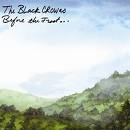
#1. The Black CrowesBefore The Frost…Until The Freeze

I grow tired of defending The Black Crowes, mostly because their detractors are so often correct. They hold a special place for me because of the fierceness of their Stones/Faces-influenced first two albums. What of it? Some bands coast for decades on the strength of one album, releasing nothing but half-baked shit forever after (*cough*Violent Femmes*cough*), yet their fans are not mocked and derided the way Crowes fans are outside of the hippie/jam-band community. So yes, the Crowes spent most of the 90’s riding the beads ‘n’ beards pothead circuit, putting out a series of increasingly incoherent and mediocre albums, and then hanging it up in 2002 for a hiatus during which they were not really missed. But when they re-emerged in 2008, they were a different — much better — band.

Different, certainly, from the young gunslingers of their first two albums, but aging has suited them. Age has deepened their grasp of fundamental blues and R&B motifs, which they seemed to forget during the worst of their wretched jam-band era. Age has polished their songwriting, and most of all, age has improved their playing. I mean, these guys play well. It’s not just a few chords and a rack of effects pedals that seems to pass for guitar-playing these days (yes, by some on this very list.) Long-time guitarist Rich Robinson is joined by new guitarist Luther Dickinson, who also plays with the North Mississippi Allstars, and together they form a team whose prowess lies not just in flashy soloing — though they can certainly do that — but in perfect rhythm and feel. “Body music” as it is called by Crowes hero Keith Richards.

Recorded live (with most of the crowd noise edited out, a la Neil Young’s Rust Never Sleeps) at Levon Helm’s “Midnight Ramble” barn in upstate New York, the Crowes’ already formidable six-man lineup is augmented by an additional percussionist and a banjo/fiddle/pedal steel specialist in a grand display of instrumental virtuosity.

There were two versions of this set released: a standard length album (Before The Frost) and an expanded double-length with a different running order (Before The Frost…Until The Freeze). The extra tracks are for the most part quieter and quirkier, leaning more toward country-folk than blues-rock. This #1 ranking would apply to either one, but I prefer the more experimental longer version, which is also the only one available on vinyl. I don’t know how long the band can continue at this level, but my faith in them has been somewhat restored.

Leave a comment

Filed under Music -- 2000s

The 4 Types of Women on OKCupid

The Holy Bee is not made of stone. There are times when my solitary lifestyle is…well, kind of sad. Not often, mind you. Don’t shed any tears for me. For the most part, I have zero problem with an existence of doing whatever I want whenever I want to do it, but how many Deadliest Catch marathons and trips to Brownie’s Lounge will make a life complete? Sometimes, the need for companionship of the feminine variety rears its ugly head. Easy enough to solve, right? Hell, I’ve even managed it in the past a few times myself. But these days, I have a special set of issues that prevents the solution from being cut-and-dried:

Issue #1: I’m not really sure, deep-down, that I want companionship after all. I’m a loner by nature, so any move in this direction is hesitant and half-assed.

Issue #2: I’m waaaaay pickier than anyone who looks/acts like me has any right to be.

Issue #3: I don’t go out, and where would I go if I did? (A “nightclub”? Hahahahaha. Can you imagine me at a “nightclub”?) Brownie’s Lounge doesn’t count. You can see the STD microbes jumping off the women at Brownie’s Lounge. And I’m not yet reduced to flirting with women in the checkout line at WinCo.

Issue #4: Can’t flirt anyway. Got no game. Had it once. Lost it long ago. The idea of walking up to a stranger and striking up a conversation is as ludicrous an image as me in an Ed Hardy shirt at a “nightclub.”

Even my next door neighbor, a shuffling, tubercular sixtysomething with a porkpie hat and a permanent scowl seems to have a girlfriend, although she has twice made nocturnal visits to dump boxes of his shit on the lawn, so the relationship seemes somewhat volatile at best. But if he can do it, why not me? (Actually, he can do it because he doesn’t seem to have my Issue #2. I’ve caught glimpses of the gargoyle he “dates”, and it’s no coincidence she only moves around by dark of night.)

So that leaves us with the wonderful world of the Internet. The fine folks who brought us Anna Nicole Smith autopsy photos, “Leave Britney alone!”, and “2 Girls, 1 Cup.” Sure, you can pay good money and sign up for the nationally-advertised E-harmony.com and Match.com. But “paying” for “romantic companionship”? It’s a slippery slope, brothers and sisters, and I refuse to do it. It’s one of the few principles I have left. So the free site, OKCupid, is the only viable option.

I’ve long since gotten over any embarassment over having a profile there, but it was a rough start. I was in a depressed, drunken stupor when I signed up on the day after Thanksgiving 2007, and I immediately went into a cringing shame spiral. But I shook it off, hung tough, and explored the opportunities. I don’t expect miracles, and I’ve sometimes gone months between log-ins, but the hook is in the water, right?

Let’s talk age. One of the first things OKCupid asks you is what age range you’re interested in. I initially cast a pretty wide net (21-38), then two things (very) quickly occurred to me:

1. Any self-respecting woman in her early-to-mid twenties with all of their faculties would rather gnaw off one of their own limbs than date a fossilized fud like myself, unless he were fabulously wealthy (or at least the owner of a ski-boat.) I have to remember I’m 35, and a haggard 35 at that.

2. #1 doesn’t matter, because I would end up chewing off one of my limbs if I had to spend too much time with one of those hyperactive chatterboxes too young to remember Johnny Carson, Cheers, or the World Series earthquake.

So I reined in the age range a little. 29-38 seemed appropriate. This makes the dating pool extremely shallow, because most women my age are still trying to make their first marriage work (spoiler alert: it probably won’t).

After over two years of dipping in and out of OKCupid, it has gradually dawned on me that most (not all, you nitpickers) women, 29-38, who have profiles on that site fall into four broad categories (no pun intended):

#1. The Whirlwind
“Grab your passport, let’s travel!! Where? Any-fucking-where! It doesn’t matter, as I’m kind of an empty shell, and constant motion is preferable to sitting still and listening to the roaring void that is my personality!” Snowboarding in the winter, wakeboarding in the summer, the Whirlwind has no patience for soft, sedentary reflection, it’s go-go-go. She will run you into an early grave if you try to keep up with her, which is fine ’cause your premature death gives her more time for rock-climbing and trips to Ireland.

#2. The Girly-Girl
She matches all the stereotypes. These are the girls that the “oppressed males” in beer commercials are always trying to escape from, and with good reason. They like wine-tasting, celebrity gossip (Jon & Kate count as celebrities to them), chocolate, Oprah, Lucky magazine, and relationship discussions. Especially noteable for their absolutely appalling taste in all forms of popular culture, their DVD shelves are groaning with titles like Dirty Dancing and The Notebook, and their iPod playlists are chock full of Jack Johnson, Keith Urban, and Colbie Caillat. They may be smart, but they never display an iota of intellectual curiosity. (Warning: She will eventually turn into The Castrating Shrew, but that’s a different set of categories.)

[SIDE NOTE: I thought the “Girly-Girl” was a Madison Avenue cliche, a creature existing solely as an antagonist in the above-mentioned commercials, but they’re clearly out there. I suppose their opposite number is the “Manly-Man,” but it’s no longer the rugged, square-jawed Marlboro Man type. No, the new “Manly-Man,” according to the advertising wizards, is an unshaven, overgrown fratboy prone to bellowing incoherently and high-fiving his Token Black Friend over how shiny his truck is or how good he thinks his pisswater light beer tastes.]

#3. The Pretentious Grad Student
She may have graduated long ago, but never left the mentality behind. Very, very intelligent — much more so than you, certainly, you scruffy fuck — but hasn’t laughed out loud in a dog’s age. (A particularly pithy Jon Stewart quip or trenchant New Yorker cartoon may draw a wry smirk.) Reading list consists of hefty volumes on socio-political issues, or Gabriel Garcia Marquez novels. She listens to jazz, or Brazilian folk, or just whatever pops up on NPR’s Fresh Air that day (who has time for music when there’s causes?) She loves Thai food, or is vegetarian, or God help us, vegan. She often has a little bit of the Whirlwind in her, enjoying an occasional escape into the “real” culture of Europe, or some oppressed Latin American banana republic. Her Facebook profile picture for the next eighteen months will be her in front of some Mayan ruins in oversized boots and a hemp rucksack. In short, she’s completely insufferable.

#4. The “I’m-Just-A-Country-Girl”
Whole lotta these lurking around. She owns Tim McGraw and/or contemporary Christian CDs (hasn’t bought an iPod yet). Enjoys camping. Probably voted for Bush, twice, if it occurred to her to vote at all. Dumb as a fucking fencepost.

So no match for me. I seem to fall between the cracks (again, no pun intended) of these categories. The 21-28 year olds have their own set of categories, which are embryonic versions of all of the above (the only real difference is the 29-38 year olds have decent jobs), with the addition of Party Girl, Faux-Hippie Girl, and Aren’t-I-Nerdy/Quirky?-Girl.

In ten years, I might be writing about a whole new set of categories for 39-48 year olds. Stay tuned.

[ANOTHER SIDE NOTE. ACTUALLY, MORE OF AN END NOTE: Despite the rib-tickling satire above, I really believe these websites do work if you want them to work. I actually did meet one or two nice, normal women through that website, and even went “out” once or twice. What happened? See my Issue #1. I backed away.]

[END NOTE #2, FIVE YEARS LATER: Ok, the site works. See comments below. B-T-dubs, replace the incredibly dated Internet and Jon & Kate references above with whatever happens to be the new viral sensation and reality show celeb-du-jours in the year you’re reading this.]

4 Comments

Filed under Life & Other Distractions

Top 20 Albums of 2009, #20 – 12

I should point out that, in my opinion, 2009 was a dog year for music. Compiling my annual list was a challenge, because nothing stood out as incredibly special. My #1 album kind of became #1 by default, not because I was over the moon about it. It was just the one I had come back to the most. I found nice things to say about every album on my list, but bear in mind, there are things pretty high up here that wouldn’t even make the list in other years.

I am, however, looking forward to 2010 in music quite a bit.

To start things off, let’s reel off the Honorable Mentions – albums worth a listen, but fell just a tiny bit short of the Holy Bee’s exacting standards:

Animal CollectiveMerriweather Post Pavilion

I guess my philistine, structure-craving ears just don’t get these guys. But every so often, the ambient noodling up-shifts into some really breathtaking moments, like seeing moutaintops above the cloud layer. (Regarding the linked clip from Coachella above, if you can stand there drinking bottled water and looking smug on stage while your music plays without you, something is wrong. Electronica is such a fucked-up genre sometimes.)

Conor Oberst & The Mystic Valley BandOuter South

Used to be in the top 20, got pushed out at the last minute by Yeah Yeah Yeahs.

U2No Line On The Horizon

Might have been a top-notch album before co-producer Brian Eno got his slimy, deconstructionist paws all over it. Like Animal Collective, this one’s more about great moments within songs, rather than great songs.

MastodonCrack The Skye

This is the one that pained me to cut. Call it #21 on my list. Love the whole idea of this band and this album, but it’s sheer heaviness means I can’t really listen to it all the way through in one sitting.

Monsters Of Folks/t

Some nice songs, but less than the sum of its renowned parts.

2009 offerings from Alberta Cross, 1990s, Girls, Wolfmother, These United States, Arctic Monkeys, YACHT, Eels, and Patterson Hood are all worth a spin as well.

Now, it’s time for Biggest Disappointments:

Holy Bee favorites Bruce Springsteen (Working On A Dream) and Bob Dylan (Together Through Life) both produced underwhelming albums this year. Dylan’s just sounded a little tired (some nice Tex-Mex accordian flourishes highlight the better songs), but Bruce’s flirted with outright suckage, and included the worst song he’s ever written (“Queen Of The Supermarket.”) Bob’s Christmas album had kind of a weird appeal, however (and the profits went to charity.)

Critics’ summer darlings Phoenix (ultimately boring, except for the single), Grizzly Bear (pretentious), and Dirty Projectors (pretentious AND boring) left me cold. Author/comedian Greg Behrendt, as a guest on a podcast, recently wondered about this new twee, arty sound that seems all the rage with young people by asking “don’t kids want to get laid anymore?”, and then answered his own question with the conclusion that the new generation of college kids have already been laid – thousands of times – and are bored with it by nineteen. The result: twee, arty, sexless (and soulless) music chock-full of ennui. I’m hoping the Arcade Fire will be back soon to inject a little passion into art-rock again.

And Jay Farrar has flushed a lot of the goodwill I had for him right down the bog. When he re-formed Son Volt in 2005 after a seven-year hiatus, hopes were high. Okemah And The Melody Of Riot was right up there with his best work. Then came the mediocre The Search. Then came this year’s appalling American Central Dust, where Farrar has completely lost his songwriting ability. Lyrics he seems to have made up off the top of his head as the tapes rolled are matched with totally tuneless acoustic strumming.

OK, enough with the griping. Let’s count down the Holy Bee’s Top 20 Albums of 2009:

#20. KasabianWest Ryder Pauper Lunatic Asylum

Britpop as a genre took a sickeningly steep plunge in popularity quite some time ago – everywhere but Britain. Every lunar cycle or so, the adorably hyperbolic British music press trumpets another group of collegiate lads with bedhead and Rickenbackers as the Second Coming, only to viciously turn on them as poseurs and sell-outs before the ink on their recording contracts is dry. Kasabian was the Band of the Week a few months back, slotted between The Kooks (wankers!) and The Rifles (soon to be wankers!). Kasabian registered a little higher on the radar for me due to their attempts to inject a touches of neo-psychedelic Eastern flavor (think Magical Mystery Tour-era Beatles – or more precisely, Head-era Monkees, and that’s not meant as an insult). Blend that with some 70s-style glam and pub rock, all on top of a foundation of early-90s Madchester electronic grooves, and you have an album that gets an “A” for effort, even if it never rises above its influences.

#19. Cage The Elephants/t

More noise from the garage. If you can get past the half-rapped lyrics (admittedly, it is a challenge), this recorded-in-10-days wonder from the Kentucky quintet throws its hat into the “bring back real rock n’ roll” ring. Unfortunately, that ring is pretty crowded with forgotten hats, and Cage The Elephant doesn’t always do enough to differentiate itself from the crowd. You can forget all that when you’re actually listening to it, though, because it’s pretty damn fun in its Stones-meet-Chili Peppers way (that description alone is enough to cause some people I know to toss this one right in the trash), and it does contain one bona-fide anthem (“Ain’t No Rest For The Wicked”).

#18. The HeavyThe House That Dirt Built

Stax-Volt meets the MC5. Sometimes they play it straight with an earthy, neo-soul vibe, other times they aim for surreal, Tom Waitsian funhouse grotesqueries , coming off like the soundtrack to a Terry Gilliam movie set in Memphis.

#17. Green Day21st Century Breakdown

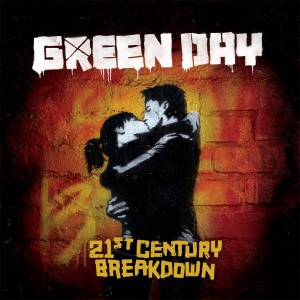
Rapidly becoming modern-rock elder statesmen, Green Day proved with 2004’s American Idiot (my Album of the Decade for the 2000s) that through diligent work at their craft and some very un-punk ambition, they have transcended the reductive “pop-punk” label and can stand of equal footing with U2 and R.E.M., who have a decade’s head start. Like American Idiot, the songs of 21st Century Breakdown collectively tell a story, and also like American Idiot, I don’t really give a shit what the story is, because each track works so well on its own. The individual songs all sound like singles, cut and polished and sweated over to hit the elusive bull’s-eye of the ear’s pleasure center, and make a big run at the charts. (Sadly, probably not the Rhianna-and-Ke$ha dominated charts of today, but perhaps the charts of yesteryear, or the charts that only exist in my imagination.) The only reason 21st Century Breakdown isn’t much higher on the list is that it follows the American Idiot template a little to closely, and comes off as a bit of a retread.

#16. Brendan BensonMy Old, Familiar Friend

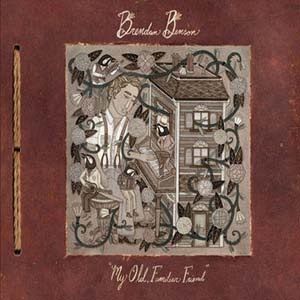
Like A.C. Newman (one notch higher), Benson is known for his work in the genre called power-pop – music designed to be as hook-y and infectious as humanly possible. A nice treat, but a steady diet will rot your insides. I admit to a power-pop sweet tooth, and Benson’s fourth record provides me with a fix that doesn’t overload the circuits. Underneath the AM Gold guitars and big choruses, there’s some interesting – even dark – things going on lyrically, and the sound (expertly produced by Gil Norton) throbs a little heavier than your standard Cheap Trick-knockoff artists. This is a record meant to be played loud in a fast-moving vehicle.

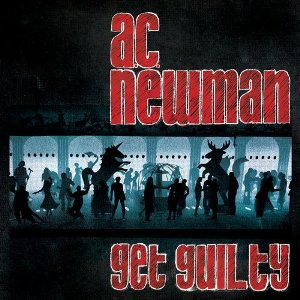
#15. A.C. Newman Get Guilty

New Pornographers’ frontman Carl “A.C.” Newman continues to play to his strengths on his second solo album: a gift for melody, and a skewed, off-kilter sense of rhythm. Newman’s unpredicatble songs stutter and stop, lurch and sway. Bare-bones acoustic ruminations will suddenly get jumped and hijacked by booming, orchestral drama. Newman also seems to want to use every instrument known to western music at some point to build his baroque pop-puzzles, but the record never feels cluttered.

#14. Neko CaseMiddle Cyclone

Case’s song cycle about nature and its consistent physical and moralsuperiority over mankind was officially selected as the Institute of Idle Time’s Album of the Year for 2009, breaking both the gender and solo artist barrier for an IIT #1 album. Case’s arrangements remain idiosyncratic (including, but not limited to, piano “orchestras” and the ambient sounds of the old barn she recorded in), but her country roots show through in her phrasing and vocal warmth. I also don’t think anyone’s consistently writing lyrics at her level right now.

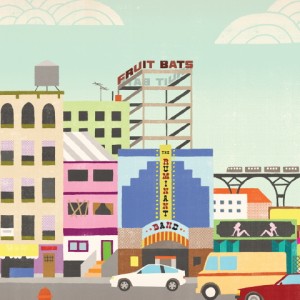
#13. Fruit BatsThe Ruminant Band

Mellow echoes of the old Laurel Canyon sound permeate this offering from Fruit Bats. Acoustic textures are to the fore, with some pedal steel woven in like silken thread. Lead singer/songwriter Eric Johnson is also a fairly recent addition to The Shins, so I hope his added workload won’t cause him to neglect his lesser-known band, who have produced here a warm, graceful, and relaxed entry in the annals of alt-country (a label that, like “Britpop,” may only have relevance to me as the rest of the world moves on as if there were an entire decade between us and the 90s. Wait, what?)

#12. MuseThe Resistance

Stadium-fillingly huge in Europe, and beloved a particular breed of prog-rock nerd stateside, Muse has thus far eluded the warm embrace of American popularity. It’s easy to say that Muse cribs from the Queen playbook, but I feel it goes beyond that. When they choose to go the Queen route (and they don’t always), it’s no mere imitation. It’s a full-on recreation and rebirth. That dense, layered sound and operatic bombast we thought (in some cases, hoped) was gone forever lives and breathes again, vital and exciting. Muse can also turn it down to a low simmer, and their three-part orchestral suite that closes the album? It’s actually a fun listen, unlike most attempts to scale that particular peak. So points to Muse for having the balls to try and pull off an album like this, and bonus points for doing it so well.

That’s all for Part One. We’ll take it from 11 down to 1 next time…

Leave a comment

Filed under Music -- 2000s

Books of the Holy Bee, 2009

Happy New Year. Some Holy Bee New Year’s Resolutions:

  1. Floss more regularly. Floss swords are awesome and make it much easier.
  2. Watch more movies. From my peak of watching 5-6 movies a week, I’ve dwindled to about two a month. The last time I went to the theater was for Inglourious Basterds at the end of August. The Hangover, District 9, Paranormal Activity, and just about every other major 2009 release are all as yet unseen by me. (I did see Year One, so I’ve got that going for me. Which is nice.) My Netflix has fed me a steady diet of TV shows over the past year (House M.D., It’s Garry Shandling’s Show, How I Met Your Mother, many others). I r dum.
  3. Read more fiction. See below.
  4. Don’t be such a filthy alkie and quit taking drinks to bed. I shouldn’t pretend I’m going to “sit up & watch a DVD”. I will fall asleep almost instantly, wake up at 3:30 to the Family Guy DVD menu on a constant loop, and the drink will have gone to waste (not that it will stop me from taking a watery sip as I turn off the DVD player.) I probably set a record by breaking this resolution six minutes after the Times Square ball dropped. But I will do better. So to start the Holy Bee Year-End Round-Up, we’ll be taking a look at the books I’ve gone through this year, followed in a later entry by the Holy Bee Top 20 Albums of the Year. (No Movies of the Year entry for reasons described above.)

I’ve been keeping a list of books that I’ve read each year since 2004, and this is the first time I’ve made it public. In looking it over, I see most of my interests are covered, but I am slightly surprised to find no “heavy” history represented. Usually each year, I burrow my way through at least one weighty, shoebox-sized tome detailing the life of a president, a noted statesman, or a war. I hope my attention span isn’t being atrophied by my dedication to websites like Failblog or Passive Aggressive Notes.

Bear in mind, this is a list of stuff I’ve read cover-to-cover (including Prefaces, Introductions, and Author’s Notes. In some cases, I’ve even found myself poring over the source notes.) This list does not include the dozens of books that I’ve skimmed, dipped in and out of, or abandoned partway through. It does not include old favorites that I’ve re-read (I do that way too often.) Only a few of them were actually published in 2009. We’ll start with the ten best/most interesting (in no particular order):

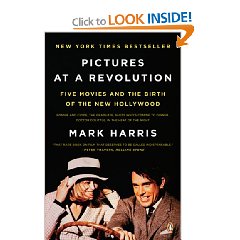
1. Pictures at a Revolution: Five Movies and the Birth of the New Hollywood by Mark Harris (2008)
An examination of the development, production, and release/promotion of the five films nominated for Best Picture at the 1967 Academy Awards. This was a transitional time, when the old Hollywood studio system was breathing its last, but before the new wave of “movie brats” (Coppola, Scorsese, Spielberg) had fully picked up the gauntlet. Edgy, unsettling films appealing to a growing trend of cynicism and anti-authority feelings (represented by Arthur Penn’s Bonnie and Clyde and Mike Nichols’ The Graduate) squared off against comfortable, crowd-pleasing, middle-brow fare with an impeccable pedigree (what we now call “Oscar-bait,” represented here by the Tracy-Hepburn-Poitier Guess Who’s Coming To Dinner, and a fixture at the Oscars ever since: think Seabiscuit, Forrest Gump, etc.) Throw in an indie-with-a-social-conscience (In The Heat Of The Night) and a bloated “family” musical that represented “old Hollywood” excess at its worst (Doctor Doolittle), and you’ve got a perfect snapshot at the state of filmmaking on the cusp of the biggest change since the dawn of talkies. This book makes an interesting sort-of prequel to Easy Riders, Raging Bulls, which tells the tale of the movie brats’ takeover, and how it eventually led to the same sort of wretched excesses that almost sunk Hollywood in the previous decade.

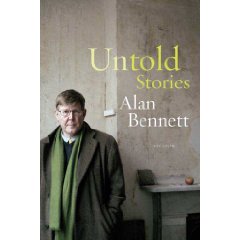
2. Untold Stories by Alan Bennett (2006)
Alan Bennett first came to the public notice as part of the long-running British satirical stage show Beyond The Fringe in 1960. He has since become one of Britain’s foremost playwrights, authoring The Madness of George III, The History Boys and many others. Not so much an autobiography as a series of autobiographical sketches and diary entries, Bennett tells of growing up in the shabby university town of Leeds, his mother’s mental illness, his brutal beating at the hands of muggers in Italy, his coming out in his fifties after years of self-denial, and his battle with colon cancer. And he makes it all funny, or at least warm and engaging in his gentle, self-deprecating style. I could have done with a few more anecdotes about Bennett’s Fringe co-star Peter Cook, but that’s just me.

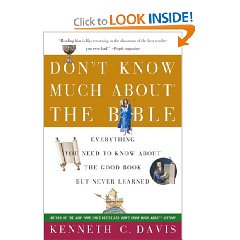
3. Don’t Know Much About The Bible: Everything You Need To Know About The Good Book But Never Learned by Kenneth C. Davis (1998)
Part of Davis’ epic “Don’t Know Much About…” series, this is a solid primer on Biblical lore and history. Despite my conspicuous absence of anything resembling faith or belief in any religion, it’s a fascinating topic of study and I’ve always told myself I would educate myself properly on it. I made an early attempt when I was 21 or 22, taking some Religious Studies classes and reading a few books. But beyond confirming the suspicion I’d harbored since I was ten or so that religion held nothing for me spiritually, my attempt to educate myself on the nuts and bolts of western religion was sketchy and facile.

Now that I have a few years of adulthood under my belt, my mind is a little more disciplined (I wouldn’t say “mature”), and I feel the time is right to try again. Davis takes the reader through both books of the Bible, chapter by chapter, and explains the historical and political context of the writings. A good, basic introduction (or re-introduction) to an area of study I am going to try to make something of a priority over the next year or two.

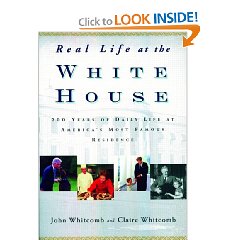
4. Real Life at the White House: 200 Years of Daily Life at America’s Most Famous Residence by John & Claire Whitcombe (2000)
A behind-the-scenes look at how the White House functioned as a home, rather than a symbol or seat of power. President by president, the Whitcombes take the readers through the routines and changes each occupant brought to the building.

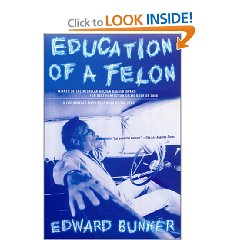
5. Education of a Felon: A Memoir by Edward Bunker (2000)
I’ll quote myself from an earlier entry:  Another young L.A. thug-turned-writer is Edward Bunker. Bunker spent the late 1940s and 1950s in and out of juvenile hall and foster homes, or living on the streets. Bunker was unable to resist the easy money of drug-dealing and armed robbery, despite an off-the-chart IQ and a taste for Shakespeare and Dickens – which he had plenty of time to peruse once he started doing hard time in places like San Quentin and Folsom prisons. Bunker’s memoir, Education of a Felon, recounts his escapades, both as a criminal and his attempt at a “straight” job: working as an assistant and confidant for the mentally unstable wife of Paramount Pictures’ super-producer Hal B. Wallis. His descriptions of prison life make it sound not so bad for someone who follows the official and unofficial rules, at least until the race wars began in the late 1960s, and suddenly no one was safe. Upon his release in 1975 after almost two decades behind bars, he was already a published author — his autobiographical 1973 novel No Beast So Fierce was adapted into the 1978 film Straight Time, with Dustin Hoffman as the Bunker character. Bunker continued to write and also dabble in bit-part acting – culminating in his crowning achievement, at least as far as most people are concerned: his performance as Mr. Blue in Reservoir Dogs.

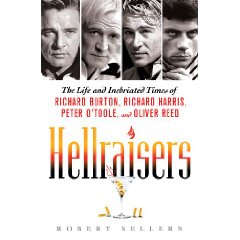
6. Hellraisers: The Life and Inebriated Times of Richard Burton, Richard Harris, Peter O’Toole, and Oliver Reed by Robert Sellers (2009)
A quadruple biography…of sorts. It almost entirely ignores the professional accomplishments of these distinguished performers in favor of anecdotes about their excessive boozing. Naturally, I loved it. Yes, its shallow and sensational, in a style more befitting a British tabloid than a serious examination of what drove these four men to such self-destructive behavior — but the book is totally unapologetic, just like it’s subjects. The author’s informal style extends to the use of Cockney rhyming slang (he would never say “phone” when he could say “dog and bone,” and “porky pies” repeatedly took the place of “lies”).

It also introduced me to the sublime-yet-humble, unpretentious, masculine, stolidly British cocktail: the gin-and-tonic. I had always had it in my head that I don’t like gin, but inspired by its frequent appearances in this book, I decided to give it another shot. I liked it so much that it’s currently my facebook profile picture. (And make sure it’s real tonic water with quinine, not club soda or that flat piss that comes out of the soda gun at your local bar.) Oliver Reed would have his mixed in a bucket with plenty of lemon slices, and simply dip his pint mug in it at frequent intervals. I prefer lime slices and the traditional collins glass, but who knows what the future holds?

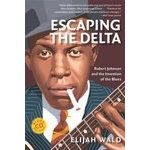
7. Escaping the Delta: Robert Johnson and the Invention of the Blues by Elijah Wald (2003)
Despite Wald’s narcissistically academic, self-aggrandizing writing style (Hello, pot? This is kettle), this is a solid attempt to not only separate fact from myth in regards to the fabled Mississippi bluesman, but also a concise history of blues as a genre. In conjunction with some other material I’ve read on the topic (see the list below), a picture emerged of a style that was not necessarily an authentic expression of oppression and heartache emanating directly from the cotton fields, but rather a much more commercially-oriented case of giving an audience what they wanted.

The original itinerant blues performers of the 1920s and 30s considered themselves “songsters,” human jukeboxes, happy to play a paying audience whatever kind of song they wanted – minstrel tunes, Broadway show numbers, country, jazz, you name it. When white academic folklorists such as John Hammond and Alan Lomax, or “race record” label owners came calling to record these performers for posterity, it was the more hard-edged blues numbers they were interested in, and the performers were happy to oblige. In their well-meaning-but-still-slightly-condescending way, Lomax and his ilk considered this primitive style more “authentic.” It was, of course, brilliant stuff, and it sold, sending more talent scouts and folklorists out to juke joints and shantytowns for more blues artists, creating a situation that fed on itself. The “bluesmen”’s versatility was forgotten, as was the songster tradition. It was all twelve-bar, slide guitar, my-woman-done-left-me from then on. Not that I’m complaining.

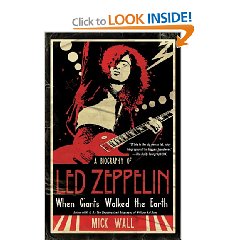
8. When Giants Walked The Earth: A Biography of Led Zeppelin by Mick Wall
A solid bio that neatly balances musical & personal, and brings the story up to date as of the big reunion concert at the O2 Arena in December 2007, and the subsequent out-of-left-field success of Robert Plant’s collaboration with Allison Kraus that seems to have permanently scuppered the more lasting reunion that was within our grasp. The perfect book to replace that worn-out, well-thumbed copy of Hammer of the Gods that should be sitting on the bookshelf of anyone who loves the rock and roll. One small quibble: Frequent interludes where each band member’s backstory is told in their first-person “voice,” as imagined by the author. Kinda lame. One smaller quibble: Wall has a pretty shaky grasp of American culture and geography. But it’s probably better than the average American’s grasp of British culture and geography.

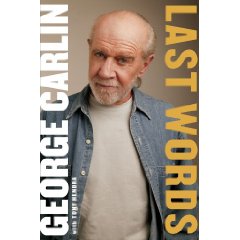
9. Last Words: A Memoir by George Carlin (2009)
The late George Carlin’s autobiography. (Although he detests that word – “only criminal business pricks and politicians write autobiographies.” He prefers the term sortabiography.) It is the influential comedian’s final project, pieced together by collaborator Tony Hendra (a British ex-pat known for his association with National Lampoon and his role as Spinal Tap’s manager Ian Faith) from hours of tape-recorded conversations spanning a decade. Carlin tells of being raised in New York City by a single mother, his days as a class clown (of course) and misfit Air Force enlisted man, the beginnings of his comedy career as a radio DJ and member of the nightclub comedy team Burns and Carlin, his 1960s fame as a middle-of-the-road comic appearing frequently on The Tonight Show and Ed Sullivan Show, and the 1970 epiphany that caused him to abandon his career in “safe” comedy and blaze a trail of goofy outrageousness, and at times seething anger. Throw in a bit of a love story, the usual show-biz “nightmare descent” into drugs and alcohol, rocky recovery from same, and a bittersweet ending (the material in the book was originally meant for a one-man Broadway show, New York City Boy, which he didn’t live to realize) and you have all the makings of a fitting last statement from one of the greatest comedic minds of all time.

10. Just After Sunset: Stories by Stephen King
My sole foray into fiction this year, these stories are some of King’s best work in over a decade (and includes one old story from the Shining/Stand era of 1977 that’s actually the weakest link here). I always tell myself I’m going to read more fiction, to go deeper into Charles Dickens’ oeuvre, to explore Flannery O’Connor and T. Coraghessen Boyle, and really try to get a feel for fictional storytelling. But every time I pick up a fiction book, it’s usually popcorn genre-type stuff, like Andy McNab’s British spy novels, the Godfather sequels, and Stephen King. And even that doesn’t happen too often. I re-read King’s It and Danse Macabre every few years (and I did so this past summer) — both amazing examinations of horror’s place in pop culture, one fiction, one non-fiction. (I actually read Moby Dick three years ago and I’m still patting myself on the back for it.)

Other Books Read in 2009:

Moon Shot: The Inside Story of America’s Race to the Moon – Alan Shepard & Deke Slayton

Titanic’s Last Secrets: The Further Adventures of Shadow Divers John Chatterton & Richie Kohler – Brad Matsen

Donnie Brasco: My Undercover Life in the Mafia – Joseph D. Pistone & Richard Woodley

Mythmaker: The Life and Work of George Lucas – John Baxter

John Wayne: American – Randy Roberts & James S. Olson

Spencer Tracy: Tragic Idol – Bill Davidson

Niv: The Authorized Biography of David Niven – Graham Lord

Howard Hughes: The Untold Story – Peter Harry Brown & Pat H. Broeske

Down at the End of Lonely Street: The Life and Death of Elvis Presley – Peter Harry Brown & Pat H. Broeske

Delta Blues: The Life and Times of the Mississippi Masters Who Revolutionized American Music – Ted Gioa

The History of the Blues – Francis Davis

Brown Eyed Handsome Man: The Life and Hard Times of Chuck Berry – Bruce Pegg

The Man Called Cash: The Life, Love, and Faith of an American Legend – Steve Turner

Martini Man: The Life of Dean Martin – William Schoell

Exile On Main St: A Season in Hell With The Rolling Stones – Robert Greenfield

Gasping For Airtime: Two Years in the Trenches on Saturday Night Live – Jay Mohr

Smile When You’re Lying: Confessions of a Rogue Travel Writer – Chuck Thompson

Born Standing Up – Steve Martin

The Holy Bee’s Gin-and-Tonic Recipe

Quarter a small lime, and squeeze two quarters’ worth of juice into the bottom of a tall collins glass. (Toss in the two quartered lime pieces as well.) Fill to the brim with ice. Add 4 oz. of your favorite gin. Fill the rest of the glass with tonic water and enjoy. Save the other half of the lime for the second drink you will undoubtedly have. Cheers.

Leave a comment

Filed under Books

Christmas Bonus: Top 5 Holiday Comedies of All Time

Well, we’re hip-deep in the holiday season, and a serious snafu with my AT&T U-Verse service has caused all my DVR’d shows to be wiped out, along with my HD signal. An early lump of coal in my 42-inch plasma stocking (there’s an image for you). This puts a serious dent in my obsessive, holiday-themed viewing, which I wrote about last year. I can only hope some of the things I had in the archives will be re-run. So while I wait a week for the irritable AT&T maitenance elves to sally forth from their magical workshop and get my shit back in working order, my thoughts turn to movies on DVD…

When the Institute of Idle Time launched its zine in the fall of 2008, I made a promise to myself that the zine would feature exclusive content from the pen of the Holy Bee, and articles from the zine would not reappear online in any form, making the physical copies of the zine valuable collector’s items.
As I’ve observed before, promises to yourself are pretty easy to break. In observance of the season, I couldn’t resist posting (with a few 2009 editorial notes and web links) my article from the Winter 2008 issue of IDLE TIMES — Top 5 Holiday Comedies!

There are two primary categories of holiday movies. The heart-warming family classics (It’s A Wonderful Life, Miracle On 34th Street, etc.), and the broad holiday comedy, which is surprisingly difficult to pull off. For every score, there’s five misses (see the recommendations below). For this Top 5, I decided to go the trickier route. I cast my net for the movies that met the following parameters: 1) it had to deal in some way with one or more of the major year-end holidays, 2) it had to be marketed specifically as a comedy, and 3) it had to be a movie I watch every year like clockwork. When I shared my list with some acquaintances, several took umbrage at what appeared to them to be a glaring omission: The perennial favorite A Christmas Story. Yes, it’s a terrific film, and I own it in multiple formats. But its 24-hour airing on TNT each year has caused a little Red Ryder BB-gun fatigue to set in, plus everything in that movie is on the surface. It wears its heart on its sleeve, and all its cards are dealt face-up.

To make this Top 5, a move must require you to dig a little deeper. Discovering a surprising, soulful, real moment smuggled into a raucous comedy about coping with holiday expectations is like unwrapping a present under the tree. The holidays put us under pressure to be our best selves, and have our best time of the year. Sometimes, the pressure can become unbearable, and we snap…comedy (or tragedy) results.

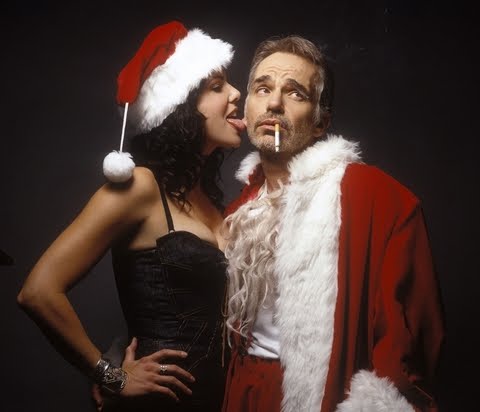
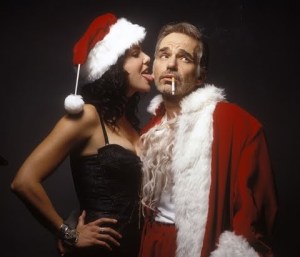
#5. Bad Santa
“Don’t fuck with my beard.”
“It’s not real.”
“No shit. Well, it was real, but you see I got sick and all the hair fell out so I have to wear this fucking thing.”
“How’d you get sick?”
“I loved a woman who wasn’t clean.”
“Mrs. Santa?”
“No, it was her sister.”
–Willie “Santa” Soke & the child on his lap.

You know what really grinds my gears? People who think they’re over and above the holidays. People who smirk and snort and say “It’s all a big commercial” or worse, give an exasperated, eye-rolling sigh and say something like “I hate the fucking holidays” or other surly too-cool-for-schoolisms. This kind of behavior is rampant among folks of my generation. Fine, for the other eleven months of the year, be your awesome, hyper-critical intellectual NPR-listening selves. But when December rolls around, recognize. Accept the fact that in an old photo album at your parents’ house is a picture of you in pajamas on Christmas morning (with a comical case of bed-head) holding up Castle Greyskull or a Pound Puppy and grinning toothlessly ear-to-ear. Accept the fact that that happy little shit is still within you, and needs to be indulged once a year.

On the surface, Terry (Ghost World) Zwigoff’s Bad Santa is just the sort of movie for the naysayers. The setting is Phoenix with a brief interlude in Miami Beach, the least Christmassy cities in the U.S. (The inclusion of Honolulu would make a perfect trifecta.) There is no element of the beloved St. Nick that Bad Santa does not debase by simply putting a Santa suit on Willie T. Soke (Billy Bob Thornton), an alcoholic, misanthropic career criminal who uses his yearly employment as a department store Santa to rob said department stores blind on his last night of work, Christmas Eve. But before the big payoff, he must subject himself to a month of a crying, urinating toddlers and eternal loops of mindless Christmas carols on the store’s loudspeakers. Willie deals with all of this by lashing out at everyone as profanely and angrily as possible, usually while in costume and on duty. (He is protected from being fired by partnering with an African-American dwarf who threatens costly employment discrimination lawsuits.) If the movie confined itself to merely to laughing at harried middle-class soccer moms and their over-indulged spawn and Willie’s foul-mouthed verbal beatdowns of them, this would just be another corpse in the pit-grave of crass holiday comedies. But the filmmakers (including producers Joel & Ethan Coen, who purportedly had a hand in the writing) are far too clever for that.

Willie is a genuinely dark and damaged human being, who hates all people, but he reserves his most vicious hatred for himself. He is clearly days away from wrapping his whiskered lips around the barrel of a revolver and giving the walls of his cheap motel room a very special kind of Christmas decoration. Then he meets the slow-witted, moon-faced “kid.” The kid latches himself onto Willie, insisting on calling him “Santa” (even when he’s out of costume) and interrogating him on sleigh and reindeer details. It’s just the kind of kid that should provoke the worst in Willie, but…it somehow doesn’t. He discovers the kid lives only with his senile grandmother in a sterile McMansion in the suburbs, and moves himself in. What starts as a crass exploitation of the sweet, trusting child evolves (very) slowly into tolerance, then protectiveness, and finally, affection. (But not before a suicide attempt involving a running car in a closed garage, along with detailed instruction to the kid as to what to do when they come to “bag Santa up.”)

The final segments are as heartwarming as anything found in Prancer. The kid admits to knowing that Willie isn’t really Santa, but it was easier to lose himself in fantasy than to deal with the fact that his mother is dead and his father is in prison. Wille derails his yearly heist to deliver the kid’s single Christmas present. He braves his murderous partner and police pursuers to give a gift to the one human being who has ever shown him unconditional affection. So if Willie T. Soke can be touched by the magic of Christmas, then it can’t be too much of a stretch for all you hipster douchebags to lighten the fuck up and squeeze some joy out of this time of year.

BONUS POINTS: The final screen appearance of John Ritter as the store manager, and Lauren Graham playing the anti-Gilmore Girl, a dimwitted cocktail waitress with an uber-creepy Santa fetish.

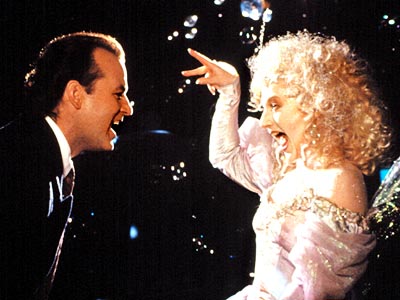
#4. Scrooged
“I’m sorry. I thought you were Richard Pryor.”
–Frank Cross, after tossing water on someone he believed was on fire.

Most people are unaware that Charles Dickens pretty much bullshitted up Christmas as we know it. In the early 1800s, devout Protestants (which is what most Americans were) eyed it suspiciously, as it still reeked to them of solstice-worshipping paganism and/or Roman popery. Those who did celebrate Christmas did so in a low-key, Thanksgiving-ish way. (Thanksgiving as national celebration did not crop up until the 1860s. The “Pilgrims” —another bullshitted-up term— had the first one in 1621, and then it was promptly forgotten about for 240 years). With the publication of Dickens’ novella A Christmas Carol in 1843, all holiday hell broke loose. An immediate smash hit on both sides of the Atlantic, we have Dickens’ highly detailed prose to thank for inventing the “perfect” Christmas. Charles Dickens, it must be remembered, was a pretty good writer. He concocted the very first “winter wonderland”: snow, roasting chestnuts, holly & mistletoe, ringing bells, and ruddy-cheeked festive folks chock-full of goodwill toward men, all colliding together in a giddy orgy of holiday cheer. None of this existed as a whole in the popular conception of Christmas before Dickens’ story. Dickens created a totally idealized holiday scenario to throw the darkness of his main character, Ebenezer Scrooge, into sharp contrast. Its primary function as a literary device has been superseded by its new existence as a template for a perfect Christmas, which cannot exist – but it doesn’t stop many from striving for it (see my #1 Holiday Comedy)
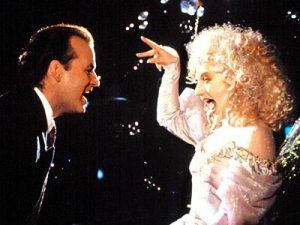
Movie versions of A Christmas Carol have existed for as long as cinema itself…and I love every damn one of them. From the 1938 version starring Reginald Owen (known to Disney geeks as “Admiral Boom” in Mary Poppins) to the “definitive” 1951 version starring Alastair Sim (once voted the most popular actor in Britain, for whatever that’s worth), all are as addictive as Christmas crack to me. I especially enjoy the two made-for-TV versions, the 1999 version starring Patrick Stewart, and the 1984 version starring George C. Scott (the best screen Scrooge in my opinion). Neither spared any expense in effects and casting, and hold up even better than the cinematic offerings. [ED. NOTE: The 2004 musical version with Kelsey Grammer was one of the casualties of my DVR meltdown. Hadn’t seen it yet, but hopes weren’t too high for it, anyway.]

But we are talking theatrical releases here, and we’re talking comedy. Comedic versions of A Christmas Carol have been tried from time to time, but the one that pulls it off the best is 1988’s Scrooged. Directed by Richard (Goonies/Lethal Weapon) Donner, it was co-written by the late Michael O’Donoghue, the misanthropic former SNL scribe who gave us such black-hearted delights as “The Little Engine That Died.” Like Bad Santa, Scrooged mines holiday comedy from really dark territory. Scrooges in other versions tend to play the role with such snarling nastiness that the audience can sense it’s a complete front, and the third act redemption and transformation just seem like fait accompli. In Scrooged, Bill Murray plays Frank Cross, the Scrooge character, not with hammy cinematic crankiness, but rather taps into the pure cynicism that beats at the heart of the literary Scrooge. In his own mind, he is perfectly reasonable, and the rest of the world is delusional. Murray avoids Scrooge clichés by dumping the gruff bluster (let’s face it, George C. Scott cornered the market on that) and infusing Frank Cross with his trademark brand of cool, blank-faced, ironic detachment. This allows us to see a little of our post-modern selves in him, and makes his final transformation all the more unsettling and powerful.

Many Carol adaptations forget that the visits from the Christmas Ghosts are supposed to be creepy and traumatic, otherwise they wouldn’t convince Scrooge/Cross to change his ways. The Ghosts put Cross through a physical and emotional wringer, leading up to the final transformation, which by the way, is a manic, improvised rant filmed in what appears to be a single take. Murray genuinely looks like someone who has reached the end of his rope, and experienced a re-birth. He concludes with a shaky, out-of-breath declaration that he feels “really better” than he’s felt “in a long time.” Sometimes simple words say it best.

And do yourself a favor and read the original story. It’s short (it can be done in one or two sittings), and reminds you why this Dickens fella was such a swingin’ dick back in the day…

BONUS POINTS: A scene capitalizing on Murray’s resemblance to Richard Burton, which I swear no one before or since, to my knowledge, has remarked upon except myself.

#3. Grumpy Old Men
“What could make two grown men spend the majority of their lives fighting each other?”
“Guess.”
“…A woman.”

–Ariel Truax & John Gustafson

Perhaps the worst title for a good movie ever. I remember when I first heard it, I thought it was a film version of a bad SNL sketch (remember the one with Dana Carvey and Jon Lovitz as cranky octogenarians sitting on a park bench? Of course you don’t.) It turned out the be a late-era classic from frequently-paired duo Jack Lemmon and Walter Matthau. Lemmon and Matthau had a peculiar sweet-and-sour chemistry, best displayed in slightly dark, character-driven comedies, like the 60’s classics The Fortune Cookie and The Odd Couple. I went to see GOM to pay my respects to what I imagined would be the final L&M pairing, as they were getting on in years. (Unfortunately, the unfunny Out To Sea and the downright abominable Odd Couple 2 were still in their short future. Matthau died shortly thereafter, and no wonder.) Imagine my surprise when a bona-fide holiday classic unfolded before my eyes. Not that it deals explicitly with holiday themes, but the comedic action unfolds from the week before Thanksgiving to the night before Christmas. Too many people I know dismissed this movie without seeing it, claiming it was just a couple of old codgers making pre-Viagra limp dick jokes. OK, admittedly, that’s in there…a lot. But there is so much more.
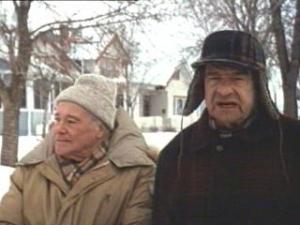
John Gustafson (Lemmon) and Max Goldman (Matthau) are two widowers and next-door neighbors in Wabasha, Minnesota. They have been at odds since 1938, when the local hottie chose one over the other. Although they bicker and snipe, you get the sense that they’re just going through the motions, and that they really don’t care about anything anymore. In fact, the juvenile pranks and name-calling they perpetrate on each other seem to be the only spark of life in these guys…until a new woman, Ariel Traux (Ann-Margaret), comes into their lives, tossing fuel on their smoldering resentment. Pranks mushroom into physical assaults and desperate sabotage…

…and it’s the best thing that’s happened to them in years. Although it may seem like the renewal of real hostilities is a bad thing, it’s quite the opposite. For years, the two men have been dead inside, and just waiting for their bodies to follow suit. (There are few sights sadder than John whiling away a long winter evening playing chess with himself, or Max begging his adult son to stay just a few minutes longer.) The competition snaps them out of their deathwatch, re-invigorates them, and in the end, makes them realize their deep lifelong bond. Max, up until now portrayed as the nastier of the two, ends up doing a number of heartfelt kindnesses for John, who falls seriously ill in the film’s climax. When the hospital nurse asks the visiting Max if he’s “friend or family” of John, the puzzled, emotional pause before he chokes out the word “friend” says it all.

And talk about atmosphere! That’s its greatest assets as a holiday movie. Snow, snow, and more snow. The film’s depiction of a true Midwestern winter is vivid enough to be another character. (Think Fargo without the dismembered bodies in wood-chippers.) For someone born and raised in California who wishes he had real seasons, it’s a fantasyland. I want to ice-fish! I want to put on my heaviest coat and galoshes for the thirty-second walk to the mailbox! I want to trudge blocks through thigh-high snow to enjoy an 8-ounce glass of Miller High Life at a cozy tavern called “Slippery’s.” I’m sure the novelty would wear off fast, though, which is why tuning in to GOM from the comfort of my sofa every November is such a treat.

BONUS POINTS: Sit through the closing credits for a final word from Matthau.

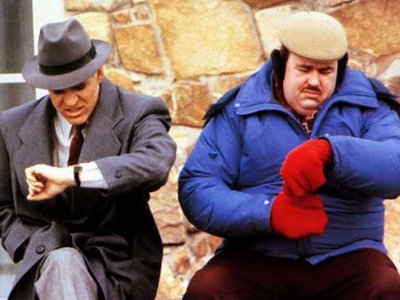
#2. Planes, Trains & Automobiles
“If I wanted a joke, I’d follow you into the john and watch you take a leak. Now are you going to help me, or are you going to stand there like a slab of meat with mittens?”
–Neal Page in a dark moment

One of the best road/buddy movies of all time, and certainly the Ultimate Thanksgiving Movie, PT&A treats us to the sight of a man getting picked up by his scrotum, a man accidentally sleeping with his left hand wedged between another man’s thighs, and a hapless car rental clerk being harangued by a venomous monologue containing 18 f-bombs in less than a minute. But underneath all the tomfoolery is a serious, sometimes sad character study of two people cut off from their loved ones, and Learning An Important Lesson: Don’t take what you have for granted. Be Thankful.

Neal Page (Steve Martin), an uptight, aloof advertising executive, is busting his ass to get from a business meeting in New York to his home in Chicago during the busiest two travel days of the year, right before Thanksgiving. Inclement weather, mechanical failures, and all-around bad luck force Neal to improvise his way home using the titular vehicles (and several others much less comfortable.) Circumstances also force him to team up with Del Griffith (John Candy), an overbearing motormouth of a traveling salesman, whose cheery obliviousness conceals a secret tragedy, evidenced by the occasional wounded flash in his eyes when Neal snaps at him, which is often. But for the most part, nothing can get Del down, not even riding in the back of a hillbilly’s pick-up truck on a frigid morning, unable to move for fear of their fellow passenger, a vicious dog that could attack them at any moment. “Bee-yoo-tiful country, though, isn’t it?” Del chirpily observes. Neal, miserable, can only ask “What do you suppose the temperature is?” and receive the matter-of-fact reply, “One.”

We suspect Neal might not be the most hands-on dad, sacrificing time with his family to provide the cushy, upper middle-class life he thinks they want. What they really want, of course, is to have him around more. (Early on, he calls his wife, and as soon as she tells their daughter who is on the phone, the daughter sighs and mumbles “flight delay,” as if this is the 100th time it’s happened.). Neal’s epiphany comes halfway through the movie, and like most real epiphanies, it doesn’t look like one to an outside observer. Staring into space, toying with his lunch, he says very simply and quietly, “I’ve been spending too much time away from home.” Del’s response, revealing more than it intends to, is an off-handed “I haven’t been home in years.” It’s a wonderful, poignant moment, beautifully underplayed by Martin and Candy, and it’s over in a few seconds.

Neal, naturally, ends up inviting his new friend home for Thanksgiving, and the movie closes on a freeze-frame of Del’s smiling face. But it is a sad smile, because he knows when Thanksgiving dinner is over, he must move on and continue his existence of more or less permanent loneliness. Holiday moments are fleeting, folks. Don’t be a cynical jackass. Enjoy them.

BONUS POINTS: John fucking Candy, people. Acknowledge the genius.

#1. National Lampoon’s Christmas Vacation
“We’re going to press on, and have the hap-hap-happiest Christmas since Bing Crosby tap-danced with Danny fuckin’ Kaye! And when Santa squeezes his fat white ass down that chimney tonight, he’s gonna find the jolliest bunch of assholes this side of the nuthouse!”
–Clark W. Griswold blowing off some holiday steam

Chevy Chase had much to atone for: For the better part of a decade (1976-1986), his cocaine-fueled ego, nasty arrogance, and inflated sense of entitlement alienated anyone who crossed his path. But the high-flying comedy star eventually came a cropper with a series of reversals that everyone took vindictive glee in observing: A plunge in box office bankability that would make Whoopi Goldberg wince, a crippling painkiller addiction, a late night talk show so heinous it smelled like Jeffrey Dahmer’s stovetop (and is still spoken of by TV fans in hushed tones.) The final straw was a 2002 Comedy Central roast that was famously brutal, especially in that not one friend bothered to appear with him, onstage or in the audience. (Fellow amigos Steve Martin and Martin Short appeared in a pre-taped bit so half-assed and perfunctory it was the ultimate insult.) The roast was quietly buried by Comedy Central and has never been re-run, or released on DVD. Chase has recently been reduced to doing direct-to-video comedies in Europe. [ED. NOTE: In the time since this was written, Chase has made a low-key comeback of sorts in a supporting role in the pretty-good sitcom Community.]

The rise and (steep, steep) fall of Chevy is now fading old news. It’s time to let him up easy, if for nothing else, then for giving us the Greatest Christmas Comedy of All Time. Chase has stated that the character of Clark W. Griswold forced him to tap into his inner Nice Guy, and allow that facet of his personality to become dominant as he belatedly grew up and walked away from the smoking ruins of his career.
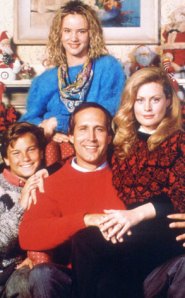
Doting father and husband Clark Griswold (familiar to viewers from two earlier Vacation entries) attempts to have a perfect “fun old-fashioned family Christmas,” by inviting his elderly parents and in-laws for a two-week holiday visit. The results are a perfect screwball farce, a throwback to the anarchic comedies of the 1930s. Unlike more recent comedies where events unfold in an orderly sequence and reach a logical conclusion and everyone grows a little bit (I’m looking at you, Apatow), the comedic situations in NCLV crash into each other like runaway train cars until attractive women are mauled by dogs with sinus conditions, elderly men clutch smoldering toupees to their chests, squirrels are threatened with destruction by hammer, and an ordinarily reasonable housewife greets the SWAT team that just crashed through her picture window by offering the hand that had previously been attached firmly to her husband’s testicles. Toss in an electrocuted cat, some steaming raw sewage, and an odd, pudgy youngster with an “unidentified” lip fungus for good measure. If all of this seems somewhat tasteless, then the true triumph of NCLV becomes clear: it’s not tastelessness for tastelessness’ sake, but woven into a larger tapestry depicting a warm, cheerful celebration of all that Christmas means to the modern American. That this sweet, nostalgic tone is maintained in spite of the grotesque disasters inflicted on poor Clark can be credited to screenwriter/reclusive genius John Hughes [ED. NOTE: RIP] who also gave us Planes, Trains & Automobiles.
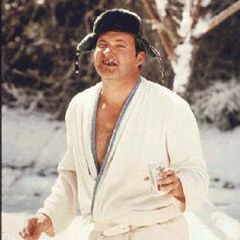
At my house, NCLV is LAW. It must be watched, multiple times if possible, come hell or high water. Christmas itself might as well be canceled if a viewing of NCLV does not occur.

BONUS POINTS: All the Vacation movies have good casting, but this one is particularly stellar: Familiar veteran character actors, including Diane Ladd and E.G. Marshall, play the grandparents, Juliette Lewis makes her debut as daughter Audrey, The Big Bang Theory’s Johnny Galecki turns up in an early role, and mega-MILF Beverley D’Angelo burns a hole in the screen as Clark’s wife Ellen.

Repeat viewings are a must. Throw it on while you clean house or work at your computer. For a dash of variety, play it with the Chase-free cast commentary. D’Angelo, who is either audibly intoxicated or has recently suffered a minor stroke, can’t stop obsessing over her hair.

ALSO CHECK OUT: A Christmas Story, Elf, When Harry Met Sally, The Ref

AVOID LIKE THE PLAGUE: Jingle All The Way, Christmas With The Kranks, all Santa Clause sequels, all Home Alone sequels, Deck The Halls, Surviving Christmas, Four Christmases[ED. NOTE: the last one is a new addition to the “avoid” list], and, most likely, whatever holiday comedy is playing at your local multiplex this year.


Leave a comment

Filed under Film & TV

This Used To Be My Playground, Part 6: Schwing And A Hit

#43. “Alive” — Pearl Jam

Ohhh, Pearl Jam. The perpetual #2 in the Great Early 90s Seattle Band ranking. The Stones to Nirvana’s Beatles. The Wyatt Earp to their Tombstone. The Munsters to their Addams Family. Pearl Jam were much more open about their classic-rock influences than Nirvana, and P.J.’s slightly-less-experimental approach gave Nirvana the much sought-after credibility edge. Kurt Cobain once summed up Pearl Jam in one sneering word – “jocks” – the implication being that cool, popular guys like Pearl Jam were once the guys that beat up arty misfit punks like Nirvana. It was all a crock, of course — neither band really matched those reductive descriptions. It was all a part of a “feud” between the two bands whipped up by the media to sell the magazines that were beginning to pile up in the corner of my room.

Sometime in early ’92, I was cruising aimlessly around town on a Friday night in Brian C.’s much beloved sky-blue Chevy stepside (mentioned in a previous entry.) Also on board was Jason Van Zant, a free spirit who favored floppy denim hats and those rough-hewn, loose-fitting hemp pullovers that I thought had a name, but I guess are just called “rough-hewn, loose-fitting hemp pullovers.” The proper social order was maintained, as I rode in the middle of the truck’s bench seat (as a junior) while Cunningham and Van Zant occupied the proper “adult” seats befitting their status as seniors. Van Zant was very into music, like I was, but his taste skewed a little more toward metal. He was one of those dabblers who always knew a few guitar chords and occasionally scribbled some lyrics into a Mead notebook.

“Vedder stole my thunder,” Van Zant was saying.

“Huh?” I asked, never having heard the name at this point.

“Eddie Vedder from Pearl Jam. I’ve been working on getting that tremolo into my singing voice for years, and now this Seattle clown is making a mint off it.” Continue reading

Leave a comment

Filed under Music -- 1990s, This Used To Be My Playground

"Are You A Collective?": The Holy Bee’s Adventures at the San Francisco Zine Fest

A number of developments marked the last few weeks of August for the Institute of Idle Time “collective.” First of all, WH and I went back to work after a summer break (MDG runs a summer camp, so no break for him, poor chump), and our place of employment is under new management. Second of all, our grand project — DECADES — hit the streets on August 21st. A thought-provoking, argument-starting ranking of our favorite 400 albums of the past fifty years, complete with individual write-ups for each album. It’s published by ComiXpress and written in large part by the membership of the Institute of Idle Time. (If I’ve never introduced them by name officially in this forum, they are: myself, MDG, WH, RF, 3D Chain, Arcturus the Boy-Tune Wonder, and JH. For a reminder of what we’re all about, click here.) Even the seven of us could not possibly do write-ups for 400 albums in the time we had, so there are also contributions from over thirty of our friends and family. You might know one. You might be one. It’s a damn good bathroom read, contains original art by Jim Shepherd and photography by John Muheim and George Umpingco, and looks nice on a coffee table. Copies are available through me for $12.

Third of all, we decided to pack up our new books and several copies of our zine that we printed in late ’08 and early ’09, and make a fortune at the San Francisco Zine Fest.

A “zine” is simply a self-published magazine that initially came of age in the underground-punk-rock-DIY 70’s, a paper-and-staples relic being made increasingly irrelevant by the very thing you’re staring at right now. Sporadically produced, lovingly assembled, and indifferently distributed out of copier paper boxes and duffel bags, a zine is a soapbox guaranteeing your extremist and incindiary opinions will be read by literally tens of people, and discarded unread by dozens more. The Institute of Idle Time produced three issues of Idle Times between September 2008 and March 2009, with threats of a fourth issue made every so often. Mostly harmless pop-culture piffle (articles on monster movies and breakfast cereal, interviews with local artists and sub-minor celebrities, etc.), they have some pretty good stuff in them, and like the book, are available through me at a buck a throw.

So a couple of Saturdays ago, I made my leisurely way down to San Francisco’s Golden Gate Park, and the County Fair Building therein, where MDG and his girlfriend Sherice, along with his brother Matt, photographer John Muheim, and fellow Idle Timer Arcturus the Boy-Tune Wonder, had set up the official Idle Time merch table. I was there to keep everyone company and lend moral support. I certainly wasn’t there for my salesmanship. I took the preschool advice “don’t talk to strangers” to heart, and it’s still a credo I try to live by. When forced to deal with large numbers of people I don’t know, my stomach clenches, my palms sweat, and when I’m not communicating in a hoarse whisper, I’m setting records for awkward pauses. (Low-level social anxiety disorder? Or just a misanthropic asshole? Who can tell?) But by the time I arrived, MDG was ready for a coffee break. I was counting on MDG’s megawatt personality to be a buffer between my reticent, surly self and the general public.


And this was not exactly the “general” public we’re talking about here. These were the denizens of the San Francisco Zine Fest, and within five minutes of my arrival, I was the official representative of the Institute of Idle Time to a crowd of hundreds of people who were each trying in their own special way to be as different and off-putting as possible.

Pic snapped by MDG as he left me in charge of the table. L to r: John Muheim (standing), Your Humble Narrator, Sherice Wu, Matt. My expression says it all.
 
Almost immediately, our table was approached by a young girl of indeterminate ethnic origin and about the size of a border collie standing on its hind legs. She peered at me through eyes fringed with neon-blue mascara. “So, what are you guys all about?” she all but snapped.I blinked in small-town confusion. Sherice blinked. I blinked again. “Don’t everyone talk at once,” she said and lit the fuse on a firecracker string of staccato chuckles. I shifted into my brand-new role as Group Spokesperson and stammered out a thumbnail sketch of what we’re all about. She seemed enraptured, propping her tiny elbows on the table and leaning into us. I was suspicious immediately. She asked us several follow-up questions, among them “Are you a collective?”
In the fifteen minutes that I had been there, this was the second time I had heard that term. “Some friends and I from the east coast are trying to get a collective together…”was a snatch of conversation I overheard as I was walking in from an erudite young lady in a suede coat and (presumably fake) fur collar, complete with knee-high boots and what appeared to be a bandolier. I expected her to announce at any moment that she was, in fact, Inigo Montoya, and that I had killed her father, and should be prepared to die. I had only the vaguest idea what the term meant, but people kept trying to apply it to us.
Anyway, our new friend finished her interrogation of us, and immediately launched into her own completely-expected sales hustle. She was starting a fest of her own in September, and was trying to gather sponsorship. We took her flyer and watched her move on to the next table, where she plunked her elbows down and asked them what they were all about. Within the next few minutes, someone else dropped the collective terminology on us.”What’s a collective? Are they asking if we all sleep together and raise soybeans?” I asked Sherice.”I think you’re thinking of a co-op,” said Sherice. I pondered awhile.

[So here’s an official definition of “collective” that I looked up later: a group of people who share or are motivated by at least one common issue or interest, or work together on a specific project to achieve a common objective. So far, I guess we are, indeed, a collective. Collectives are also characterized by attempt to share and exercise political and social power. And that’s where the similarites end for us. We know and accept that we’re merely opinionated attention-whores, which is exactly like everyone else there, but we use no pretense of activism or artistry as a smokescreen.]


MDG’s coffee break extended into attending a screenprinting workshop, which extended my duties as Chief Salesman. Not that there were many sales to be made. As MDG pointed out, “A free zine fest does not attract the type of person with gobs of spending money.” What it does attract:

  1. A person with what appeared to be a gutted sheep carcass on his head. Upon closer examination, it turned out to be a particularly horrid set of dreadlocks, with what I’d wager to be a population density greater than San Francisco itself.
  2. A person who thought a plum-colored blazer gave him the air of a sophisticated bon vivant, but this belief was undercut by the many cigarette burn holes dotting the garment like moon craters.
  3. Women (now well into their thirties) who still think striped stockings and zany hair color are the height of alterna-culture.
  4. Bi-polar lesbian vampire enthusaists. (I’m not kidding, their table was right next to ours.)

MDG finally returned, but business at our stall remained slow, even when not fronted by the scintillating personality of Your Humble Narrator. Why?

  1. We in no way espoused a radical political cause. (One prominent silkscreened poster nearby depicted an armed, masked thug with the legend This Isn’t A Smash-And-Grab…This Is A REVOLUTION! stencilled across the bottom. Whatever. You’re not Thomas Paine, you criminal shitbird. It is a smash-and-grab, and they will probably catch you because you’re stupid. Good luck with the “political revolution” defense in court.)
  2. Our material in no way depicted or endorsed the activities of vampires, zombies, or a fiendish blend of both.

We were strictly music, which actually put us odd-man-out amongst this conglomeration of oddities. I was mistaken in my initial belief that these folks would gravitate to stuff of a musical nature. Music was a distant second (or third) to whatever other fringe hobbyhorse occupied their fevered minds.

I wasn’t getting any more comfortable working the table. What I need most in situations like these is a little infusion of Dutch courage. So not long after MDG came back, I was off like a shot to find the nearest public house. I didn’t have to look far.

On Lincoln Way, just across the street from the zine fest, is the Little Shamrock, and it is just the place to kill a few hours. The barkeep had his poodly hair tied back with a leather thong and was draped in tie-dye, but was such a font of hearty goodfellowship I immediately forgave him his unfortunate sartorial taste and decided he was one of the Good Ones. His obvious fondness for his products and his liberal use of the word “fuck” as noun, verb, adjective, and preposition marked him as a man after my own weaselly, wicked heart. He extolled the virtues of the recently-discovered Three Olives bubblegum-flavored vodka, and was generous with the free samples.

“My buddies and I had way too much of this last night,” he declared to his coterie of adoring female barflies. “We were like a bunch of fuckin’ Bazooka Joes!”

After three fingers of Bushmills on the rocks and a couple of IPAs, I felt much better about manning the zine fest table. It must have shown on my face as I returned, with Matt remarking “Looks like Popeye’s had his spinach.”

“Let’s sell some fuckin’ zines!” I hollered as I parked myself and prepared to press the flesh. But the only person who made a lengthy stop at our table for the remainder of the evening was a blind guy. He was one of those non-sunglasses-wearing blind guys, with his spooky eyes on full display, along with the white tapping cane. Seriously, he couldn’t have looked more blind (this will be important in a moment). All he lacked was a dog, but I guess he felt he didn’t need a dog when Matt would do just as well.

“Excuse me, sir, could you direct me to the restrooms?”

Matt looked up, and did exactly what I’d hoped he’d do.

He pointed.

“Go about ten tables down and take a left.”

It was my favorite moment of the day.

Blind people have acute hearing to compensate for their lack of sight, so he must have heard by involuntary chuckle die an embarrassed, choked-off death in my upper thorax. But he chose to continue his awkward conversational waltz with Matt.

“Excuse me, sir, but as you may have noticed, I’m visually-impaired.”

Shooting the rest of us a hangdog, why-me stare (unseen by its cause, of course), Matt put down his copy of Decades ($12, e-mail me) and walked the man to the bathroom, leaving us to ponder how he knew Matt was a “sir.” We supposed he could see vague shapes, but even so, a six-foot-plus shape with a booming bass voice was no guarantee it was a “sir” at the zine fest, which ended soon after.

After an awesome meal at Pizza Orgasmica, the next item of business was a Decades-themed DJ set at uber-hot downtown San Francisco nightspot House of Shields presided over by 3D Chain, WH, and MDG. I understand it was a roaring success. I wouldn’t know personally. I never found a parking spot. It was Saturday night in the busiest part of one of the busiest cities in the world. WH and JH got there hours early (they didn’t bother with the Zine Fest). MDG, an SF native, parked 200 blocks away in the Financial District. I could have found somewhere to get cash to pay for the exorbitantly expensive (and dangerously seedy) public lots, but I decided, in the Great Holy Bee Tradition — fuck it. Home was a more attractive option. I pointed my car toward the Bay Bridge and got the hell out.

I’m told there will be a Sacramento Decades DJ set soon. That’s more my speed.


MGD DJ’ing at House of Shields. Photo by JH. I wasn’t there…
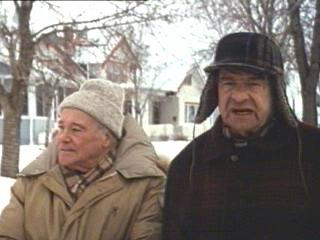
Up next, the final installment of Marysville: Then & Now, and a return of This Used To Be My Playground…

6 Comments

Filed under Books, Current Events, Life & Other Distractions

Marysville: Then & Now, Part 2

[NOTE: This piece was ported over from a much-older website, and some of the formatting and photo sizes aren’t presented as originally intended. As soon as I hire a quality control staff, these errors will be corrected.]

Okay, all informed and/or refreshed on Marysville’s rather snake-bit history after reading Part One? Splendid. On we go.

Up until 1956, if you were coming into Marysville from Sacramento or other parts south, you crossed the Yuba River and entered town via the D Street Bridge. D Street was essentially Marysville’s “Main Street.” E Street and its associated bridge, which brings in squirrel-crushingly copious amounts of traffic nowadays due to it being part of the I-70 corridor, was back then still a secondary street, populated mostly by warehouses and light industrial buildings (and, after 1927, the Marysville Hotel and the State Theater.)

D Street once was where all the action was, and like many small-town Main Streets, it has seen better days. Once the new E Street freeway bridge was opened (the D Street Bridge was fatally weakened in the 1955 Christmas floods and dismantled), D Street pretty much shriveled on the vine. Oh, there are still signs scattered around boasting about “Historic Downtown Marysville” and there are a tiny handful of preserved buildings, but unless you want a boutique gift or discount office furniture or to be unsettled by the eerily mellow hippies that run the used bookstore (excuse me, “literary arts center”), “Historic Downtown Marysville” doesn’t have much to offer the average person anymore.

One of Marysville’s most famous bits of history is the Bok Kai Temple, built by the local Chinese community in 1880 and the only one of its kind in the United States. It’s located at the foot of D Street, but faces away from the street toward the river – or rather, it was built facing the river, now it faces a blunt levee wall.


The temple itself seen from the levee, recently re-painted and spruced up, is behind a locked gate to keep Marysville’s less-upstanding citizens from urinating in it, but to it’s right (or left, I guess, as it was built facing the “wrong” way) is a rather picturesque pavilion and small park open to the public.


The M&M Trading Company building (“The Building That Melts In Your Mouth, Not In Your Hands”), was on the east side of the D Street Bridge, once the main entry into Marysville. The M&M building itself dates from the 1800s, and has been put to a myriad of uses.


The M&M has now changed into the Silver Dollar Saloon, whose website boasts that its second floor used to be a brothel in the 1800s. (A couple of other websites say it remained in that capacity until the 1970s, and I have reason to suspect it remains so in the 2000s, but that’s a story for another day.) The bridge entry is now the aforementioned Bok Kai pavilion and park.


On the west side of D Street was the W.J. Brown Furniture Store, and just visible behind is the intersection that took drivers to and from the more industrialized E Street a block to the west.


This area is now a continuation of the Bok Kai park, and is usually pristine and peaceful, even though it’s just a few steps away from the very busy E Street bridge/freeway combo. Occasionally, some of Marysville’s more “colorful” characters, or transients passing through, will be spotted lounging under the shade trees here, but they usually move on quickly, leaving the place once again to the birds and squirrels.

The view from the bridge as you came into town.


The view is now obliterated by foliage and the Bok Kai pavilion. Not that there’s much to see anymore, anyway.


Another view from the bridge.


And another view of the trees that replaced it. Where Studebakers and Hudson Hornets once rolled into town, lizards now scamper in the underbrush, and a set of cement steps leads you to the Bok Kai temple gate, and beyond them, a set of rickety wooden steps leads you still further to the top of the levee. If you turn around from where I’m standing to take the above picture…

…you can see the remains of the D Street bridge supports still jutting from the Yuba River like a pair of rotting teeth.

D St. 1920s


1940s


By 1977, it was decided that D Street from 1st to 3rd Streets had become an eyesore, a flea-bitten collection of bars and flophouses, plus it had brought unwanted notoriety as a cruising ground for serial killer Juan Corona, so the whole two blocks had to go.

Much of it was replaced with a drab 70s-style strip mall called “Downtown Plaza” (hey, at least they had the name before Sacramento) on the east side of the street, and the Mervyn’s department store on the west side. Trees were planted, hobos and stewbums were (for the most part) rousted out, and everyone congratulated themselves on a job well done.


D Street between 1st and 3rd is now shadier (in the good sense), safer, cleaner – and pretty much abandoned. The Downtown Plaza sits half-unoccupied, and as we learned in the last entry, Mervyn’s sold its last bath towel in December 2008.

The tiny Lyric Theater once co-existed side-by-side with the Tower Theater. My dad got his tattoos somewhere around here in the 1950’s.

By the seedy 1970s, I doubt the Lyric was showing The Apple Dumpling Gang. While the state and usage of these buildings may not have boosted civic pride, at least they had character.

Unlike their replacement, the Downtown Plaza.


As the east side of D Street spiraled into debauchery, the west side clung to respectability, with businesses like Payless Drugs (not pictured, but after 1956 on the site of the Western Hotel), the Star Grill, Gallenkamp Shoes and United Jewelers still peddling their wares.

The Mervyn’s parking lot replaced them all.

What better place to hang out in the mid-20th century than the Brunswick Billiard Parlor? A swell fella could grab a shave and a haircut (complete with a splash of bay rum and some Wildroot Cream-Oil), buy a Hav-A-Tampa, and pat a dog on the head, then shoot some stick, all in the company of other swell fellas, and without a lot of yip-yap from the skirts.


Well, I guess you can’t turn back the hands of time, and Mervyn’s needed a parking lot more than an average joe like me needed a place to hang out.

Oh, yes, I promised more fires.

Remember the Kelly Brothers’ Stables? The brothers could console themselves after the 1915 fire that destroyed it with the fact that their very successful undertaking business was still going strong.

Kelly Brothers Mortuary was located on the first floor of the Elk’s Lodge building on D Street.


Which burned down in the 1926 (taking the Atkins Theater with it.) I don’t really know what became of the Kelly Brothers after that. The site became a much smaller storefront business (left) and the entrance to the Tower Theater.

The northeast corner of 1st and D seems to have been a theater site since the turn of the century. The Marysville Theater was first to occupy the area, built in 1907, and the site of many live stage performances.


The corner lot itself is now parking for the Tower Theater (see below).

Around the time it switched from live performances to a cinema screen in the early 1920s, the Marysville Theater changed its name to the Atkins Theater

The Atkins Theater is visible in the background of this picture of 1st and D on Rotary Day, when local business donated goods to charity.


The same corner as it appears today.


The Atkins Theater burned down along with the adjacent Elks Lodge building in 1926. It was replaced by the Liberty Theater shown here (the burnt-out frame of the Elks building is still visible in the background.)


The hastily-built Liberty was replaced with the much bigger Tower by the late 1930s. The L-shaped Tower has its entrance near the old Elks building site, but curves around and to the back, encircling the small area where the Atkins/Liberty stood.

The Tower Theater is, of course, no longer a movie theater, and hasn’t been for some time. But everyone’s a sucker for Art Deco, so the building was allowed to remain when the rest of lower D Street was wiped out. For a short while in the late 90s it hosted live music events (I went to a few). Now, somewhat restored and remodeled, it’s the headquarters for the Marysville chapter of the New Age-y Center for Spiritual Living, and private office space. Moving on to the other Marysville Theater…

The State Theater opened as the National Theater in 1927 on E Street, across 5th from the Marysville Hotel, which opened at the same time. Its name went from “National” to “State” in 1938.


The State as it appears today, fifteen years after it showed its last movies in 1996.(The John Travolta vehicle Phenomenon, and the kids’ adventure flick Alaska, if you’re interested. The posters, which I put up, remained in their cases until 2003 or so, fading to almost pure white.)

Yes, I was the State’s assistant manager for its final year of operation (December 1995 – November 1996), so you can expect to hear a few State stories in This Used To Be My Playground. I like to claim credit for running the place into the ground, but it was clearly dying without my help. For the final month or so, it was a discount theater, all seats a dollar. The company that ran the place came up with a hideous mascot (“Buck The Chick”), and one of my final tasks as a State Theater employee was to put up those posters and marquee letters reading “Buck The Chick Says CHEAP CHEAP!” The axe deservedly fell a few days after that, before they got a chance to put someone in the baby-chick costume and have them prance around on the street corner.

The State’s new owners (a couple of shady Hungarians) are currently embroiled in the usual finger-pointing battle with the obstructionist Marysville City Council over taxes and fees and grandfather clauses. If it re-opens in any capacity within the next decade, you can knock me over with a feather from Buck The Chick.

There has been some confusion as to whether the State ever suffered a serious fire at any point in its history. Many are convinced it did, but my research has only turned up records of the Atkins theater fire, a few blocks away. The people & websites that say the State burned all date the fire to 1926 – when the Atkins burned. I think people are a little confused, compounded by the fact that late 1926 was when construction on the State began.

I’ll try to bring this whole thing to a conclusion in the next entry, and get back to the 90s playlist (which now seems to be stretching into next summer, thanks to my apathy and ability to become distrac…hey, Robot Chicken is on! Later.)

7 Comments

Filed under History