Just Another Shi**y Pop Movie?: The Beatles’ “HELP!” Turns 50 (Part 1)

film2

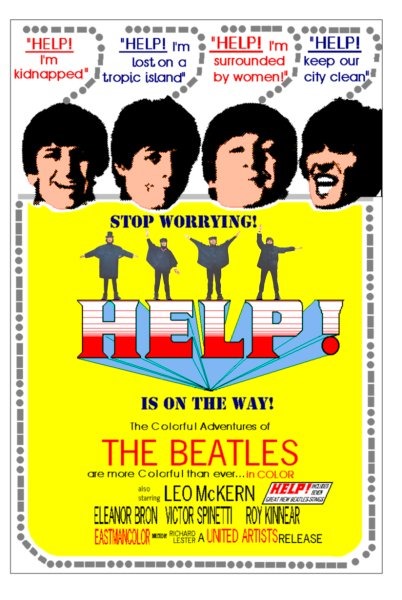
The original film poster

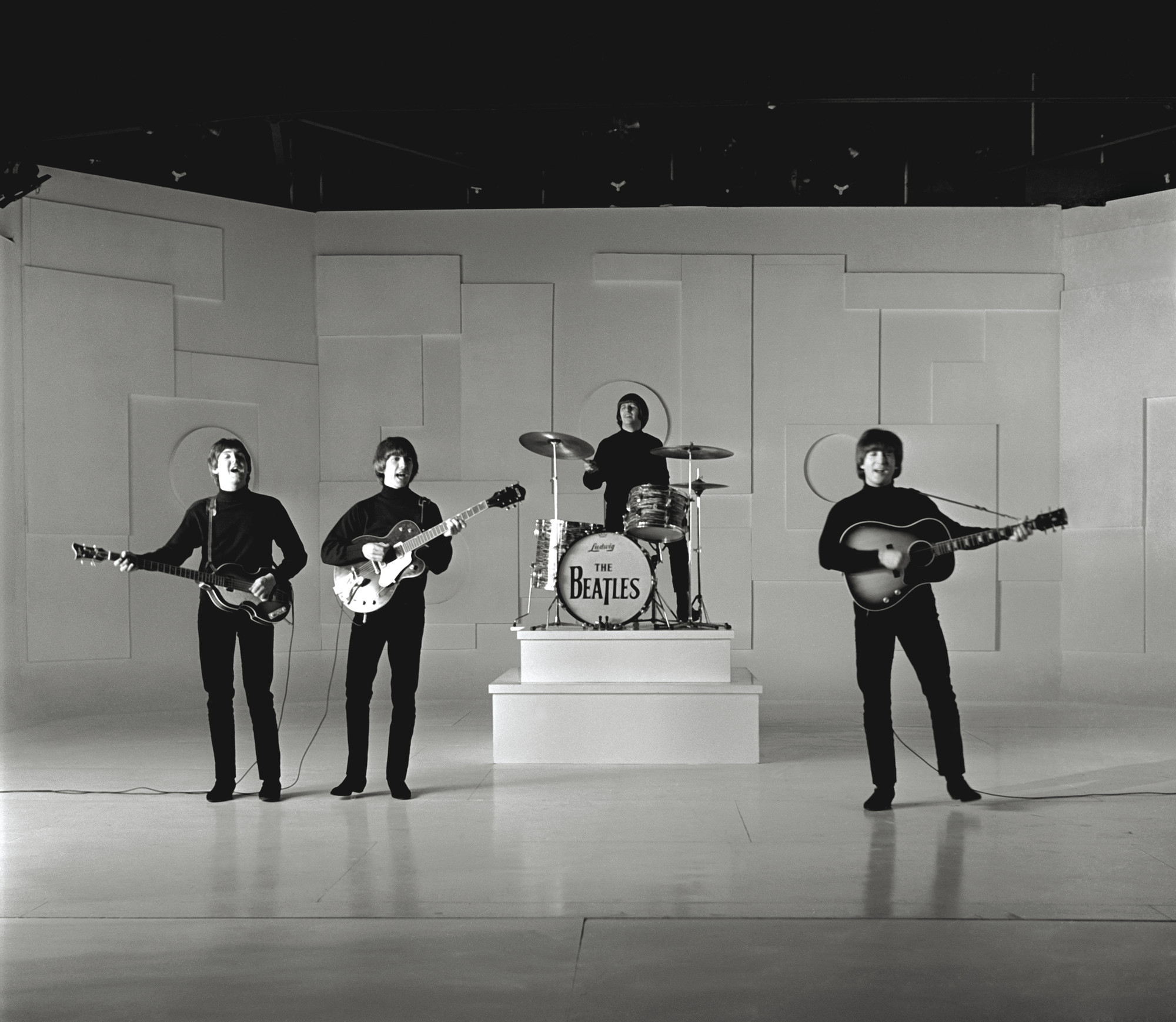
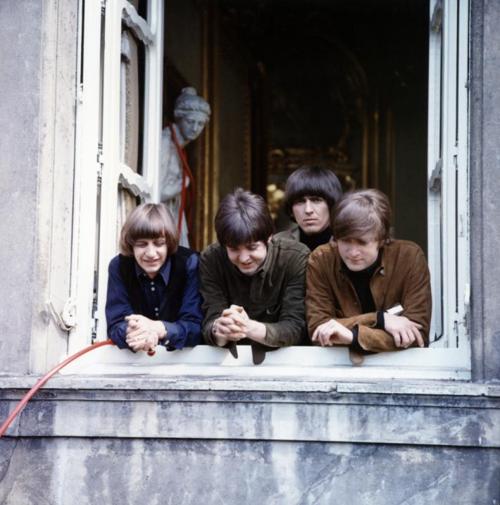
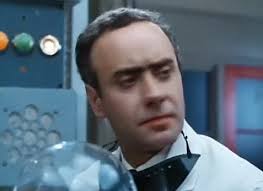
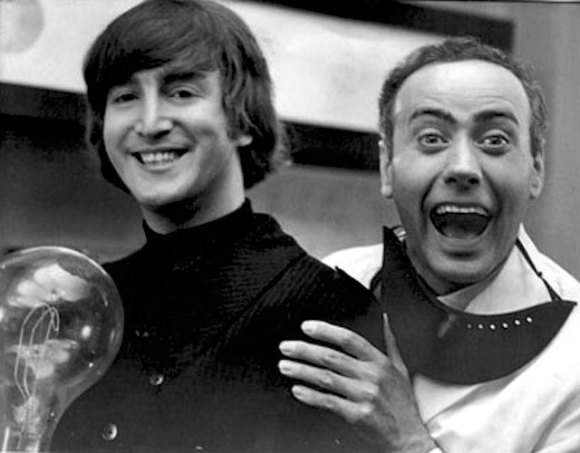
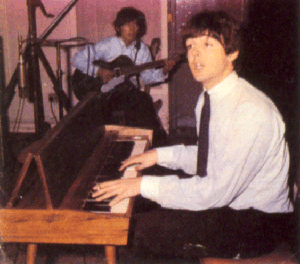
Help! was a movie, too, you know…

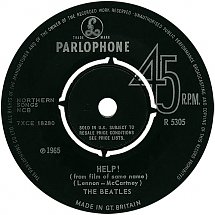
Nowadays, Help! mostly conjures up thoughts of the 1965 album, its driving, brilliant title single, and its Side Two (in the UK) monster classic “Yesterday.”

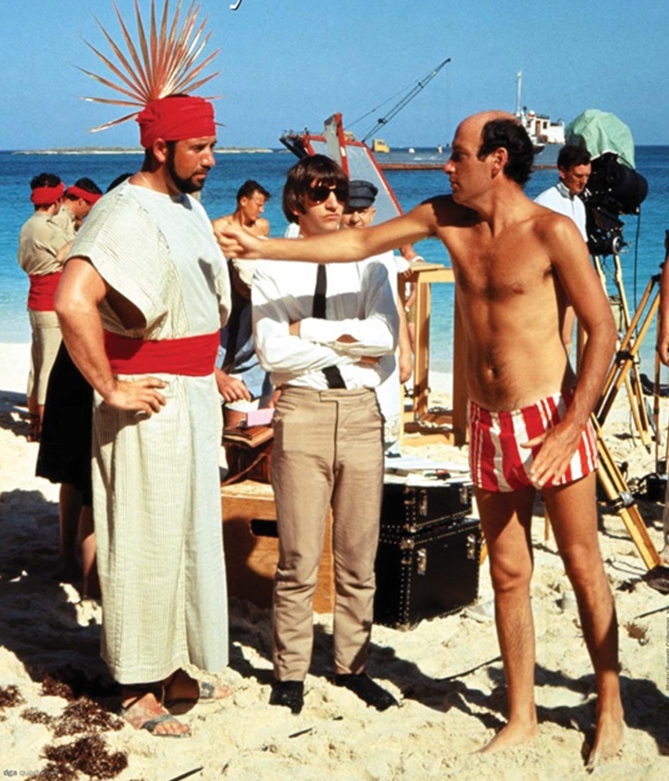
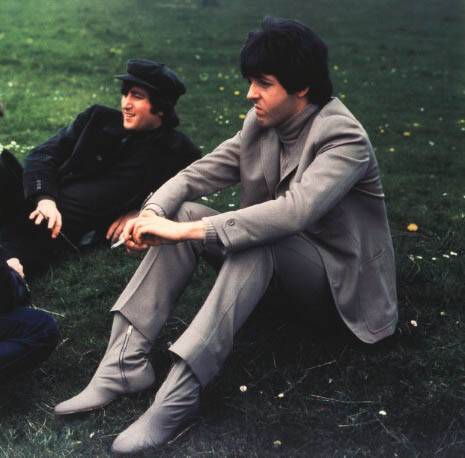
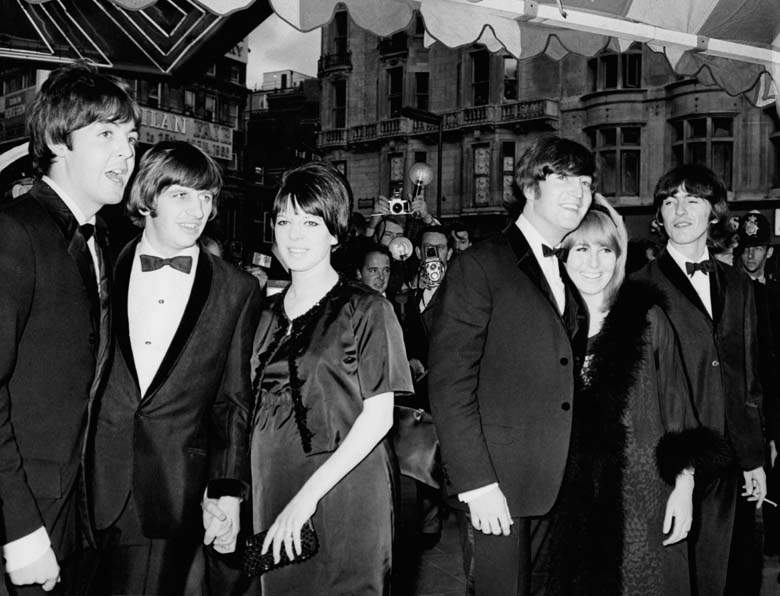
But Help! was a cinematic entity as well, and the accompanying album was (mostly) intended to be its soundtrack tie-in. Help! (the movie) has always gotten short shrift from Beatles historians, film critics, and even the Beatles themselves. Oh, no one says it’s bad — everyone acknowledges it’s a hell of a lot of fun to watch — but in most Beatles books it’s dismissively given about a page-and-a-half to two pages out of the band’s whole history. This for a project that the band spent almost four months producing, and four months in those hectic Beatlemania days might as well have been four years. (Even their self-made, self-indulgent psychedelic mess of a TV movie, 1967’s Magical Mystery Tour, gets more notice and affection these days.)

There was a time when popular singers, once they’d reached a certain point of  fame, were expected to take the next step and become all-around “entertainers,” conquering other mediums, especially film and television. Guys like Bing Crosby, Frank Sinatra and Elvis Presley ended up with just as many films as albums, if not more. Following that mindset, Beatles manager Brian Epstein signed the band up for a three-picture deal with United Artists in late 1963. Their first film, A Hard Day’s Night (released July 1964) was microscopically budgeted and hastily shot with the belief that the Beatles were a temporary craze with an imminent expiration date. (UA could cancel the remaining two pictures if they chose.)o-THE-BEATLES-facebook

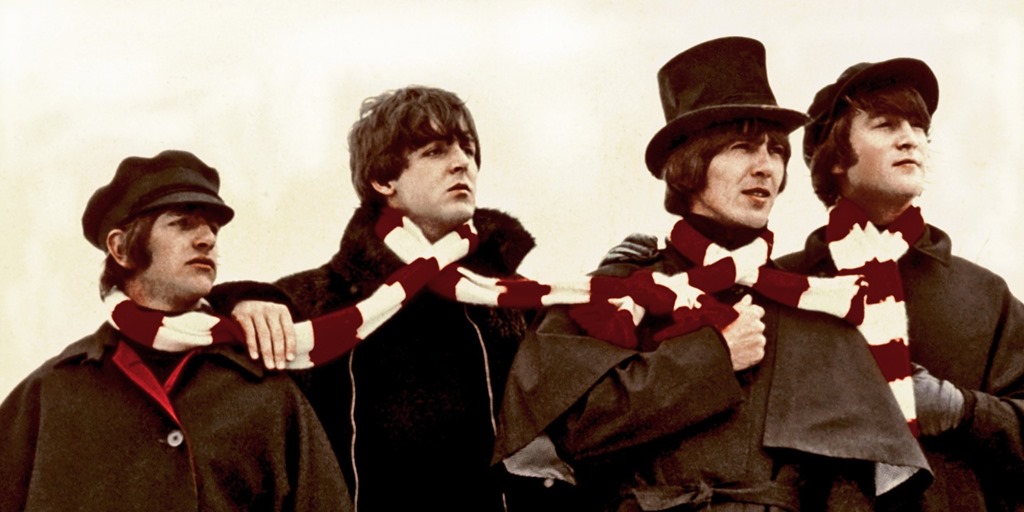
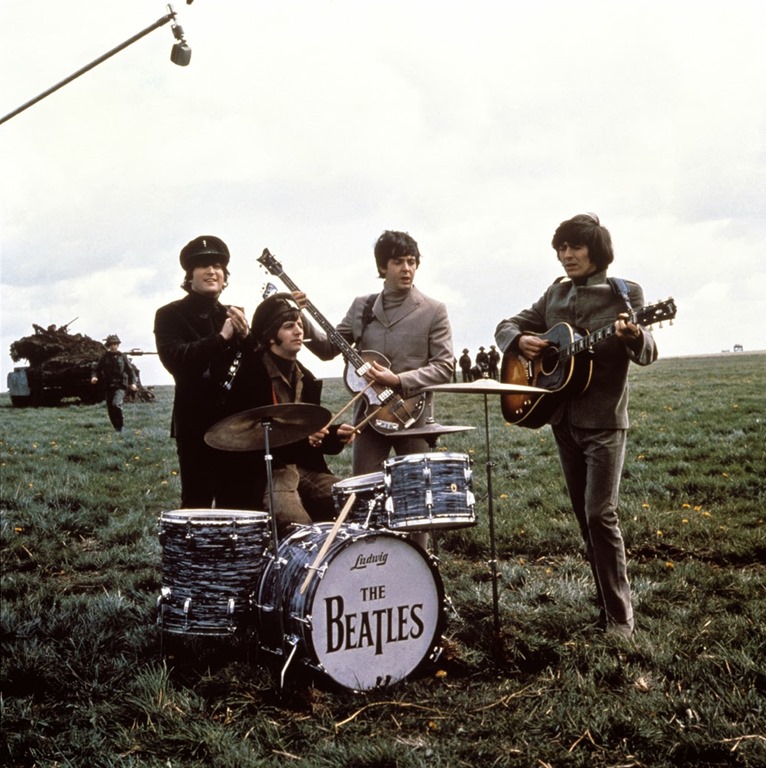
Help!, their second film under the UA contract, was released to British cinemas in July 1965 (a month later in the US). The British and American versions of the soundtrack (two very different animals, as we’ll see) were released a week apart in early August.

“There’s nothing in Help! to compare with…A Hard Day’s Night…This one, without sense or pattern is wham, wham, wham all the way…Some of it is surprising. Richard Lester, the director, has played some witty pranks with his camera. There are some fetching title and color gags, and a lot of amusing tricks achieved with old silent film techniques…The boys themselves are exuberant and uninhibited in their own genial way. They just become awfully redundant and—dare I say it?—dull.” (Original New York Times review by Bosley Crowther, 1965.)

Help!

“The script…isn’t a complete failure, especially for fans of British comedies of the 1960s. There’s some really great funny business between the group…But overall, the story can’t hold a candle to the behind-the-scenes look from A Hard Day’s Night. The issue with Help! is its complete rejection of any realistic element – the moment you see the Beatles living in one large house, you know this is a cartoon world with no sense of reality…Help! turns the zaniness to 11 and it’s just too much to make for a good movie….It makes it pretty clear that while the Beatles were geniuses at music, acting was not their forte. The songs written for Help! are some of the group’s best…but the dated stuff in between make it hard to watch on a regular basis…” (Daniel S. Levine, film critic for The Celebrity Cafe, and evidently a hater of everything non-realistic.)

“I enjoyed filming it. I’m sort of satisfied, but not smug about it. It’ll do. There’s good photography in it. There’s some good actors in it — not us, because we don’t act, we just do what we can.” (John Lennon, damning it with faint praise around the time of its release).

“Looking back on it, Help! isn’t such a bad film. It’s more of a fun romp, but I think that A Hard Day’s Night is the better of the two…we’d really tried to get involved and learn the script for A Hard Day’s Night, [but] by the time Help! came along we were taking it as a bit of a joke. I’m not sure anyone ever knew the script, I think we used to learn it on the way to the set.” (Paul McCartney.) 3834949

Yes, Help! will always suffer in comparison to A Hard Day’s Night, a film-buff favorite. That first film was cinema-verite style look at a fictionalized “two days in the life of” the world’s greatest pop group. Its gritty, black & white cinematography, documentary-style handheld camera work, jittery editing, and energetic performances from the Beatles still in their first flush of mega-stardom make A Hard Day’s Night a bona fide cinema classic. (The music is pretty good, too.)

The lion’s share of credit goes to director Richard Lester, but accolades are also deserved by screenwriter Alun Owen, like the Beatles a native of Liverpool, who traveled with the band on their November 1963 mini-tour of Ireland, and incorporated their personalities and witticisms into his Oscar-nominated script. Also contributing to its success were Beatles’ recording producer George Martin, who composed the orchestral score, and film producer Walter Shenson of United Artists, who stayed hands-off and allowed Lester, Owen, Martin, and the Beatles to create something that wasn’t just “another shitty pop movie” (Lennon’s words) like the kind Presley was cranking out in bulk at the time. Mere days after the Beatles stood on Ed Sullivan’s stage making their iconic US TV debut, they were in front of Lester’s cameras to get the film in the can before their next round of touring…

Beatles-help-0513-banner

SIDE NOTE: The Beatles’ schedule in their first three years or so of worldwide fame was almost inhumanly grueling, as a glance at Mark Lewisohn’s Complete Beatles Chronicles will tell you. Consider this: the last day of filming on A Hard Day’s Night was April 24. On the 25th, they were in rehearsals for their ITV TV special Around The Beatles. On the 26th, they played at the New Musical Express Poll-Winners concert. The 27 and 28th was more rehearsing and then taping Around The Beatles. The 29th and 30th were concerts up in Scotland. May 1st saw them back in London recording an appearance for the BBC. And so on…

Continue reading

Leave a comment

Filed under Film & TV, Music -- 1960s

The Holy Bee Recommends, #12: “Smokey And The Bandit”

I’ve already written a few pieces on life in my college apartment awhile back, and every once in awhile, something comes along that takes me right back to those days. The other night, I came across a certain flick while channel-flipping…

Every college apartment has those one or two movies that are almost nightly viewing…the Big Lebowskis, the Monty Python & The Holy Grails…where the dialogue, gestures, even facial expressions become a treasure trove of inside jokes and the secret language of roommates. For me and my college roommates, it was 1977’s Smokey And The Bandit. We had a VHS copy with warbly sound and a discolored rainbow effect down one side of the screen, but it did its duty, night after night. Individual lines of dialogue that made no sense outside of the immediate context of the film came out of our mouths to the exclusion of actual conversation:

“Lemme have a Diablo sammich and a Dr. Pepper and make it fast I’m in a goddamn hurry!”

“Hold up on that car wash, gentlemen.”

“What we gonna do, kidnap the pope or somethin’?” (Proper response: “How’d ya guess?”)

“If they’d-a cremated that sumbitch, I’d be kicking that Mr. Bandit’s ass around the moon by now…”

“What-I-owe?” (while pointing at someone with both the index finger and pinkie extended.)

“I’m gonna barbecue yo’ ass in MOLASSES!!”

“Honey hush.”

“Thank you, nice lady.”

Each of those lines, and many, many others, meant something to us in Apartment-speak. (Respectively, “I’m hungry,” “stop what you’re doing,” “what’s your plan/idea?” “this traffic jam sucks,” “how much do I owe you?” “I’m very upset with you,” “oh my goodness,” and, uh, “thank you, nice lady.”) Again, there were many others. I almost considered compiling a glossary for this piece.

The film’s story is a simple premise — for reasons that don’t seem to extendSmokeyBanditposter beyond their own twisted amusement and taste for sub-par beer, millionaire Texans Big Enos Burdette and his adult-but-diminutive son Little Enos Burdette travel through the South offering truck drivers (“gearjammers”) exorbitant amounts of cash to haul Coors beer outside of its legal distribution zone. In the 1970s, Coors was available only west of the Mississippi, and people who couldn’t get it became obsessed with it, despite the fact it is very, very shitty beer. (I’d like to see a movie where someone has to haul a truckload of White Castle sliders to California.) They make the offer to “truck-driving legend” Bo “Bandit” Darville. (“Looks like a legend and an out-of-work bum look a lot alike, Daddy” Little Enos observes.) According to the terms of the wager, Bandit must travel to Texarkana, Texas, acquire his cargo, and return to Atlanta in 28 hours. He eagerly accepts, enlisting his pal Cledus “Snowman” Snow to actually drive the truck, while he speeds around in a flashy Pontiac Trans-Am as a “blocker,” drawing the attention of any law enforcement in the vicinity away from the truck and its illicit load. Along the way, he picks up Carrie, a runaway bride. Add to this mix a dogged, vengeful Texas sheriff who fanatically tails him far beyond his jurisdiction. Revving engines, squealing tires, high-speed chases, and crashed police cars ensue as the characters exchange witticisms via CB radio.

Veteran stunt coordinator & driver Hal Needham made his directorial debut with this film, and he never bettered it (not even with his 1986 BMX epic Rad). The project was originally meant to be a low-budget B-movie targeted to rural drive-ins, capitalizing on the CB radio fad and truck-driver worship sweeping the country in the mid-1970s. (You can start singing “Convoy” to yourself now. And the term “smokey” was CB slang for a state policeman, due to their Smokey the Bear-style park ranger hats.) It would feature country singer and part-time actor Jerry Reed as the titular Bandit…until Reed’s friend, Gator co-star, and bona fide celebrity Burt Reynolds expressed an interest in starring. Universal Studios thought that was a great idea. The budget was duly inflated, Reed got bumped to the sidekick role, and it was released as a main feature in theaters across the country, to critical indifference and massive popular success. The only film to make more money that year was Star Wars. Continue reading

1 Comment

Filed under Film & TV, The Holy Bee Recommends

Christmas On First Street

I have been told I have a remarkable memory, and I’ll humbly admit that it is true. However…it is slipping.

Lots of entries here at The Holy Bee of Ephesus are autobiographical reminiscences, and I have found recently as I’m writing them that I’m straining to remember dates and details that were once clear as day. My “steel trap” memory (my Mom’s description) is getting rusty.

SCN_0038Like many people, some of my favorite memories are of Christmas, and I find that I remember Christmases of my early childhood better than those of just a few years ago. This may be due to never spending more than a few Christmases in any one house. Mom and Dad were always renters instead of owners, because Mom often grew bored or dissatisfied with houses, and we would frequently pack up and move (sometimes only a few blocks.) I liked it because moving was an adventure, and it gave each Christmas a unique feel and flavor, but even those once-vivid childhood Christmases are starting to fade and go a little sepia-toned…so I figured I’d better get to writing before they are gone from my brain cells for good.

Woodland, California is a mid-sized town about twenty miles northwest of the state capital of Sacramento. My grandparents settled there when they came from Oklahoma back around 1940, and Woodland and its smaller, semi-rural satellite towns (Esparto, Yolo, Winters, etc.) were my extended family’s home base for more than fifty years.

My first four Christmases were spent in four different houses, but in September of 1978, we settled down for awhile. A big, Spanish-style adobe house on the corner of First Street and Craig Avenue in one of the older sections of “historic Woodland” was my home for my fourth, fifth, and sixth birthdays (on December 3), and the first Christmases that I really remember.

SCN_0029

The house on First Street, New Year’s Day, 1980. Note the retired Christmas tree in the gutter.

SCN_0030

IMAG0388

The house on First Street as it appears today. The thick shrubbery under the dining room window (left) has been removed, otherwise it is remarkably unchanged.

In ‘78, there was me, 4, a pre-school student at Montessori and attendee at Mrs. Lanier’s in-home daycare, my sister Lori, 12, a seventh-grader at Lee Junior High, Dad, 39, who worked in auto body repair at Winter Motors in Sacramento, and Mom, 30, an elementary school secretary. We were definitely a comfortable level of middle-class, but with a touch of blue-collar in the mix.

Living nearby were my mom’s older sisters — Aunt Jonna and her husband Uncle Hugh were ensconced over on Rancho Way in one of the more upscale areas of Woodland. This was their home for over a quarter century and the site of many Thanksgiving and Christmas dinners. Aunt Thana was single at that time, and if anyone in the family moved house more than us, it was her. Even my remarkable memory cannot keep up with the amount of places she lived during this era. Jonna and Thana had a mix of kids still at home and adult kids already out on their own, but all still in the general Woodland area. Grandma and Grandpa were living a ways up the Capay Valley, in the tiny town of Guinda along Cache Creek…

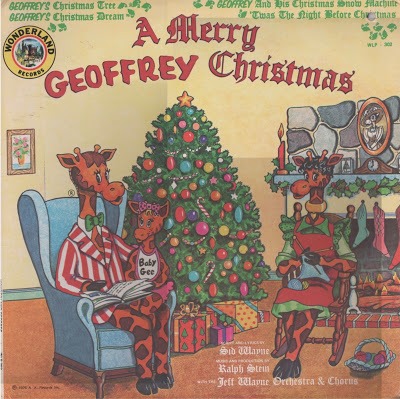
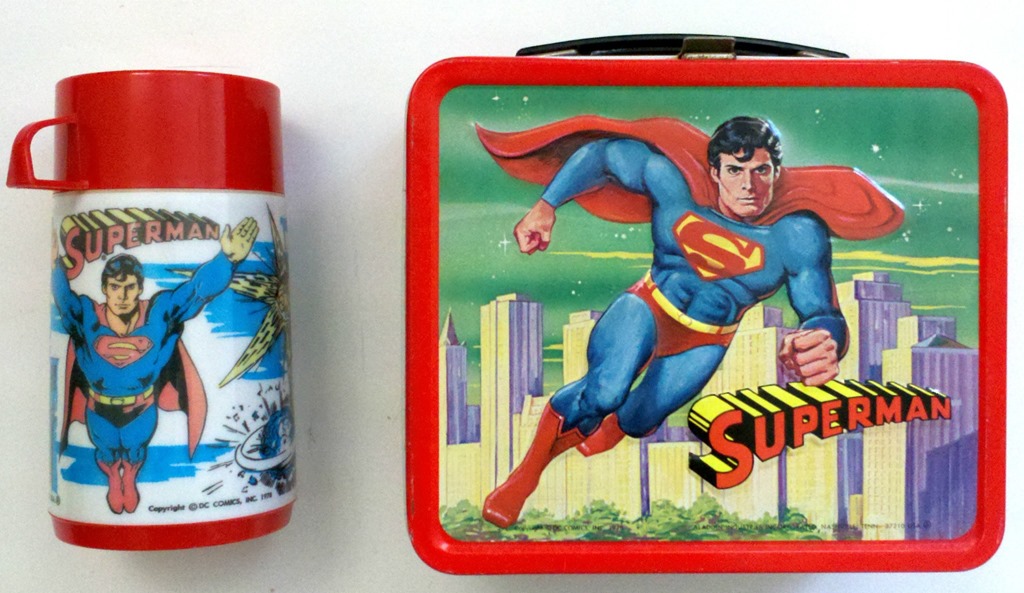
The earliest memory I have of the days leading up to Christmas ’78 (which may be my first Christmas memory ever) was of making a Christmas card at preschool withGeoffrey Cover poster paint and Christmas-shaped sponges (trees, bells, angels, etc.). I also remember sitting in the rec room at Mrs. Lanier’s daycare listening to a Christmas-themed record album featuring the Geoffrey Giraffe family from the old Toys R Us ads. (Internet research tells me this was 1975’s A Merry Geoffrey Christmas.) The big Christmas movie release that year was Superman with Christopher Reeve as the Man of Steel. I saw it at the old State Theater — the first movie I saw in a theater — and it made quite an impression. It wasn’t long before I was toting my mayonnaise sandwiches to Mrs. Lanier’s in a red Superman lunchbox.

1978-SupermanInstead of getting a pre-cut tree, we did a saw-your-own expedition to a tree farm this year. (Or maybe that was ‘79. I curse my four-year-old self for not keeping detailed notes.) The tree farm would have been up in Placerville, near Apple Hill, and the tree we got was a massive, bushy monstrosity, probably Scotch pine, and over nine feet tall in order to properly fit in our arched front window. Unlike some of our other houses, First Street had high ceilings — and an open floor plan with square footage to spare, so Mom totally rearranged all the furniture every few months or so. From week to week, you never knew if you’d be sitting on the couch to watch TV in the living room, the formal dining room (which we used as more of a den), or the linoleumed area off the kitchen.

We decorated the tree with a standard set of glass balls, bows, candy canes, and tinsel garland (which I enjoyed wrapping around myself and swishing about the house, which may have worried my parents in those pre-enlightened days.) There was also a pink shoebox full of plastic Disney character figurine ornaments flocked in a thin velour which grew balder and mangier over the years, and a potpourri of oddball tree hangings acquired in various ways through various holidays, including a grotesquely overweight topless “angel” with pendulous breasts, handmade out of glazed clay by someone with a skewed sense of humor. The (clothed) angel tree-topper dated from Lori’s first Christmas in 1966. Continue reading

4 Comments

Filed under Life & Other Distractions

66 & 2/3–Use Your Illusion I and II (Part Three)

The floodgates finally opened: Thirty songs spaced over two packed-to-the-gills compact discs. Use Your Illusion I’s cover used the red-and-yellow motif of the original Mark Kostabi painting. Use Your Illusion II changed the color scheme to a cool blue-and-purple. The CD booklets were stuffed with photos, the vitriolic lyrics in microscopic sans-serif type, and detailed production and songwriting credits. Here’s the track list for the albums:

USE YOUR ILLUSION I

  1. Right Next Door To HellGnR--UseYourIllusion1
  2. Dust N’ Bones
  3. Live And Let Die
  4. Don’t Cry
  5. Perfect Crime
  6. You Ain’t The First
  7. Bad Obsession
  8. Back Off Bitch
  9. Double Talkin’ Jive
  10. November Rain
  11. The Garden
  12. Garden Of Eden
  13. Don’t Damn Me
  14. Bad Apples
  15. Dead Horse
  16. Coma

USE YOUR ILLUSION II

  1. Civil WarGunsnRosesUseYourIllusionII
  2. 14 Years
  3. Yesterdays
  4. Knockin’ On Heaven’s Door
  5. Get In The Ring
  6. Shotgun Blues
  7. Breakdown
  8. Pretty Tied Up
  9. Locomotive
  10. So Fine
  11. Estranged
  12. You Could Be Mine
  13. Don’t Cry (Alt. Lyrics)
  14. My World

GunsnRoses pinballThirty tracks of equal parts seething fury and overwrought sentiment hit the streets in the waning days of summer ‘91…(Five or six songs remained mysterious outtakes. “Ain’t Going Down” was the only original that has ever surfaced…on the official Guns N’ Roses pinball machine, if you please. Evidently some other songs were covers that came out on “The Spaghetti Incident?” in 1993.)

The albums shot immediately to #1 and #2 on the Billboard charts. Use Your Illusion II sold slightly better, which I still find hard to believe even though the evidence was right in front of my eyes on Release Day at the Wherehouse. Customers buying only one of the albums almost inevitably chose II. Perhaps because it contained the massive “You Could Be Mine” single, plus the previously released “Civil War” and “Knockin’ On Heaven’s Door” (both of which got some radio airplay over the last year), so maybe the material was more of a known quantity. But it was also saddled with the odious “My World,” the embarrassing “Get In The Ring,” the inferior “alternate lyrics” version of “Don’t Cry,” the mawkish Duff McKagan-penned ballad “So Fine”…but I suppose people going to the cash register didn’t know that at the time.

The narrowing down began almost immediately. What are the “necessary” songs from the Use Your Illusions? Like almost everyone I knew, I only had a cassette player in my car. I put the entirety of I and II onto two separate tapes…then I did what everyone who has ever owned these albums did: I made a compilation of what I thought was the best stuff, and it was this third cassette that rarely left my player through the last part of ‘91 and most of ‘92.

[Years later, there actually was an “official” single-disc Use Your Illusion, supposedly compiled by Axl himself, consisting of profanity-free songs for the big box stores like Walmart and Kmart. Unfortunately, it’s a great example of how NOT to make a single-disc Illusion, including both versions of “Don’t Cry” at the expense of better (still profanity-free) songs.]

So…the 33⅓ author did it, several blogs have already done it, I remember most of my friends from that era doing it…

They all got it entirely wrong, botching the whole thing. The Holy Bee will now do it right.

Many people’s single-disc mixes included only twelve songs, making it a song-for-song match for Appetite For Destruction. Yes, the Use Your Illusions need to be cut down, but I don’t want them to be a mere shadow of their former selves. Grandiosity is what makes them fascinating. Therefore, I will cut only fourteen songs, leaving me sixteen, clocking in at about 88 minutes. This still stretches the limits of space available on a commercially released compact disc, but my pared-down Use Your Illusion would make an awesome double album on vinyl (which, remember, the individual Use Your Illusions were anyway), and would fit on a standard 90 minute blank tape. Perfect. (A few minutes too long for recording onto a blank CD, but we’re keeping our heads firmly in 1991…)

The Selection Process: I will be discarding fourteen songs, but it’s not enough to simply cut and let the remainder stay where they are. The running order will need to be completely re-shuffled to create a smooth, balanced and natural flow from one song to the next.

I have chunked the songs on Use Your Illusion I and II down into six general categories, and each category has to lose at least two songs (except where noted.)

Continue reading

Leave a comment

Filed under Music -- 1990s

66 & 2/3 – Use Your Illusion I and II (Part Two)

Guns_N'_Roses-logoWhen my son Cameron was about six or seven, he began nosing around in my Beatles books, and saw some of the recording credits. “How could Paul play bass, piano, and organ on the same song?” he asked. “He didn’t have six hands.” Most people with a passing interest in record-making are aware of the concept of overdubs, but I’ll throw out a quick description…

In the early days of recording, the idea was to capture a performance as it happened. The band set up, the recording engineer plopped down a microphone, and they played. If there was a screw-up, they took it from the top. If a singer or instrumentalist needed to be louder, they moved closer to the microphone.

Beginning in the 1960s, thanks primarily to The Beatles’ studio innovations, the whole philosophy behind recording changed. It was no longer about capturing a performance as it happened, but building the perfect version of a song. Bits and pieces of numerous takes were edited together, and additional vocals and instruments were added via multi-track tape recorders. The typical method for a post-mid 60s rock band would be to record a “basic track” or “rhythm track” (drums, bass, a couple of guitars) onto one or two “tracks” (individual recording spaces) of the tape machine. Then additional tracks (guitar solos, percussion, keyboards, miscellaneous texturing, lead and backing vocals) would be “overdubbed” on top of the basic track. On a single-track recorder, like your old VCR or portable cassette player, the new recording would simply erase the old. But on a multi-track recording, everything remains audible. Picture an overhead projector from your early school days — each track would be the sonic version one of those transparent sheets you could lay down on the projector surface, combining to create the full image projected on the screen.

The tracks would then be mixed, ensuring the proper balance of sounds. The Beatles worked their magic with only four-track recorders. If they needed more room, they mixed the in-progress song back down to one or two tracks (“bouncing” it, as they put it), and made the necessary additions on the newly-opened tracks. The process could be repeated, but the loss of fidelity would become noticeable.

Vintage 2-track, 4-track, and 16-track tape recorders

Vintage 2-track, 4-track, and 16-track tape recorders

By the Use Your Illusion era, 48-track digital (no tape) recorders were the order of the day. With reduction (“bounce”) mixes resulting in no loss of audio quality, overdubs could be almost infinite, and even a single note or word could simply be “punched in.” 

As evidenced above, the term “track” itself has a multitude of uses — it can refer to an available space on a recording, a single instrumental or vocal overdub, a basic foundation recording…or even a finished song as it appears on an album, just to add to the confusion.

Continuing our look at the development of the Use Your Illusion material…

Summer 1989 — Eight weeks of writing, work-shopping and rehearsal for the new album were scheduled in Chicago, a seemingly random location chosen by Axl and Izzy. Then neither of them showed up for most of that time. The trio of Slash, McKagan, and Adler attempted to work out ideas in the absence of their two chief writers and arrangers, but Slash called that whole period a “waste of time” that yielded a few finished tunes, but mostly just expanded on a “handful of rudimentary ideas” that they had brought with them from L.A. in the first place. According to the hazy recollections of their autobiographies, Slash and Duff figure the songs that came together in Chicago included “Bad Apples,” “Garden Of Eden,” “Get In The Ring,” the final version of “Civil War,”  “Pretty Tied Up” (originally an Izzy song that they finished off in his absence), and “Estranged” (when Axl finally deigned to show up).

dizzyReed

Dizzy Reed

February 1990 — Against the wishes the other band members, Axl insisted on hiring a keyboard player to fatten out the sound and assist with the epic synth orchestras he was hearing in his head for his ballads. Dizzy Reed, formerly of L.A. bar band The Wild, became the sixth member of GN’R. (Also, like a wise old uncle, Mick Jagger advised Axl that using keyboards onstage helped keep your vocals on pitch.)

By the rules of rock & roll, adding a keyboard player where there wasn’t one to begin with is the first slip on the greasy slope of musical bloat. What’s next? Backup singers? A horn section? Elaborate stage effects?

Spring 1990 — After the disastrous Chicago “pre-production” sessions, according to Slash, most of the final arrangements of the Illusion tracks were worked out “in literally two nights” on acoustic guitars when all band members finally got together in one room for the first time in months. Songs that had been kicking around the band forever (see previous entry) were given a fresh going-over, old fragments were pieced together and fleshed out, becoming new songs, and Axl finally began his rough draft of the lyrics. At the end of this phase, they had thirty-six demos.

All they needed to do now was get themselves organized enough to take this material into the recording studio. Easier said than done: Slash was still a heroin addict. Duff was a raging alcoholic, guzzling by his conservative estimate a gallon of Stoli vodka per day. Steven Adler was both a heroin addict and an alcoholic, and had more than a passing interest in crack cocaine as well. Izzy, after a decade of living like these guys, had gone clean and sober and was keeping contact with his bandmates to a bare minimum. (At this point, he would often mail in cassettes of riff ideas and demos to the band office rather than show up to sessions.) Axl was Axl, and operated on no schedule other than his own whims.

They did manage to start recording in good faith with Appetite producer Mike Clink, making several passes at “Civil War,” before it became clear that drummer Steven Adler could no longer play. Recording sessions were put on indefinite hold until the situation could sorted out.

Matt Sorum

Matt Sorum

June 1990 — GN’R fired Steven Adler for drug-induced incompetence. He was replaced by veteran drummer Matt Sorum, a hard-hitter who kept solid time with no frills or complications. Sourm had played for more bands than anyone could count since the mid-70s, but was most recently the touring drummer for The Cult. The lawsuits and counter-lawsuits between Adler and the rest of the band kept dozens of lawyers employed through the 1990s.

Slash said the first song recorded with Sorum was the Bob Dylan song “Knockin’ On Heaven’s Door,” but Slash’s autobiography is (understandably) fuzzy on firm dates — it must have been recorded in a damned jiffy compared to everything else, because it came out on the soundtrack to the Tom Cruise/NASCAR turkey Days of Thunder on June 26. (“Knockin’” had been played in concert since 1987, so they knew it pretty well at this point.)

July 1990 — “Civil War” was released to little fanfare as part of the charity album Nobody’s Child: Romanian Angel Appeal, in support of Romanian orphans. It was the final appearance on a Guns N’ Roses song by Steven Adler. (According to one of the band’s counter-lawsuits, the drum track was pieced together by Mike Clink from over sixty different takes because Adler’s playing had deteriorated so much.)

September 1990 — The backing tracks are laid down at A&M Studios, Los Angeles. “Thirty-six [basic] tracks in thirty-six days” as Slash described it, bashed out by the core band with Clink behind the soundboard. These early sessions are pretty much the end of Izzy Stradlin’s recording career with Guns N’ Roses. Slash figured Izzy was there “one day out of three,” and it seems much of his rhythm guitar work was simply lifted from his mailed-in, four-track demo tapes. A close perusal of the songwriting credits on the finished albums shows that, despite being “Mr. Invisible” (as the rest of the band called him), Stradlin had a prominent role in creating the foundation of the Illusions’ strongest songs. “I have a few [songs] on there…” he told a journalist at the time, then almost dismissively followed it up by adding, “…but they all get mixed together. Once they’re on tape with Axl singing and Slash playing guitar, I just look at it as Guns N’ Roses stuff.”

The vocal-less tracks were given preliminary mixes by legendary engineer Bob Clearmountain (Stones, Bowie, Springsteen, many, many others), which were rejected as “too slick.” Another attempt was made by legendary engineer #2 Bill Price (Sex Pistols), and these proved rawer and more primitive — satisfactory. The project was already “over-budget, over-time, over everything,” in Price’s words.

His mixes provided the foundation for the copious, almost suffocating, overdubs that are the hallmark of the Use Your Illusions. Continue reading

2 Comments

Filed under Music -- 1990s

66 & 2/3–Use Your Illusion I and II (Part One)

On September 17, 1991, the band that had been on top of the hard rock heapGunsnr-useyou_22 since its debut album  Appetite For Destruction went multi-platinum back in ‘88 made the groundbreaking — and seemingly insane — decision to release two separate full-length albums of original material at the same time. “An act of almost colossal arrogance,” one writer described it. (On vinyl, each one was actually a double album in and of itself). The Use Your Illusion project was a microcosm of the arena-rock breed of populism that had been annoying intellectuals and highbrow music writers ever since Led Zeppelin and its legions of high school parking lot smokers dropped a bomb on the progressive ambitions of the Woodstock Generation.

Of course, those progressive ambitions returned with a vengeance in the form of “alternative rock,” which killed off Guns N’ Roses quite handily. Turn, turn, turn.

Use Your Illusion I and Use Your Illusion II represented a lot of things – inflated runaway egos, rock & roll super-indulgence, perhaps the pinnacle of “event” albums, but most of all they represented the end of an era.

These albums were completely over-the-top, sonically massive, and in a way that seems charmingly archaic now, totally ridiculous in their excess. Overdubbed to the breaking point, featuring synthesized strings and brass, spoken word segments, and enough hubris to fuel three Kanye Wests, the fact that the Use Your Illusions were even allowed to exist opened the door to the more subtle, self-conscious, and self-effacing alternative rock that had been waiting quietly in the underground for a few years. In 1992, Alternative Nation would topple Dinosaur Rock, and cause a complete re-set on how music designed for the masses was recorded, marketed, sold, consumed, written about, thought about.

So the Use Your Illusions have become something of a milestone, a “You Are Now Leaving…” sign. Just like Nirvana’s Nevermind, released exactly one week later (I can’t believe the beautiful symmetry either), became a “You Are Now Entering…” sign.

For some reason (midlife crisis?), in the late summer of this year, I found myself gravitating toward and listening to the Use Your Illusions quite frequently. As with most of my temporary obsessions, I tried to think of a way to spin it into a Holy Bee blog piece, but for weeks, I couldn’t find an angle. I didn’t want to do a straightforward review, nor a “Holy Bee Recommends” segment…because I can’t in good conscience recommend it. Frankly, the albums are a mess.

So I thought briefly of doing the classic music-nerd parlor game of winnowing a sprawling double album into a tight, cohesive single album by discarding weak tracks and championing the keepers. A great exercise to foster discussion and debate on things like The Beatles (“White Album”), London Calling, and of course, Use Your Illusion I and II. But seeing how that activity has been done so incredibly frequently (by me and my friends, you and your friends, and certainly by other bloggers), I didn’t want to make it the whole point of the essay.

I didn’t know what I had to say about the Illusions, then it occurred to me (in the bathroom, where I get my best ideas.) Why not say everything? I had the brilliant idea of doing a shorter version of a  33⅓ book, which are not that long to begin with.

33Collage33⅓ is a series of small, slim paperbacks put out by Bloomsbury Publishing, each one dedicated to a milestone album. They are usually written by a critic or journalist, but several have been written by musicians. (My favorite 33⅓ book, on The Rolling Stones’ Exile On Main Street, was written by Bill Janovitz of the 90s indie-rock band Buffalo Tom). There are currently 98 33⅓ books in print, with several more slated though 2016. The authors are free to write about the album in whatever way they want: technical breakdowns, musical analysis, personal reflections on what the album meant to them, short fiction, etc. Or a combination of it all. No set format, and that’s what makes them fascinating.

I now had an approach. Regular Holy Bee readers know I’m a throw-in-the-kitchen-sink kind of writer, so I decided to dump all of my thoughts on this peculiar pair of albums into one massive, multi-part piece. My own little 33⅓ book.

Imagine my heartbreak when I discovered that there already was a 33⅓ book on the Use Your Illusions! I was stunned. Frankly, the 33⅓ books are a little on the hipster/elite side — their latest entry is on Sigur Ros’ (), to give you an idea — and I was very surprised Use Your Illusion I and II would appeal to their regular readers. Back to the drawing board for the Holy Bee?

But wait! The Use Your Illusion I and II 33⅓ book is perhaps the most reviled work in the entire series. Former Spin and Village Voice music editor Eric Weisbard pissed off nearly everyone with his take on the albums. Here’s some titles of the scathing Amazon reviews:

“This Book Is Garbage !!”

“Yikes. Not for the fans!”

“An hour of my life I won’t get back.”

“Wow – This writer is completely self-indulgent and pretentious.” (The Holy Bee looked around nervously at that one.)

“The Worst Book in the 33⅓ Series I’ve Read.”

And so on.

Weisbard decided to write a piece about popular culture in the early 90s, using the Use Your Illusions as a filter through which he 33grexamines the changing of the musical guard described above. What infuriated readers is that his look at the music on the Use Your Illusions is cursory and intentionally secondary. It’s based on his memories of the album from twenty years ago…without re-listening to it until he wrote the final chapter! By his own admission, he was far from a Guns N’ Roses expert, and not even much of a fan.

I was siding with the indignant Amazon reviewers, until I plunked down a ten-spot and actually downloaded the damn thing to my Kindle to see what all the fuss was about.

It turns out Eric Weisbard is a good writer. With every turn of the page, he fires off an eloquent passage expressing the whole end-of-an-era idea much better than I ever could. To wit: “The idolatry required to sustain albums on a 1970s or 1980s scale could no longer be met by a popular culture whose niche markets were collectively far more valuable than its consensus heroes…In the season of the blockbuster [album], CDs still came in ‘long boxes’: tall rectangles shaped like skyscrapers, and meant to…fit record store bins, and provide at least a hint of the majesty that LP covers had offered. Unlike vinyl, however, once you bought a CD and ripped the long box open the effect was instantly gone. A couple of years later, the industry stopped faking consumers; the aura of the LP had been replaced by the profit margin of the CD…We need to hear Use Your Illusion I and II with the long boxes still intact, those twin towers of September 1991. Filter back in the audience they summoned and expected to speak for…”

And there’s more where that came from. (Check out his NPR article on Brad Paisley’s “Accidental Racist” if you like his style.) I understood what he was trying to do, and I think he succeeded in doing it. I can definitely recommend his book — with the caveat that, as the reviewers have made clear, it’s not really about the Use Your Illusion albums

And when he did get to some thumbnail analysis of the songs, he gets everything entirely wrong, naturally.

Good thing I’m here. I decided to plunge ahead and write the 33⅓ (or 66⅔ if you will) on Use Your Illusion I and II that people seemed to actually want. Along with my picks for a single-disc version. Not even Eric Weisbard could resist that little exercise. He may be a great writer, but his single-disc UYI mix blows. Continue reading

3 Comments

Filed under Music -- 1990s

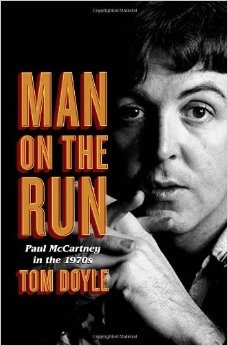
The Holy Bee Recommends, #11: Tom Doyle’s “Man On The Run: Paul McCartney in the 1970s”

It is said that no journalist gets close to Paul McCartney. His naturalman on the run guardedness and evasiveness have been compounded by fifty years of constantly dealing with prying, insensitive, and often clueless “reporters” trying to get a story out of one of the most well-known, wealthiest, and at times, oddest, musicians in the world.

He still gives tons of interviews. But, as Rolling Stone reporter Chet Flippo wrote in an old McCartney bio, when the reporter leaves the glow of being in the presence of a Beatle and actually reviews their tapes or notes, there is a cold realization that they have come away with nothing of any substance.

Does Tom Doyle break through that wall? For the most part, as even he admits, no. But he feels he has been lucky enough to get glimpses of the unguarded McCartney, mostly by virtue of being Scottish (a quality that McCartney seems to love), and the fact he is a long-time writer and editor for the classic rock-worshipping music mag Q, and not some Fleet Street hack looking for an angle on his messy divorce or re-hashing the same Beatles questions for the 10,000th time.

Perhaps to avoid over-familiar territory, Doyle has chosen to focus on the wings19721970s. Under the multi-platinum surface of Wings was a schizophrenic and frenetic decade for McCartney. Less resonant than the cultural upheaval that was the Beatles and the ballyhooed 1960s, but perhaps more interesting to someone who has had their fill of Beatles/60s mythologizing.

Doyle bookends his text with a Prologue and Epilogue from his numerous McCartney interviews of the 2010s. He notes that McCartney’s hair now seems professionally colored, rather than what he suspects were appalling home dye-jobs in the 1990s. (It’s this type of detail written in a clear, informal prose style that makes this book a particular pleasure.) Another reason I really like Doyle: He actually asks about Paul’s goofy, cheery, thumbs-up “Macca” persona of the last quarter century that has led to countless bad Dana Carvey-style impressions and a degradation of his standing among those who fancy themselves “serious” rock fans.

McCartney sighs, and says, “Have you seen me do it [the thumbs-up] in the last ten years?”

Doyle admits he hasn’t.

“I have been chastised by world opinion on that.”

The unguarded McCartney’s speaking voice, according to Doyle, is earthier and more “lovingly profane” than the cartoon Liverpudlian he puts on for most of the public. (Is this a thing? I’ve also heard from many sources that Michael Jackson’s spacey, high whisper was a total put-on, and he had a perfectly normal speaking voice in private.) The world’s third most-famous pot smoker (after Bob Marley and Willie Nelson) also admits he quit the stuff several years ago, citing age as a factor. He noted that friends told him recently “‘Wow, your choice of words has really gone up.’ Before, I’d go ‘It’s like…y’know…it’s like…y’know…good.” Continue reading

Leave a comment

Filed under Books, Music -- 1970s-80s, The Holy Bee Recommends

This Used To Be My Playground, Part 19: Pulp Friction In The Voodoo Lounge

#143. “Black Hole Sun” — Soundgarden

The pattern began before I moved to my new apartment. I had recently swapped out my old Mazda Sundowner pickup for an ‘86 Bronco II, which had been my family’s workhorse for years prior to its being put out to pasture with me, and gaining the sobriquet Millennium Bronco (its hyperdrive was similarly unreliable, and I never even attempted the Kessel Run.) I would drive to Danielle’s house, check if her car was in the driveway, and if it was, ring the doorbell. (Calling ahead was for chumps.) If it wasn’t, I would seek out Caspar’s dad’s liquor cabinet. If that failed too, it was a disappointed return home and locking myself away with Soundgarden, Green Day, and Nine Inch Nails.

sg_0I had way more free time on my hands than Danielle. By the end of August, she was at high school six hours a day. She had an evening math class at the college (just like I did the year before, but hers was due to her being too advanced, rather than mathematically-challenged like me.) She had a job at Round Table, and just got a second job as a hostess at a family restaurant. (Yuba City folks loved them some family restaurants — Sizzler, Lyon’s, Perko’s, Jerry’s, Hal’s, Mr. Steak, and the ever-present Denny’s just across the river in Marysville.) That August and September, the precious few hours she had each week before doing something productive were more often than not spent on her family room couch with me, watching videos, or listening to some new CD I’d bought over to spin on the player perched on her kitchen counter. She was also undoubtedly bracing herself for the inevitable moment when I would try to kiss her. Between coughs (see previous entry).

The aforementioned Soundgarden, Green Day, and Nine Inch Nails were also all over MTV right around then. The intensely creepy video for the pseudo-psychedelic “Black Hole Sun” was in heavy rotation that summer, so viewers were treated to its face-melting CGI nightmare fuel every 45 minutes or so.

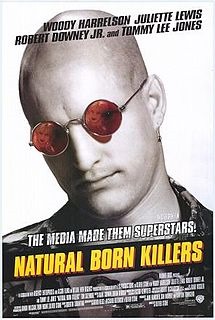
We did get off the couch occasionally. I took her to the opening weekend of the215px-NBKillaz Oliver Stone gonzo bloodbath Natural Born Killers, illustrating how completely tone-deaf I was as to what girls might want to see at the movies on a date. I don’t even recall asking if she wanted to see it. I just announced that was what we were seeing.

But Danielle seemed to tolerate me. When I finally worked up the courage to kiss her cheek (high on the jawbone, near the ear), she accepted it gracefully, but it did not lead to a make-out session. I even asked “Was that OK?” (ever the gentleman) and she said “Yeah, it was nice.” I didn’t push any further at that point.

In my defense, her mother, little brother, and two dogs loved me. Her brother, a sophomore, was another overachiever-type and worked at the McDonald’s in the same shopping center as my video store. He would make me quadruple quarter-pounders (just called “pounders.”) Eating these on a regular basis may be solely responsible for the shooting pain in my left arm every time I rise from a seated position two decades later.

A lot did seem to be going right. But I couldn’t push through to the next level with her. The issue couldn’t possibly be me, could it?

The pattern continued…

#144. “When I Come Around” — Green Day

Gas was cheap in ‘94, hovering around a buck-twenty per gallon. I did a lot of aimless driving around, listening to sports talk or the oldies station (no CD player in the Millennium Bronco…yet), but I always ended up seeing if Danielle was home.

As we’ve discussed, Danielle was a busy girl. Her car was there maybe one out of every three or four days that I checked. I imagined her being disappointed on the days she was there and I somehow missed her. Missing her was a highly unlikely scenario because I watched that driveway like a hawk, but I imagined it nonetheless. “When I Come Around” was Green Day’s version of a ballad, and it was then and remains today my favorite song by them. The lyrical narrator is always “out on the prowl,” while the object of his affection is just sitting around “feeling sorry for [her]self.” I naturally applied this scenario to my situation. I was the roaming free spirit, she was the faithful waiter. Pure fantasy, of course…but there was an odd little hiccup that indicated I was subconsciously aware that whatever was going on with Danielle was kind of doomed.

I had a habit of slightly tweaking song lyrics when I would sing along with them to better suit my current state of mind. Even at the height of my delusions, I couldn’t kid myself about the last verse of “When I Come Around.” I mentally reversed the pronouns when I sang along with the song (which was often), switching the song’s “you” and “your” for “I” and “my.” As in “I may find out that my self-doubt/Means nothing was ever there/I can’t go forcing something if it’s just not right…” Very telling.

But “forcing something” I did. I pushed my chips to the center of the table one night as I was leaving, and planted a kiss squarely on her lips. She smiled, and continued saying whatever she had been saying before I moved in. But she did smile. I was hoarding whatever positive signs I got from her, because evidence that this was not going to work was piling up. (The coughing was a purely a nervous reflex at this point, and still lingering.)

Not long after that, I finally asked her to make it official with me. We were up in her bedroom, and she was doing something incredibly labor intensive (draining a waterbed, I think), and I sat cross-legged (not helping) on the floor, nervously fingering my shark’s tooth on a pukka shell necklace that I got in Hawaii a couple of months before. (It went nicely with the three-button polo shirt I was also wearing at the time. Why anyone would let me in their house is beyond me.) I steered the conversation toward Official Couplehood, and she didn’t steer it elsewhere (lack of panicked refusal = permission to continue). I ended up making clear that I was very low-maintenance. But the way I phrased it — “It doesn’t take much to make me happy” — didn’t come across the way I intended it. “Oh, thanks,” was the sarcastic reply. Smooth operator that I was, I somehow rescued the situation, and left for work that evening with the (ambivalent) impression I had a girlfriend again.

And I had one more ace up my sleeve if all else failed… Continue reading

4 Comments

Filed under Music -- 1990s, This Used To Be My Playground

This Used To Be My Playground, Part 18: Never Bring Laundry To A Mud Fight

Two years is a long time…practically forever in Internet-land, but that’s how long it’s been since an entry has been made in this series.

If you’re to new to the site, and/or a shut-in with mobility issues, you can begin with Part 1.

Or catch up on the last few entries here:

This Used To Be My Playground, Part 15: Parker Lewis CAN Lose Or, The Perils of Clinging To Adolescence

This Used To Be My Playground, Part 16: A Fantastic Voyage With Cousin Bob (Loser Chronicles, Vol. II)

This Used To Be My Playground, Part 17: Nine Inch Fails — You Want To What Me Like A What??

When I first started these musical reminisces five years ago, it was intended as a quick skim through a few songs that I felt culturally encapsulated a very important decade in my life. Well…300 songs. The Holy Bee has always been an ambitious blogger. Ambitious…and verbose. The little capsule reviews of ‘90s songs and a few funny/sad memories to go with them swelled into a rambling autobiography, and it stopped abruptly at a particular time — the split between myself and my high school/early college girlfriend, Emily. I now realize that was the point to which I was writing. Once I got there, it was like lancing a boil, or vomiting up something that had sickened me for far too long. The whole damn thing was not about music at all, but about heartbreak. And when I purged, I lost interest in continuing.

Looking back on the first seventeen entries, I am both proud and somewhat embarrassed. I was honest — too honest, sometimes. I included some real names I should have changed, some incidents best left unreported, and some thoughts best left unexpressed.

So I’ve gone back and changed a few more of the key names, including Emily’s. Why? Anyone who knows me from back then knows the real name(s), of course, and those who don’t wouldn’t be aware of who they are anyway. But I’ve just grown increasingly uncomfortable typing those real names, especially the girls (now middle-aged women long past caring, but it still feels intrusive.) The only person guaranteed to keep his real name is McKinney. Leaving his name attached to my memories is my inadequate tribute to his legacy as a genuine character.

I suppose I could stop the whole thing right here, but I feel I should see it through. The web is littered with abandoned blog series, and I refuse to join them. There’s still a few stories left to tell, and even a little music to remember.

One thing that will make it easier for me to continue is that “The Nineties” as an era, not a set of calendar pages, really ended for me in late 1997, and that’s when this series will pretty much end (probably with a quick 98-99 epilogue). Your mileage may vary, but I think unfocused anticipation (fear?) of 2000 shortchanged the last few years of the 20th century. So, if I keep it brief, I can see the end of my Nineties from here.

Decades are much more of a cultural span than a rigid group of numerical ten-year blocks, overlaid with very personal associations for those who experienced them. Culturally, the decade known as “The Fifties” was much more than Jan. 1, 1950 to Dec. 31, 1959 (add one year to each of those for you mathematical sticklers out there.) It started with the Baby Boom and the Cold War just after WWII, and continued well into what the calendar told us was the 1960s. Depending on your point of view, the turbulent “Sixties” began with the assassination of JFK or the American arrival of the Beatles (the two events took place eleven weeks apart). The Sixties “era,” too, lingered into the 1970s. A recent book called What You Want Is In The Limo by Michael Walker made a good case for the cultural “Seventies” starting in ‘73.

holybee94

The Holy Bee, looking typically morose, late ’94. Form an orderly line, ladies.

…So my Nineties felt a little short. It got rolling only in late ‘91 when Nirvana shook up a bloated and complacent music scene, and ended for me in the fall of 1997, for a few reasons. 1) I discovered I was going to be a father in 1998. I would have to be a grown-up from then on. 2) I began feeling the autumn breezes on the crown of my head a little more than in previous years, and the contents of my hairbrush and shower drain confirmed the physical (if not emotional) aging process had truly begun for me. 3) I lost touch with the music that was on the charts and on the radio. It began targeting a different audience (younger and dumber, in my opinion), and I became [sigh] “hipsterized,” for lack of a better term — interested in digging for the non-mainstream, the obscure. What little was left of the musical mono-culture crumbled into sub-genres and sub-sub-genres, “event” albums that everyone owned (and even albums themselves) would soon cease being relevant, staring as they were down the barrel of mp3s and new ways to consume music. Not necessarily bad ways, just not Nineties ways. The New Millennium was already eating its way backwards. Like the Fifties, I feel the 2000s (“The Oughts”?) began a little early, and lingered a little long. In fact, have the 2010s established an identity — a “feel” — even now?

Where were we? Oh, yes. It was August 1994, and I was a mopey 19-year-old college student and video store clerk who had just been dumped. Wispy early attempts at facial hair came and went according to my whims. I was spending a lot of time holding down a barstool at Mahler’s coffeehouse, where the coffee was gratis thanks to the counterman Caspar (an old high school acquaintance), and fellow regular patrons Audrey (Caspar’s girlfriend) and McKinney were allowing me a semblance of a social life again… Continue reading
2 Comments

Filed under Music -- 1990s, This Used To Be My Playground

Zeppo = Zero? A Totally Unexamined Life

PRODUCER: Can you get some more variety into your part?Zeppo Marx, 1933

ZEPPO: How many different ways are there to say “yes”?

(Allegedly overheard during Animal Crackers Broadway rehearsals, 1928.)

“Zeppo Marx is a peerlessly cheesy improvement on the traditional straight man.” — James Agee, legendary film critic.

“Oddly enough, it proved to be Zeppo who was the most difficult to track down in terms of his post-team life. Perhaps if I had more time and money…though I expect that would have a pretty minority appeal.” —  Simon Louvish, Marx Brothers biographer.

One thing that comes from a reading list like mine that consists mostly of biographies is you get a glimpse of the difference between a well-known person’s public image and what he is like out of the spotlight. A seemingly simple, straightforward persona can hide immense depths of complexity (and vice versa).

It seems clear that no one is ever likely to write a biography of Zeppo Marx, the fourth Marx Brother and one who proved entirely superfluous and inessential to the act. [2024 Edit: I was wrong.] So much so that he dropped out halfway through their film career and barely anyone noticed. Zeppo, with his entirely normal appearance and lack of any sort of comedic character, has always been described as the “straight man,” but the Marx Brothers never really needed a straight man, at least as that term is normally understood. Their aggressive form of comedy took on authority, pretension, and stuffiness — external targets, which did not require a traditional straight man within the team feeding them set-up lines. And Margaret Dumont was the greatest straight woman in cinema history when one was needed. The Marx Brothers were three Great Comedians — Groucho, with his cigar, painted-on mustache, and endless flow of wisecracks, insults and non-sequiturs, Harpo, the gifted silent clown who communicated through exaggerated facial expressions and horn-honking, and Chico, the piano-playing sharpie with the inexplicable Italian accent — and one leftover.

The leftover has become a footnote in film history, and perhaps nothing more than a mostly-forgotten cultural punchline. “Zeppo” has become a euphemism for “unneeded.” So, who was Herbert “Zeppo” Marx, outside of his limited screen persona? This is a question that kept occurring to me as I’ve read through various Marx books and bios over the years, and Zeppo-the-real-person would pop up now and again and tug at my curiosity.

Zeppo does have his defenders, at least as a performing presence. It was an unwritten (but seemingly ironclad) rule that a musical comedy of stage or screen in the 1920s and 30s, no matter how off-the-wall or zany, had to have a romantic subplot featuring an attractive young couple. These parts are pretty bland and thankless, especially to the eyes of modern audiences, and Groucho, Harpo, and Chico were far too colorful and grotesque to play such a part. You would think that the role would fall naturally to young, relatively handsome Zeppo. In fact he has even been credited with undermining the entire nature of romantic lead, just by virtue of being a Marx Brother.

Marx-Brothers-Monkey-Business

The Four Marx Brothers, c. 1931

“Zeppo’s parts were always intended to be a parody of the juvenile role often found in sappy musicals of the 1920s-30s era. Sometimes, he would just have a few lines, and he would otherwise be reduced to standing in the background with a big smile on his face..and always stiff and wooden. In other films, Zeppo would have a more significant role as the romantic lead, but he would still always be stiff, wooden, and, yes, with a big smile on his face. Either way, he could never be considered a real straight man. He was a sappy distortion of the real thing, and sort of the gateway through which we connected with the other Brothers.” — Danel Griffin, film theorist, University of Alaska Southeast.

Joe Adamson goes on to say that Zeppo’s participation in the letter-dictating routine in Animal Crackers displays his obvious importance to the act. And Allen W. Ellis wrote a massive scholarly paper called “Yes, Sir: The Legacy of Zeppo Marx,” (for which I refuse to pay $35 to the Wiley Online Library for “24-hour access” to the PDF, enlightening as I’m sure it must be).

It’s nice to see poor Zeppo get this belated critical respect, but it is not backed up by what we see on the screen.  By their own admission, the brothers and their writers didn’t put all that much (or any, really) thought into Zeppo’s role. The letter-dictating routine is one scene in one movie. His presence in any other comedy routine in all the other movies is non-existent. Out of the five movies he did with his brothers, in only two (1931’s Monkey Business and 1932’s Horse Feathers) did he play anything close to a romantic lead…and acquitted himself fairly well. No worse than any other person playing that type of part at that time, and certainly nothing to indicate it was even the slyest of parodies. In his other three films, he played Groucho’s secretary/assistant, with a handful of unimportant lines. Not only did those films not appear to be parodying wooden, stiffly-smiling romantic leads, they went out and got other young actors to play actual wooden, stiffly smiling romantic leads. It didn’t even seem to occur to them to fit Zeppo into that role each time, where maybe he could poke fun at its conventions from within and be a real team member.

No, he didn’t have much to do because, historically, the fourth Marx Brother never had much to do, and no one was interested in changing the long-established procedures. Continue reading

13 Comments

Filed under Film & TV