
“The essential American soul is hard, isolate, stoic, and a killer. It has never yet melted.” –D.H. Lawrence, 1920s.
“This is the west, sir. When legend becomes fact, print the legend.”
–John Ford’s The Man Who Shot Liberty Valance
Paramount Pictures, 1962.
“America has contributed two great art forms to world culture: jazz music and the western.”
–attributed to Clint Eastwood, early 1990s.
Around the time Clint Eastwood was doing publicity for his 1992 western Unforgiven, his somewhat reductive quote about jazz music and westerns began making the rounds. Now, I despise pretty much all jazz music (a bunch of instruments playing different songs at the same time, with drums that sound like shoes in a dryer), but I love westerns with an unseemly passion, and I have to agree with Clint that they are a uniquely American form of cinematic expression. Our historical background provides bottomless fodder for an art form that, like rock and roll, has been declared “dead” many times through the decades, but keeps hanging on. And we are all the more blessed for it.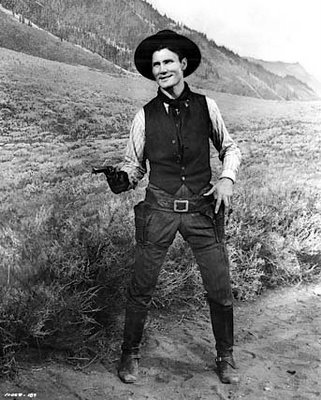
Between the end of the Civil War (1865) and the year when the U.S. Census Bureau declared the American frontier “closed” (1890), was a relatively brief period of time that cast a huge shadow over the American character. The raw, primitive America of Daniel Boone and James Fenimore Cooper smashed up against the modern, materialistic America of John Rockefeller and Upton Sinclair. The two halves of the American Dream began an ugly grappling match – freedom & rugged individuality vs. wealth & community – which continues to this day, but much further below the surface. In those 25 or so years at the end of the 1800s, the naked savageness of this fight was very much on display, and the negative extremes of both sides had free reign. “Rugged individuality” often expressed itself in brutality and lawlessness, and “wealth” often expressed itself in a level of exploitation and greed far surpassing even today’s levels. When these two titanic forces clashed (or even circled each other warily) in such a tiny sliver of time, a modern mythology was created almost overnight.
The “Old West” began mythologizing itself before it was even over. The cheap pulp fiction about the exploits of such figures such as Wild Bill Hickock, Wyatt Earp, and Jesse James flew off the shelves during a time when the men themselves were still at the height of their careers. So many of the stock characters and situations (white-hatted good guys, showdowns at high noon) we see in westerns — usually bad ones — have their roots in the dime store fiction that was eagerly devoured by readers of the previous century.
A good western does not merely present us with the mythology, but attempts to answer why we’re attracted to that mythology in the first place through the actions of its characters. A good western is not merely a historical costume drama, but is a reflection of the era in which it was made. (For instance, the westerns of the 1940s and 50s emphasized duty and sacrifice, the westerns of the 1960s and 70s tended to be cynical and anti-authority, the westerns of the 1990s and 2000s explored the nature of violence and fame.) A good western gives us a glimpse into a funhouse mirror, showing an exaggerated reflection of all of our best and worst qualities.

 Holy Bee of Ephesus