
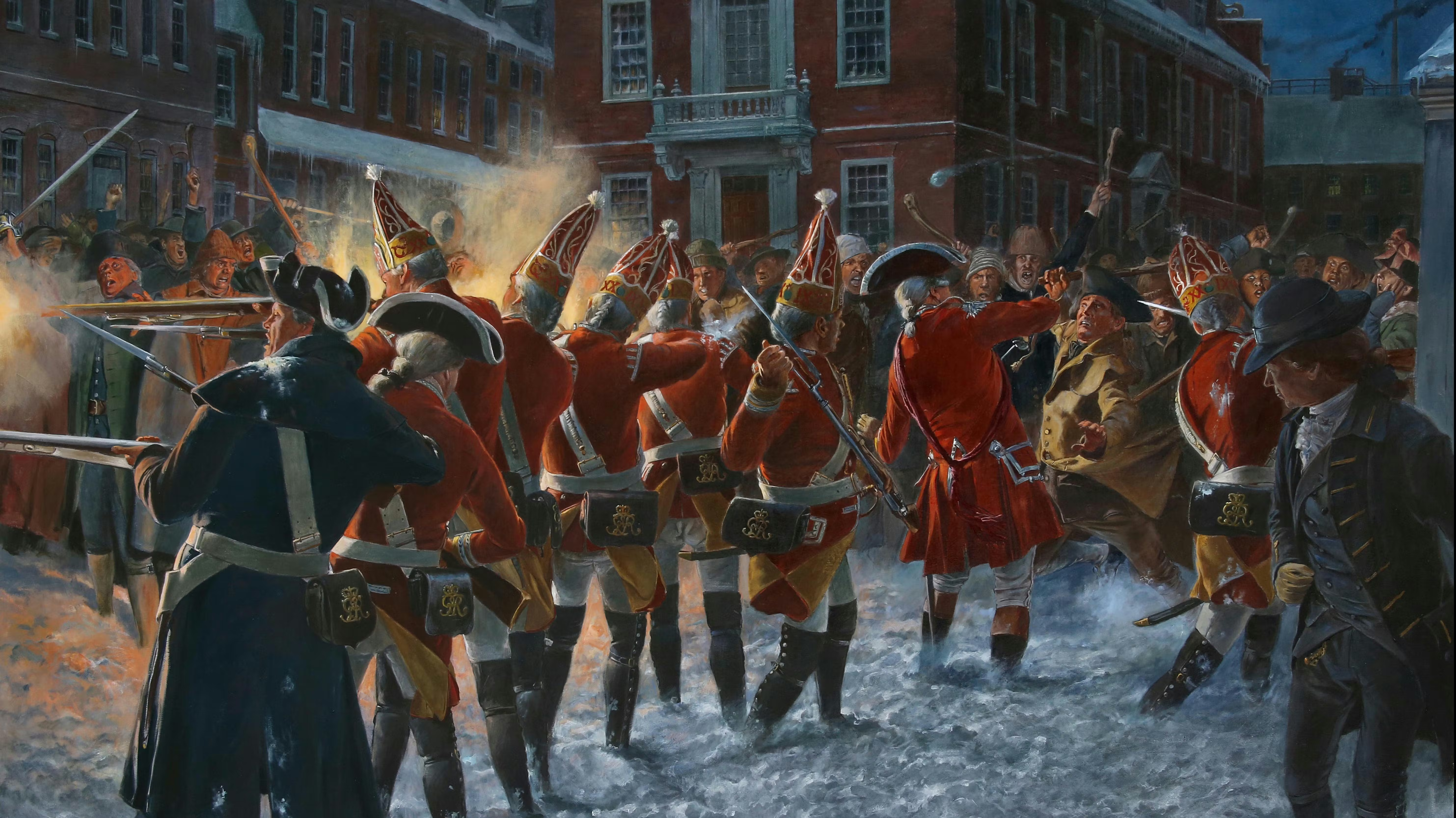
March 5, 1770…“That little twerp*,” Private Hugh White must have been thinking as he observed a wigmaker’s apprentice — a boy all of thirteen named Edward Garrick — accosting one of White’s senior officers, Captain John Goldfinch, about a past-due payment for barbering services owed to the boy’s employer. Goldfinch (technically a “captain-liuetenant”), who had actually settled the debt the day before, tried to laugh it off and continue on his way up King Street, but the lad wasn’t having it. He and his fellow apprentice, Bartholomew Broaders, blocked Goldfinch’s path, and Garrick even rammed his finger into Goldfinch’s chest, accusing him of thievery in the most colorful language his adolescent mind could concoct as his breath puffed visibly in the frigid late winter air. An officer and a gentleman, Captain Goldfinch simply stepped around the bothersome boy and headed for “Murray’s barracks,” an abandoned distillery converted into housing for British troops a few blocks away. Trouble was currently afoot between a group of unruly citizens and the soldiers posted there.
Garrick continued his nasty tirade even after Goldfinch was out of earshot. Private White was on guard duty in a small sentry box near the entrance of Boston’s Custom House and had been talking with barmaid Jane Crothers about the escalating mess at the nearby barracks when he finally had enough of Garrick’s mouth. Freezing cold and insulted on behalf of his captain, White was in no mood to let this low-class child get away with that kind of behavior. He approached Garrick, barked something about respecting your betters, and gave the little twerp a supremely satisfying crack upside the head with the butt of his musket.
This would not end well…
Back for a moment to the Puritans, who were never comfortable with using the word “church” in reference to a building. They felt it gave an inherent holiness to an inanimate structure, an idea they did not care for. To them, the true “church” was the congregation, the people. Congregationalists met in a “meeting house.”
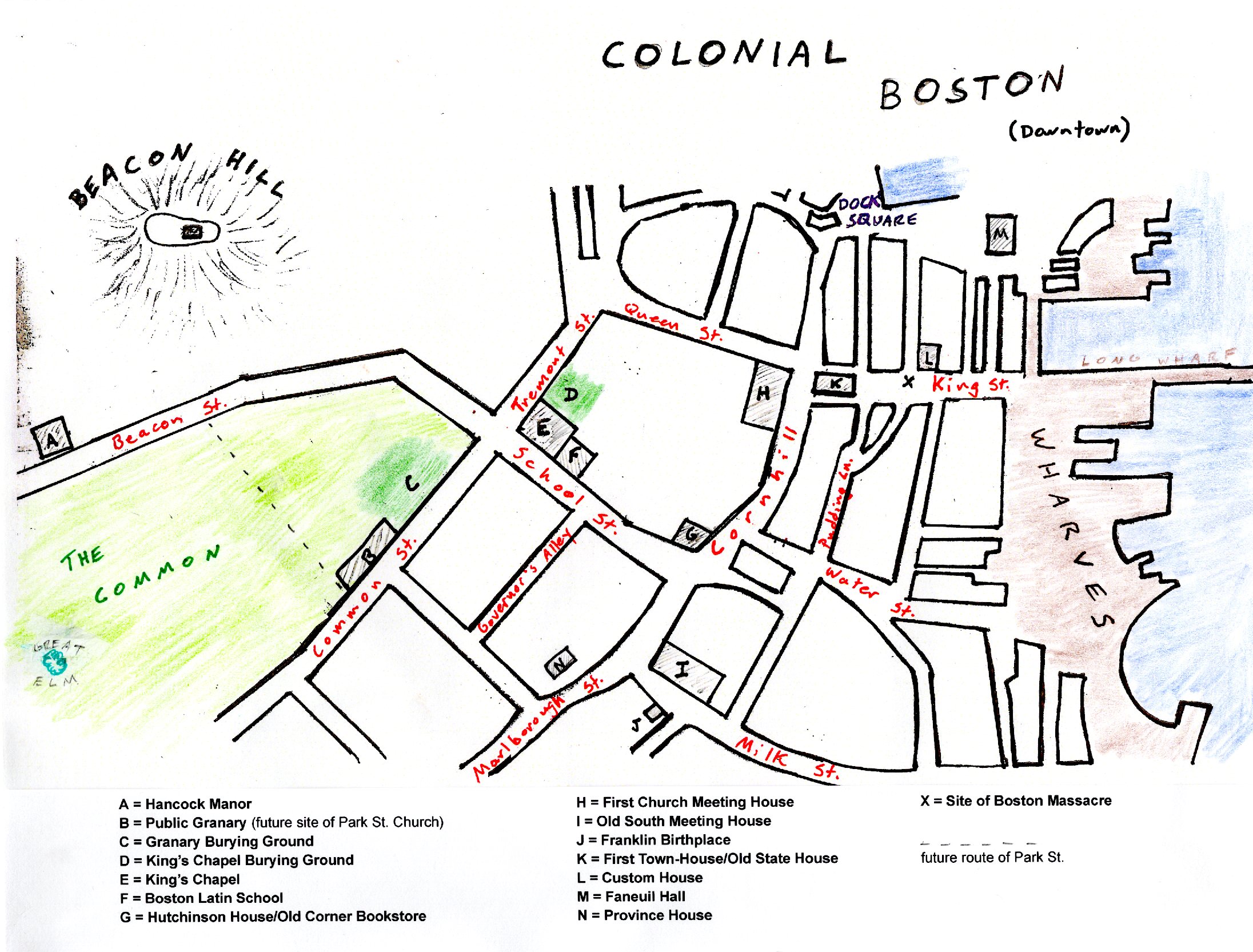
So the First Church in Boston was established along with the city itself in 1630, and its meeting house settled in on Cornhill, just up the road from the Hutchinson residence (see previous entry). The Second Church was established in Boston’s North End in 1649 to handle the city’s increasing population. The Third Church was established in 1669 by a few dozen breakaways from the First Church due to another one of those quibbles over a microscopic question of religious doctrine that seem incredibly stupid to anyone outside of the belief system. A debate over the proper amount of water used in a baptism caused several members of the First Church to completely lose their shit and set up a whole new congregation. The Third Church met in a cedar wood meeting house at the intersection where Cornhill became Marlborough Street on its way south. It was in this building that Benjamin Franklin was baptized, and attended services as a young boy.
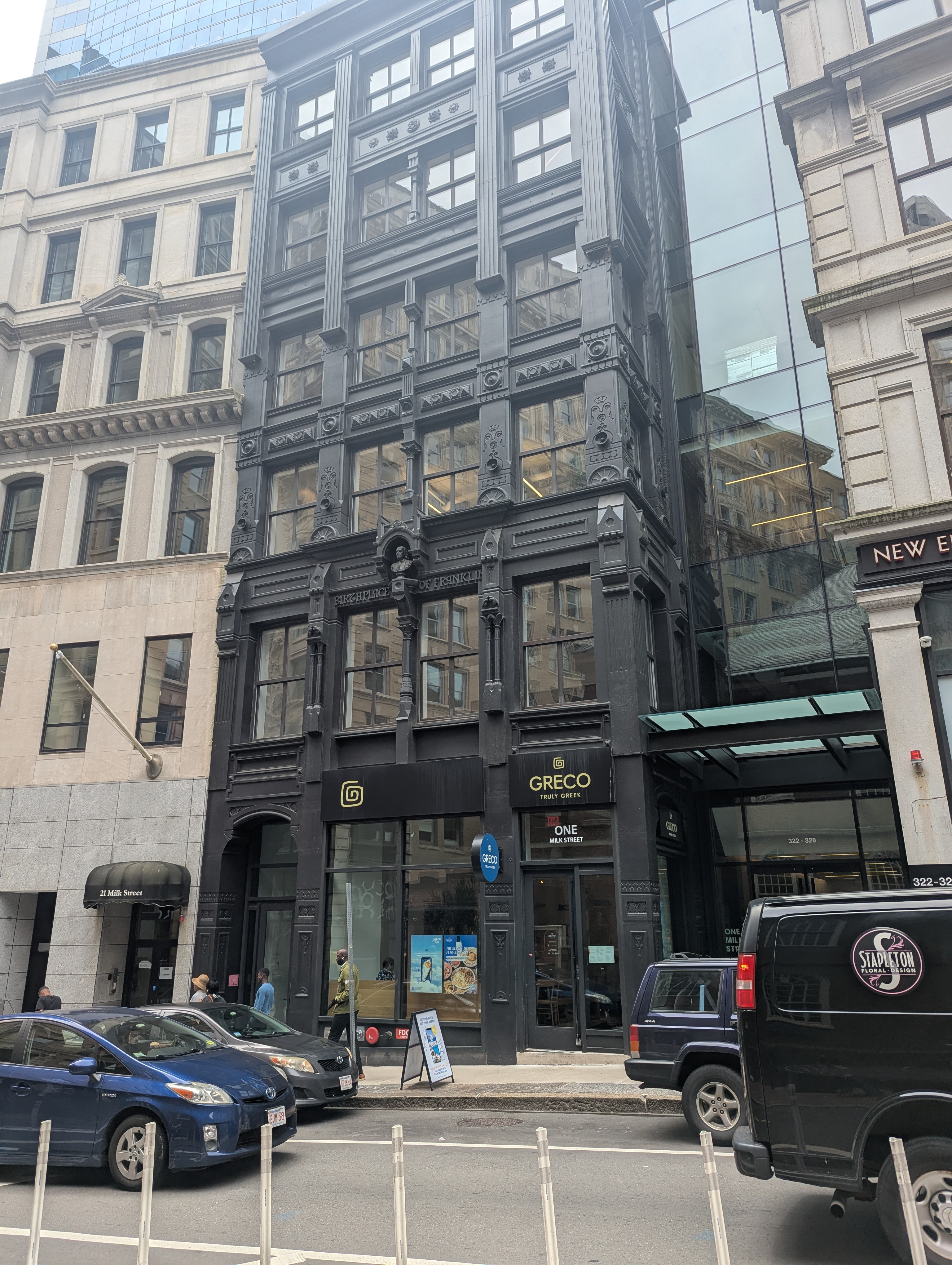
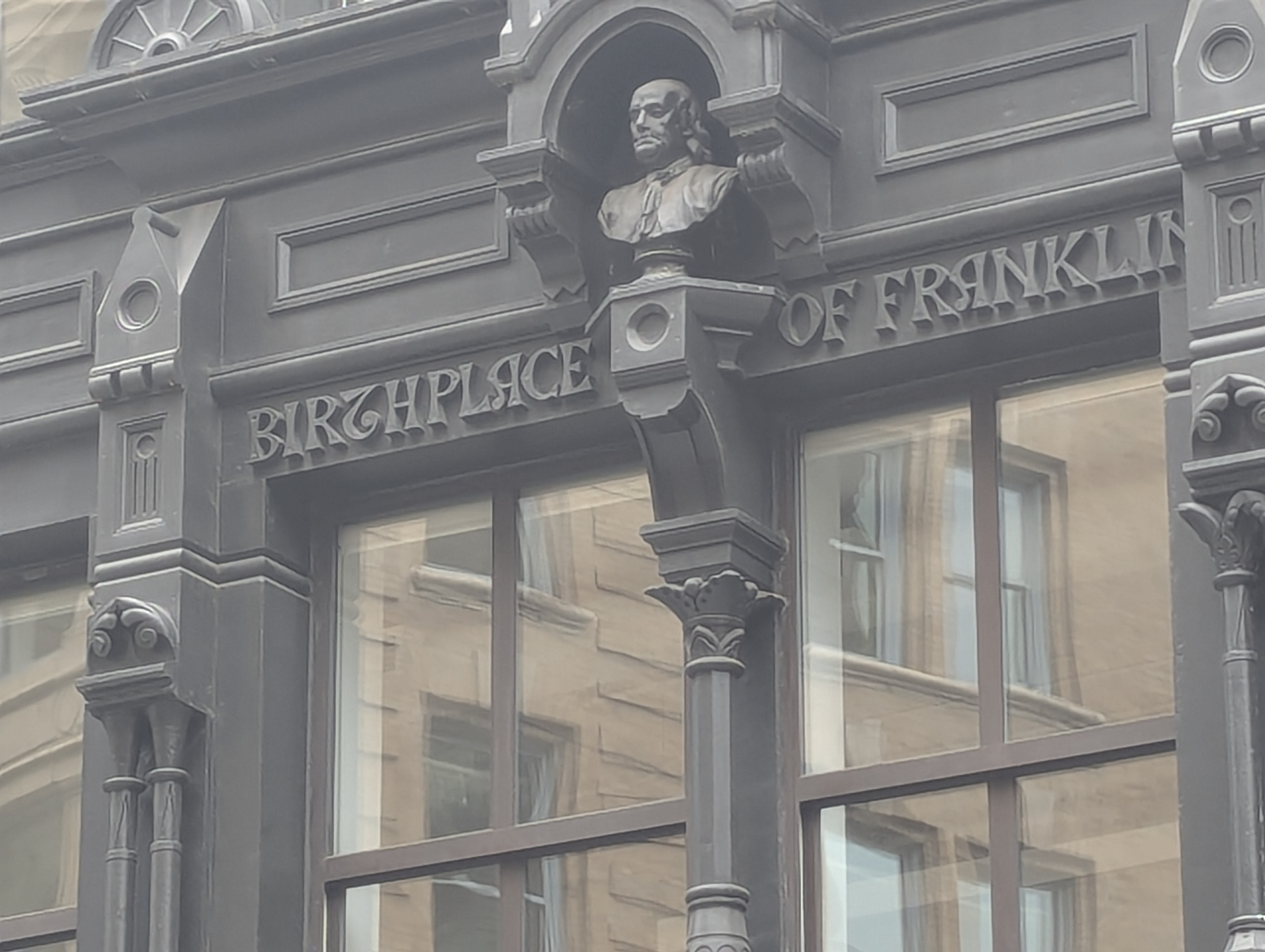
The site of the house where Franklin was born in 1706 is just around the corner. The original address was 17 Milk Street, and the house itself was destroyed by fire in 1811. Maybe the lot stayed vacant, or perhaps a few other buildings came and went until its current occupant, the Boston Post Building, was built in 1874. The Post Building was refurbished in 1930, and a bust of Franklin along with an inscription was added to the facade of the building between the second and third floors.
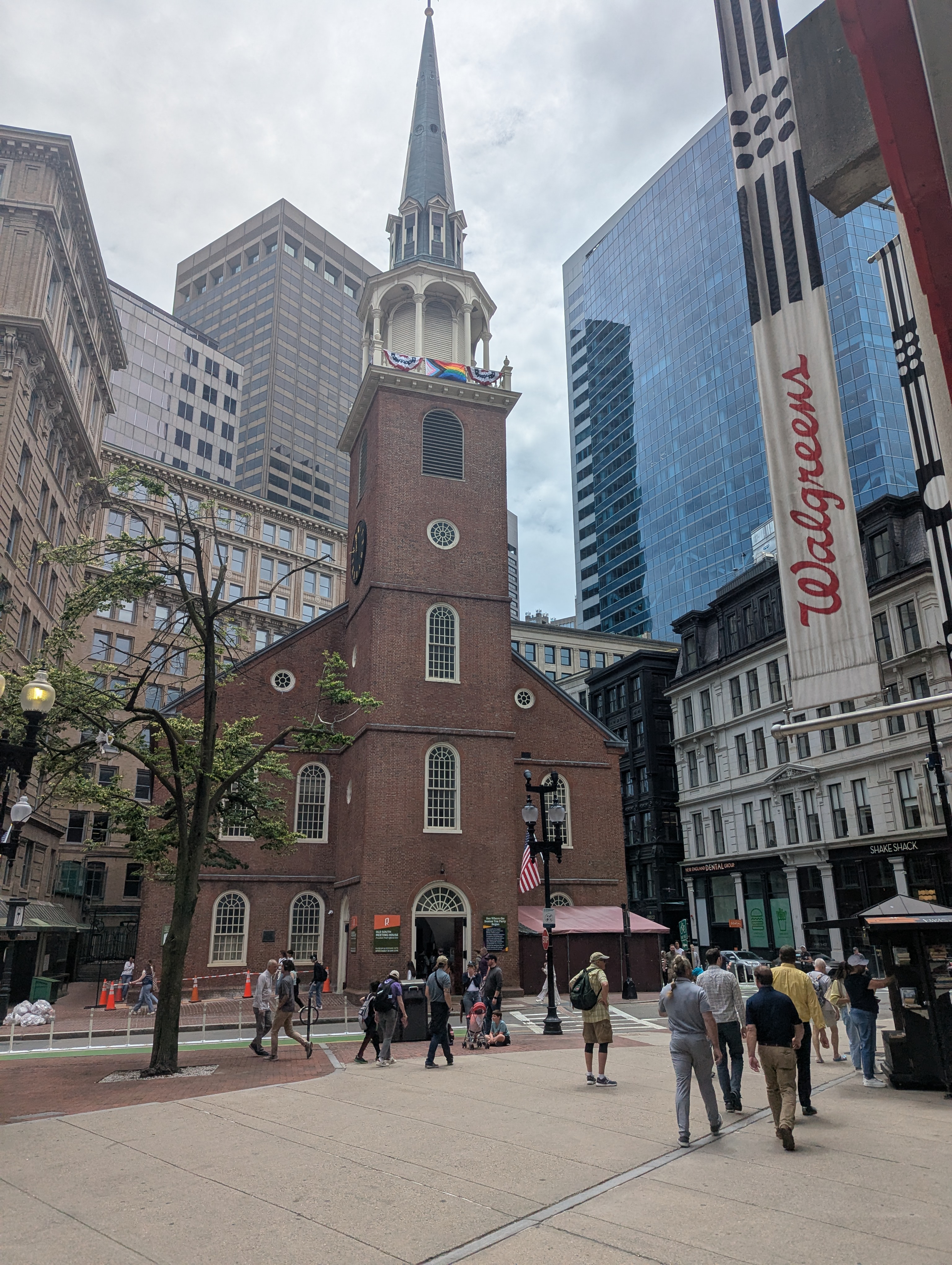
The cedar meeting house was eventually torn down, and replaced with #8. Old South Meeting House in 1729. At the time of the American Revolution, it was the largest building in the city of Boston. It was diagonally across the road from the Hutchinson house/Old Corner Bookstore, and still within spitting distance of their estranged brethren in the First Church.
We will briefly return to the Old South Meeting House in a future entry, but now let’s reverse our steps and head back north past the Old Corner Bookshop.
The former home of Anne Hutchinson is only one of many structures lost in the Great Boston Fire of 1711. As it burned its way up to where Cornhill (now Washington Street) met King Street (now State Street), the conflagration also took down the meeting house for the First Church of Boston. The First Church meeting house was quickly re-built in brick, and was used until 1808, when the congregation re-located and the “Old Brick” was demolished. On the site today is the massive modern skyscraper called One Boston Place, the 7th tallest building in the city.
One Boston Place casts its shadow over the location of another victim of the 1711 fire — the “Old Town-House” on King Street.
1639…Robert Keayne was hauled before the Massachusetts General Court, an elected body that served both legislative and judicial roles in the colony. Keayne was supposedly a respectable and upstanding member of the community. He was an active member in the First Church, and founded the Ancient and Honorable Artillery Company of Massachusetts, a volunteer militia unit that is the oldest chartered military organization in North America. His crime? Price gouging. The ten-year-old Massachusetts Bay Colony still relied on imports from England for just about everything, right down to nails. Keayne was accused of selling imported iron nails (a surprisingly valuable commodity at the time) at an inflated price. The specific case that brought him before the grim-faced Court was that he had sold some sixpenny nails (six pence per pound) to a customer on credit for eight pence per pound. A twenty percent profit margin. It was only when Keayne demanded the deferred payment — after an ample waiting period — did the customer decide he was being fleeced, and took the case to court. During his trial, numerous hive-minded townspeople suddenly emerged from the woodwork to add to the opinion that Keayne always charged a bit too much. (A few of them also helpfully threw in accusations that he was a drunkard as well.)
Where was the line between making a profit and exploitation? It was considered both a sin and a crime by the Puritans to earn too big a profit off of your fellow community members (anything above fifteen percent was viewed a little suspiciously, twenty was the danger zone, thirty totally criminal). The line was drawn by the General Court on a case by case basis, and they weren’t playing around with Keayne. They pointed out that he had been warned about this kind of thing before, and fined him £200 — a third of his entire fortune at the time. It was eventually lowered to £80 by the semi-sympathetic colonial governor Thomas Dudley (much to the outrage of some of the more hardcore members of the Court). In later years, when the Puritans no longer had a theocratic hegemony over the colonial government, these standards were relaxed. This was a good thing for 1700s guys like John Hancock, who never would have amassed the fortune he did if he had to do business by 1600s Puritan rules.
Just when he thought the whole matter was settled, Keayne was called out and publicly censured by the minister of the First Church. In an ecclesiastical trial, the congregation came close to excommunicating him, but he was saved by a narrow vote. He was outwardly contrite…but how did he feel inside? Was he genuinely repentant…or did he silently seethe over this treatment? His business managed to continue successfully, and after a year of probation, he was once again a church member in good standing. He even became a member of the General Court himself (briefly — he was booted for his alleged alcohol problem). But he must have heard the whispers and seen the looks.
When his health began failing, he drafted his will — a bitter, self-righteous 37-page screed where he vented all of his pent-up frustrations about his ordeal and passionately defended his personal character and actions as not detrimental to the community good. He died in 1656, and is buried in the King’s Chapel Burying Ground.
Whether it was out of genuine goodwill for the city that had filled his pockets for years or an attempt to prove he wasn’t a greed-driven villain, Keayne left Boston a gift in his will — £2500 for public improvements and relief for the poor. Specifically, he set aside £300 to build a centralized government and commercial building to serve the citizens. His donation was matched by several other prominent townspeople, construction of a wood-framed building on King Street in the heart of the city began in 1657, and everyone bit their lip and wondered if maybe they had been a little too hard on ol’ Bob Keayne.
The spacious “First Town-House” of Boston consisted of a public market on the ground floor, and space for the town council, a library, the governor’s office, and General Court on the upper floors. There are no contemporary images that exist of the Town-House, only later conjectural drawings based on detailed descriptions.
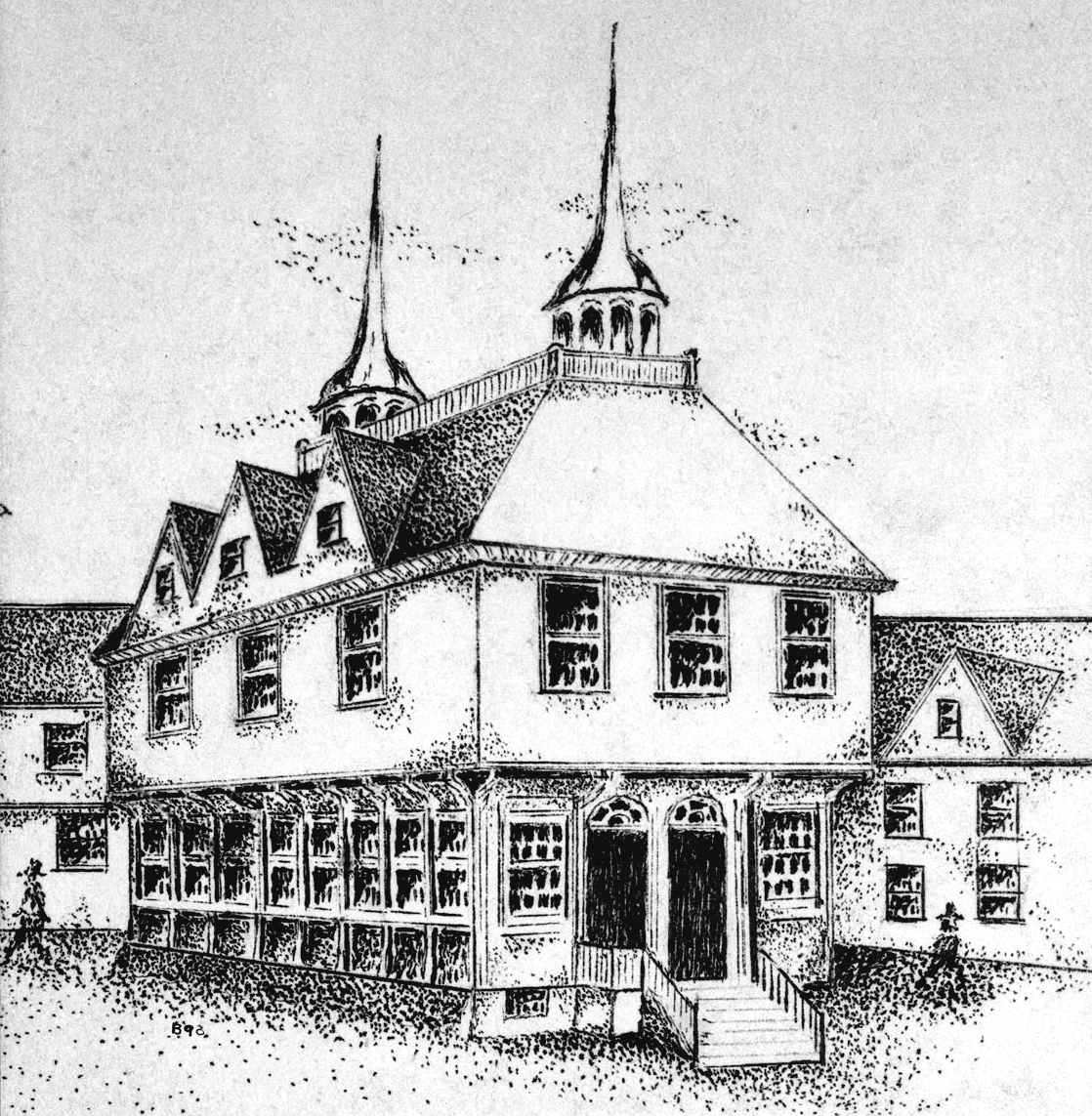
Whatever motivated Robert Keayne to bequeath a small fortune governing center for both the city and colony that accused him of being the embodiment of avarice, the First Town-House served its purpose from 1658 to 1711 when it was consumed by the first Great Boston Fire.
In an era when most buildings were made of wood, and professional fire departments were only beginning to be considered, the populations of even modest-sized towns existed with a constant low-key dread of the outbreak of fire. A church bell ringing outside of normal church hours usually signaled a fire had been spotted (remember that for later), and all able-bodied citizens were expected to grab a bucket and help out. Citizen volunteers did what they could, but mostly the blazes just had to run their course.
On the evening of October 2, 1711, in the rear yard of a bar called the Ship Tavern, located on Cornhill among the ramshackle wooden buildings between the large Hutchinson/Crease house on the corner and the First Church meeting house, a woman named Mary Moore was handling oakum (tar-soaked hemp fibers used for sealing the space between wooden planks) near an open flame. The oakum caught fire, which quickly spread due to the dry, windy conditions. The fire consumed the tavern, the Hutchinson house, the First Church meeting house (four sailors perished trying to rescue the bell from the steeple), the First Town-House, and a hundred or so more buildings. The glow of the flames was visible from sixty miles away, and roughly one-third of the city was destroyed. “From School Street to Dock Square,” said Winthrop descendant Robert C. Winthrop, “including both sides of Cornhill, all the buildings were swept away.”
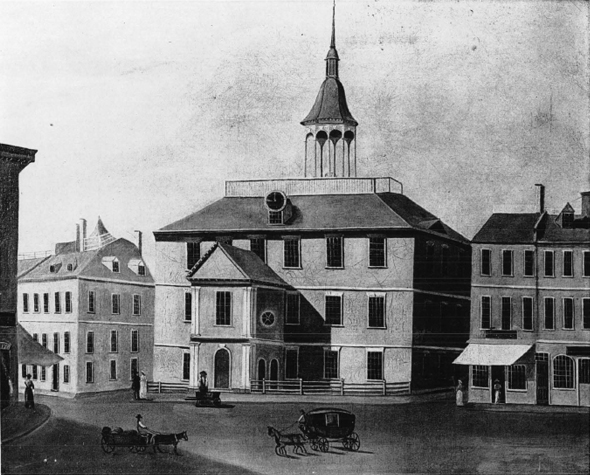
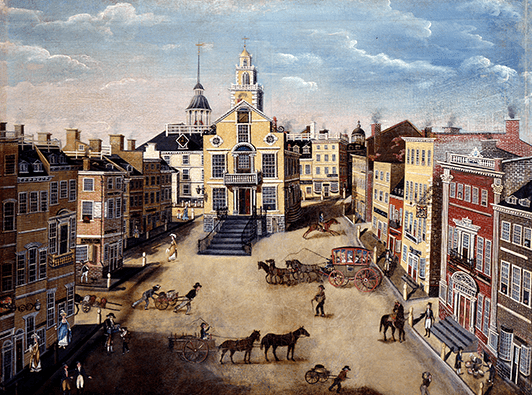
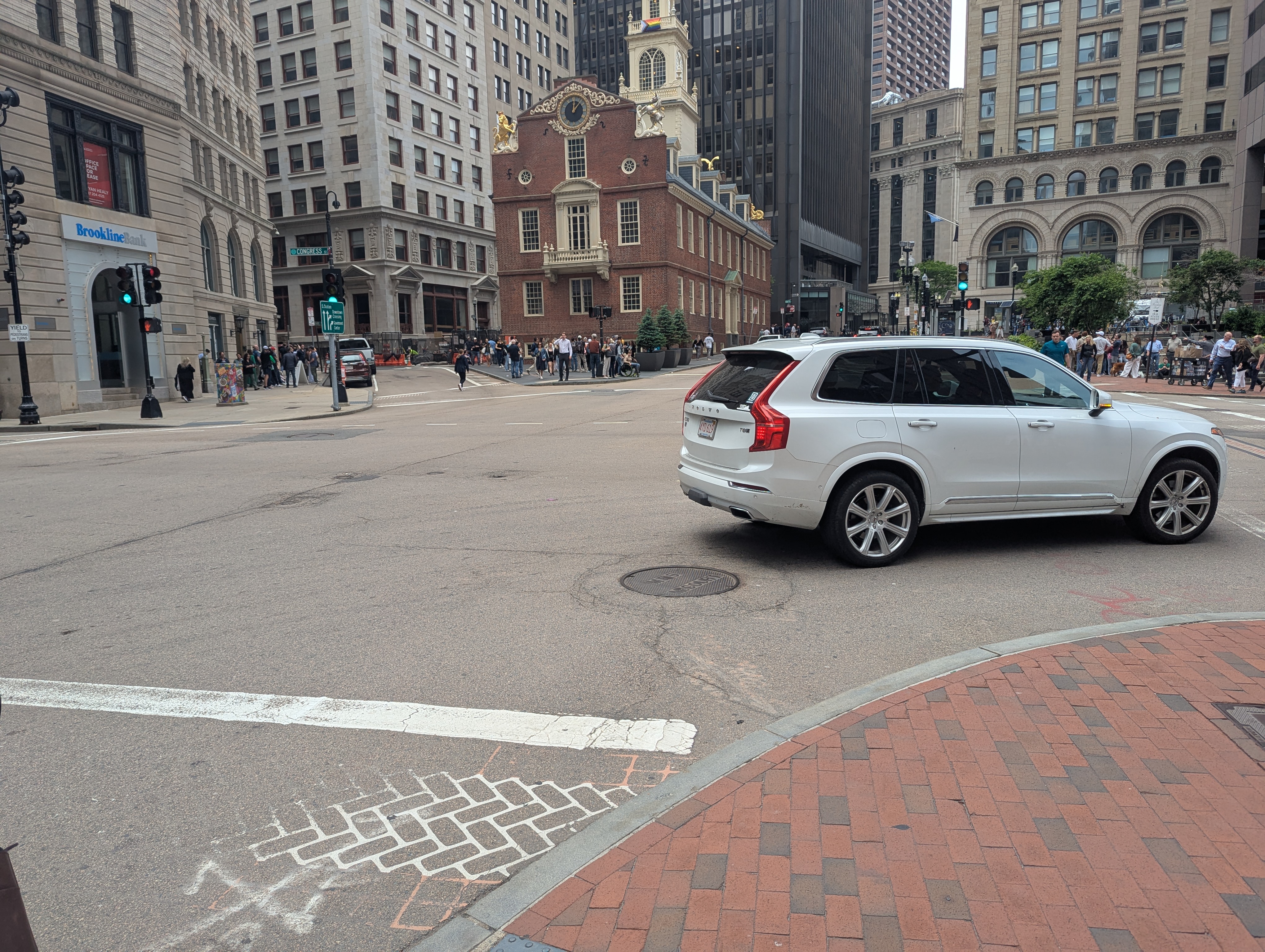
Three weeks later, the General Court voted to replace the Town-House with a building to serve the same purpose “in or near” the same location. This would turn out to be the next stop on the Freedom Trail — #9. Old State House. Construction was completed in 1713, and this brick building with a three-tiered tower became the seat of the Massachusetts colonial government. Its distinctive balcony was the site for many readings of public proclamations, including the Declaration of Independence on July 18, 1776. When independence from Britain was declared, Massachusetts became a state instead of a colony, and the Old State House became the home of the Massachusetts state government until 1798, when it moved to its new location (see Part 2 of this series). The Old State House was then leased out to various commercial tenants, did a brief stint as City Hall, and finally became a museum operated by the Bostonian Society in 1881.
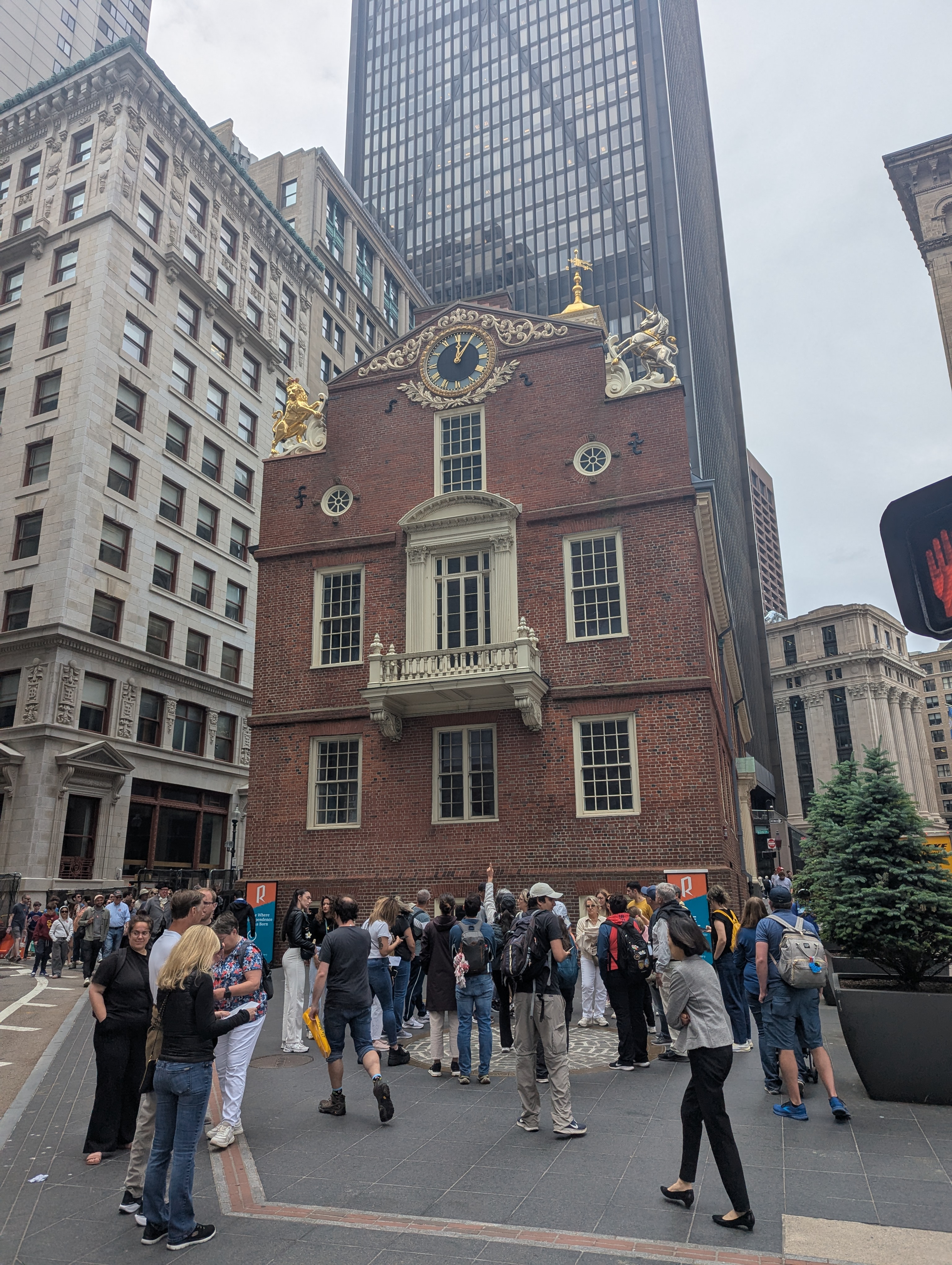
In front of the Old State House is an historical marker indicating #10. Site of the Boston Massacre.
Although the Stamp Act had been repealed, Parliament passed a new round of taxes on the colonies in 1767 called the Townshend Acts. So much trouble was expected in Boston in response to this, Britain sent four regiments to the city to protect the tax collectors and maintain civic order. This amount of troops in a city of only 16,000 was certainly a noticeable presence, and from the time of their arrival in the fall of 1768, Boston had an air of tension. The altercations between the citizens and the soldiers are too numerous to detail, but always managed to de-escalate without either side resorting to deadly force. (To be fair, it should be noted that there were numerous instances of friendly relationships between the soldiers and Boston citizens. Enlisted men often socialized with locals, and a few even married Boston girls.) After 1769, only two regiments, the 14th and 29th (approximately 2,000 soldiers total), remained in the city.
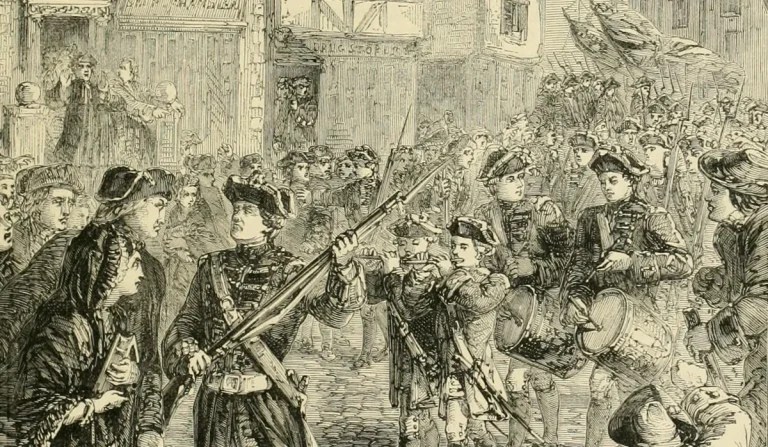
But with every negative incident, the hostility grew more palpable. Bostonians freely yelled insults at soldiers in the street. Unsurprisingly, the people doing the majority of the insult-hurling were adolescent boys. “Barbers’ boys” like Garrick and Broaders had an especially bad reputation for trouble-making. But even more mature Bostonians agreed with the sentiments, and sometimes joined in.
By March 5, 1770, Boston was a powder keg. Although the sun was out, the temperature was frigid, and about a foot of snow lay on the ground from the previous night’s storm. Many citizens recall the mood was particularly tense in the city that day. The first fatal confrontation between colonists and British officials had occurred on February 22, when eleven-year-old Christopher Seider was gunned down by a customs officer (as described in Part 2), and his well-attended funeral, a public occasion mingling sadness and righteous anger, was a grim recent memory for everyone. There had been two large street brawls at the ropewalks on March 2 and 3, putting the populace on edge. The 4th was a Sunday, when things went pretty quiet in observance of the Sabbath. On the 5th, rumors started circulating that the British soldiers were planning a vengeful crackdown. The Sons of Liberty were out in force, keeping a watchful eye on the troops doing their routine patrols. A local minister said he overheard someone saying “if they don’t start something, we will,” or words to that effect. As the sun started setting, there was a noisy confrontation — yelling and shoving — at Murray’s barracks near Dock Square, close enough to catch the attention of patrons of the Royal Exchange Tavern across the alley from the Custom House. (This is what sent barmaid Jane Crothers out to see what was going on.) Captain Goldfinch arrived at the barracks (a few minutes after side-stepping young Garrick) to break things up. Among the Bostonians he sent away were sailor Crispus Attucks, and apothecary Richard Palmes.

Despite all this, it looked like the day would end without any serious violence. As darkness fell, lights appeared in shop and tavern windows, a pale quarter moon emerged, and a lot of melted snow re-froze into slippery ice.
And just around 9:00 pm, Private Hugh White sent Edward Garrick sprawling on the ground.
Bartholomew Broaders began yelling for help, and a crowd gathered. Initially it was the usual collection of teenage street toughs. Most were friends of the two boys, and more than a few of them were carrying fence pickets as makeshift clubs. “Damned rascally scoundrel lobster son-of-a-bitch!”** was one of the many epithets that rang out through King Street. White told Crothers to get out of there. (She did not go far, becoming one of the main witnesses in the later trial.) Henry Knox***, a portly young bookstore clerk on his way home from work, happened upon the scene. He saw Private White, now fearing for his life, backing up the Custom House steps and loading his musket.
“If you shoot, you’ll die for it,” warned Knox. If the angry mob didn’t kill White outright, he might be hanged for murder.
“Damn them,” replied White. “If they molest me, I will shoot.” He tried to get inside the Custom House, but it was locked. The crowd grew bigger, with respectable Boston citizens joining in with the rowdy youths. The threats and taunting began. Words were followed by projectiles. Icy snowballs struck White painfully from all sides.
Around this time, church bells started tolling, from both the Brattle Street meeting house and the First Church meeting house. As indicated earlier, church bells ringing when there was no church service was understood to be a fire alarm. Dozens more Bostonians flooded the streets, some of them carrying buckets and looking very confused when they didn’t see smoke or flames. But they were quickly attracted by the ruckus on King Street, and many of them joined the throng. (The identity of the bell ringers — who began the alarm within minutes of White striking Garrick — remains a mystery, but was almost certainly some of Garrick’s teenage pals.) James Bailey, a sailor who had participated in the street fights of March 2-3, stood next to the terrified White, and attempted to talk down the situation. Whatever he said went unheeded.
Private White decided at this point to summon assistance. With 2,000 soldiers in a very compact city like colonial Boston, one soldier was never far away from another. At least two were close enough to White to run and alert the officer of the watch.
There was a guard house across from the Old State House (still referred to as the “Town-House” at that time) just up the street, and from that location Captain Thomas Preston emerged with seven other soldiers. Preston paused and weighed his options. Irish by birth, he was one of the few British officers who got along well with the colonists. Using force to break up the mob — now in the hundreds — would jeopardize his carefully cultivated relationship with the citizenry. He observed the situation from a distance for a while (one source says he hesitated almost a full thirty minutes). Finally, he accepted that he had to take action. Private White needed to be rescued, and he could not risk the crowd breaking into the Custom House, where trade goods from the nearby harbor went to be assessed for import duties. Both the goods themselves and the plentiful cash on site made a tempting target. The Custom House was not originally built for the purpose. It was a converted townhouse, and required extra security. Hence, the sentry box and the presence of Private White.
Corporal William Wemms, and Privates Hugh Montgomery, John Carroll, James Hartigan, William McCauley, William Warren, and Matthew Kilroy, were dispatched by Preston. The seven soldiers walked swiftly down King Street and pushed through the crowd, bayonets fixed. Henry Knox approached Preston and warned him that any shooting would have dire consequences. Preston nodded grimly and indicated he was well aware of the seriousness of the situation, thank you very much. The troops formed a semi-circle in front of the Custom House, and made a clear show of methodically loading their muskets. The onslaught of rock-hard snowballs, oyster shells, and other debris intensified as did the threats and taunts. At certain moments, the crowd and the bayonet points were only inches apart. After another few moments, Preston drew his sword and went to join his men, who were facing down increasingly provocative shouts from the throng.
“Why do you not fire? Fire, damn you! Fire! Fire and be damned! You dare not fire!”
Captain Preston stood between his soldiers and the crowd, and repeatedly ordered them to disperse. Private Carroll recognized James Bailey, still standing near White, from the earlier street fights. He began to move aggressively towards him to give him a little payback, but White told him to back off. Extra trouble was not needed.
Richard Palmes, freshly arrived from the defused situation at Murray’s barracks (as were many others), approached Preston, clutching a wooden cane at his side. “Are your soldiers’ guns loaded?” he asked.
“They are.”
“I hope you don’t intend the soldiers shall fire on the inhabitants.” It was well known that British officers could not give an order to fire without the approval of a local magistrate and a reading of the Riot Act (yes, that’s a real thing), which was why Bostonians went pretty free and easy with the taunting and smack-talk.
“By no means, sir, by no means. I’m standing right in front of them. I [would] fall a sacrifice.”
These were the last words spoken before all hell broke loose on King Street.
There were two hundred people who claimed to be eyewitnesses to what happened next. Pretty much all of their recollections were different. No one saw anything the same way as the person next to them. Putting together an amalgam of the most agreed-upon details, here’s an approximate version of what went down:
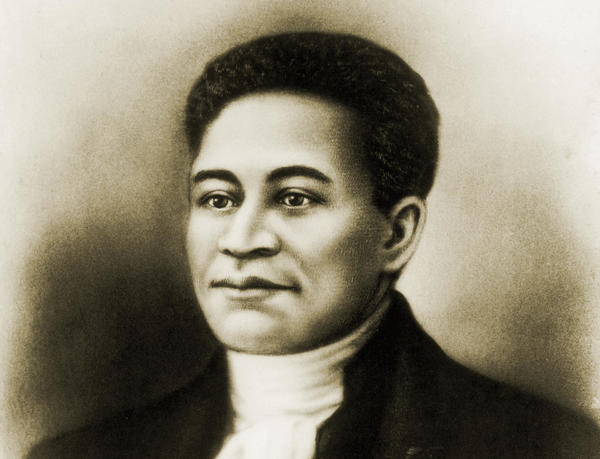
As Palmes was asking his passive-aggressive questions of Preston, some random object was hurled into the air (rock? chunk of wood or ice?) and came down hard on Private Montgomery, who fell to his knees and dropped his musket. Rising to his feet, he was heard to exclaim “Damn you! Fire!” (Was he talking to his musket or his fellow soldiers?) He stepped to one side of Captain Preston and discharged his weapon. The soldiers’ muskets carried a double load, and two bullets from Montogomery’s single musket shot slammed into the torso of Crispus Attucks, at the front and center of the crowd. Attucks, half-Black and half-Native American, was well over six feet tall and towered over most of the crowd. He was a crewman on a whale ship, and had a reputation as an anti-British agitator when he was in town. He died almost instantly, his right lung, liver, and gall bladder shredded.
Palmes then swung his cane wildly, striking both Montgomery and Preston on the arm.
Preston gave no order, but all of the other soldiers fired in the next few moments. Without an order, this was not a precisely timed volley in unison, but a hesitant, undisciplined round of shots by panicked soldiers that ended up ripping into eleven people. Corporal Weems was the only one who did not shoot. (Private White also does not seem to have taken part in the shooting.)
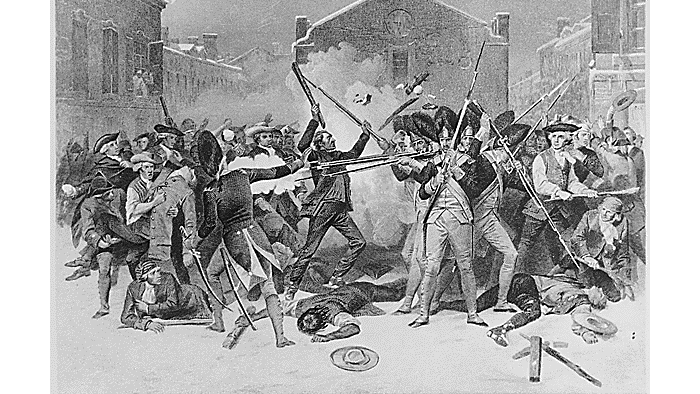
Another shot struck notorious street fighter Samuel Gray, who had been a ringleader of the recent ropewalk brawls, and who was drawn to altercations such as this like a moth to a flame. Gray’s skull erupted in a gory spray of blood and brains, and he was dead before he hit the ground.
17-year-old James Caldwell, an itinerant sailor on board a ship called the Hawk with no known relations or connections in Boston, took a shot in the back as he attempted to flee. He became the third dead body crumpled on King Street.
Another fleeing 17-year-old, ivory-carving apprentice**** Samuel Maverick, had the misfortune to be hit squarely in the upper abdomen (possibly by a ricochet), and died the next morning. He had turned up to help fight the non-existent fire, but then happily joined in the verbal abuse of the soldiers until that first shot rang out and he decided to make an escape that was cut brutally short.
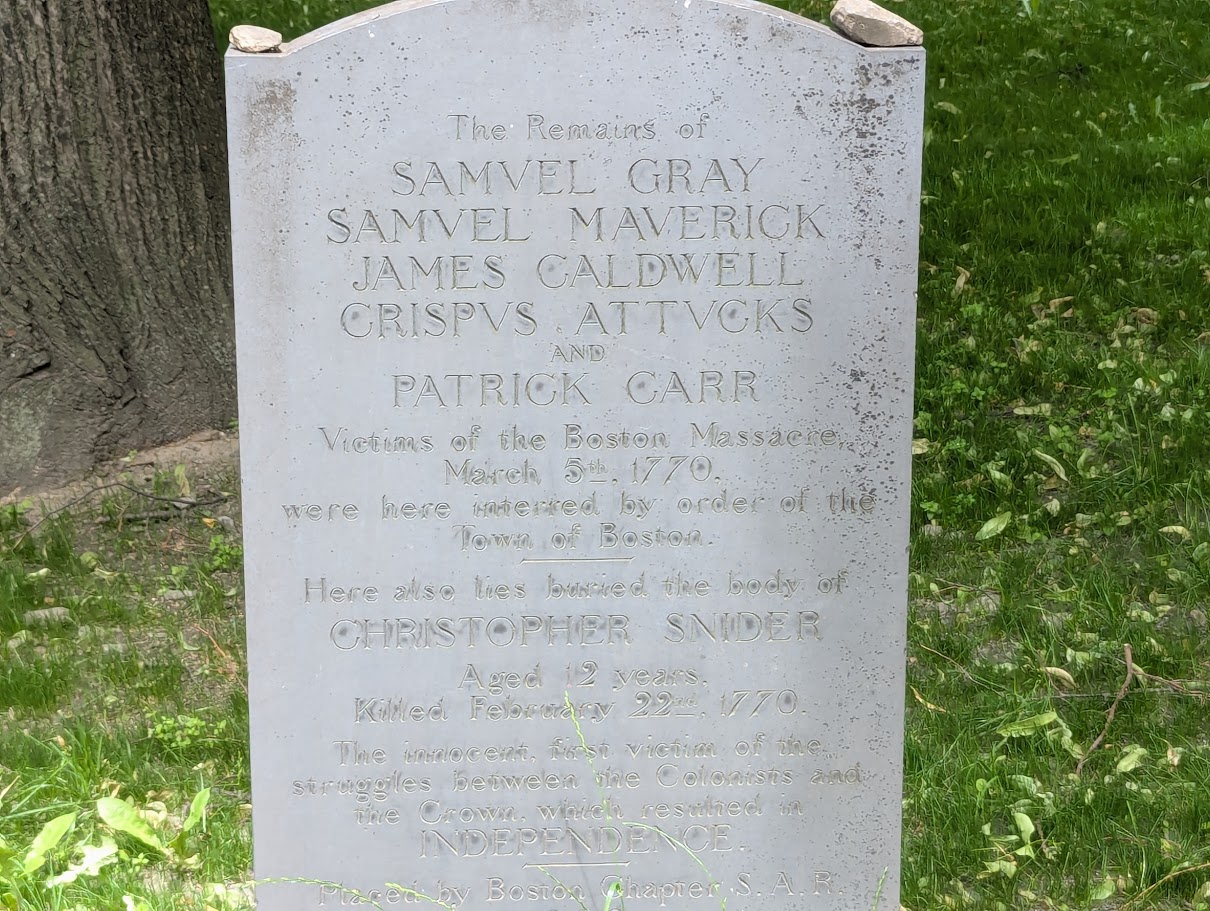
Patrick Carr, an Irish immigrant who worked in a leather shop and was also responding to the church bells, was struck in the lower body (various sources say hip, spine, and/or abdomen). Unlike Maverick, who genuinely believed there was a fire, the older and more savvy Carr suspected a street fight, and had to be talked out of bringing a cutlass to the scene. Carr lingered for over a week before expiring, and before he died he confirmed that the situation was instigated by the citizens, and the soldiers had acted in self-defense.
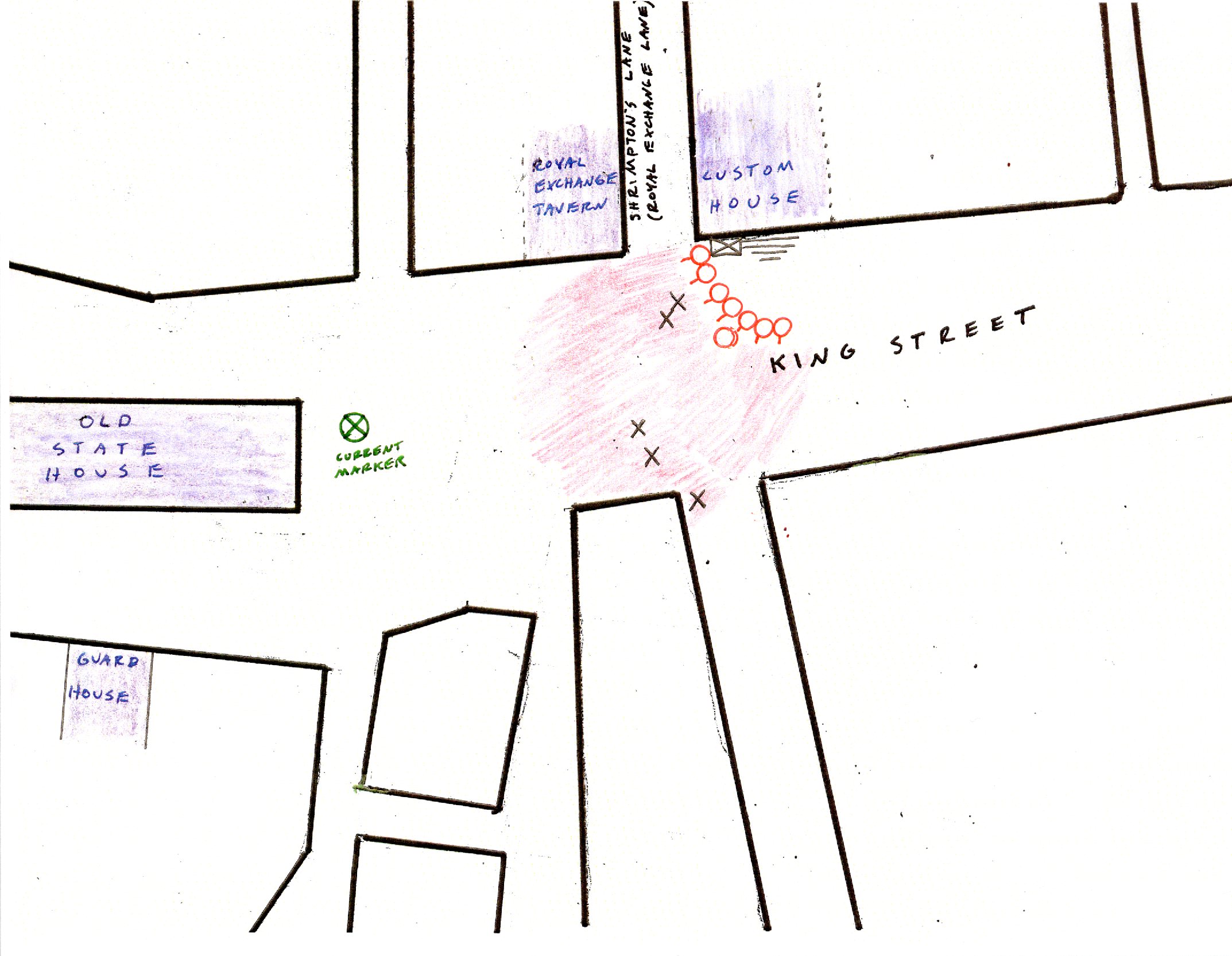
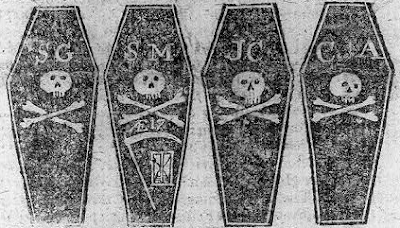
In addition to the five deaths, six more were wounded with varying degrees of severity. (The most serious was Christopher Monk, who was permanently disabled by his injuries and died from related causes a decade later.)
Captain Preston used the flat side of his sword to swat up the soldiers’ muskets to ensure there were no more unauthorized shots, and hustled them back to the guard house as the stunned Bostonians that remained on King Street began tending to the wounded, with gunsmoke and the coppery smell of blood stinging their nostrils. Among those summoned to the scene was local physician Dr. Joseph Warren. More on him soon.
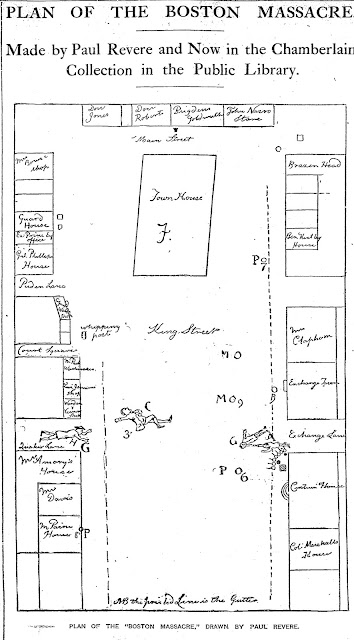
All five victims were buried in a common grave in the Granary Burying Ground.
I stood on the marker commemorating what became known as the “Boston Massacre” just over 255 years after it happened. A lot of what I just wrote about I didn’t know at the time. I have a bad habit of doing my heavy research on a place after I’ve visited it. What I did know was that this marker, directly in front of the Old State House, was in the wrong spot. On purpose. If they put it in the right spot, people trying to visit it would get mowed down by the cars speeding through the intersection of State Street and Congress Street. (Boston traffic is no joke, but wait ‘til we get to my later visit to Atlanta for true vehicular insanity…)
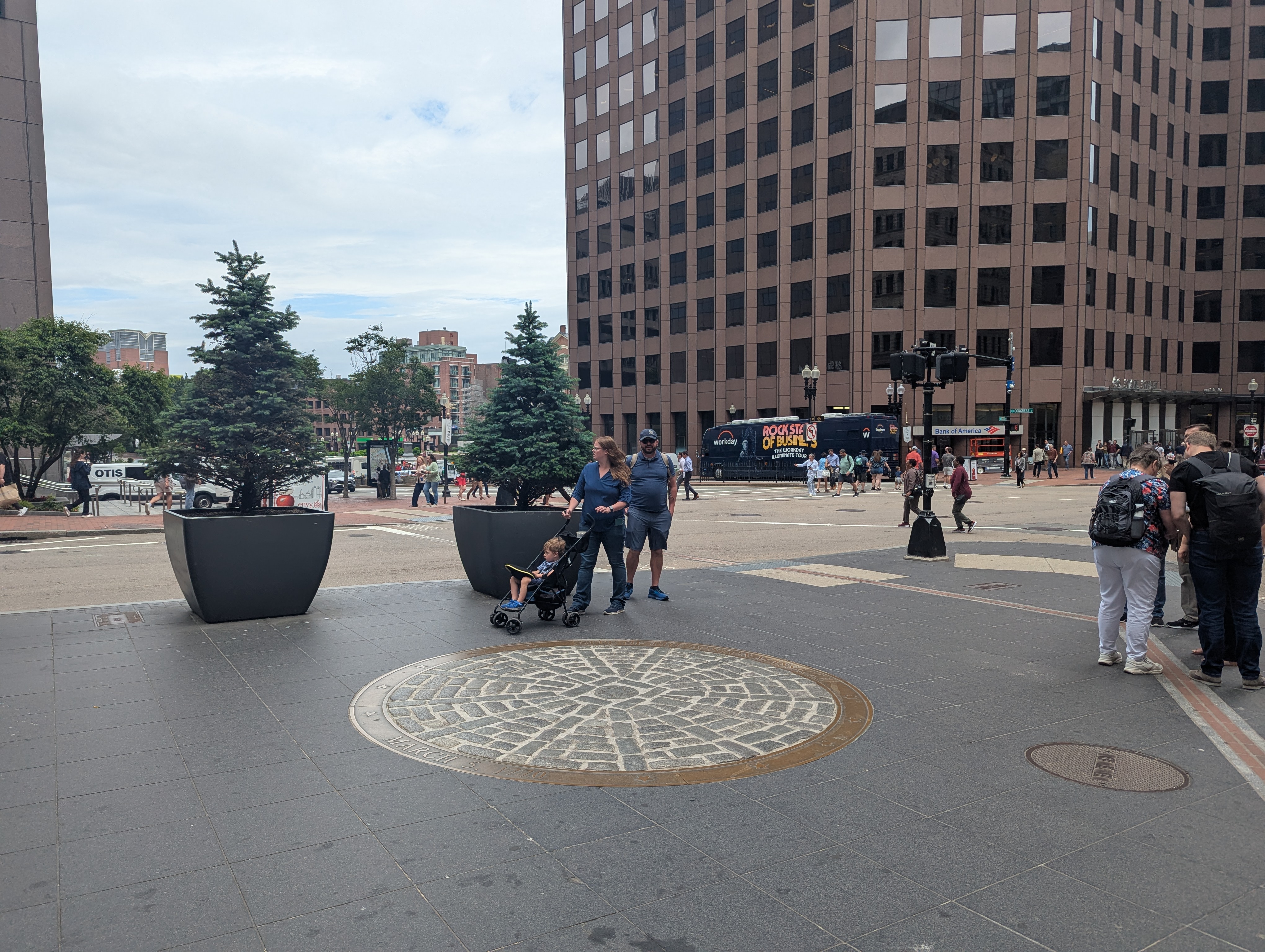
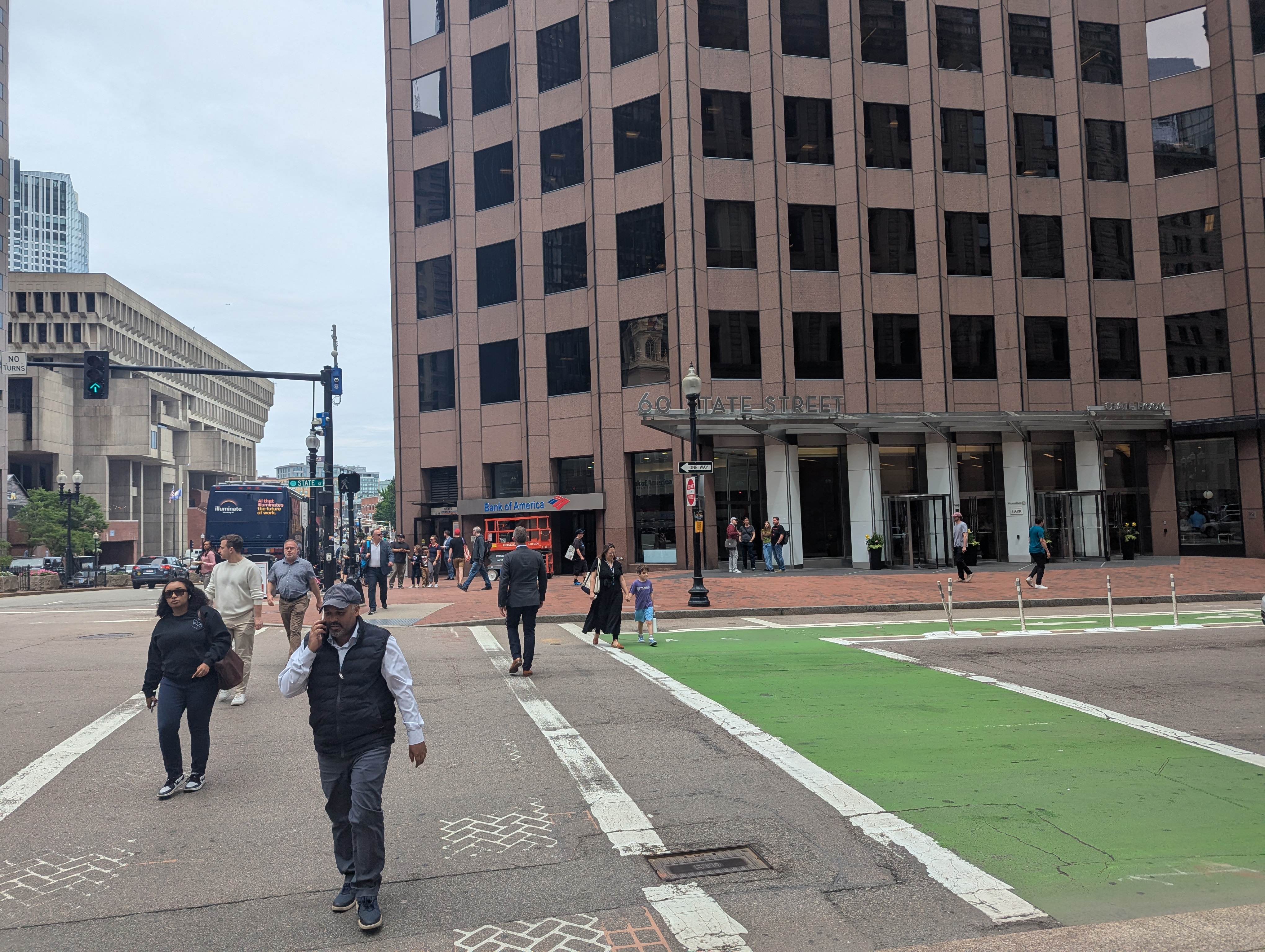
The actual Boston Massacre was about a hundred feet to the northeast of the official marker, in the northbound lane of traffic in front of the high-rise building known simply as 60 State Street. There was once a narrow alley called Shrimpton’s Lane where there is now Congress Street, four times as wide as the old alley. The Royal Exchange Tavern was on one side of the alley and the Custom House on the other. (The alley was also sometimes called Royal Exchange Lane). The soldiers stood on the Custom House corner of the alley and fired into the crowd in the middle of King Street.
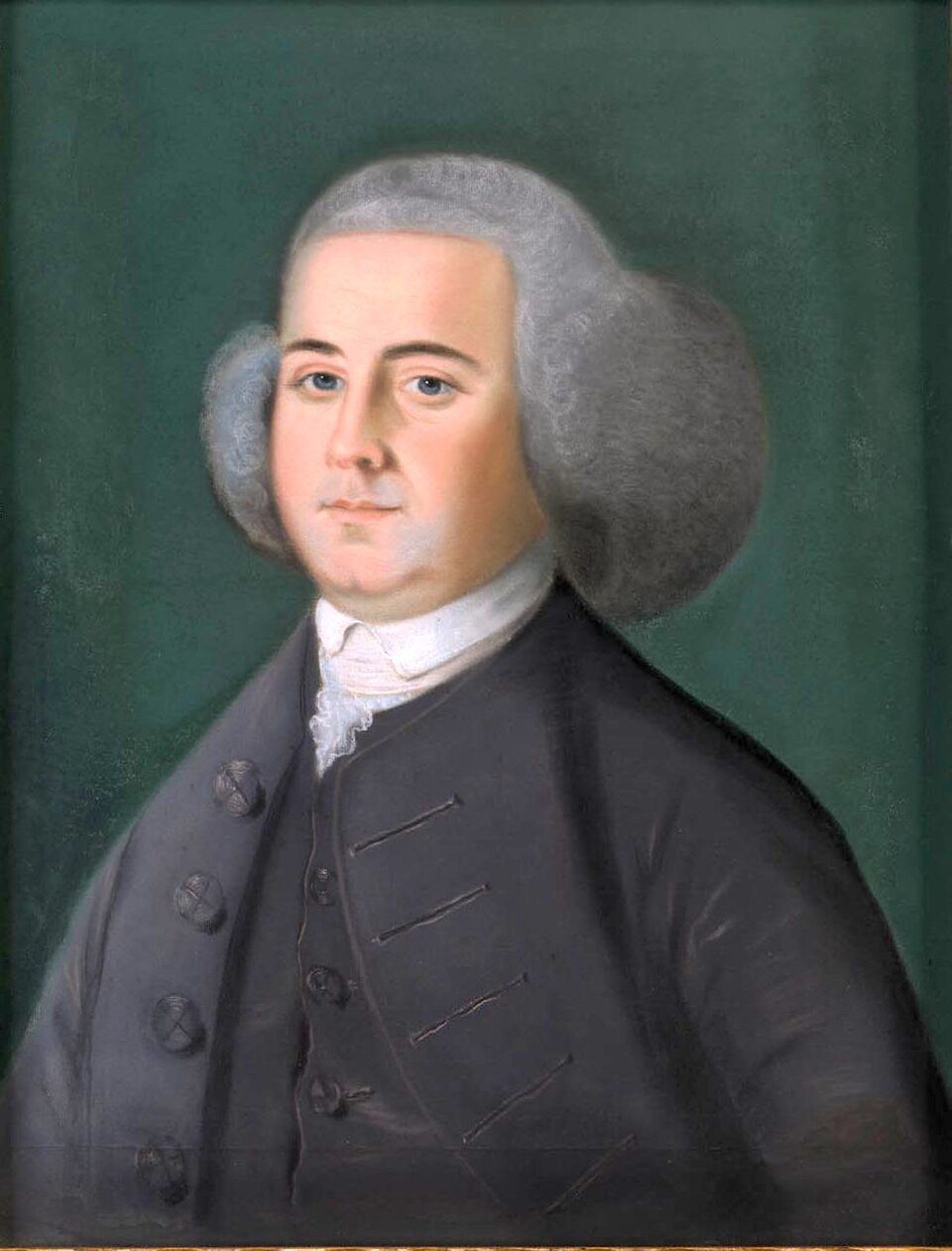
Captain Preston and his troops were put on trial for murder by colonial authorities. Due to his rank, Preston was tried separately. They were all defended by one the best attorneys in Boston — John Adams. Adams’ legal acumen and the testimony of many eyewitnesses (along with Carr’s deathbed remarks) resulted in the acquittal of most of the soldiers. Hugh Montgomery and Matthew Kilroy were convicted of the lesser charge of manslaughter, as they were the only ones observed by multiple witnesses to have fired directly into the crowd. (It was Kilroy’s shot that almost decapitated Samuel Gray, who was standing only a few feet away from the business end of his musket.) They pleaded “benefit of clergy” — a medieval legal strategy that had gone through so many changes over the centuries that the “clergy” part no longer had any meaning. It was essentially a request for clemency for first offenders. The court accepted the plea, and the two soldiers were branded on the thumb with the letter “M” (crying their eyes out as the painful punishment was administered, according to one source) and released. John Adams estimated he lost half of his regular clients in defending the British soldiers, but not even his firebrand cousin Samuel could take issue with how the fair and equitable trials played out. “Facts are stubborn things,” John Adams said during the course of the proceedings.
The Custom House was referred to as “Butcher’s Hall” by Bostonians until it moved to a new location in 1805 and the original converted townhouse was torn down.
Although he accepted the results of the trials, Samuel Adams had no intention of letting the British off the hook for the public killing of Boston civilians. Usually Paul Revere gets the credit for the famous illustration — titled “The Bloody Massacre” — that Adams ensured was distributed far and wide in the months following the “incident on King Street” as it was called before its more famous moniker was utilized. The original illustration was created by Henry Pelham, and was straight-up plagiarized by Revere for his more well-known version. The image depicts a line of smirking, evil-looking British soldiers being ordered to fire on an innocent group of peaceful civilians (including a puppy) going about their business in front of a clearly-labeled “Butcher’s Hall.”
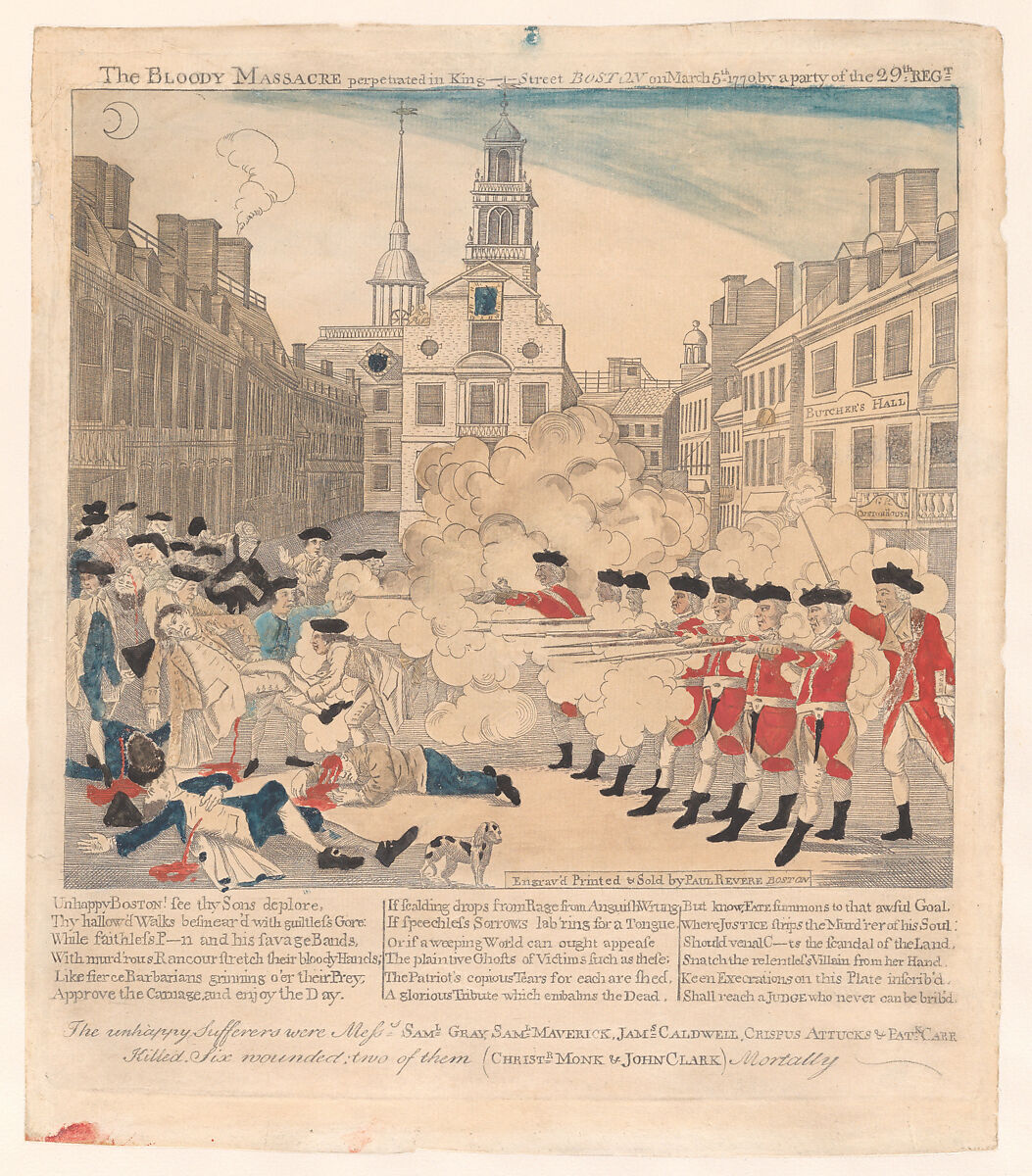
Samuel Adams had slightly altered “Bloody Massacre” into “Boston Massacre” in his writings by 1772, and the name stuck. Adams’ catchy name combined with the Pelham/Revere image became a useful bit of anti-British propaganda for the Sons of Liberty and other like-minded people as Massachusetts and the rest of the colonies drifted irrevocably towards independence.
Nothing works up an appetite like exploring a two-and-half-century old site of carnage, so we set off to Faneuil Hall for lunch…
* Or whatever the 1770 equivalent of “twerp” was.
** Writer J.L. Bell makes a convincing argument that the term “lobsterback,” almost universally believed to be a colonial pejorative against British soldiers, may have been made up by 19th century writers, and that the shortened “lobster” is more historically accurate. I always assumed both terms referred to the British soldiers’ red coats, but no one really knows.
*** Knox later went on to be one of Washington’s most valued generals in the Revolutionary War, served as the U.S.’s first Secretary of War, and has a notable gold depository and military fort in Kentucky named after him.
**** “Ivory carving” in the 18th century was associated with dentistry. Young Maverick probably would have had a career in denture-making.
SOURCES
https://www.oldsouth.org/history
http://www.benjamin-franklin-history.org/birthplace/
https://sah-archipedia.org/buildings/MA-01-BD15
https://grokipedia.com/page/robert_keayne
https://grokipedia.com/page/first_town_house_boston
https://conversableeconomist.blogspot.com/2017/06/the-story-of-robert-keayne.html
https://www.history.com/articles/the-boston-massacre-245-years-ago
https://www.jyfmuseums.org/learn/teacher-resources-programs/classroom-resources/the-boston-massacre
https://boston1775.blogspot.com/2007/03/king-street-on-5th-of-march-1770.html
https://boston1775.blogspot.com/2013/03/charles-bahne-on-boston-massacre-site.html
George Washington’s War: The Saga of the American Revolution — Robert Leckie
The Boston Massacre: A Family History — Serena R. Zabin
Boston’s Massacre — Eric Hinderaker
Samuel Adams: A Life — Ira Stoll
John Adams — David McCullough
And Good Ol’ Wikipedia — the Lazy Researcher’s Friend
(NOTE: Many of the cited sources are themselves based on the various testimonies and statements made at the trials of Preston and his men, which have been preserved and can be read in their entirety by people who are not me.)
 Holy Bee of Ephesus
And I was a history major, so living in Boston was living in history every day.