

I’m always suspicious of people who claim to have no holiday traditions, although mine tend more towards “personal holiday observances, usually based around specific dates, that no one else really participates in.” I wrote about a bunch of them in some of my very first entries on this website, spreading them over three 2008 entries at a total length that would barely be half of a single 2020s-era entry. Obviously, much has changed since then. I’ve grown more long-winded in my website pieces, and more lax in observing many of my old traditions. However, the following five remain pretty iron-clad.
1. No Christmas music until after Thanksgiving. But as soon as the dishes are cleared away, I consider it open season for “Good King Wenceslas.” The Christmas Spotify playlist is usually on the car stereo driving home from Thanksgiving dinner.
2. Christmas lights on the house no later than the Sunday after Thanksgiving (weather permitting). This is often something I really have to force myself to do, tearing myself away from my fireside end of the sofa, my book, and the muted football game on TV to clamber around on a rickety ladder and almost plummet to a paralyzing injury at intervals that come closer together as the years roll on.
3. Christmas tree acquired and decorated on whatever weekend is closest to December 10. Any sooner and it dries up no matter how carefully I check the water level, any later and why bother?
4. Making a shepherd’s pie at some point in December (usually between the 20th and 23rd).
5. Having a bunch of Christmas-themed stuff on the TV. Cheesy variety specials, Christmas episodes of sitcoms, classic movies, you name it.
I say “having it on” instead of “watching,” because it’s usually just atmospheric background to my reading, computer gaming, or puttering around the house. I am a world-class putterer, and lately I’ve taken to doing it with my half-moon reading glasses perched on the end of my nose. Jesus, I’m old. Am I really the same person who used to go to Primus concerts with dyed blue-black hair (Manic Panic!) and army surplus pants tucked into shin-high black boots? I did scrupulously avoid the mosh pit, so I guess I was always kind of soft. But at least I was young and soft. (That didn’t sound quite right, but I’m leaving it in.)
One of the movies in the holiday rotation is A Christmas Story. Little regarded upon its initial theatrical release in November 1983, it has since become a holiday television staple in households across the country. So popular were its frequent airings on cable stations that Turner Broadcasting began showing it marathon-style — “24 Hours of A Christmas Story” — in 1997. For the last 25 years, starting at 8pm Christmas Eve and concluding at 8pm on Christmas Day, you could tune in and get your fill of Ralphie and his Red Ryder BB gun (with a compass in the stock and “this thing which tells time.”) You’d be joining roughly fifty million others.
Like Christmas music, the viewing of Christmas material on TV is strictly forbidden until after Thanksgiving. But this year, I violated tradition by watching A Christmas Story way outside of its normally-accepted viewing slot because I wanted to watch its brand-new sequel, A Christmas Story Christmas, the day it dropped on HBO Max. Watching a new sequel without a re-watch of the original is a violation of the Holy Bee Code.

As the consistently high annual ratings for the marathon have proven, the Christmas Story phenomenon is a powerful thing, and it’s woven firmly into the fabric of American culture. Even if you haven’t seen the film, it might feel like you have — it’s the story of nine-year-old Ralphie and his quest to get a BB gun for Christmas, while also dealing with his perpetually hassled mom and intimidating dad (only ever referred to as “the Old Man”), along with various other childhood dramas. You’ve probably heard about the notorious “fra-gee-lay” leg lamp, the tongue frozen to the flagpole, and the oft-repeated “you’ll shoot your eye out” catchphrase.
Full disclosure — I am not any kind of die-hard Christmas Story fanatic. It’s just tossed in with all the other holiday viewing for me. If it hasn’t been a part of a family tradition for years, this mild little period-piece comedy may actually be kind of a hard sell for new viewers who will undoubtedly wonder what all the fuss is about. But I did grow up with A Christmas Story, and I did get a warm tingle when I heard they were making a proper sequel. (And it just dawned on me that my Subscribe button is emblazoned with “I triple-dog dare you.” Maybe I am a die-hard fan.)
Wait, a “proper” sequel? Were there improper sequels? Yes, actually. Three of them, and they all failed for their own reasons, but mainly due to the issue that A Christmas Story Christmas intends to correct.

Never much liked the original poster, which failed to capture the true tone of the film — it made it look far too “wacky” and/or “zany,” the kind of movie where you’re just waiting for someone to get hit in the nuts and go cross-eyed.
The Christmas Story juggernaut started with Jean Shepherd (“Shep” to his legion of fans), a fixture of New York late-night talk radio from 1955 to 1977. Shep built a dedicated following by spinning lengthy first-person yarns about his alter ego, “Ralphie,” Ralphie’s family (“the Parkers”), and his experiences growing up in America’s heartland in a bygone era. You can get a taste of Shepherd’s engaging vocal style from his narration of A Christmas Story, portraying the unseen-but-constantly-heard adult Ralphie.
Although he insisted the tales were pure fiction and not autobiographical, elements of Shepherd’s real life always crept in. He really did have friends named Flick and Schwartz and a kid brother named Randy, he did go to Warren G. Harding Elementary School, and the name of his actual hometown — Hammond, Indiana (just across the state line from Chicago) — isn’t too far off from the fictional Midwestern town, “Hohman, Indiana,” that he created for his stories. He made the character of Ralphie a few years younger than himself to better align Ralphie’s childhood and adolescence with the Depression and the war years.

Jean Shepherd
What really blew people’s minds was that Shepherd told these stories off the top of the head. He prided himself on never relying on pre-written scripts, and could extemporize, ad-lib, spin off into side stories, and then tie it all up in a neat conclusion right as his closing music began to play. As his popularity grew, he began speaking tours of college campuses where audiences could verify this skill with their own eyes.
Someone finally asked Shep to put some of his favorites down in writing, and one of the first stories published was the one that provided the framework for A Christmas Story. “Duel in the Snow or, Red Ryder Nails the Cleveland Street Kid” appeared in Playboy magazine in 1964. (Playboy also sent him as a correspondent to tour with the Beatles for a few days later that year. A middle-aged jazz snob by then, Shep never warmed to their music, but admitted they were great fun to hang out with.)

Enough stories appeared in Playboy over the next two years to compile into a book. The result, In God We Trust, All Others Pay Cash, was published in 1966. Often described as a “story collection” or “anthology,” Shep always proudly referred to it as a novel. Despite this claim, it is pretty episodic, with the self-contained stories appearing as reminiscences between adult Ralphie and Flick during Ralphie’s return visit to his hometown. Only “Duel in the Snow” is Christmas-themed, and the other stories bounce around chronologically, with Ralphie depicted as anywhere from seven to fourteen, depending on the chapter.
Two sequels, Wanda Hickey’s Night of Golden Memories and Other Disasters (1971) and A Fistful of Fig Newtons (1981) continue the mixed bag of stories about (a mostly older) Ralphie.
Shepherd’s radio monologue about Flick getting his tongue frozen to a flagpole (a story that never made it into print) turned aspiring young filmmaker Bob Clark into a lifelong Shepherd fan. The eventual Christmas Story director contacted Shep as early as 1970-71 about making a film based on his stories, but it was a long road to production. They got as far as writing a screenplay, but no studio was interested.
The first attempt to tell a Ralphie Parker tale that made it to a screen was the TV movie The Phantom of the Open Hearth, which aired on December 23, 1976 as part of the PBS anthology series Visions. Shep wrote the script, and established a formula: a main throughline based on a key story from one of his books (in this case, the title story of Wanda Hickey), supplemented by secondary plot threads drawn from other stories (the leg lamp story from In God We Trust is first seen onscreen here) and from various unpublished monologues, all tied together by his voiceover narration.
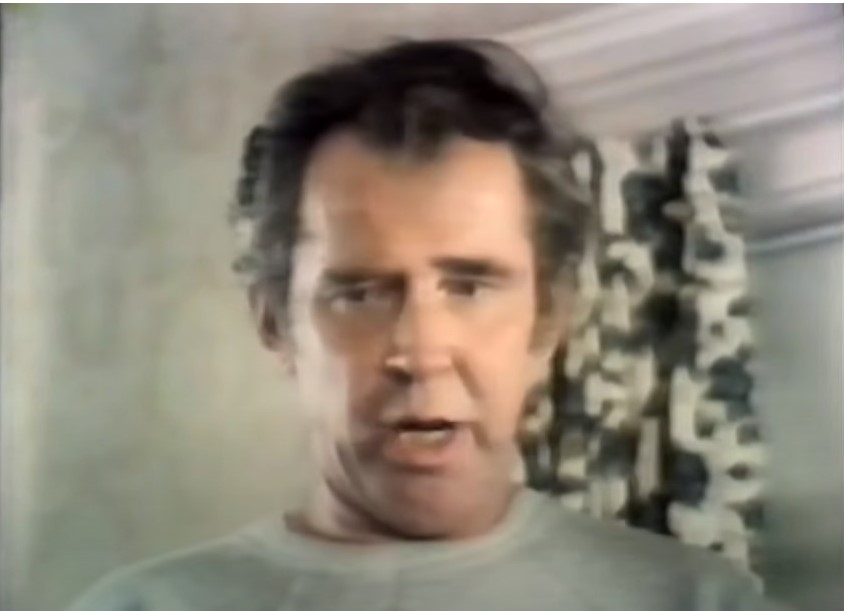
The Phantom of the Open Hearth led to two (or three, kind of) more PBS adaptations, and they’re just this side of watchable if you can handle dingy, PBS-level production values, a much slower pace, and a few glaring differences from our beloved Christmas Story. The PBS Ralphie (re-cast each time) is depicted as an athletic, self-assured high school junior — a far cry from the awkward, needy, bespectacled little kid we’re used to. Flick comes off as a potentially dangerous criminal thug. Craggy character actor James Broderick (known for the ABC drama Family from the same era) is no Darren McGavin, but makes a pretty decent Old Man. (Just like no one is going to surpass Anthony Hopkins as Hannibal Lecter, you have to hand it to Brian Cox, who was the first actor to play the character — and did a good job — in the 1986 movie Manhunter.) Barbara Bolton as Mrs. Parker is the only lead actor to appear in all three, but she doesn’t exude a lot of personality, and only reminds the viewer of how much spark Melinda Dillon brought to the role. And, like most 1970s productions set in a previous era, no one would commit to period-accurate haircuts, so everyone kept their bushy ‘70s hair. (Another example: any given episode of M*A*S*H.) (The Phantom of the Open Hearth was re-cast and re-shot as a possible pilot for an ABC series in 1978, but it was never shown.)
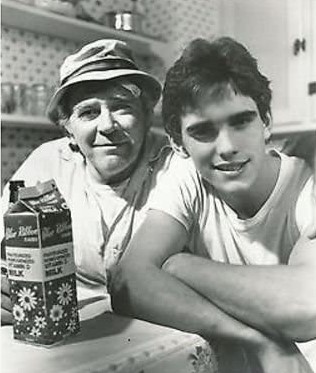
Another PBS anthology series, American Playhouse, aired the second Shepherd adaptation. The Great American Fourth of July and Other Disasters hit TV screens on March 16, 1982, based around more In God We Trust stories. James Broderick returns as the Old Man (it was one of his final roles, he died later that year), and the characterization of Ralphie as “cool teen” reaches its zenith — he is played by none other than Matt Dillon. Like its predecessor, The Great American Fourth of July is acceptable, but nothing great. I was particularly disappointed that one of my favorite Shepherd stories, “The Endless Streetcar Ride Into the Night and the Tinfoil Noose” (about Ralphie on a blind date), was staged and shot in such a clunky and cumbersome way that it drained the story of its slow-building tension and brilliant comedic payoff.
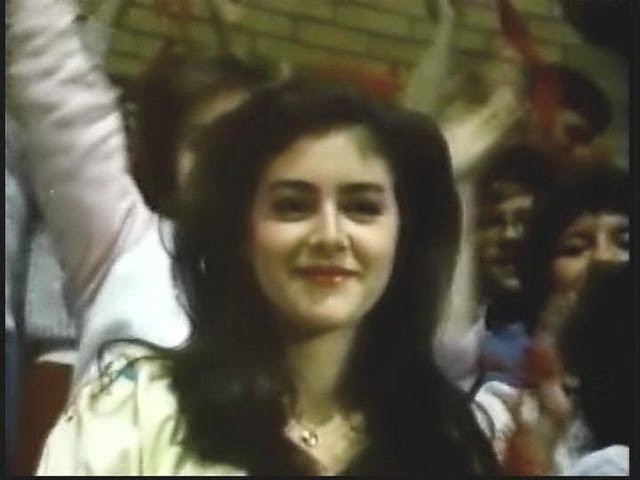
The Star-Crossed Romance of Josephine Cosnowski was based mainly on Wanda Hickey material, and it aired on American Playhouse on February 11, 1985, after A Christmas Story had been ignored in theaters, but just before its big rediscovery as a TV treasure. Romance is a notch below the first two in terms of budget, humor, and performances. Despite the presence of a few vintage cars and kitchen appliances, all attempts to give it a period feel have been abandoned. The object of Ralphie’s affection looks more like Brenda Walsh from 90210 than anyone who would have breathed 1940s air. The usually reliable George Coe is a low-key, somewhat placid Old Man, with none of the bluster the part requires. (Coe is known to a later generation as the voice of Woodhouse on Archer.)

Bob Clark
Nobody ever went broke underestimating the taste of the American public, someone once said (it evidently wasn’t H.L. Mencken), and sure enough, Bob Clark’s Porky’s was a box office smash in 1982, giving Clark the clout to make whatever he wanted as his next project. He chose the Christmas-themed script he wrote with Shepherd many years earlier. Clark, who got his start in low-budget exploitation and slasher flicks, will likely never be in the Pantheon of Great Directors. He usually painted in the broadest strokes possible, and had a tendency to aim low in his comedy. But A Christmas Story has a subtlety that most of his other films lack. He was a potentially solid director (his pre-Porky’s Sherlock Holmes pastiche Murder By Decree was quite good) who had the misfortune to have directed mostly terrible films: The powerfully stupid Porky’s and its even worse sequel, feeble comedies like Rhinestone and Loose Cannons, whatever the hell Turk 182! was supposed to be, and the absolutely execrable Baby Geniuses, which played at the theater where I once worked and inspired more walk-outs than any other movie I can name. And those are just his movies people may have heard of. But not everyone can be Stanley Kubrick (luckily for Shelley Duvall), and Clark, by all accounts a genuinely nice man, had a personal warmth comes through in A Christmas Story’s informative commentary on the DVD. The kids in the cast loved him (unlike The Goonies’ cast, who were always a little afraid of grumpy old Richard Donner), and he clearly poured his heart into A Christmas Story. I was very sad to hear of his tragic death in a head-on collision on the Pacific Coast Highway back in 2007.
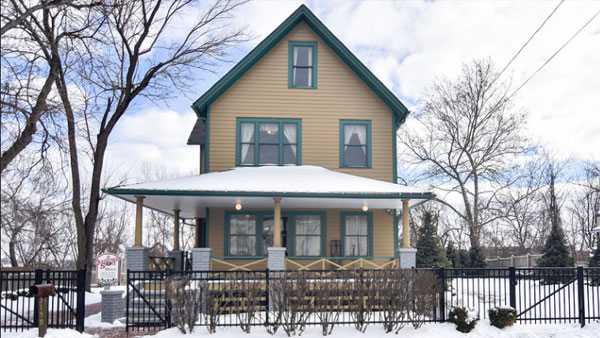
The film was shot from January to March of 1983, mostly in and around Toronto. The department store scenes were done at the actual Higbee’s in Cleveland. Another Cleveland location was the Parker house, located at 3159 West 11th Street. The interior scenes were shot on a Toronto soundstage, so the Cleveland location was for exterior shots only. It was purchased in 2004 by a California entrepreneur (who specialized in the production of replica leg lamps) and restored to resemble the house — inside and out — as it appeared in the film. Adjoining houses were converted into museum and gift shop space. (As of this writing, the whole complex is up for sale.)
A Christmas Story’s studio, MGM, did not seem to have much confidence in the final result. They put it into theaters in mid-November with little promotion, and it was mostly gone from screens by Christmas week itself. It wasn’t the box-office dud that legend later described it as, but its success was modest at best. It picked up a little traction when it showed on HBO and was released on VHS in 1985. Then came the turning point — a near-broke MGM sold most of its film library to Ted Turner in 1986, and A Christmas Story began its run on Turner-owned stations that holiday season. That’s when my family first watched it. It already felt like tradition by the following year. But don’t call it nostalgic. Both Clark and Shepherd insisted the film does not fit that description. “It’s not nostalgia. It’s an odd combination of reality and spoof and satire,” said Clark. Maybe that’s why newcomers to the movie are sometimes a little put off.
Continue reading Holy Bee of Ephesus