
A performance of The Cocoanuts is underway…at the start of the second act, Groucho walks up to the footlights, peers into the crowd, and asks solemnly “Is there a doctor in the house?” A man stands up and waves his hand. “I’m a doctor!’
Long pause.
“So…how do you like the show so far, doc?”
Although noted for their boundary-pushing and rule-breaking, as professional touring entertainers, the Marx Brothers always liked to have a bit of a template to work within, if for nothing else as something to ignore or violate when the mood struck them. Part of that structure was an external target, some authority or establishment figure for their antics to knock down a few pegs. During the Brothers’ vaudeville days, in both Home Again and On the Mezzanine Floor, that figure came in female form — an elegant but stuffy dowager. A haughty grand dame, perfect for insulting, offending, shocking, and sometimes downright manhandling and/or trampling. In Broadway’s The Cocoanuts, this “straight woman” was personified by the snobbish Mrs. Potter, and was played to perfection by Margaret Dumont, who would appear with the Brothers in most of their stage and screen appearances for the rest of their careers. She was an irresistible mark — nose in the air, speaking her dialogue with an operatic trill, and rolling her r’s like a true denizen of the legitimate stage.
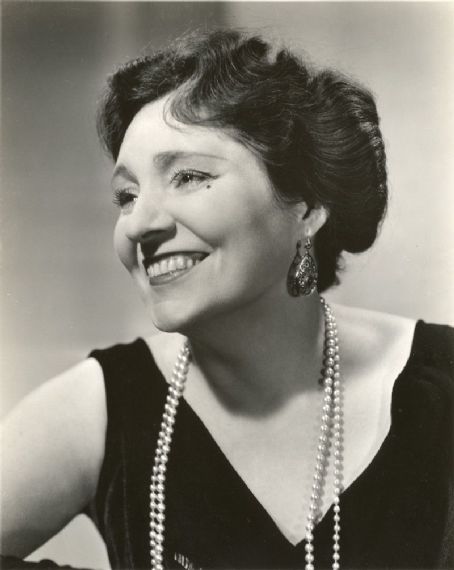
According to Marxian legend, Dumont’s acting skills were not exactly stretched by the roles she was given in their plays and films. The Brothers, especially Groucho, insisted she really was the prim, overly dignified, easily-shocked figure she portrayed. Groucho went as far as saying she didn’t really get the jokes she was constantly the butt of, and was only dimly aware she was performing in comedies.
She was born Daisy Baker in Brooklyn in 1882, but re-named herself “Daisy Dumont” and cut her performing teeth as a showgirl and singing comedienne on the same collection of vaudeville circuits as the Brothers’ old Nightingales act a few years before them. Although she burnished her resume with appearances on the stages of Paris and London, there is no evidence she ever left the U.S. She married a wealthy heir to a sugar-refining business and temporarily retired from the stage in 1910. As the socialite wife of Mr. John Moller Jr., she put on the dignified manners and pompous airs that would come to characterize her later persona. When her unfortunate husband was disinherited, and died not long after during the 1918 flu epidemic, the flat-broke Mrs. Moller was forced to take up her earlier vocation, and returned to the stage under the name “Margaret Dumont.” Her showgirl days long behind her, the stout, middle-aged Dumont spent the early 1920s toiling in supporting parts in several unmemorable Broadway productions.
Fortune smiled on everyone involved when Sam Harris cast her as Mrs. Potter in The Cocoanuts. She was the perfect foil for the Marx Brothers. The rest is history.
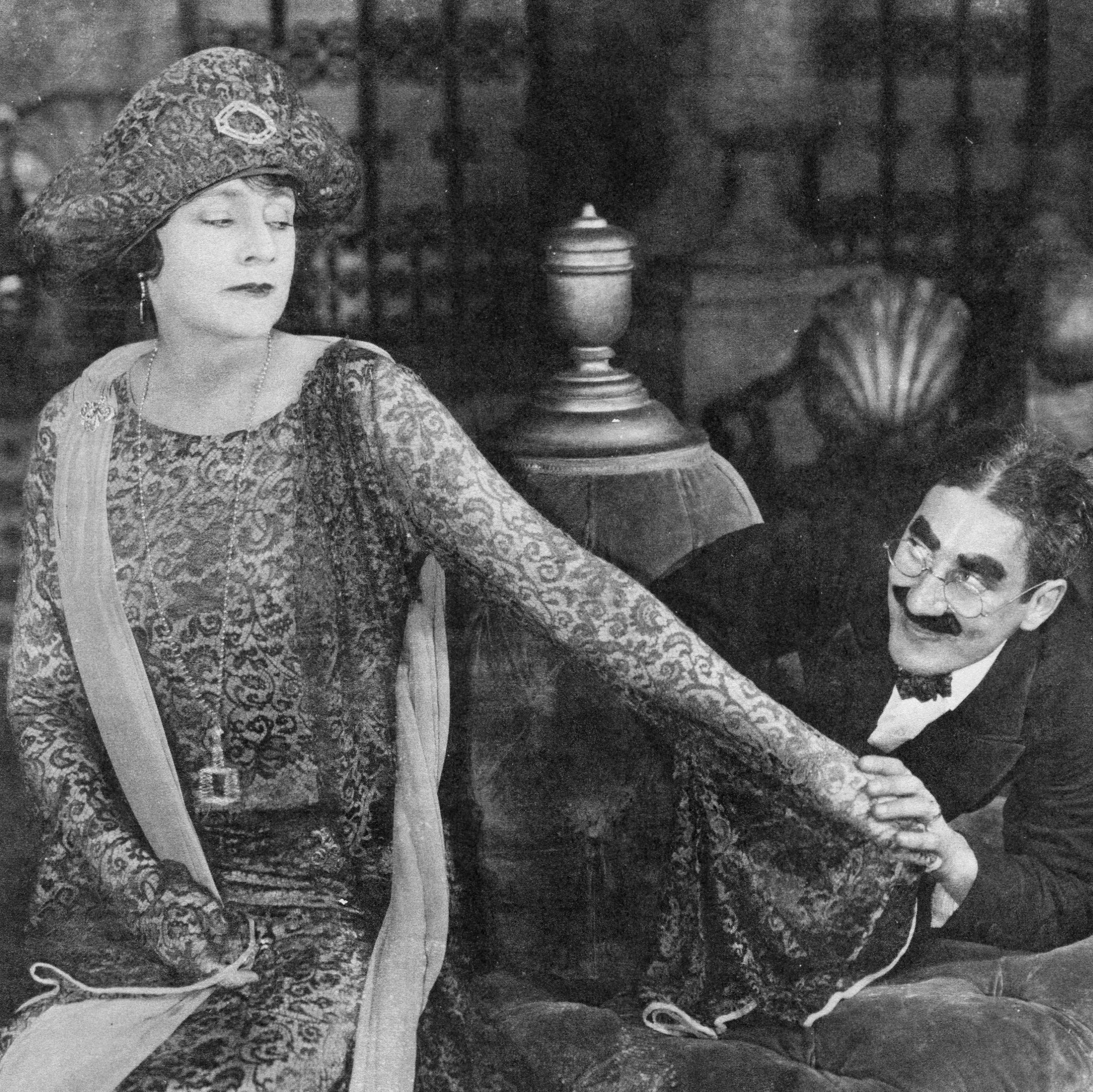
Was she as clueless as Groucho insisted? Almost certainly not. She had few close friends or family to corroborate or disavow the Brothers’ portrayal of her. Although she did carry herself with an exaggerated regal bearing even offstage, and was described by Cocoanuts co-author Morrie Ryskind as a little naive, it should be remembered Dumont was a professional actress with a long history of working in comedy going back to the turn of the century. The one in-depth interview she gave indicates her awareness of what she brought to the team: “Working with the Marx Brothers is an art. It requires a great deal of study and concentration to remain at perfect ease when they spring surprise lines…It wasn’t easy, at first, to keep a straight face at all times…But please don’t refer to me as their stooge. It’s a terrible word, isn’t it?” In other words, Margaret Dumont knew exactly what she was doing.
The Cocoanuts finished its run on Broadway in August of 1926, and headed out on tour that fall. The play stayed on the road all the way through February of 1928, and even beyond that, the Brothers did a forty-five minute truncated version of the show, called Spanish Knights, for a limited vaudeville run that spring (only in the biggest and most prestigious houses in L.A., San Francisco, and the Chicago area). During that busy time, Zeppo Marx got married, Groucho and Ruth had a second child (daughter Miriam), George S. Kaufman managed to complete and stage two non-Marx plays…and sound came to motion pictures. The William Morris Agency began shopping for a film deal for The Cocoanuts now that the all-important dialogue could actually be heard.
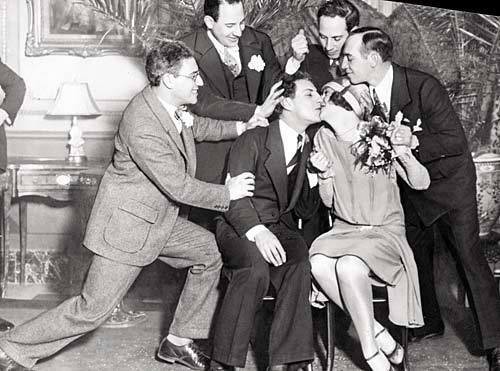
During the seemingly never-ending road tour, Zeppo’s new wife Marion Benda (who, for murky reasons, shared her very distinctive stage name with Rudolph Valentino’s mistress), formerly a chorus girl in the show (naturally — they never seemed to look too far for spouse material), was elevated to the role of Penelope, one of the show’s main villains. Poor Zeppo found himself in the unenviable position of being an official Marx Brother, but having a smaller part and less dialogue than his recently-promoted bride
Kaufman and Ryskind were corralled into writing another musical comedy for the Brothers to see if the team could pull off the hat trick — conquering Broadway for the third consecutive time.
They did.
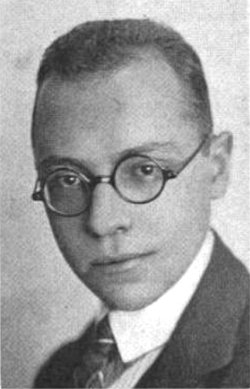
Rehearsals for Animal Crackers began in the late summer of 1928. The Marxes vowed to work hard, pay attention to the director and choreographer, and stay on script as much as possible (at least until they had it memorized). The vow lasted almost a week before they once again began making a mockery of anything like stagecraft or discipline. “It was not that they were emboldened by optimism and a sense of security in their own talents. They simply could not help themselves,” writes Groucho biographer Stefan Kanfer. “They looked at the stage as a vast toy store full of pretty girls, props, lights, straight men and women, and, the greatest plaything of all, a script to be tossed around and pieced together again.”
Seconds before the curtain went up on the very first try-out performance in Philadelphia, Groucho casually turned to nervous co-star Maggie Irving and remarked, “You don’t expect to get cues from me tonight, do you?”
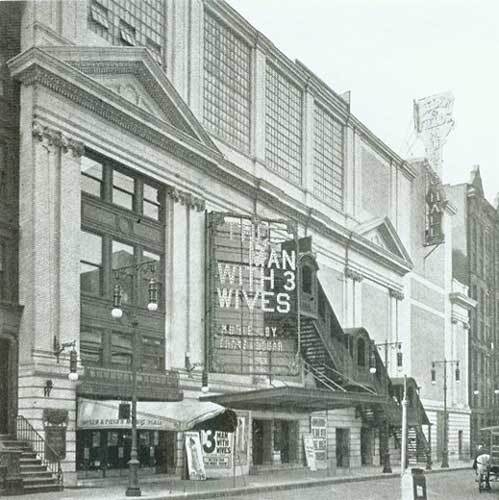
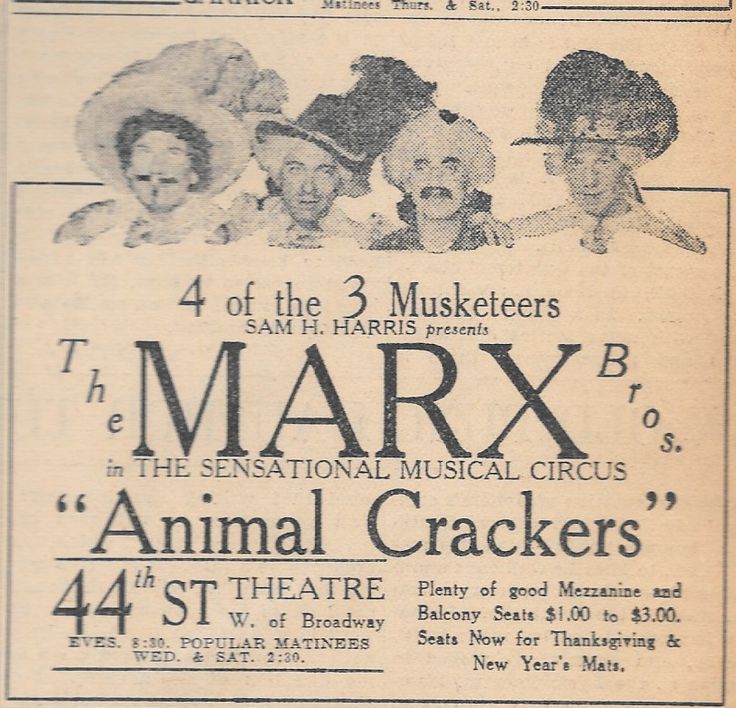
After a month in Philadelphia, Animal Crackers opened at the 44th Street Theatre in New York City on October 23, 1928. The plot concocted by Kaufman and Ryskind (who was officially credited as co-author for the first time) dealt with a posh weekend house party hosted by Mrs. Rittenhouse (Dumont). One guest of honor is Roscoe W. Chandler (Louis Sorin), a distinguished art collector who plans on displaying his most recent acquisition, After the Hunt, by the revered artist “Beaugard.” The other key guest is Captain Jeffrey T. Spaulding (Groucho) an “African explorer” invited to regale the guests with tales of his exploits in the jungle, even though anyone with half a brain can tell he’s a complete charlatan. (Chandler, too, is actually a fraud, but a more subtle one.) Chico is on hand as the party’s resident pianist and bandleader Emanuel Ravelli, and Harpo is a mysterious guest known only as “The Professor.” Zeppo has a few lines as Groucho’s secretary, Jamison (the same name he had in The Cocoanuts.) What little actual narrative there is revolves around the theft of the Beaugard painting, and the budding romance between Mrs. Rittenhouse’s daughter and a young aspiring artist (the two plot threads are indeed related.)
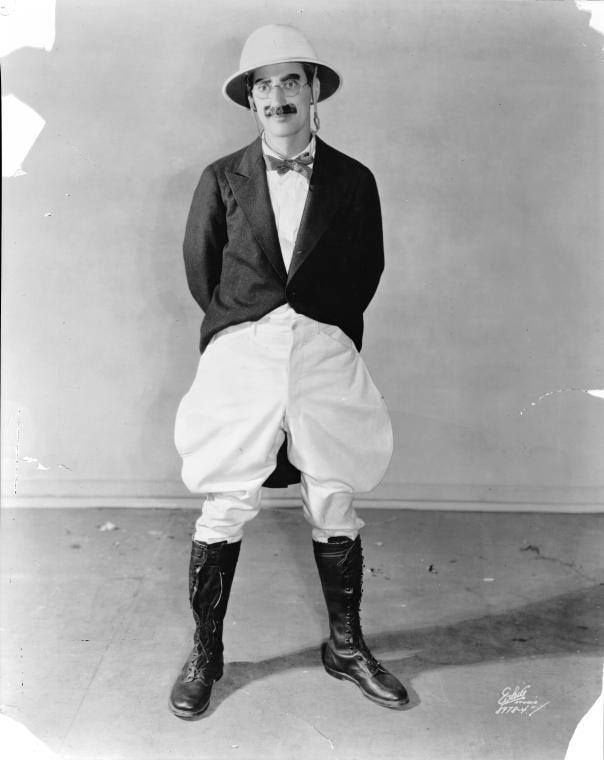
As usual no one cared a fig about the plot. Kaufman and Ryskind now had a Marx Brothers Formula — five major comedy scenes showcasing the Brothers and giving plenty of room for them to improvise and wreak their usual havoc, and a handful of “supporting” scenes to propel the narrative (to be tolerated and gotten through as quickly as possible), all linked by songs. The final comedy scene should be a lavish “big finish.” In the case of Animal Crackers, the closing sequence was another “fancy dress ball,” a repeat of Cocoanuts (and borrowing many elements from the I’ll Say She Is Napoleon scene), with French royal court regalia replacing the Spaniard costumes. The song performed was “We’re Four of the Three Musketeers.” (“Eeny!” “Meeny!” “Miney!” Honk!). Somewhere along the line, Harpo yet again drops purloined silverware from his raincoat sleeve for the 10,000th time. It never seemed to get old.

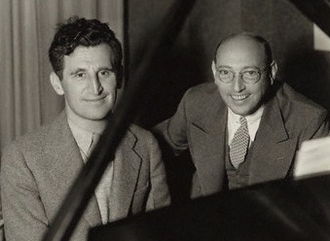
This time, the songs were provided by Bert Kalmar and Harry Ruby, a journeyman songwriting team who had begun in vaudeville, then had worked frequently on Broadway since the start of the decade. They scored an Irving Berlin-sized hit with “Who’s Sorry Now?” in 1923, and became great friends and frequent collaborators with the Brothers, with whom they shared an anarchic sense of humor.
The Marx Brothers played sold-out house after sold-out house. Audiences left the 44th Street Theatre completely wrung out, happily singing Kalmar & Ruby’s “Hooray for Captain Spaulding,” which in later years would become Groucho’s theme song, along with its companion piece, “Hello, I Must Be Going.”
After a brief flirtation with United Artists, the offer for the film rights to The Cocoanuts arrived on the desk of Adolph Zukor, president of Paramount Pictures. The whole package — story, the songs, and the services of the Marx Brothers, now an unqualified stage sensation — could all be his for a mere $75,000. Zukor still balked at the price. A meeting was arranged by Walter Wanger, head of Paramount’s New York office, between the irascible, tight-fisted Zukor and Zeppo Marx, who laid on the flattery to Zukor so thick (“You’re the one showman in the world!”) that a deal was easily reached — for $100,000. Zukor was so bowled over by Zeppo’s sweet-talk, he seemed not to notice the $25,000 increase that was slyly slipped in. Wanger watched the whole thing go down in absolute astonishment. (Some sources say it was Chico who pulled off this deal, but Wanger remembers it being Zeppo.) Veteran Paramount director Monta Bell had recently been promoted to producer, and was put in charge of shepherding The Cocoanuts from stage to screen. Morrie Ryskind was tapped to turn the stage script he had written with Kaufman into a filmable screenplay.
Early sound films were a technical nightmare to shoot. There was no way to post-synch tracks of audio, so everything had to be recorded live on set — including the music. A full orchestra was always just off-camera, waiting for its cue. Huge, primitive condenser microphones were hidden all over the set (picking up even the slightest rustle of paper — which is why all the papers on the set of the Cocoanuts film were soaked in water before a take, creating a pretty odd visual for sharp-eyed viewers). The cameras and their operators were sealed in huge wooden boxes, and filmed through thick glass windows, to keep the sound of their motors from drowning out the dialogue. The cameramen would need frequent breaks to avoid heat stroke or asphyxiation.
Continue reading Holy Bee of Ephesus