
…with one exception.
When asked who’s the greatest band the world’s ever seen, I automatically answer “the Beatles.” When asked the slightly different question of who is my favorite band, I would tend to say the same thing. But the more I think about it, the more I realize that deep in my heart, my favorite band is the Rolling Stones.
And the reason I hesitate to admit that is due almost entirely to the damage they did to their reputation because of the quality of material they released (or let escape) in the 1980s. The Beatles broke up before they had to contend with the ’80s.

Before the ’80s as a decade had receded far enough to gain historical perspective, rock fans always pointed to the trio of albums after 1972’s epic Exile On Main St as the band’s artistic nadir. But in an entry a while back, the Holy Bee mounted a spirited defense of Goats Head Soup (1973), It’s Only Rock and Roll (1974), and Black and Blue (1976) as artistically valid and quite worthy entries in the Stones discography, if not really at the level of their true classics. Far worse was to come after Black and Blue…
…but not just yet. 1978’s Some Girls was immediately lifted to the Rolling Stones Top Shelf to nest alongside Sticky Fingers and the like, and has managed to stay there. 1980’s Emotional Rescue was a swing and a miss (maybe more of a foul tip), hopefully just an aberration. They righted the ship with 1981’s Tattoo You. Its monster single “Start Me Up” dominated the radio that fall, and the album as a whole is generally considered a “near-classic.” In many people’s eyes, it is the last truly good Rolling Stones album. (There may be a secret reason to its success. Read on.)
Then came Undercover (1983). And Dirty Work (1986), and suddenly the decade was a bust. People who continue to pick on poor old Goats Head Soup out of habit probably haven’t even heard these things. They’ve been swept under the rug and forgotten. They are totally soulless, full of empty ’80s flash, and were the product of a band on the verge of falling apart.
No one liked those albums much even at the time (though they initially sold well), but 1989’s Steel Wheels? It was hailed as a masterful artistic comeback. Rolling Stone magazine gave it a slobbering four-and-a-half star review. (Not really a surprise there, given the magazine’s unfortunate habit of fellating dinosaurs. Still, I won’t cancel the subscription I’ve had since 1991.) Unfortunately, Steel Wheels’ uber-trendy, late-80s production has stood the test of time about as well as parachute pants. When everyone got over their euphoria that the band survived its near-breakup, Steel Wheels plummeted in prestige, and it’s now settled pretty firmly near the bottom of the canon.
So the Stones’ 1980s output consisted of two mediocre albums that aged poorly, two total disasters…and Tattoo You, which everyone liked. The possible secret to its success? It wasn’t widely known at the time, but Tattoo You was entirely pieced together from 1970s outtakes, when inspiration was running a little higher.
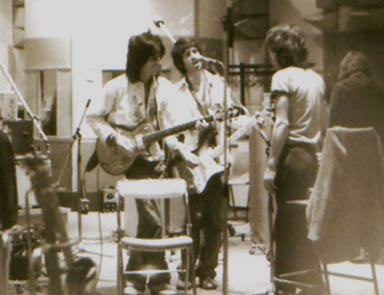
In earlier recording sessions, the Stones did rack up their share of outtakes and unreleased material here and there. But engineer Chris Kimsey, with whom the Stones began working in 1977, always kept the tapes rolling. Any musical performance in the studio, be it a false start, a tentative run-though, or an almost-ready final draft, was recorded and meticulously stored away. The band and Kimsey labored for months at the rambling old EMI Pathe-Marconi Studios in suburban Paris (the actual location was Boulogne-Billancourt), compiling the material that would comprise Some Girls, and leaving lots of stuff unused in varying states of completion. 1979’s Emotional Rescue sessions also produced a backlog of songs for the vault. This practice would come in handy a few years down the line.
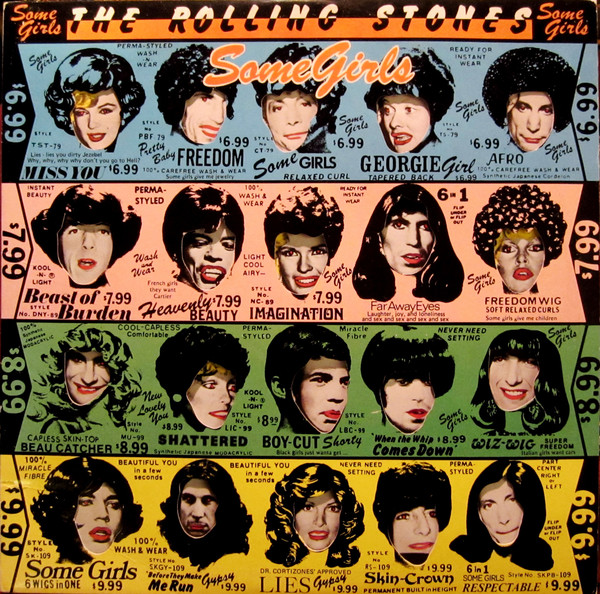
Let’s start our examination of the Stones’ decade-long tumble from greatness by looking at the heights from which they fell. Some Girls (May 1978) shot to #1 in the Billboard charts, and sold in the neighborhood of seven million copies. Kicked off by the disco jam “Miss You,” highlights included “Shattered,” a multi-layered, serpentine proto-rap about urban decay, my favorite Stones power ballad “Beast of Burden,” and one of guitarist and band co-leader Keith Richards’ best outlaw anthems, “Before They Make Me Run.” There’s also a trio of diamond-hard, speed demon rockers (“When the Whip Comes Down,” “Lies,” and “Respectable”) that veer into punk territory, offset by a gorgeously lazy, swinging take on the Temptations’ “Just My Imagination.” The slow, bluesy trance-rock of the title track and the country pastiche “Far Away Eyes,” with frontman Mick Jagger putting on an exaggerated Southern drawl, are kind of an acquired taste. Guest musicians and sidemen (always a Stones crutch) are kept to a minimum. Outsiders are limited to a few appearances by Faces keyboardist Ian MacLagan, King Crimson’s Mel Collins adding saxophone to “Miss You,” and the amazing blues harp of Sugar Blue on “Miss You” and the title track. Keith, going through the lengthy process of kicking a heroin habit, did not lead the guitar attack, and was mostly content to lay back and put down rhythmic color, his battered Telecaster usually fed through an MXR reverb-echo pedal, which became the signature sound of the ‘78-’81 Stones. The real six-string pyrotechnics were provided by “new guy” Ronnie Wood, making his first appearance on record as a full-time Stone, following Brian Jones (’62-’69) and Mick Taylor (’69-’74) in the second guitar slot.
After riding the Some Girls wave, the band traveled to Compass Point Studios in the Bahamas to begin recording the follow-up in January of 1979. But despite the laid-back Caribbean atmosphere, inspiration did not strike. Perhaps they just weren’t ready, perhaps the tension growing between Jagger and Richards was affecting their work, but Emotional Rescue, intended to be a worthy sequel and companion piece to Some Girls, paled in comparison to its powerful predecessor.
They started work by looking over promising leftovers from the previous sessions. The rockabilly shuffle “Claudine,” which everyone in the band loved and which by all rights should have been a minor classic, was disqualified (again) for fear of legal action by its subject, French actress Claudine Longet (who was let off with a slap on the wrist for fatally shooting her boyfriend.) Ultimately, “Summer Romance” and “Where the Boys Go” were plucked off the shelf, at the expense of several arguably stronger tracks. (“Start Me Up” was right there, just waiting to be picked up.)
It seemed a good head start — two songs for the new album already in the can! The Stones got down to work on the remainder of the album, following their usual pattern: three or four separate batches of recording sessions, separated by long breaks and switching studios at least once, and a final round of overdubbing and mixing at yet another studio. They tended to write and arrange once sessions were underway, allowing the songs to develop organically and spontaneously, catching the vibe of the room and each other, for better or worse.
The Compass Point sessions in January and February yielded little usable material. This was not unusual, as the first round was almost always a kind of shakedown rehearsal. The Stones reconvened months later at the site of their earlier recording triumph, the Pathe-Marconi Studios in Paris. There they spent the summer and early fall grinding away at below-average songs in a tense and moody atmosphere. Although he was finally off heroin, Keith was not averse to any other controlled substance, and like many former heroin addicts, he substituted liquor. Copious amounts of cocaine were still on the menu as well. He was usually eagerly joined by Ronnie. Keith veered between being a boozy, unproductive zombie and a coked-up, manic taskmaster, staying up for four days running. As he forced the band through take after uninspired take, he would growl his frequent refrain “Nobody sleeps while I’m awake!” The more even-keeled and professional Mick was annoyed to no end. Bassist Bill Wyman was rumored to be quitting the band.
Continue reading Holy Bee of Ephesus