
I should point out that, in my opinion, 2009 was a dog year for music. Compiling my annual list was a challenge, because nothing stood out as incredibly special. My #1 album kind of became #1 by default, not because I was over the moon about it. It was just the one I had come back to the most. I found nice things to say about every album on my list, but bear in mind, there are things pretty high up here that wouldn’t even make the list in other years.
I am, however, looking forward to 2010 in music quite a bit.
To start things off, let’s reel off the Honorable Mentions – albums worth a listen, but fell just a tiny bit short of the Holy Bee’s exacting standards:
Animal Collective – Merriweather Post Pavilion
I guess my philistine, structure-craving ears just don’t get these guys. But every so often, the ambient noodling up-shifts into some really breathtaking moments, like seeing moutaintops above the cloud layer. (Regarding the linked clip from Coachella above, if you can stand there drinking bottled water and looking smug on stage while your music plays without you, something is wrong. Electronica is such a fucked-up genre sometimes.)
Conor Oberst & The Mystic Valley Band — Outer South
Used to be in the top 20, got pushed out at the last minute by Yeah Yeah Yeahs.
Might have been a top-notch album before co-producer Brian Eno got his slimy, deconstructionist paws all over it. Like Animal Collective, this one’s more about great moments within songs, rather than great songs.
This is the one that pained me to cut. Call it #21 on my list. Love the whole idea of this band and this album, but it’s sheer heaviness means I can’t really listen to it all the way through in one sitting.
Some nice songs, but less than the sum of its renowned parts.
2009 offerings from Alberta Cross, 1990s, Girls, Wolfmother, These United States, Arctic Monkeys, YACHT, Eels, and Patterson Hood are all worth a spin as well.
Now, it’s time for Biggest Disappointments:
Holy Bee favorites Bruce Springsteen (Working On A Dream) and Bob Dylan (Together Through Life) both produced underwhelming albums this year. Dylan’s just sounded a little tired (some nice Tex-Mex accordian flourishes highlight the better songs), but Bruce’s flirted with outright suckage, and included the worst song he’s ever written (“Queen Of The Supermarket.”) Bob’s Christmas album had kind of a weird appeal, however (and the profits went to charity.)
Critics’ summer darlings Phoenix (ultimately boring, except for the single), Grizzly Bear (pretentious), and Dirty Projectors (pretentious AND boring) left me cold. Author/comedian Greg Behrendt, as a guest on a podcast, recently wondered about this new twee, arty sound that seems all the rage with young people by asking “don’t kids want to get laid anymore?”, and then answered his own question with the conclusion that the new generation of college kids have already been laid – thousands of times – and are bored with it by nineteen. The result: twee, arty, sexless (and soulless) music chock-full of ennui. I’m hoping the Arcade Fire will be back soon to inject a little passion into art-rock again.
And Jay Farrar has flushed a lot of the goodwill I had for him right down the bog. When he re-formed Son Volt in 2005 after a seven-year hiatus, hopes were high. Okemah And The Melody Of Riot was right up there with his best work. Then came the mediocre The Search. Then came this year’s appalling American Central Dust, where Farrar has completely lost his songwriting ability. Lyrics he seems to have made up off the top of his head as the tapes rolled are matched with totally tuneless acoustic strumming.
OK, enough with the griping. Let’s count down the Holy Bee’s Top 20 Albums of 2009:
#20. Kasabian – West Ryder Pauper Lunatic Asylum

Britpop as a genre took a sickeningly steep plunge in popularity quite some time ago – everywhere but Britain. Every lunar cycle or so, the adorably hyperbolic British music press trumpets another group of collegiate lads with bedhead and Rickenbackers as the Second Coming, only to viciously turn on them as poseurs and sell-outs before the ink on their recording contracts is dry. Kasabian was the Band of the Week a few months back, slotted between The Kooks (wankers!) and The Rifles (soon to be wankers!). Kasabian registered a little higher on the radar for me due to their attempts to inject a touches of neo-psychedelic Eastern flavor (think Magical Mystery Tour-era Beatles – or more precisely, Head-era Monkees, and that’s not meant as an insult). Blend that with some 70s-style glam and pub rock, all on top of a foundation of early-90s Madchester electronic grooves, and you have an album that gets an “A” for effort, even if it never rises above its influences.
#19. Cage The Elephant – s/t
More noise from the garage. If you can get past the half-rapped lyrics (admittedly, it is a challenge), this recorded-in-10-days wonder from the Kentucky quintet throws its hat into the “bring back real rock n’ roll” ring. Unfortunately, that ring is pretty crowded with forgotten hats, and Cage The Elephant doesn’t always do enough to differentiate itself from the crowd. You can forget all that when you’re actually listening to it, though, because it’s pretty damn fun in its Stones-meet-Chili Peppers way (that description alone is enough to cause some people I know to toss this one right in the trash), and it does contain one bona-fide anthem (“Ain’t No Rest For The Wicked”).
#18. The Heavy – The House That Dirt Built
Stax-Volt meets the MC5. Sometimes they play it straight with an earthy, neo-soul vibe, other times they aim for surreal, Tom Waitsian funhouse grotesqueries , coming off like the soundtrack to a Terry Gilliam movie set in Memphis.
#17. Green Day – 21st Century Breakdown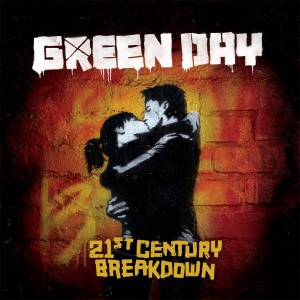
Rapidly becoming modern-rock elder statesmen, Green Day proved with 2004’s American Idiot (my Album of the Decade for the 2000s) that through diligent work at their craft and some very un-punk ambition, they have transcended the reductive “pop-punk” label and can stand of equal footing with U2 and R.E.M., who have a decade’s head start. Like American Idiot, the songs of 21st Century Breakdown collectively tell a story, and also like American Idiot, I don’t really give a shit what the story is, because each track works so well on its own. The individual songs all sound like singles, cut and polished and sweated over to hit the elusive bull’s-eye of the ear’s pleasure center, and make a big run at the charts. (Sadly, probably not the Rhianna-and-Ke$ha dominated charts of today, but perhaps the charts of yesteryear, or the charts that only exist in my imagination.) The only reason 21st Century Breakdown isn’t much higher on the list is that it follows the American Idiot template a little to closely, and comes off as a bit of a retread.
#16. Brendan Benson – My Old, Familiar Friend
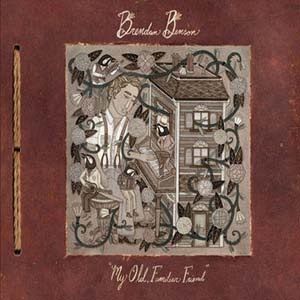 Like A.C. Newman (one notch higher), Benson is known for his work in the genre called power-pop – music designed to be as hook-y and infectious as humanly possible. A nice treat, but a steady diet will rot your insides. I admit to a power-pop sweet tooth, and Benson’s fourth record provides me with a fix that doesn’t overload the circuits. Underneath the AM Gold guitars and big choruses, there’s some interesting – even dark – things going on lyrically, and the sound (expertly produced by Gil Norton) throbs a little heavier than your standard Cheap Trick-knockoff artists. This is a record meant to be played loud in a fast-moving vehicle.
#15. A.C. Newman – Get Guilty
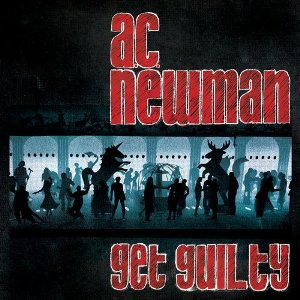 New Pornographers’ frontman Carl “A.C.” Newman continues to play to his strengths on his second solo album: a gift for melody, and a skewed, off-kilter sense of rhythm. Newman’s unpredicatble songs stutter and stop, lurch and sway. Bare-bones acoustic ruminations will suddenly get jumped and hijacked by booming, orchestral drama. Newman also seems to want to use every instrument known to western music at some point to build his baroque pop-puzzles, but the record never feels cluttered.
#14. Neko Case – Middle Cyclone
 Case’s song cycle about nature and its consistent physical and moralsuperiority over mankind was officially selected as the Institute of Idle Time’s Album of the Year for 2009, breaking both the gender and solo artist barrier for an IIT #1 album. Case’s arrangements remain idiosyncratic (including, but not limited to, piano “orchestras” and the ambient sounds of the old barn she recorded in), but her country roots show through in her phrasing and vocal warmth. I also don’t think anyone’s consistently writing lyrics at her level right now.
#13. Fruit Bats – The Ruminant Band
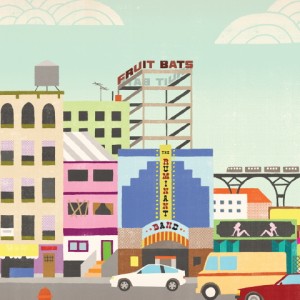 Mellow echoes of the old Laurel Canyon sound permeate this offering from Fruit Bats. Acoustic textures are to the fore, with some pedal steel woven in like silken thread. Lead singer/songwriter Eric Johnson is also a fairly recent addition to The Shins, so I hope his added workload won’t cause him to neglect his lesser-known band, who have produced here a warm, graceful, and relaxed entry in the annals of alt-country (a label that, like “Britpop,” may only have relevance to me as the rest of the world moves on as if there were an entire decade between us and the 90s. Wait, what?)
#12. Muse – The Resistance
 Stadium-fillingly huge in Europe, and beloved a particular breed of prog-rock nerd stateside, Muse has thus far eluded the warm embrace of American popularity. It’s easy to say that Muse cribs from the Queen playbook, but I feel it goes beyond that. When they choose to go the Queen route (and they don’t always), it’s no mere imitation. It’s a full-on recreation and rebirth. That dense, layered sound and operatic bombast we thought (in some cases, hoped) was gone forever lives and breathes again, vital and exciting. Muse can also turn it down to a low simmer, and their three-part orchestral suite that closes the album? It’s actually a fun listen, unlike most attempts to scale that particular peak. So points to Muse for having the balls to try and pull off an album like this, and bonus points for doing it so well.
That’s all for Part One. We’ll take it from 11 down to 1 next time…



 Holy Bee of Ephesus


